
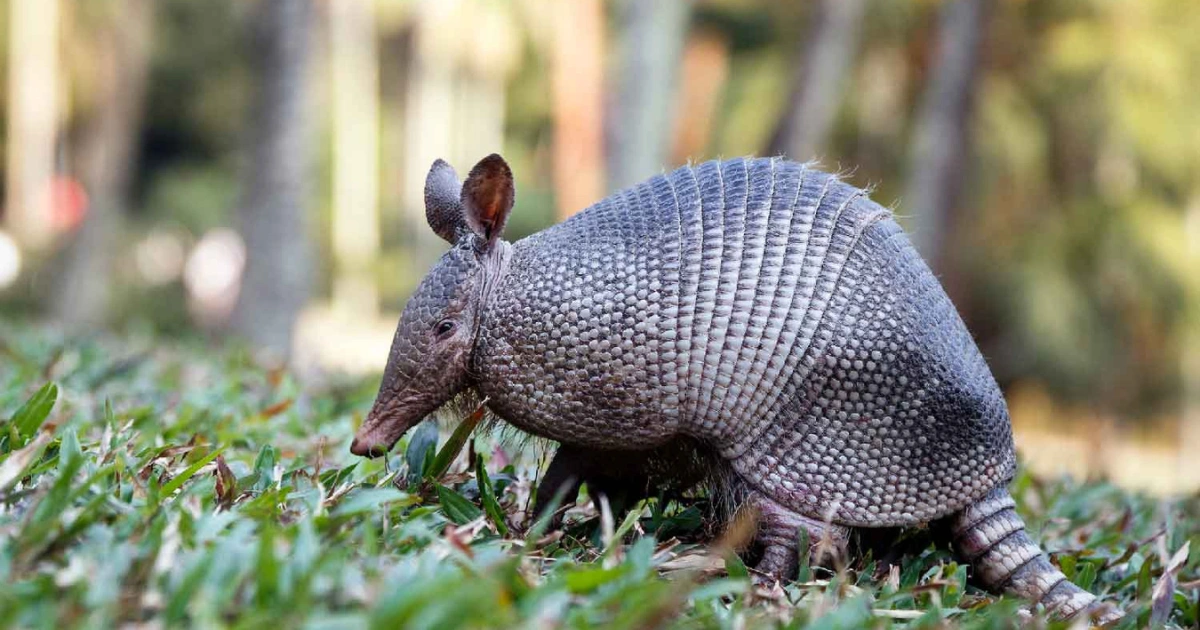
Armadillos are small to medium-sized mammals known for their distinctive armored shells. Found primarily in the Americas, these unique creatures have adapted to a variety of habitats, from grasslands to forests. Understanding the different species helps in conservation efforts and wildlife education.
1. Nine-Banded Armadillo (Dasypus novemcinctus)
- Habitat: Central and South America, southern United States
- Description: The most widespread armadillo species, recognized by its nine flexible bands across the back. It is an adept digger and often found in forests and grasslands.
2. Giant Armadillo (Priodontes maximus)
- Habitat: South American tropical forests
- Description: The largest living armadillo, growing up to 5 feet long including the tail. Primarily nocturnal, it digs extensive burrows and feeds on insects and small vertebrates.
3. Pink Fairy Armadillo (Chlamyphorus truncatus)
- Habitat: Central Argentina
- Description: Smallest armadillo species, with a delicate pink shell and silky fur underneath. It is rarely seen due to its subterranean lifestyle.
4. Southern Three-Banded Armadillo (Tolypeutes matacus)
- Habitat: South America
- Description: Able to roll completely into a ball when threatened. This defensive behavior is unique among some armadillo species.
5. Brazilian Three-Band Armadillo (Tolypeutes tricinctus)
- Habitat: Northeastern Brazil
- Description: Also capable of rolling into a ball, it is critically endangered due to habitat loss and hunting pressures.
6. Screaming Hairy Armadillo (Chaetophractus vellerosus)
- Habitat: Argentina and Bolivia
- Description: Named for the loud squeals it produces when threatened. It has a dense, hairy covering beneath its armored plates.
7. Greater Naked-Tailed Armadillo (Cabassous tatouay)
- Habitat: South American forests
- Description: Recognizable by its less armored tail, this species is a proficient digger that feeds mainly on insects.
8. Northern Naked-Tailed Armadillo (Cabassous centralis)
- Habitat: Central America
- Description: Similar to the greater naked-tailed species but slightly smaller, with a similar diet and burrowing habits.
9. Andean Hairy Armadillo (Chaetophractus nationi)
- Habitat: High-altitude regions of the Andes
- Description: Adapted to colder environments, it has a thicker, hairy covering under its armor for insulation.
10. Large Hairy Armadillo (Chaetophractus villosus)
- Habitat: Southern South America
- Description: Medium-sized with a coarse hairy undercoat, this species is burrowing and nocturnal.
11. Six-Banded Armadillo (Euphractus sexcinctus)
- Habitat: South American forests and savannas
- Description: Named for the six movable bands on its back, it is omnivorous and adaptable to various environments.
12. Pichi (Zaedyus pichiy)
- Habitat: Central and southern Argentina
- Description: Smallest of the larger armadillo species, it is nocturnal and constructs burrows for shelter.
Summary
Armadillos are diverse, ranging from the tiny Pink Fairy Armadillo to the massive Giant Armadillo. Despite differences in size, habitat, and behavior, all share a unique armored body that protects them from predators. Understanding these species helps promote conservation awareness and highlights the adaptability of this fascinating mammalian family.
Recommended Reading
- National Geographic: Armadillos Overview
- World Wildlife Fund: Armadillo Species Profiles
- Smithsonian’s National Zoo: Armadillo Facts
This guide provides a complete reference for all major armadillo species, highlighting their adaptations, habitats, and conservation status.