
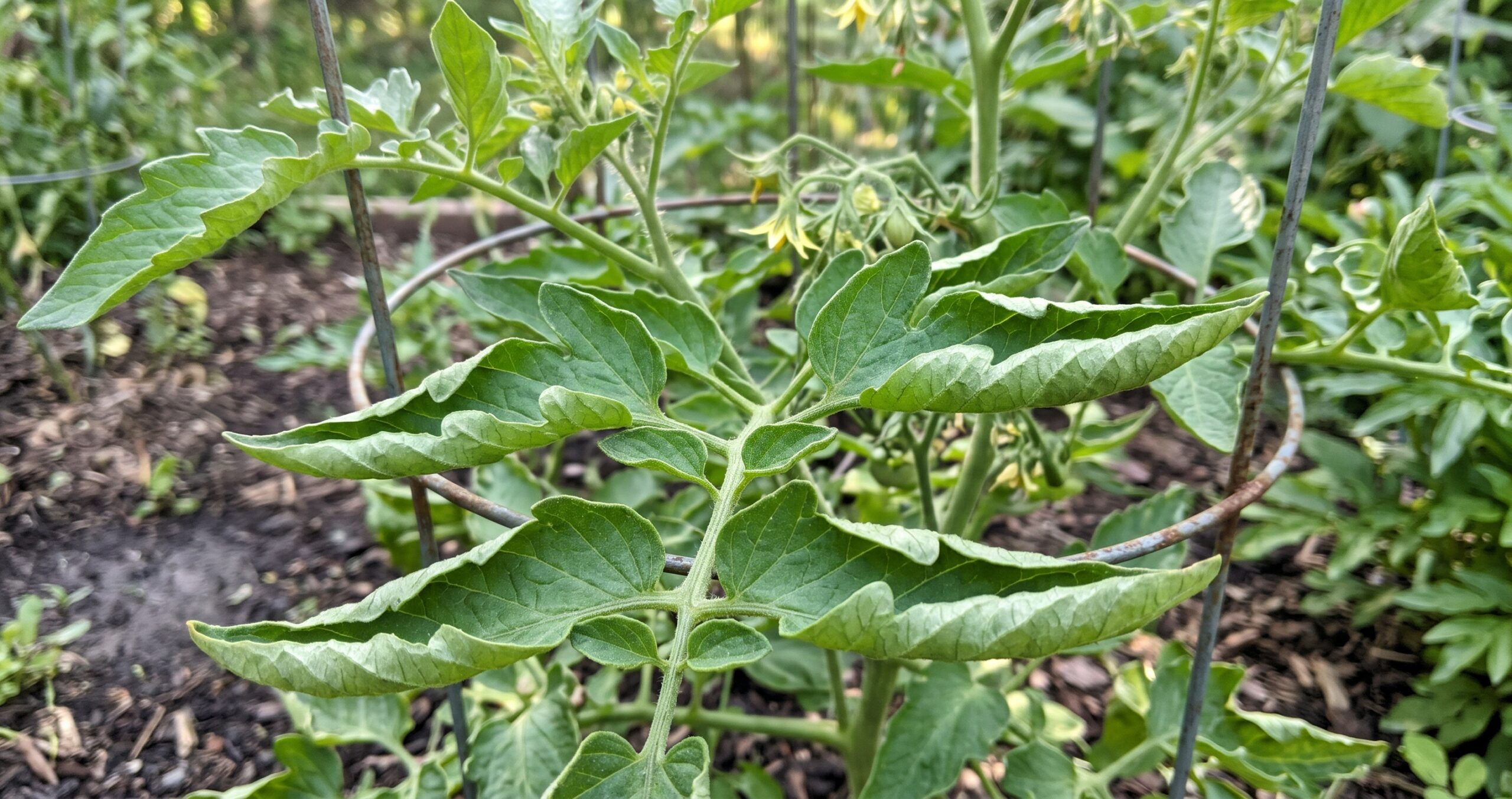
Seeing tomato leaves curling can be alarming, especially when plants were growing normally just a few days earlier. Some leaves roll upward like small tubes, while others twist downward, become narrow, or develop yellow patches. Although these symptoms may look similar, their underlying causes can be very different.
In many American vegetable gardens, curled tomato leaves are simply a response to environmental conditions such as excessive heat, inconsistent watering, or root disturbance. However, certain patterns can indicate herbicide exposure, microscopic mites, or viral infections that require a different response.
The key is to examine more than the curling itself. Leaf color, the age of affected growth, soil moisture, recent weather, and nearby chemical applications all provide important diagnostic clues.
Understanding these differences can help gardeners avoid unnecessary treatments, protect healthy plants, and recognize problems that need professional identification.
Table of Contents
- Why Tomato Leaves Curl
- Tomato Leaves Curling: A Quick Diagnostic Guide
- Physiological Leaf Roll: When Curling Is Harmless
- Heat Stress and High Temperatures
- Water Stress: Too Little or Too Much
- Herbicide Injury and Contaminated Compost
- Broad Mites and Other Pest Damage
- Viral Diseases That Cause Curled Leaves
- Regional Differences Across the United States
- How to Diagnose Tomato Leaf Curl Step by Step
- What to Do After Identifying the Cause
- Common Mistakes to Avoid
- Frequently Asked Questions
- Final Thoughts
Why Tomato Leaves Curl
Tomato leaves respond to changes in their environment, damage to their tissues, and disruptions in normal growth.
Curling is a symptom rather than a disease diagnosis. It may result from changes in water availability, abnormal cell development, feeding by small pests, or infection by a plant pathogen.
The direction of curling offers a useful clue, but it cannot establish the cause by itself.
For example, upward curling may occur during physiological leaf roll or certain viral infections. Downward twisting can suggest herbicide injury or mite damage, but these conditions can overlap.
According to Clemson University Cooperative Extension’s guide to tomato leaf rolling, gardeners should examine the age of affected leaves, direction of rolling, and symptoms elsewhere on the plant before drawing conclusions.
Home & Garden Information Center
The most reliable diagnosis comes from combining visible symptoms with the plant’s recent growing conditions.
Tomato Leaves Curling: A Quick Diagnostic Guide
Use the following table to narrow the possibilities before applying any treatment.
| Visible symptoms | Possible cause | Most useful next check |
|---|---|---|
| Older green leaves roll upward, plant otherwise vigorous | Physiological leaf roll | Recent pruning, weather, and moisture changes |
| Leaves curl during a heat wave, sometimes with afternoon wilting | Heat stress | Soil moisture and evening recovery |
| Leaves curl and wilt with dry soil | Underwatering | Moisture several inches below the surface |
| Curling, yellowing, and wilting with saturated soil | Waterlogging or root stress | Drainage and root-zone condition |
| New leaves become narrow, twisted, or strap-shaped | Herbicide injury | Recent spraying, mulch, manure, or compost |
| Young growth curls downward, becomes distorted or bronzed | Broad mites | Magnified inspection or diagnostic testing |
| Curled leaves with yellow mottling, stunting, or unusual fruit symptoms | Viral disease | Distribution of symptoms and laboratory confirmation |
| Curled young leaves with visible insect colonies | Aphids or other sap-feeding pests | Leaf undersides and growing tips |
These patterns are indicators, not definitive tests. Multiple stresses can affect the same plant simultaneously.
Physiological Leaf Roll: When Curling Is Harmless
Physiological leaf roll is one of the most common explanations for tomato leaves curling in otherwise healthy gardens.
It is a noninfectious condition associated with environmental and cultural stresses rather than a fungus, bacterium, or virus.
What Physiological Leaf Roll Looks Like
Symptoms frequently begin on older, lower leaves.
The leaflets curl upward along their edges and may eventually roll inward toward the central vein, creating a tube-like appearance.
Affected leaves often remain green, firm, and somewhat leathery.
Unlike many serious diseases, physiological leaf roll usually does not produce distinctive yellow mottling, severe shoot distortion, or widespread plant stunting.
What Causes It?
Physiological leaf roll has been associated with several conditions:
- Excessive heat or abrupt temperature changes
- Drought or irregular soil moisture
- Periods of unusually wet soil
- Heavy pruning
- Root disturbance
- Excessive nitrogen fertilization
- Transplant stress
Indeterminate tomato varieties may show this response more frequently than some determinate varieties.
Importantly, physiological leaf roll does not necessarily indicate that the plant is seriously damaged.
When overall growth remains healthy, the condition often has little or no effect on fruit production.
How to Manage It
Avoid aggressively pruning affected plants or immediately applying fertilizer.
Check soil moisture, maintain consistent watering, and protect roots from disturbance.
Previously rolled leaves may remain curled even when growing conditions improve. Healthy new growth is a more useful indicator of recovery.
Heat Stress and High Temperatures
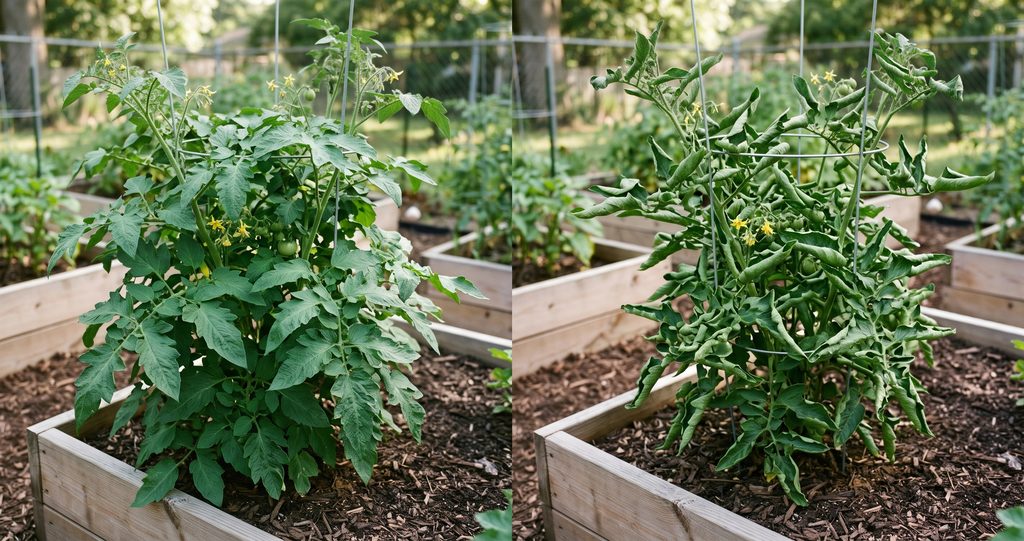
Tomatoes thrive in warm conditions, but prolonged excessive heat can interfere with normal leaf function and fruit production.
During hot weather, plants may experience greater water demand than their roots can immediately satisfy.
Leaf rolling can occur alongside wilting, reduced flower retention, or slower growth.
Recognizing Heat-Related Curling
Heat-associated symptoms often appear during sustained hot afternoons, especially when accompanied by dry winds.
Some plants regain normal leaf firmness overnight, even though curled leaflets may retain their rolled shape.
Heat-related curling is more likely when soil conditions are otherwise adequate and symptoms develop across several similarly exposed plants.
Practical Heat Management
Maintain even soil moisture without saturating the root zone.
Apply approximately two to three inches of suitable organic mulch where appropriate, keeping it away from the stem.
Temporary shade during severe heat waves may help reduce additional stress, particularly in exposed locations.
For more detailed guidance, see Heat Stress in Plants: Recognize the Symptoms Before It’s Too Late, which explains common temperature-related problems in vegetables and other garden plants.
green garden
Water Stress: Too Little or Too Much
Water stress is another common contributor to tomato leaves curling.
However, a curled leaf does not automatically mean the plant needs more water.
Both insufficient moisture and poorly aerated, saturated soil can interfere with root function.
Underwatering
When soil becomes excessively dry, roots cannot supply enough water to maintain normal plant function.
Leaves may roll, droop, or wilt, especially during warm afternoons.
Check the soil several inches below the surface rather than relying on surface appearance.
If the active root zone is genuinely dry, water slowly and deeply.
Overwatering and Poor Drainage
Excessive watering can fill soil pores that normally contain air.
Roots need oxygen for respiration, and prolonged saturation can impair their ability to absorb water and nutrients.
A waterlogged tomato plant may consequently show wilting or curling despite abundant moisture.
Check for persistently wet soil, poor drainage, yellowing foliage, and declining vigor.
If drainage is the problem, adding more water will make conditions worse.
Container Tomatoes
Tomatoes grown in pots are particularly vulnerable to rapid moisture fluctuations.
Small containers may dry quickly during hot, windy weather, while containers without sufficient drainage can remain excessively wet.
Check drainage holes, container size, and actual soil moisture before changing irrigation frequency.
Herbicide Injury and Contaminated Compost
Herbicide exposure is an important possibility when tomato leaves become dramatically twisted or misshapen.
Tomatoes are especially sensitive to certain growth-regulating herbicides used for broadleaf weed control.
These include products containing active ingredients such as 2,4-D and dicamba.
Recognizing Herbicide Damage
Possible symptoms include downward curling, narrow or strap-shaped leaves, twisted stems, abnormal growing tips, and distorted fruit.
The newest growth may appear especially affected because growth-regulating herbicides disrupt normal tissue development.
Symptoms may appear more severe on the side facing a nearby application.
However, the distribution depends on the chemical, exposure route, concentration, and environmental conditions.
Herbicide Drift
A neighboring lawn or landscape treatment can sometimes affect vegetable crops when spray droplets move beyond the intended application area.
Certain volatile herbicides may also move as vapor under particular conditions.
Wind direction, temperature, application technique, and product formulation influence exposure risk.
Contaminated Compost, Manure, and Mulch
Some persistent herbicides used in pastures and hay production can survive passage through animals and remain active in manure or compost.
Sensitive crops such as tomatoes may develop serious growth abnormalities after contaminated materials are incorporated into planting soil.
Products containing certain pyridine-carboxylic acid herbicides, including aminopyralid and clopyralid, are examples of particular concern.
If several plants develop abnormal growth after receiving the same amendment, investigate its origin.
Do not assume that compost is herbicide-free merely because it appears fully decomposed.
Can Affected Tomatoes Recover?
Recovery depends on the herbicide, exposure level, and extent of damage.
Mildly affected plants may eventually produce normal new growth after exposure ends.
Severely affected plants may remain stunted or fail to recover.
If edible plants may have been exposed to an herbicide, consult the product label, local extension service, or appropriate agricultural authority before deciding whether the produce is safe to eat.
Broad Mites and Other Pest Damage
Not every case of curled foliage is caused by weather or chemicals.
Certain insects and mites feed on tomato tissues, sometimes damaging young leaves before the gardener notices the pests themselves.
Broad Mites
Broad mites (Polyphagotarsonemus latus) are extremely small arachnids that can damage actively growing tomato tissue.
They are particularly troublesome in some greenhouse and protected-growing environments.
Affected new leaves may curl downward, become distorted, or develop bronzed and hardened tissue.
Severe infestations can stunt growing tips and reduce normal development.
Unlike ordinary physiological leaf roll, broad mite injury frequently affects young leaves and creates abnormal new growth.
Because these mites are difficult to see without magnification, confirmation may require a strong hand lens, microscope, or diagnostic laboratory.
Spider Mites
Spider mites can also damage tomatoes, especially under hot, dry conditions.
Typical symptoms include tiny pale feeding marks, bronzing, and sometimes fine webbing.
Severely affected foliage may dry, distort, or curl.
Their feeding pattern differs from the characteristic deformation caused by broad mites.
Aphids
Aphid colonies may gather on the undersides of leaves and around tender growing tips.
Heavy feeding can produce curling, distortion, and sometimes sticky honeydew.
Inspect the plant carefully before applying treatment, since the visible presence of pests is far more informative than curling alone.
Managing Pest Problems
Begin with accurate identification.
Avoid broad-spectrum insecticides without confirming the pest, because unnecessary applications can harm beneficial organisms.
Depending on the identified pest, management may involve removing heavily infested tissue, conserving natural enemies, or using an appropriately labeled product.
Always check the label for use on tomatoes, application restrictions, and harvest intervals.
Image placement — after this section
Suggested image: A realistic, scientifically accurate six-panel diagnostic photograph comparing healthy tomato leaves, physiological upward leaf roll, heat-associated curling, drought stress, herbicide-distorted new growth, and broad mite damage. Each panel should show distinguishable leaf characteristics with clear labels.
Alt text: Tomato leaves curling from physiological leaf roll, heat, water stress, herbicide injury, and broad mites.
Viral Diseases That Cause Curled Leaves
Several tomato viruses produce leaf curling, often accompanied by additional symptoms.
Unlike ordinary physiological leaf roll, viral infections may disrupt growth throughout the plant.
Accurate identification matters because different viruses spread through different routes.
Tomato Yellow Leaf Curl Virus
Tomato yellow leaf curl virus, commonly abbreviated TYLCV, is an important tomato pathogen in warmer regions.
Infected plants may develop upward-curling leaves, yellow margins, reduced leaf size, and pronounced stunting.
The virus is transmitted by the sweetpotato whitefly, Bemisia tabaci.
This disease is particularly significant in some southern growing regions where suitable whitefly populations occur.
Tomato Mosaic Viruses
Tomato mosaic virus and related mosaic viruses may cause mottled foliage, unusual leaf shapes, and abnormal growth.
Their symptoms can overlap with herbicide injury and other viral diseases.
Some mechanically transmitted viruses spread through contaminated hands, tools, plant material, or contact between plants.
Curly Top Disease
Curly top disease, associated with beet curly top virus and related viruses, can cause upward curling, stunting, and abnormal plant development.
Beet leafhoppers transmit the pathogens responsible for curly top disease.
The disease is particularly important in certain western United States production areas.
What to Do About Suspected Viruses
There is no spray or home remedy that eliminates a systemic viral infection from an infected tomato plant.
However, curling alone is insufficient evidence for removing a plant.
If symptoms strongly suggest a virus, contact a local cooperative extension office or plant diagnostic laboratory.
Once infection is confirmed, follow locally recommended sanitation and vector-management practices.
Regional Differences Across the United States
Climate and pest pressure change the relative likelihood of different causes.
The following patterns can help guide investigation but should not replace direct examination.
| U.S. region | Important considerations |
|---|---|
| Northeast | Sudden heat waves, transplant stress, variable spring moisture, and occasional herbicide exposure |
| Midwest | Physiological leaf roll during summer, storm-related moisture changes, and possible lawn-herbicide drift |
| Southeast | Extended heat, high humidity, whitefly pressure, and regionally important viral diseases |
| Southwest | Intense heat, dry winds, irrigation stress, and certain leafhopper-transmitted diseases |
| Pacific Northwest | Cool spring soil, wet conditions, transplant stress, and summer watering fluctuations |
| California and Mountain West | Regional variation in heat, irrigation needs, herbicide exposure, mites, and curly top disease |
Local growing conditions often vary more than broad regional labels suggest.
For example, a container tomato on an urban balcony may experience greater heat and moisture stress than a field-grown tomato several miles away.
Greenhouse production also creates different pest and temperature conditions from outdoor gardening.
How to Diagnose Tomato Leaf Curl Step by Step
A systematic examination is more reliable than guessing from one photograph.
Step 1: Identify Which Leaves Are Affected
Determine whether symptoms begin on older lower leaves or the newest growing tips.
Older leaves rolling upward while remaining green suggest physiological leaf roll.
Severe distortion concentrated in new growth deserves closer investigation.
Step 2: Examine Leaf Color and Texture
Look for yellow mottling, bronzing, pale feeding marks, thickened leaves, or dead tissue.
Normal green foliage with simple upward rolling differs from foliage showing multiple abnormal symptoms.
Step 3: Check Soil Moisture
Insert a finger or small trowel into the soil several inches below the surface.
Determine whether the root zone is dry, appropriately moist, or saturated.
Avoid watering again automatically without checking the actual conditions.
Step 4: Review Recent Weather
Consider heat waves, unusually cold nights, dry winds, heavy rainfall, and recent transplanting.
Environmental stress often explains symptoms that appear across multiple plants simultaneously.
Step 5: Investigate Chemical Exposure
Review nearby lawn treatments, roadside spraying, and any recently applied compost, manure, or mulch.
Ask whether similar symptoms are appearing on other broadleaf plants.
Step 6: Inspect for Pests
Examine young shoots and leaf undersides for aphids, spider mites, feeding damage, and webbing.
For suspected broad mites, magnification or professional testing may be necessary.
Step 7: Assess Plant Growth
Compare the affected plant with healthy tomatoes of similar age and variety.
Check whether new growth appears normal, whether fruit develops properly, and whether stunting is progressing.
If symptoms remain unexplained, collect clear photographs and contact your county extension office.
What to Do After Identifying the Cause
The correct response depends on the diagnosis.
Physiological leaf roll generally requires improved growing conditions rather than pesticides.
Heat and moisture problems call for careful irrigation, mulch, and reduced additional stress.
Herbicide injury requires identifying and eliminating the exposure source.
Confirmed pest infestations should be managed according to the organism involved, preferably using integrated pest management principles.
Suspected viral disease requires more caution, particularly where symptoms include widespread stunting, yellow mottling, or abnormal new growth.
Do not use fertilizer, insecticides, fungicides, or homemade sprays indiscriminately.
There is no single product that treats every possible cause of tomato leaf curling.
Common Mistakes to Avoid
One frequent mistake is treating curled leaves as proof of disease.
Another is adding more water whenever leaves appear abnormal, even when the soil is already wet.
Excessive pruning can also increase stress and worsen physiological leaf roll.
Applying unnecessary fertilizer may encourage excessive vegetative growth without solving the underlying problem.
Finally, removing a productive tomato plant solely because its older leaves have rolled upward can mean discarding an otherwise healthy crop.
Frequently Asked Questions
Why are my tomato leaves curling upward but staying green?
Physiological leaf roll is a common possibility, especially when older leaves are affected and the plant continues growing normally.
Check for recent heat, pruning, moisture fluctuations, and root disturbance.
Should I remove curled tomato leaves?
Not automatically. Healthy green leaves can continue contributing to photosynthesis even when rolled.
Remove foliage only when there is a clear horticultural reason, such as confirmed disease management or extensive tissue death.
Can tomato plants recover from leaf curling?
Yes, when the cause is temporary environmental stress.
Recovery is less predictable following serious herbicide exposure, severe pest damage, or systemic viral infection.
Does tomato leaf curling mean the plant needs fertilizer?
No. Curling alone does not diagnose a nutrient deficiency.
Use soil testing and other symptoms to determine whether additional nutrients are necessary.
Can I still harvest tomatoes from plants with curled leaves?
Tomatoes from plants experiencing ordinary physiological leaf roll are generally suitable for harvest.
If herbicide exposure is suspected, seek product-specific guidance before consuming fruit.
Why are only the newest tomato leaves curled?
Distorted new growth may suggest herbicide injury, mites, or viral disease.
Examine growing tips, neighboring plants, and exposure history before deciding on treatment.
Final Thoughts
Understanding the real causes of tomato leaves curling can prevent unnecessary treatments and help gardeners make better decisions.
Many cases involve physiological leaf roll, heat, or moisture stress and do not indicate a serious disease.
However, distorted young leaves, abnormal coloring, persistent stunting, and unusual fruit development can indicate more significant problems.
By examining the entire plant, checking soil conditions, investigating environmental changes, and seeking diagnostic confirmation when necessary, gardeners can respond to the actual cause rather than the appearance of the leaves alone.