
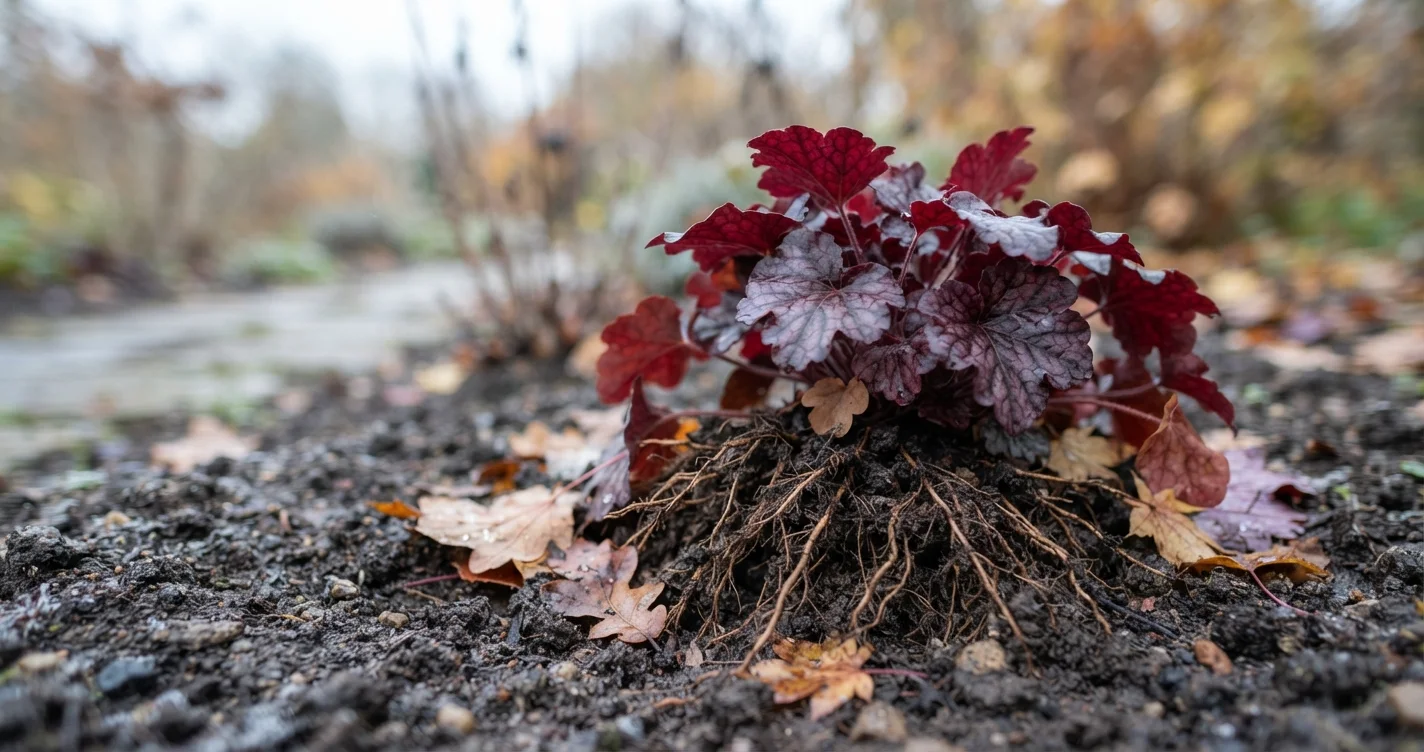
A perennial that was firmly planted in the ground last fall can suddenly appear to have climbed several inches out of the soil by late winter. Its roots are exposed, its crown is sitting above ground level, and the plant looks as though someone has pulled it out of the garden.
The culprit is often a natural process called frost heave. Coral bells are particularly vulnerable because of their relatively shallow root systems.
Understanding frost heave, coral bells, and the effects of fluctuating winter temperatures can help gardeners prevent unnecessary plant losses.
Interestingly, the greatest danger isn’t always the cold itself. It’s what happens beneath the soil when temperatures repeatedly rise and fall around the freezing point.
Table of Contents
- What Is Frost Heave in Perennials?
- Frost Heave and Coral Bells: Why Shallow Roots Are Vulnerable
- The Science Behind Frost Heave in Garden Soil
- Other Perennials Vulnerable to Frost Heave
- Five Signs of Frost Heave in Perennials
- How to Protect Perennials From Frost Heave
- How to Rescue Plants That Have Been Lifted From the Soil
- Common Winter Gardening Mistakes
- In Your Own Yard: Creating a Frost-Resistant Perennial Bed
- Frequently Asked Questions
What Is Frost Heave in Perennials?
Frost heave occurs when freezing conditions cause the soil to expand and move upward.
As moisture freezes beneath the surface, it can form layers of ice that gradually lift the surrounding soil. Plants growing within that soil may be pushed upward along with it.
When temperatures rise again, the ice melts and the soil settles. However, the plants may remain partly lifted from their original positions.
Repeated freezing and thawing can make this displacement progressively worse.
Eventually, a perennial that was once securely established may have exposed roots and a crown sitting noticeably above the surrounding ground.
When Frost Heave Is Most Common
Frost heave is particularly concerning during periods when daytime temperatures rise above freezing but nighttime temperatures fall below it.
These conditions frequently occur during late fall, winter warm spells, and early spring.
Gardens with exposed soil, inconsistent snow cover, and moisture-retentive soils may experience greater problems.
Frost Heave and Coral Bells: Why Shallow Roots Are Vulnerable
Coral bells, botanically known as Heuchera, are popular perennial plants admired for their colorful foliage and delicate flower spikes.
Their leaves come in an impressive range of colors, including burgundy, lime green, silver, bronze, and deep purple.
Despite their winter hardiness, these attractive plants can be susceptible to frost heave.
A Relatively Shallow Root System
Coral bells develop fibrous roots that occupy the upper layers of the soil.
Unlike deeply rooted perennials, they may have less anchorage against the upward movement of freezing ground.
Recently planted specimens are particularly vulnerable because their roots have had less time to establish themselves.
An Exposed Crown
The crown is the area where the roots and aboveground stems meet.
When frost heave lifts a coral bell, its crown and upper roots may become increasingly exposed to cold air, drying winds, and sunlight.
This exposure can cause dehydration and tissue damage, even when the plant is otherwise hardy enough to survive local winter temperatures.
Winter Hardiness and Frost Heave Are Different
A perennial’s USDA hardiness rating describes its general ability to tolerate winter minimum temperatures.
However, winter hardiness does not guarantee protection against physical soil movement.
Even a cold-hardy coral bell can suffer when its roots are repeatedly pushed out of the ground.
The Science Behind Frost Heave in Garden Soil
Frost heave is more complicated than water simply expanding as it freezes. It involves an interaction between soil particles, moisture, and temperature.
How Ice Lenses Form Underground
When temperatures fall below 32°F (0°C), freezing begins near the soil surface and can gradually extend deeper into the ground.
Under suitable conditions, unfrozen water moves through tiny spaces between soil particles toward the freezing zone.
As this water freezes, it can accumulate into horizontal layers known as ice lenses.
These ice layers continue growing when additional moisture is available, exerting upward pressure on the soil above them.
This movement can be powerful enough to displace plants, garden edging, fence posts, and even sections of pavement.
Why Soil Type Matters
Different soils respond differently to freezing temperatures.
Fine-textured soils, particularly those containing considerable amounts of silt, can be susceptible to frost heave because they allow moisture to move toward the freezing zone.
Poorly drained clay soils can also create challenging winter conditions.
Coarse, well-drained sandy soils are generally less susceptible, although local moisture conditions still matter.
Why Repeated Freezing Makes Things Worse
During a sunny winter afternoon, the upper soil layers may begin to thaw.
When temperatures fall again overnight, freezing resumes.
Over time, these repeated cycles can loosen the soil surrounding a perennial, break delicate roots, and gradually displace the plant.
How Mulch Interrupts This Process
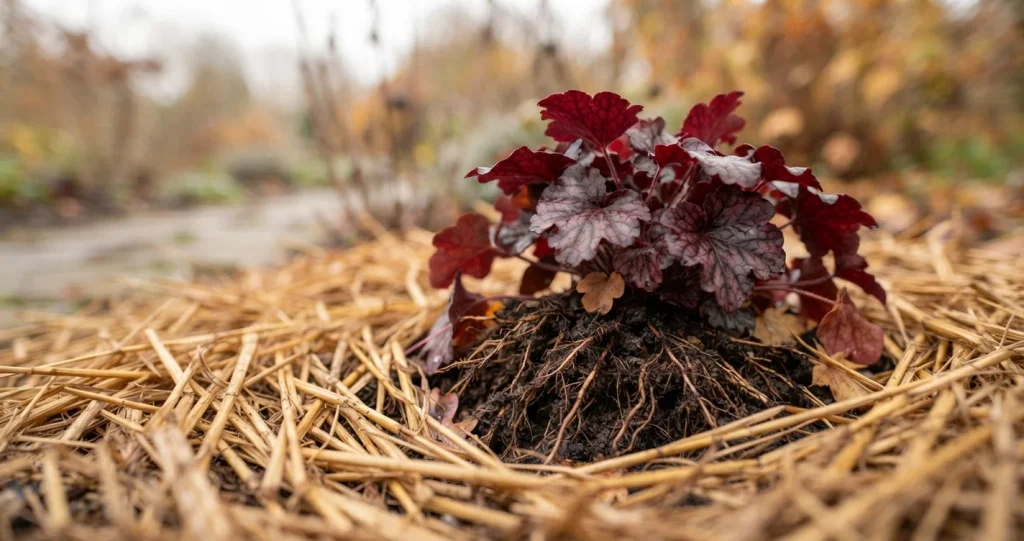
Mulch acts as a protective insulating blanket.
Rather than keeping the soil warm throughout winter, its primary purpose is to reduce sudden temperature changes.
A more stable soil temperature means fewer opportunities for the repeated freezing and thawing that displace shallow-rooted plants.
Other Perennials Vulnerable to Frost Heave
Coral bells are among the best-known examples, but several other popular garden plants can experience similar problems.
| Perennial | Botanical name |
|---|---|
| Coral bells | Heuchera |
| Foamflower | Tiarella |
| Garden mums | Chrysanthemum |
| Shasta daisy | Leucanthemum |
| Pincushion flower | Scabiosa |
| Bergenia | Bergenia |
| Hens and chicks | Sempervivum |
| Strawberries | Fragaria |
Newly planted and recently divided perennials are especially vulnerable, regardless of species, because their root systems may not yet provide sufficient anchorage. Yard and Garden
Five Signs of Frost Heave in Perennials
Recognizing frost heave early gives gardeners an opportunity to protect exposed roots before serious damage occurs.
Watch for these common warning signs:
- Raised crowns: The base of the plant sits unusually high above the surrounding soil.
- Exposed roots: Fine roots become visible around the plant.
- Cracked soil: Small gaps or cracks appear near the root ball.
- Loose plants: The perennial feels poorly anchored or begins leaning sideways.
- Drying foliage: Remaining leaves become unusually dry or wilted as exposed roots lose moisture.
Older coral bells may also develop elevated, woody crowns as part of their natural growth. This gradual change should not automatically be confused with sudden winter frost heave.
How to Protect Perennials From Frost Heave
Preventing frost heave involves preparing the soil, encouraging root establishment, and providing appropriate winter protection.
1. Apply Winter Mulch at the Right Time
In regions where the ground freezes, apply protective winter mulch once sustained cold weather has arrived and the soil surface begins to freeze.
A loose layer approximately 3–4 inches thick can provide additional insulation for vulnerable perennials.
Suitable materials include shredded autumn leaves, clean straw, pine needles, and loose shredded bark.
Keep dense, moisture-retaining materials away from the crown to reduce the risk of rot.
2. Improve Soil Drainage
Coral bells generally prefer soil that retains some moisture while allowing excess water to drain freely.
Incorporating well-aged compost when preparing a new garden bed can help improve soil structure.
For gardens with persistent drainage problems, slightly elevated planting beds may provide better growing conditions.
3. Plant Early Enough in the Season
Spring and early fall are often suitable times for planting coral bells.
When planting in autumn, aim for approximately six weeks before the first expected frost, allowing time for root development before winter. Missouri Botanical Garden
4. Maintain the Correct Planting Depth
Position coral bells so that the crown remains at soil level.
Planting too deeply can encourage crown rot, while planting too shallowly leaves roots vulnerable to dehydration and temperature extremes.
5. Preserve Healthy Winter Foliage
Coral bells often retain some of their foliage during winter, depending on the cultivar and climate.
Leave healthy leaves in place and remove damaged foliage when necessary in late winter or early spring. Oklahoma State University
How to Rescue Plants That Have Been Lifted From the Soil
Discovering a perennial with exposed roots does not necessarily mean the plant is lost.
Prompt intervention can help protect surviving tissues.
Step 1: Examine the Plant
Inspect the crown and visible roots.
Firm tissues suggest that the plant may still be viable, even if its foliage appears damaged.
Step 2: Protect Exposed Roots
If the ground remains frozen, temporarily surround the exposed roots with loose soil and insulating mulch.
Avoid forcing the root ball into frozen ground, as this may damage the remaining roots.
Step 3: Replant When the Soil Becomes Workable
Once the soil has thawed, carefully reposition severely displaced plants at their original planting depth.
Gently firm the surrounding soil to eliminate large air pockets.
Step 4: Water and Monitor Recovery
Water lightly if the soil is dry and temperatures permit.
Monitor the plant during spring for emerging leaves and renewed growth. Recovery depends on the extent of root and crown damage.
Common Winter Gardening Mistakes
Small gardening habits can unintentionally increase the risk of frost heave and other forms of winter damage.
Applying Mulch Too Early
Adding heavy winter protection while the soil is still warm can interfere with normal seasonal acclimation.
Wait until consistently cold conditions arrive before applying additional winter insulation.
Removing Mulch During a Winter Warm Spell
A few unusually warm afternoons do not necessarily signal the end of winter.
Maintain protective mulch until seasonal conditions become more stable, then gradually remove excess material.
Allowing the Soil to Become Waterlogged
Although moisture is essential for plant survival, saturated soil can create unfavorable conditions for shallow-rooted perennials.
Coral bells are particularly sensitive to poorly drained winter soil.
Neglecting Mature Coral Bells
Established coral bells can develop elevated woody crowns as they age.
Dividing mature plants approximately every three to four years in spring can help maintain their vigor and restore appropriate planting depth. University of…
In Your Own Yard: Creating a Frost-Resistant Perennial Bed
A well-designed perennial garden can provide colorful foliage, seasonal flowers, and valuable wildlife habitat while reducing winter maintenance.
Start by selecting plants suited to your local climate and soil conditions.
Combine coral bells with woodland companions such as hostas, native ferns, foamflowers, and bleeding hearts.
Allow healthy fallen leaves to remain in selected areas, creating natural insulation while providing winter shelter for small invertebrates.
You can also follow this simple seasonal maintenance schedule.
| Season | Essential garden task |
|---|---|
| Early fall | Plant perennials and check drainage |
| Late fall | Apply protective winter mulch |
| Midwinter | Inspect exposed crowns during mild weather |
| Late winter | Cover exposed roots as needed |
| Early spring | Remove excess mulch and reposition lifted plants |
| Late spring | Monitor recovery and new growth |
Pay particular attention to plants growing near south-facing walls or other locations exposed to alternating sunshine and freezing temperatures.
These small microclimates can experience surprisingly large temperature fluctuations.
Frequently Asked Questions
1. Can coral bells survive frost heave?
Yes. Coral bells can often recover when their crowns and enough of their roots remain healthy. Protect exposed roots promptly and reposition displaced plants when the ground becomes workable.
2. What is the best mulch to prevent frost heave?
Loose organic materials such as shredded leaves, straw, and pine needles provide effective insulation. In colder regions, a temporary 3–4-inch layer can help protect vulnerable perennials while reducing soil temperature fluctuations.
3. Does snow help prevent frost heave?
Yes. Consistent snow cover acts as natural insulation, reducing exposure to sudden temperature changes. Gardens with intermittent snow cover may benefit from additional protective mulch.
Conclusion
A coral bell rising mysteriously from the ground is a fascinating reminder that garden soil continues to change throughout winter.
When it comes to preventing frost heave, coral bells benefit from stable soil temperatures, proper drainage, established roots, and well-timed mulching.
These simple precautions can help preserve your favorite perennials while supporting a more resilient garden ecosystem.
Sometimes, the most important winter gardening work happens beneath the surface, where tiny roots wait patiently for spring.
External Sources
1. An Evaluation Study of Coral Bells
Coral bells can develop increasingly elevated woody crowns as they age, contributing to their vulnerability to winter root exposure. chicagobotanic.org. Read the botanical evaluation (PDF)
2. Winter Garden Tasks
Gardeners can use mild winter days to inspect susceptible perennials and gently reposition slightly heaved plants when soil conditions permit. Yard and Garden. Iowa State University . Read the university gardening guide
3. Frost Heaving
Winter mulch can conceal displaced perennial crowns, making periodic inspections important even in protected garden beds. Missouri Botanical Garden. Read the botanical garden’s frost heave guide