
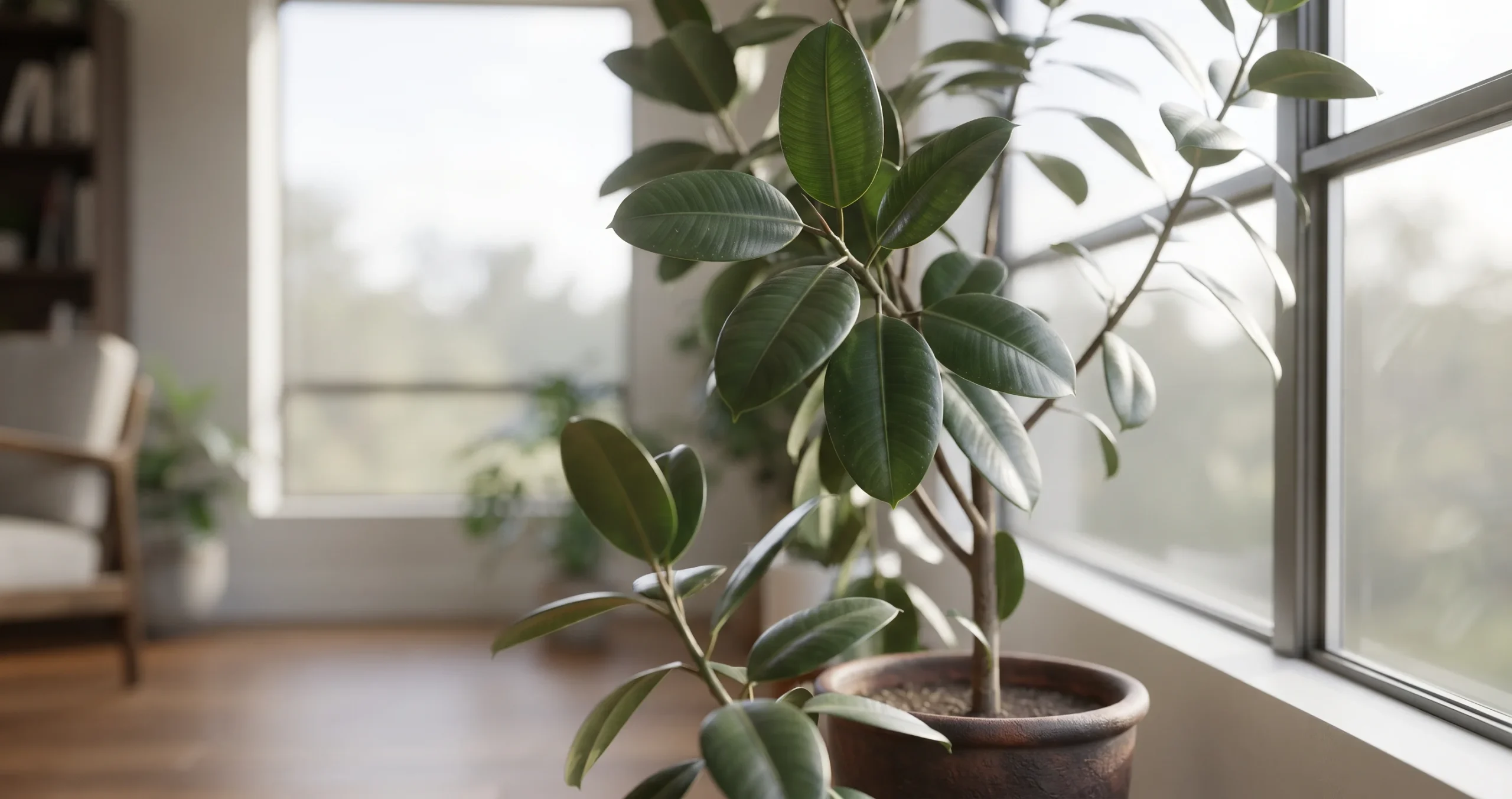
A rubber plant can spend the entire summer producing beautiful, glossy leaves, only to begin shedding them when winter arrives. Sometimes, even perfectly green leaves fall without any obvious warning.
Rubber plant leaf drop is often a response to changing indoor conditions rather than a sign of disease. Shorter days, colder windows, dry indoor air, and excessive watering can all disrupt the plant’s natural balance.
Originally adapted to tropical environments, rubber plants experience a very different climate inside American homes during winter.
Fortunately, understanding how these plants respond to seasonal changes can help you protect their foliage, encourage healthy roots, and prepare them for another season of growth.
Table of Contents
- Understanding the Rubber Plant
- Seven Common Causes of Rubber Plant Leaf Drop
- The Science Behind Winter Leaf Drop
- Signs Your Rubber Plant Is Struggling
- How to Water a Rubber Plant in Winter
- Choosing the Best Indoor Location
- How to Help a Rubber Plant Recover
- Common Winter Care Mistakes
- In Your Own Yard: Preparing Rubber Plants for Winter
- Frequently Asked Questions
Understanding the Rubber Plant
The rubber plant (Ficus elastica) is a tropical evergreen native to parts of Asia. In its natural habitat, it can develop into a substantial tree with a broad canopy and thick, leathery leaves.
Indoors, it remains considerably smaller and has become a favorite among houseplant enthusiasts.
Its glossy foliage, upright growth habit, and tolerance of ordinary household conditions make it an attractive addition to living rooms and indoor gardens.
Popular varieties include:
- Burgundy: Deep green to almost black foliage.
- Tineke: Green leaves with creamy white margins.
- Ruby: Variegated foliage with pink and reddish tones.
- Robusta: Large, glossy, dark green leaves.
Although rubber plants are relatively adaptable, maintaining stable environmental conditions becomes especially important during winter.
Seven Common Causes of Rubber Plant Leaf Drop
A falling leaf can reveal several different problems. Identifying the underlying cause is more effective than immediately changing every aspect of your care routine.
1. Insufficient Winter Light
Winter brings shorter days, lower solar angles, and reduced sunlight intensity across much of the United States.
A rubber plant that receives enough light during summer may struggle in the same location during December or January.
Reduced light limits photosynthesis, slows growth, and can contribute to the loss of older leaves.
Move the plant closer to a bright window where it receives plenty of indirect sunlight.
Variegated varieties often benefit from brighter conditions than solid-green varieties.
2. Overwatering
Overwatering is one of the most common causes of rubber plant leaf drop during winter.
As growth slows, the plant generally uses less water. Continuing a summer watering schedule can leave the potting mix excessively wet.
Prolonged saturation reduces oxygen availability around the roots and increases the risk of root rot.
Yellowing lower leaves, soft stems, and persistently damp soil are potential warning signs.
3. Cold Drafts
Rubber plants prefer relatively stable temperatures.
Cold air entering through windows, exterior doors, or poorly insulated rooms can cause environmental stress.
In some cases, leaves may fall while they are still green.
Position your plant away from frequently opened doors and prevent its foliage from touching cold window glass.
4. Dry Indoor Air
Central heating systems often reduce indoor relative humidity during winter.
Although rubber plants tolerate moderate household humidity, very dry conditions may contribute to brown leaf margins, curling, and increased moisture loss.
A room humidifier can help maintain more consistent conditions.
5. Sudden Temperature Changes
A rubber plant may experience stress when exposed to frequent temperature fluctuations.
Moving it between rooms, placing it beside a heating vent, or exposing it to alternating warm and cold air can disrupt its normal physiological processes.
Stable conditions are generally preferable to extreme changes.
6. Winter Pest Infestations
Spider mites, scale insects, and mealybugs can infest rubber plants indoors.
Spider mites are particularly associated with warm, dry environments.
Inspect the undersides of leaves, stems, and areas where leaves attach to branches.
Small webs, sticky deposits, pale speckling, or cotton-like clusters may indicate a pest problem.
7. Natural Leaf Aging
Occasionally, a healthy rubber plant sheds one of its oldest lower leaves.
This is part of its normal growth cycle and does not necessarily require intervention.
However, frequent or widespread leaf loss deserves closer investigation.
The Science Behind Winter Leaf Drop
A falling rubber plant leaf is not simply a piece of foliage detaching from a weakened stem. In many cases, it is the result of a coordinated biological process.
How Reduced Light Changes Plant Metabolism
Rubber plants use photosynthesis to convert light energy into sugars that support growth, maintenance, and root development.
During winter, reduced light availability can limit the amount of energy the plant produces.
At the same time, growth typically slows, especially when indoor temperatures are cooler.
The plant may shed some foliage when environmental conditions make it difficult to maintain its existing canopy.
The Role of Plant Hormones
Plants produce chemical signals that regulate growth and responses to environmental stress.
Hormones such as ethylene and auxin participate in a process called leaf abscission.
During abscission, specialized cells near the base of the leaf stalk gradually separate, allowing the leaf to detach.
This explains why a rubber plant can sometimes lose a leaf that still looks green and healthy.
Environmental stress can influence these hormonal signals and accelerate leaf shedding.
The Relationship Between Roots and Leaves
Healthy roots absorb water and nutrients while supporting the foliage above the soil.
When potting mix remains saturated for extended periods, oxygen becomes less available to the roots.
Damaged roots may struggle to absorb sufficient water, even when the soil is visibly wet.
As a result, an overwatered rubber plant can sometimes display symptoms resembling dehydration.
Understanding this relationship is essential when diagnosing winter leaf drop.
Signs Your Rubber Plant Is Struggling
The appearance of falling leaves can provide useful clues about the plant’s condition.
Before changing your watering routine or moving the pot, examine the foliage, soil, and surrounding environment.
| Symptoms | Possible cause | Recommended solution |
|---|---|---|
| Yellow lower leaves | Excessive watering | Allow soil to dry slightly |
| Green leaves suddenly falling | Cold drafts or environmental stress | Stabilize temperatures |
| Brown, crispy edges | Dry air or insufficient water | Check moisture and humidity |
| Drooping leaves | Underwatering or root damage | Inspect soil and roots |
| Soft, dark roots | Root rot | Remove damaged roots and repot |
| Pale spots and fine webs | Spider mites | Isolate and treat the plant |
| Slow, elongated growth | Insufficient light | Provide brighter indirect light |
These symptoms can overlap. Checking soil moisture and recent environmental changes is often the best starting point.
How to Water a Rubber Plant in Winter
Adjusting your watering routine is one of the most effective ways to reduce rubber plant leaf drop.
Check the Soil Before Watering
Insert your finger approximately 1–2 inches into the potting mix.
If the soil still feels moist, wait before watering again. For larger containers, check moisture deeper in the root zone as well.
The surface can appear dry while the lower portion of the pot remains saturated.
Water Thoroughly but Less Frequently
When the soil has dried sufficiently, water evenly until excess water flows through the drainage holes.
Empty any water that collects in the saucer or decorative outer container.
Depending on indoor conditions, your rubber plant may need watering every two to four weeks during winter. However, soil moisture is a more reliable guide than a fixed schedule.
Both insufficient and excessive watering can contribute to falling leaves. PlantTalk Colorado
Use Room-Temperature Water
Allow very cold tap water to reach room temperature before watering.
This is particularly useful when the plant is already growing in relatively cool indoor conditions.
Choosing the Best Indoor Location
A suitable indoor location can make a significant difference in how well a rubber plant maintains its foliage throughout winter.
Provide Bright, Indirect Light
An east-facing window is often an excellent choice because it provides gentle morning sunlight.
South-facing windows can also work well, especially when intense direct sunlight is filtered through a sheer curtain.
If natural light is limited, consider using an indoor grow light to supplement daylight.
Maintain Stable Temperatures
Aim for comfortable indoor temperatures of approximately 65–80°F (18–27°C).
Avoid exposing rubber plants to temperatures below 55°F (13°C), sudden temperature changes, and cold drafts. Home & Garden Information Center
A small indoor thermometer can help you identify unexpectedly cold areas near windows.
Maintain Moderate Humidity
A relative humidity level of around 40–60% is a reasonable indoor target when conditions allow.
Grouping houseplants or using a clean humidifier may help reduce excessively dry conditions.
Occasional misting provides only temporary moisture and is generally less effective than maintaining consistent room humidity.
How to Help a Rubber Plant Recover
Even a rubber plant that has lost a substantial portion of its foliage may recover if its stems and root system remain healthy.
Step 1: Identify the Source of Stress
Consider any recent changes in watering, lighting, indoor heating, or plant placement.
Correct the most likely cause before making additional changes.
Step 2: Inspect the Root System When Necessary
If the soil remains wet for unusually long periods or develops an unpleasant odor, carefully inspect the roots.
Healthy roots are generally firm, while severely rotten roots may appear dark, soft, and mushy.
Trim damaged roots using clean scissors and repot the plant in fresh, well-draining potting mix if necessary.
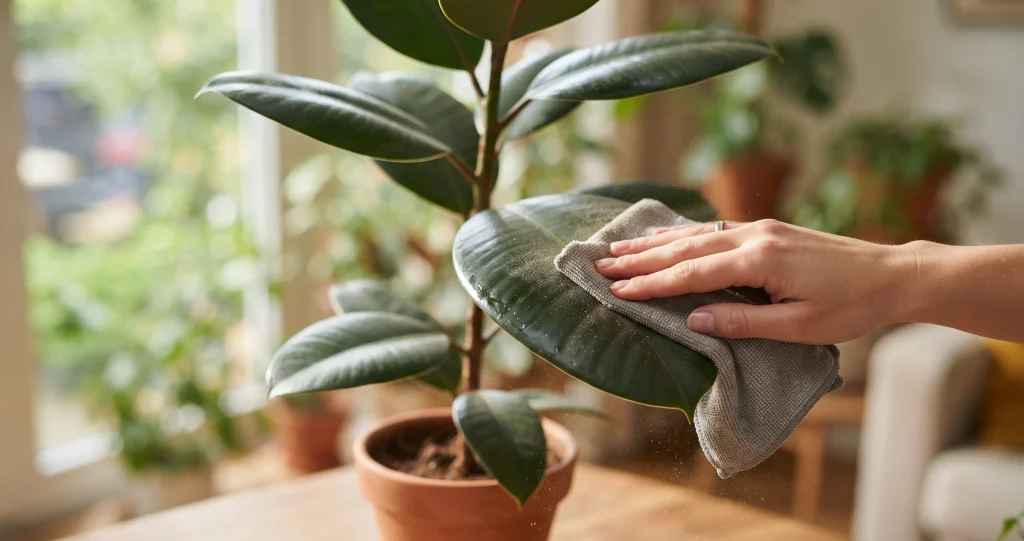
Step 3: Clean the Remaining Leaves
Support each leaf with one hand and gently wipe its surface with a soft, damp cloth.
Removing accumulated dust allows more light to reach the foliage and makes pest infestations easier to detect.
Step 4: Allow Time for Recovery
Avoid expecting immediate results.
The plant may continue shedding some previously stressed leaves after its environment improves.
Healthy new growth, firm stems, and a gradual reduction in leaf loss are encouraging signs of recovery.
Common Winter Care Mistakes
Some well-intentioned gardening habits can actually make rubber plant leaf drop worse.
Fertilizing a Stressed Plant
Fertilizer cannot compensate for insufficient light or damaged roots.
Most rubber plants require little or no additional fertilizer during periods of slow winter growth.
Resume regular feeding when active growth returns.
Moving the Plant Too Frequently
Constantly changing the plant’s location exposes it to additional environmental adjustments.
Choose a suitable location and allow the plant time to acclimate.
Repotting Without a Clear Reason
Routine repotting is generally better suited to late winter or spring.
Emergency repotting may be necessary when root rot or serious drainage problems develop.
Placing the Plant Beside a Heater
Although rubber plants appreciate warmth, direct exposure to heating vents and radiators can increase moisture loss.
Choose a location with consistent warmth and gentle air circulation.
In Your Own Yard: Preparing Rubber Plants for Winter
If your rubber plant spends the summer outdoors on a patio, porch, or shaded garden terrace, preparing it for the transition indoors is especially important.
Bring the plant inside before nighttime temperatures regularly approach 55°F (13°C).
Inspect the foliage and stems for insects, clean the leaves, and gradually introduce the plant to lower indoor light levels where possible.
In colder US regions, rubber plants should remain indoors throughout winter.
Use this simple seasonal care schedule as a guide.
| Season | Recommended care |
|---|---|
| Early fall | Inspect for pests and prepare an indoor location |
| Late fall | Bring the plant indoors and adjust watering |
| Winter | Maintain stable temperatures and monitor soil moisture |
| Early spring | Watch for new growth |
| Mid-spring | Resume regular feeding as growth increases |
| Summer | Provide filtered light and water as needed |
Remember that rubber plants produce a milky sap that can irritate skin. Wear gloves when pruning and keep the plant away from pets and children who might chew its leaves.
Frequently Asked Questions
1. Is rubber plant leaf drop normal in winter?
Occasional loss of an older lower leaf can be normal. However, frequent leaf loss usually indicates environmental stress, such as excessive watering, inadequate light, cold drafts, or pest problems.
2. Will rubber plant leaves grow back after falling off?
Healthy rubber plants can produce new leaves and shoots when growing conditions improve. However, new leaves generally do not replace fallen leaves in exactly the same positions. Spring pruning may encourage branching and a fuller appearance.
3. How often should I water my rubber plant in winter?
Many indoor rubber plants may need watering every two to four weeks during winter. The actual frequency depends on temperature, light, pot size, and soil composition. Always check soil moisture before watering.
Conclusion
A glossy green leaf suddenly falling from a rubber plant may seem mysterious, but it often reveals a change in the plant’s surroundings.
Preventing rubber plant leaf drop begins with understanding the relationship between sunlight, soil moisture, temperature, and root health.
By providing bright indirect light, reducing watering frequency when appropriate, maintaining stable temperatures, and protecting the plant from cold drafts, you can help your rubber plant thrive through the colder months.
Winter is a quieter growing season, and sometimes the best plant care involves making fewer interventions.
With patience and consistent conditions, those beautiful, glossy leaves can once again become the centerpiece of your indoor garden.
External Sources
1. The Rubber Tree
Insufficient light and excessive watering can produce similar symptoms in rubber plants, making winter leaf loss particularly difficult to diagnose. University of Arizona. Read the university publication (PDF).
2. Ficus Elastica
In their natural habitat, rubber plants can begin growing as epiphytes on other plants and develop aerial roots. North Carolina State University. Read the botanical profile
3. Rubber Plant Care
Rubber plants can tolerate relatively low light but may respond to insufficient illumination by shedding foliage. Clemson University. Read the university extension guide