
Table of Contents
- Why Your Lawn Suddenly Looks Torn Apart
- The Real Reason Skunks and Raccoons Dig
- Understanding Lawn Grubs
- H2: Skunks Digging Up Lawn Grubs – Why It Peaks in Late Summer
- How to Tell if Grubs Are Actually the Problem
- The Difference Between Skunk and Raccoon Damage
- Humane Ways to Reduce Grub Problems
- Why Simply Repairing the Lawn Doesn’t Solve the Issue
- Preventing Future Damage
- Practical Tips
- Common Mistakes
- Frequently Asked Questions
- Conclusion
Why Skunks and Raccoons Dig Up Lawns in Late Summer (It’s Not Random)
You wake up one August morning to find patches of your lawn peeled back like loose carpet or peppered with dozens of small holes. It’s tempting to blame mischievous wildlife, but in many cases, the animals aren’t the real problem. They’re simply following a food source hidden beneath your grass. Understanding skunks digging up lawn grubs is the key to solving the issue. Skunks and raccoons aren’t destroying healthy lawns for fun—they’re searching for protein-rich beetle larvae living just below the soil surface.
Late summer is when this behavior becomes most noticeable because many white grubs are actively feeding near the roots of turfgrass. Wildlife quickly learns where these nutritious larvae are concentrated and returns night after night if the food supply remains abundant.
Rather than focusing only on repairing damaged turf, successful long-term lawn care starts by determining whether grubs are present and managing them in ways that support a healthy lawn while minimizing unnecessary harm to wildlife.
Why Your Lawn Suddenly Looks Torn Apart
Damage often appears almost overnight.
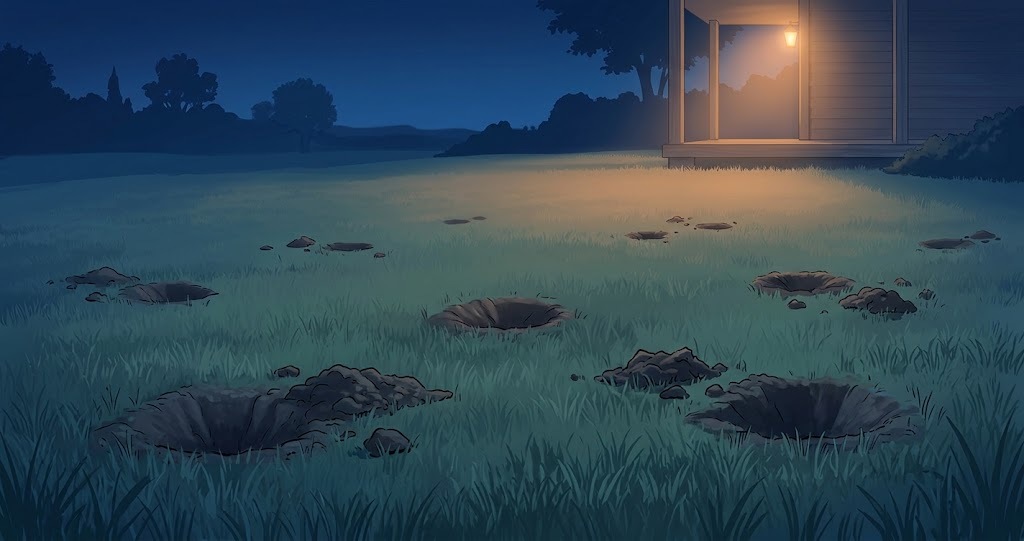
One evening the lawn looks perfectly healthy. By morning, sections of sod have been flipped over or dozens of shallow holes cover the yard.
This sudden change surprises homeowners because the animals responsible are mostly active after dark.
The digging itself is usually a symptom—not the underlying problem.
If skunks or raccoons repeatedly visit your yard, they’re almost always finding something worth eating beneath the surface.
The Real Reason Skunks and Raccoons Dig
Both skunks and raccoons are opportunistic omnivores.
Their diets vary throughout the year and may include:
- Insects
- Beetle larvae
- Earthworms
- Fruits
- Seeds
- Small animals
- Eggs
- Human food when available
During late summer, many lawns contain abundant white grubs, which become an attractive, energy-rich food source.
Because these larvae live only a few inches below the soil surface, they’re relatively easy for skilled foragers to locate.
Wildlife isn’t targeting your grass.
It’s targeting what’s beneath it.
Understanding Lawn Grubs
“White grubs” is a general term for the larval stage of several scarab beetles.
Common examples include:
- Japanese beetles
- Masked chafers
- June beetles
- European chafers (in some regions)
Adult beetles lay eggs in turf during summer.
After hatching, the larvae begin feeding on grass roots.
Small grub populations are common and often cause little or no noticeable damage.
Problems develop when grub numbers become high enough to weaken the lawn while simultaneously attracting wildlife predators.
University turfgrass specialists emphasize that treatment decisions should be based on confirmed grub populations rather than assumptions.
Michigan State University Extension provides excellent science-based guidance on grub identification and management:
https://www.canr.msu.edu/
H2: Skunks Digging Up Lawn Grubs – Why It Peaks in Late Summer
Late summer creates ideal conditions for this familiar lawn problem.
Young Grubs Are Feeding Actively
Freshly hatched grubs spend much of late summer feeding near the root zone.
Because they remain relatively close to the soil surface, skunks and raccoons can locate them more easily.
Wildlife Is Building Energy Reserves
Late summer and early fall are important feeding periods for many mammals.
Animals naturally increase foraging activity before colder weather arrives.
Protein-rich grubs become especially valuable during this time.
Dry Soil Makes Damage More Visible
In many areas, lawns experience heat stress during late summer.
When weakened turf is disturbed by wildlife, the resulting damage often appears more dramatic than it would in vigorous, actively growing grass.
How to Tell if Grubs Are Actually the Problem
Before treating your lawn, confirm that grubs are present.
Digging by wildlife alone doesn’t automatically mean you have a serious infestation.
Inspect the Root Zone
Choose several damaged locations and carefully lift a small section of turf.
Healthy grass should remain firmly attached to the soil.
If the sod lifts easily, inspect the top few inches of soil.
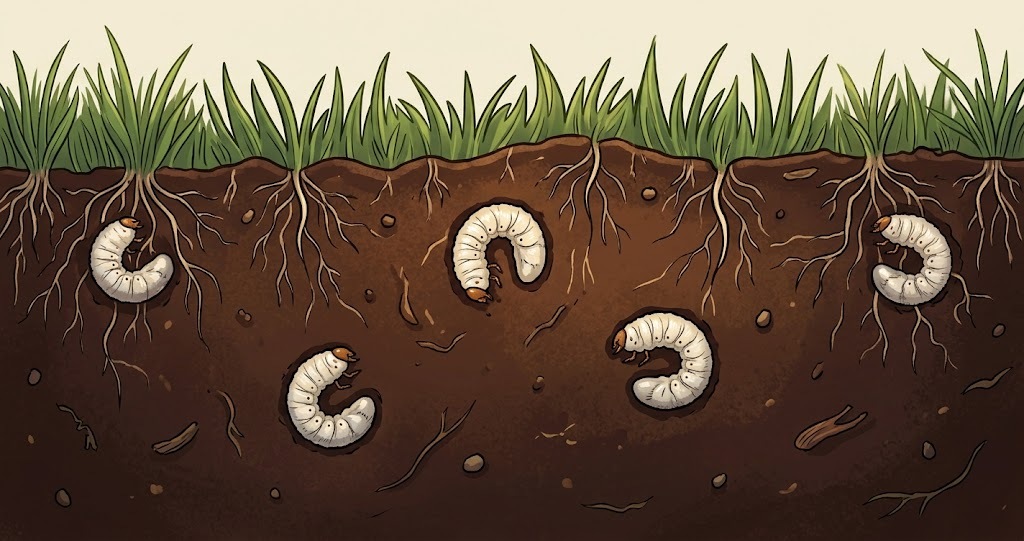
White grubs are typically:
- Cream-colored
- C-shaped
- Brown-headed
- Found just below the roots
Count What You Find
Extension recommendations vary somewhat depending on grass species, region, irrigation practices, and turf health.
Rather than treating every lawn with a few grubs, many Cooperative Extension programs recommend considering treatment only when grub numbers exceed locally recommended thresholds and damage is occurring.
This approach helps avoid unnecessary pesticide applications.
The Difference Between Skunk and Raccoon Damage
Although both species hunt grubs, their digging patterns often differ.
Skunk Damage
Skunks typically create:
- Small cone-shaped holes.
- Narrow divots.
- Scattered shallow digging.
Because they use their powerful front claws with remarkable precision, damage often appears relatively neat.
Raccoon Damage
Raccoons are stronger and more destructive diggers.
They may:
- Roll back large sections of sod.
- Tear loose turf.
- Flip entire patches of grass.
- Create extensive overnight damage.
If the lawn appears peeled back like a rug, raccoons are often responsible.
Humane Ways to Reduce Grub Problems
The most effective long-term solution focuses on reducing grub populations rather than trying to exclude hungry wildlife.
Maintain Healthy Turf
Healthy grass tolerates moderate grub feeding much better than stressed lawns.
Proper mowing, irrigation, and fertilization improve resilience.
Monitor Before Treating
Avoid preventive treatments without confirming grub activity.
Many lawns naturally contain low grub populations that never require intervention.
Encourage Natural Predators
Birds, ground beetles, parasitic wasps, and certain mammals all contribute to natural grub control.
A diverse landscape often supports more balanced insect populations.
Consider Biological Controls
Where appropriate and recommended by local Extension guidance, biological controls such as beneficial nematodes or microbial products targeting certain grub species may help reduce populations while minimizing impacts on non-target organisms.
Because effectiveness depends on grub species, timing, soil moisture, and temperature, follow product directions and local recommendations carefully.
Improve Lawn Health
Proper irrigation, aeration, overseeding, and soil care help lawns recover more quickly from both grub feeding and wildlife disturbance.
Why Simply Repairing the Lawn Doesn’t Solve the Issue
Many homeowners immediately replace damaged sod or reseed torn areas.
While repairing turf is important, it doesn’t remove the underlying food source.
If abundant grubs remain beneath the soil, wildlife often returns repeatedly.
Long-term success requires addressing both:
- Lawn recovery.
- Grub management.
If you’re planning lawn repairs this fall, our guide explains the best timing:
https://secretsofthegreengarden.com/overseed-lawn-fall-timing/
Preventing Future Damage
Complete prevention isn’t always possible because wildlife naturally explores many landscapes.
However, reducing attractive food sources greatly lowers the likelihood of repeated digging.
Helpful practices include:
- Monitoring grub populations annually.
- Maintaining dense turf.
- Avoiding excessive irrigation that favors some beetle species.
- Repairing stressed lawn areas promptly.
- Following local Extension recommendations before considering treatment.
Remember that occasional wildlife visits are a normal part of healthy suburban ecosystems.
The goal isn’t eliminating wildlife—it’s reducing the conditions that encourage repeated foraging.
Practical Tips
- Inspect damaged areas before treating the lawn.
- Lift a small section of turf to check for grubs.
- Maintain strong, healthy grass through proper mowing and watering.
- Overseed thin areas during the appropriate fall window.
- Consider biological grub controls only when justified by confirmed infestations.
- Avoid leaving pet food outdoors, which may attract additional wildlife.
Common Mistakes
Assuming Wildlife Is the Entire Problem
The digging usually indicates a food source already exists beneath the lawn.
Treating Without Confirming Grubs
Not every damaged lawn contains a significant grub infestation.
Applying Broad-Spectrum Insecticides Automatically
Unnecessary pesticide use can affect beneficial insects and may not solve the problem if applied at the wrong time or for the wrong pest.
Ignoring Lawn Health
Healthy turf tolerates moderate grub populations much better than stressed grass.
Repairing Grass Without Addressing Grubs
Newly repaired turf may simply be dug up again if the food source remains.
Frequently Asked Questions
Why are skunks digging only certain parts of my lawn?
Grub populations are rarely distributed evenly, so wildlife often focuses on the most productive feeding areas.
Will skunks return every night?
If abundant grubs remain available, they may continue visiting until the food source declines.
Are grubs always harmful?
No. Small grub populations are common and often cause little measurable damage to healthy lawns.
Should I trap or relocate skunks?
Wildlife agencies generally recommend addressing attractants first rather than focusing on removal. Regulations vary, so consult your local wildlife agency before taking action.
What’s the safest long-term solution?
Maintaining healthy turf and managing confirmed grub infestations according to local Cooperative Extension recommendations provides the most sustainable approach.
Conclusion
Finding your yard torn apart overnight can be frustrating, but skunks digging up lawn grubs is usually a sign of an underlying insect problem rather than random wildlife behavior. Both skunks and raccoons are simply taking advantage of an abundant, high-protein food source hidden beneath the grass.
Instead of concentrating solely on repairing damaged turf, inspect your lawn to confirm whether grubs are present and determine whether their numbers justify action. Healthy lawns, careful monitoring, and targeted, humane grub management are far more effective than simply patching the damage. By addressing the cause rather than the symptom, you can protect your lawn while continuing to coexist responsibly with the wildlife that shares your neighborhood.
Internal Link Suggestions
Anchor text: When to Overseed Your Lawn in Fall (By Region, Not the Calendar)
Link: https://secretsofthegreengarden.com/overseed-lawn-fall-timing/
Anchor text: Why Mulch Matters Most in Late-Summer Heat (And How to Apply It Correctly)
Link: https://secretsofthegreengarden.com/mulch-depth-late-summer-heat/
External Dofollow Authoritative Sources
Michigan State University Extension – White Grubs in Home Lawns
https://www.canr.msu.edu/
University of Minnesota Extension – White Grubs in Home Lawns
https://extension.umn.edu/
Penn State Extension – White Grubs and Lawn Management
https://extension.psu.edu/