
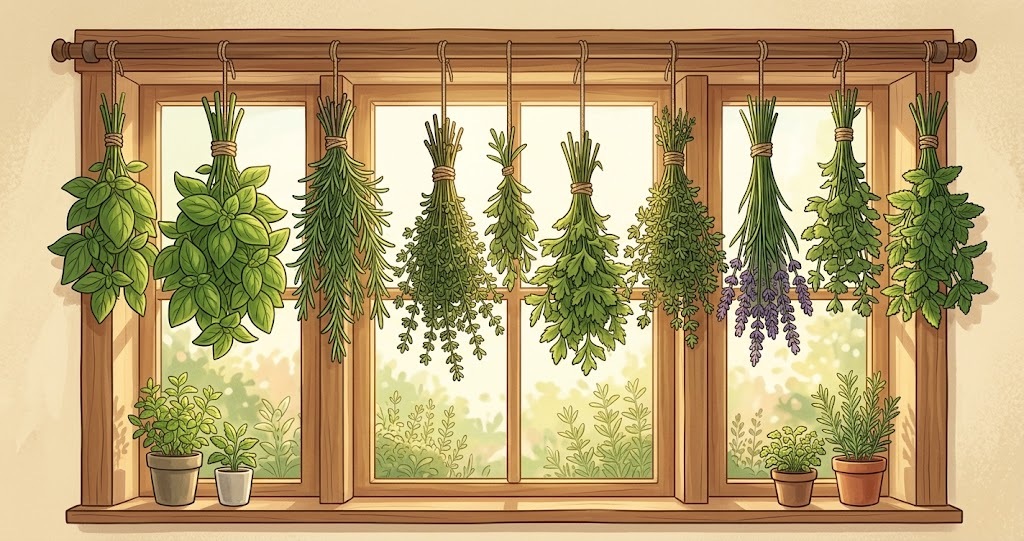
The first cold nights of fall can bring an herb garden to an abrupt end. Basil may turn dark after exposure to chilly temperatures, while tougher herbs such as parsley, sage, thyme, oregano, and mint can remain usable after light frosts. Knowing how to preserve garden herbs before frost lets you capture their flavor while the leaves are still in good condition instead of rushing outside after a freeze warning.
The best preservation method depends on the herb. Woody Mediterranean herbs usually dry beautifully, while tender, moisture-rich herbs often keep more of their fresh character when frozen. Oil can also work well, but only when handled with proper food-safety precautions.
This guide breaks down which herbs to harvest first, how to choose between drying and freezing, and how to plan your final harvest around your local first-frost date.
Table of Contents
- Why Herbs Respond Differently to Frost
- When to Harvest Herbs Before the First Frost
- How to Preserve Garden Herbs Before Frost
- Basil
- Parsley
- Cilantro
- Dill
- Chives
- Mint and Lemon Balm
- Rosemary
- Thyme
- Sage
- Oregano and Marjoram
- Tarragon
- Air-Drying vs. Freezing vs. Oil
- Regional First-Frost Timing
- Safe Herb Preservation in Oil
- Storing Preserved Herbs
- Frequently Asked Questions
- Final Thoughts
Why Herbs Respond Differently to Frost
Not every herb needs to be harvested on the same afternoon. Their tolerance for cold depends on the species, growth habit, plant age, and local conditions.
Basil is the herb to watch most closely. Illinois Extension describes basil as a tender annual and notes that cold temperatures can damage and blacken its foliage even around 50°F. That means waiting for an actual frost can already be too late for top-quality basil. (Illinois Extension)
Other herbs are surprisingly resilient. Illinois Extension notes that mint, parsley, sage, thyme, oregano, and even rosemary have enough cold tolerance to remain harvestable beyond early frosts in some conditions, although rosemary generally cannot survive a cold northern winter outdoors. (Illinois Extension)
Perennial herbs such as thyme, sage, oregano, mint, and chives may survive winter depending on species, cultivar, drainage, and USDA hardiness zone. Their ability to survive winter does not mean you should postpone preservation indefinitely, however. Leaf quality and flavor can decline as plants enter dormancy and repeated freezes arrive.
When to Harvest Herbs Before the First Frost
If your goal is preservation rather than simply keeping the plant alive, harvest while the foliage is healthy.
For drying, Penn State Extension recommends harvesting most herbs shortly before flowers first open. New leaves near growing tips tend to have concentrated flavor, and harvesting in mid-morning after dew has dried helps capture herbs when their aromatic oils are in good condition. (Penn State Extension)
Use clean scissors or pruners and avoid damaged, diseased, or heavily weathered foliage. Rinse herbs under cool water when needed, then remove surface moisture carefully before drying or freezing.
Don’t wait for a hard freeze just because an herb is technically cold tolerant. If a major freeze is forecast and the plant still has leaves you want for winter cooking, make your final harvest beforehand.
How to Preserve Garden Herbs Before Frost
There are three particularly useful options for home gardeners: drying, freezing, and freezing herbs with oil.
Drying removes moisture and creates a concentrated seasoning suitable for long storage. Freezing retains more of the character of certain tender herbs but changes their texture. Oil helps protect color and makes convenient portions for cooked dishes, but fresh herbs in oil require careful refrigeration or freezing because of botulism risk.
Choosing among them by herb type produces much better results than trying to preserve everything the same way.
Basil: Freeze It Before the Cold Arrives
Basil should usually be first on your fall preservation list. Don’t use the first-frost date as a deadline because basil can suffer cold injury before temperatures reach freezing.
Freezing generally preserves basil’s fresh character better than traditional air-drying. Penn State Extension specifically includes basil among herbs suitable for freezing and notes that herbs frozen in oil can retain color particularly well. (Penn State Extension)
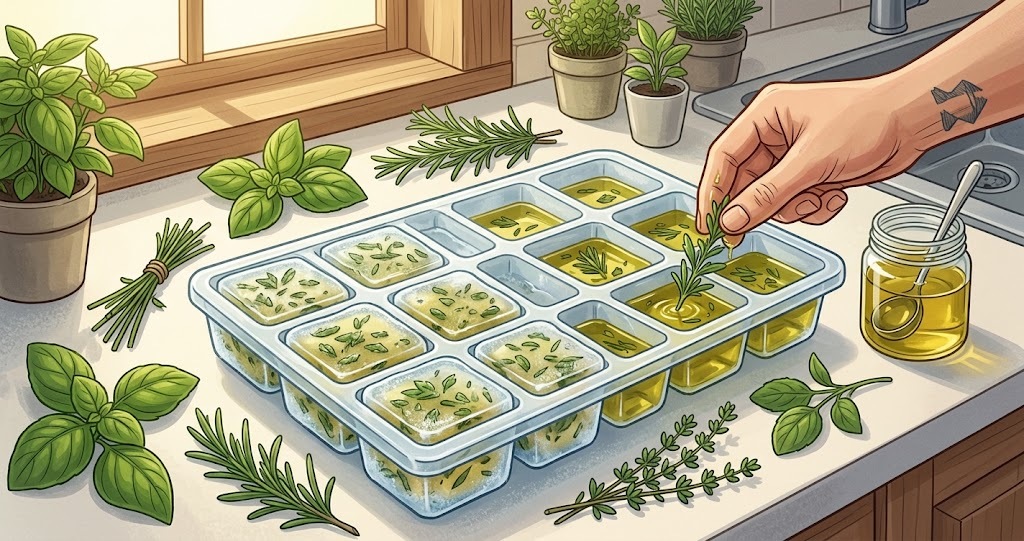
Strip healthy leaves from the stems, wash if necessary, and dry thoroughly. You can freeze individual leaves on a tray before transferring them to freezer containers, chop the leaves into water-filled ice cube trays, or combine chopped basil with oil and freeze it in small portions.
Frozen basil becomes limp after thawing, so save it for sauces, soups, pesto-style preparations, and cooked dishes rather than garnishes.
Best methods: Freezing or freezing in oil
Harvest urgency: Very high
Parsley: Freeze for Fresh Flavor or Dry for Convenience
Parsley is considerably tougher than basil. Illinois Extension describes it as a hardy biennial, although gardeners commonly grow it as an annual. (Illinois Extension)
That gives you a little more time, but freezing is an excellent option when you have a large fall harvest. Penn State lists parsley among herbs that freeze well. (Penn State Extension)
Chop clean, dry parsley and freeze it in small portions, either alone or in water-filled cubes. Dried parsley is convenient, but freezing usually retains more of the fresh herb character.
Best method: Freezing
Alternative: Drying
Harvest urgency: Moderate
Cilantro: Preserve the Leaves by Freezing
Cilantro can tolerate cooler growing conditions better than basil, but its distinctive fresh flavor changes substantially when dried.
For winter soups, beans, curries, and cooked sauces, freeze chopped cilantro in small portions. Water-filled cubes are convenient because they can go directly from the freezer into a hot dish.
If plants have already bolted, consider allowing some seeds to mature instead. Cilantro seed is coriander, giving you another useful harvest from plants that are no longer producing ideal leaves.
Best method: Freezing
Harvest urgency: Moderate
Dill: Freeze the Leaves, Dry the Seeds
Dill gives gardeners two different preservation opportunities.
Tender dill foliage can be frozen on the stem or chopped and frozen in small portions. Penn State specifically recommends freezing dill and notes that dill stems can also be wrapped and frozen. (Penn State Extension)
Mature dill seeds are better dried. Allow seed heads to mature, cut them, and finish drying them somewhere protected with good airflow.
Best method for leaves: Freezing
Best method for seeds: Drying
Chives: Chop and Freeze
Chives can be difficult to air-dry without losing much of the quality that makes them useful. Freezing is simple and effective.
Wash the leaves, dry them thoroughly, chop them into the sizes you normally use, and freeze them in a thin layer or small containers. Penn State recommends chopping chives before freezing because their narrow leaves freeze quickly. (Penn State Extension)
Frozen chives work especially well in soups, potato dishes, sauces, eggs, and casseroles.
Best method: Freezing
Mint and Lemon Balm: Freeze or Dry Carefully
Mint and lemon balm contain more moisture than woody herbs. Penn State Extension warns that tender-leaf herbs such as lemon balm and mint can mold if they aren’t dried quickly. (Penn State Extension)
Freezing leaves in water-filled cubes is an easy option for tea, beverages, sauces, and cooked recipes. Mint can also be dried successfully if you use small bundles, plenty of airflow, and low humidity.
For drying, make sure the leaves become fully crisp before storage.
Best methods: Freezing or careful drying
Rosemary: One of the Best Herbs for Drying
Rosemary’s firm leaves and concentrated oils make it a natural candidate for drying.
Harvest healthy stems, tie them into small bundles, and place them in a warm, dry location with good airflow. Once the leaves are completely dry, strip them from the stems and place them in airtight containers.
Rosemary can also be frozen on the stem. Penn State includes both rosemary and thyme among herbs that can be frozen this way. (Penn State Extension)
In colder climates, consider potting up rosemary before freezing weather and trying to overwinter it in a bright indoor location.
Best method: Drying
Alternative: Freezing
Thyme: Air-Drying Is Hard to Beat
Thyme is another herb that naturally suits drying. Its small, relatively low-moisture leaves dry quickly and retain strong flavor.
Penn State Extension identifies thyme among the less-tender herbs that are easiest to air-dry. Small bundles can be hung where there is good air movement and low humidity. (Penn State Extension)
Once fully crisp, remove the leaves and store them whole when possible. Crushing herbs only when you use them helps retain aromatic oils longer.
Best method: Air-drying
Sage: Excellent for Drying
Sage is a perennial herb with thick, strongly aromatic leaves. Although the leaves are larger than thyme leaves, sage preserves extremely well when properly dried.
Hang small bundles or spread individual leaves in a single layer with good airflow. The finished leaves should be crisp rather than leathery before being sealed in a container.
Sage’s concentrated flavor means a modest fall harvest can supply plenty for winter stuffing, poultry, squash, beans, and savory dishes.
Best method: Drying
Oregano and Marjoram: Dry for Concentrated Flavor
Oregano is one of the most rewarding herbs to dry because its characteristic flavor remains powerful after dehydration.
Harvest healthy stems, make small bundles, and dry them indoors away from direct sunlight. When the leaves crumble easily, remove them from the stems and store them in airtight containers.
Marjoram can be handled similarly, although its more delicate flavor means gentle, low-temperature drying is particularly useful.
Best method: Drying
Tarragon: Freezing Often Wins
Tarragon has delicate aromatic notes that can change during drying, making freezing an appealing option.
Penn State includes tarragon among herbs suitable for freezing. (Penn State Extension) Chop the leaves and freeze them in small portions for sauces, chicken dishes, vegetables, and other recipes.
You can also experiment with drying a smaller batch and compare which version you prefer.
Best method: Freezing
Air-Drying vs. Freezing vs. Oil
When you preserve garden herbs before frost, think about how you actually cook.
Air-drying works especially well for rosemary, thyme, sage, oregano, and similar sturdy herbs. Penn State notes that drying requires a combination of heat, low humidity, and air movement, and herbs must be completely dry before storage to prevent mold. (Penn State Extension)
Freezing is often better for basil, parsley, dill, chives, lemon balm, mint, and tarragon. The tradeoff is texture: ice crystals damage plant cells, so thawed herbs become soft rather than remaining garnish-quality. (Penn State Extension)
Oil works best when treated as a freezer-preservation method rather than a pantry-storage shortcut. Basil is particularly well suited to being chopped or blended with oil and frozen.
For research-based instructions, see Penn State Cooperative Extension’s Freezing Herbs guide.
Regional First-Frost Timing
There is no single national date for harvesting herbs. First-frost timing varies dramatically across the United States and can also vary within the same state because of elevation, proximity to water, and local microclimates.
Northern and high-elevation gardeners generally need to prepare earlier in fall. Gardeners in the Mid-Atlantic and much of the central United States often have a longer autumn window, while gardeners in the Deep South, Gulf Coast, and other mild regions may experience frost much later or only occasionally.
Rather than relying on a generic calendar, check the average first-frost date for your ZIP code or consult your local Cooperative Extension office. Then watch the actual forecast as that period approaches.
Remember that an “average” frost date is not a guarantee. Weather can deliver an unusually early cold snap, which is why cold-sensitive basil deserves attention before your statistical frost date arrives.
The same local timing principle applies to fall vegetables. Our guide to Fall Vegetable Planting: What You Can Still Plant by Region explains how regional growing conditions affect what can still be planted as autumn advances.
Safe Herb Preservation in Oil
Herbs and oil require special attention because fresh plant material introduces moisture into a low-oxygen environment.
Oregon State University Extension advises that fresh herb-and-oil mixtures should be refrigerated and used within four days or frozen for longer storage. It also recommends freezing crushed herbs and oil in ice cube trays for convenient portions. (OSU Extension Service)
Do not simply cover fresh herbs with olive oil and leave the jar in the pantry. Improperly stored herb-infused oils can create conditions favorable to Clostridium botulinum, the bacterium responsible for botulism.
For an end-of-season harvest, freezing is the straightforward solution. Combine herbs and oil, portion the mixture into freezer-safe containers or trays, freeze promptly, and transfer frozen portions to labeled freezer containers.
If you want a shelf-stable infused oil, use only a research-tested acidification procedure from a reliable food-preservation authority rather than improvising a recipe.
Storing Preserved Herbs
Dried herbs should be completely crisp before going into storage. Place them in airtight containers and keep them somewhere cool, dry, and dark.
Penn State Extension notes that most properly dried herbs maintain good quality for about a year and recommends storing leaves whole when possible because whole herbs retain their aromatic oils longer. (Penn State Extension)
Label every container with the herb and preservation date. Doing this may feel unnecessary when you recognize everything in October, but dried oregano, marjoram, thyme, and other herbs can become surprisingly difficult to distinguish several months later.
Frozen herbs should also be labeled and packaged to minimize air exposure and odor transfer. Add them directly to cooked dishes rather than thawing them first.
Frequently Asked Questions
Should I harvest every herb before the first frost?
No. Basil and other tender herbs deserve priority, while cold-tolerant herbs may remain usable after light frost. However, harvest anything you want to preserve before repeated freezing damages leaf quality.
Which herbs are best for air-drying?
Rosemary, thyme, sage, oregano, and other relatively sturdy, lower-moisture herbs are excellent choices. Tender herbs require faster drying and more careful airflow because their higher moisture content increases mold risk.
Which herbs are better frozen?
Basil, parsley, dill, chives, mint, lemon balm, and tarragon are good candidates. Freezing changes texture, so use them primarily in cooked dishes.
Can I freeze herbs in olive oil?
Yes. Chopped herbs can be combined with oil and frozen in small portions. Penn State Extension specifically recommends freezing herb-and-oil mixtures rather than storing them at room temperature. (Penn State Extension)
Can I leave fresh herbs submerged in oil on the counter?
No. Fresh herb-and-oil mixtures should not be treated as shelf-stable unless you are following a specifically tested acidification process. Refrigerate them for only the recommended short period or freeze them for longer storage. (OSU Extension Service)
Should herbs be washed before preserving?
Discard damaged or dirty foliage and rinse herbs in cool water when necessary. Remove as much surface moisture as possible before drying or freezing, especially when air-drying.
How do I know when dried herbs are ready for storage?
They should be thoroughly dry and crisp. Leaves should crumble readily, and stems should break rather than bend. Sealing herbs while residual moisture remains can encourage mold. (Penn State Extension)
Final Thoughts
The key to preserve garden herbs before frost successfully is not harvesting every plant at once. Start with the most cold-sensitive herbs and match each harvest to the preservation method that protects its flavor best.
Freeze basil, parsley, dill, chives, mint, lemon balm, and tarragon when you want more of their fresh character. Air-dry rosemary, thyme, sage, oregano, and other sturdy herbs for concentrated seasonings that are easy to store.
Most importantly, use your local frost information rather than a nationwide date. Check your Cooperative Extension service and local forecast as fall approaches, harvest tender herbs before cold injury occurs, and preserve healthy foliage while its flavor is still at its best.
Internal Link Suggestions:
Fall Vegetable Planting by Region
How to Save Tomato Seeds the Right Way
External Dofollow Authoritative Sources:
Penn State Extension — Freezing Herbs
https://extension.psu.edu/freezing-herbs
Oregon State University Extension — Drying Herbs
https://extension.oregonstate.edu/food/preservation/drying-herbs
Oregon State University Extension — Herbs and Vegetables in Oil
https://extension.oregonstate.edu/catalog/pub/sp-50-701-herbs-vegetables-oil