
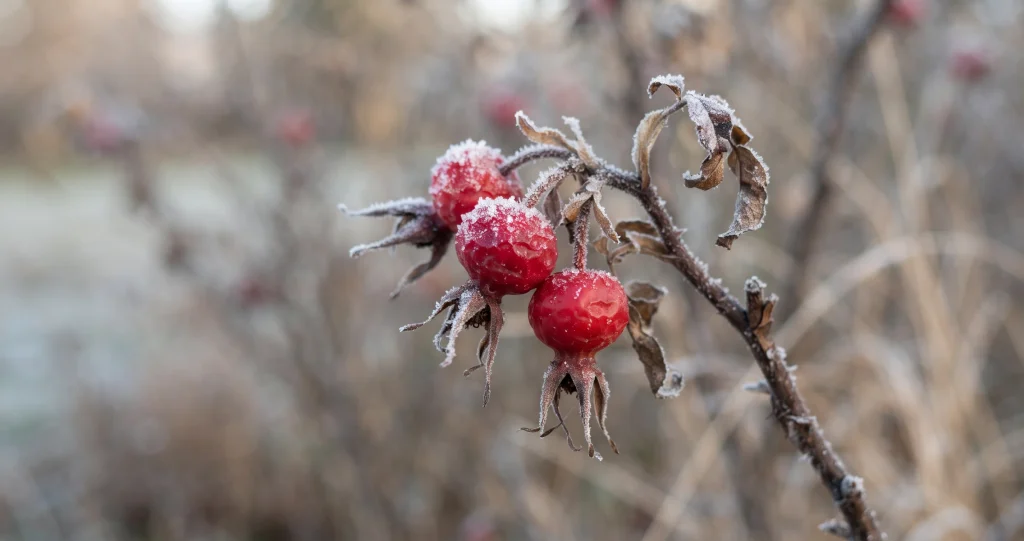
When the last rose petals fall in late summer or autumn, something remarkable begins to develop in their place. Small green fruits gradually turn shades of orange, red, or deep purple, adding natural color to the garden as colder weather approaches.
These fruits, known as rose hips, are an important part of the rose plant’s reproductive cycle. They contain seeds, provide seasonal food for wildlife, and have traditionally been used in teas, preserves, and other culinary preparations.
Although many gardeners regularly remove faded rose flowers to encourage additional blooms, allowing some flowers to develop into fruit offers several ecological and ornamental benefits.
Understanding how these fruits form, which roses produce them, and how to care for fruit-bearing rose bushes can help you create a garden that remains attractive and wildlife-friendly throughout winter.
Table of Contents
- What Are Rose Hips?
- How Rose Hips Form After Pollination
- Which Roses Produce the Best Hips?
- Why Deadheading Prevents Fruit Formation
- Why Birds and Other Wildlife Eat Rose Hips
- Culinary Uses and Important Safety Precautions
- How to Plant and Grow Roses for Hips
- Pruning and Winter Maintenance
- Common Mistakes to Avoid
- Frequently Asked Questions
What Are Rose Hips?
A rose hip is the fruit-like structure that develops after a rose flower has been successfully pollinated and fertilized. It forms from the enlarged floral cup, known botanically as the hypanthium, which surrounds the developing seeds.
Inside this fleshy structure are several small, dry fruits called achenes, each typically containing a seed. Fine, irritating hairs are also present inside many hips.
Depending on the rose species or cultivar, mature fruits can be round, oval, elongated, or slightly flattened.
Their colors range from bright orange and scarlet to burgundy and nearly black. Some remain firm well into winter, while others soften, shrivel, or fall earlier in the season.
When Do Rose Hips Appear?
Fruit development generally begins after flowering in spring or summer. The hips gradually enlarge and ripen during late summer and autumn, although timing varies with climate and rose variety.
In many gardens, the fruits become particularly noticeable after the surrounding foliage begins to fall.
Their bright colors provide seasonal interest at a time when relatively few ornamental plants are flowering.
How Rose Hips Form After Pollination
The development of a rose hip begins with a flower. While gardeners often appreciate roses primarily for their fragrance and appearance, their flowers also perform an essential reproductive function.
Step 1: Pollinators Visit the Flower
Bees and other flower-visiting insects transfer pollen between the reproductive structures of roses.
Single and semi-double flowers often provide easier access to pollen than densely packed double flowers. Some roses can also produce fruit through self-pollination.
Step 2: Fertilization Takes Place
Following successful pollination, compatible pollen can fertilize the ovules inside the flower.
These fertilized structures begin developing into seeds while the surrounding floral tissues gradually enlarge.
Step 3: The Petals Fall
As flowering ends, the petals naturally drop or dry out.
The base of the flower remains attached to the stem and begins swelling into a developing hip.
Step 4: The Fruit Ripens
Over the following weeks or months, the fruit increases in size and gradually changes color.
Once mature, it may remain attached to the plant through autumn and part of winter, depending on weather conditions and wildlife activity.
Which Roses Produce the Best Hips?
Not every rose produces abundant or attractive fruit. Some modern ornamental cultivars have been selected primarily for flower size, color, fragrance, or repeat blooming rather than fruit production.
Species roses and many traditional shrub roses are particularly valuable for gardeners interested in autumn fruits.
Rugosa Rose (Rosa rugosa)
Rugosa roses are well known for their large, rounded fruits, which often resemble miniature tomatoes.
Their flowers are commonly pink or white, and their thick foliage has a distinctive wrinkled appearance.
However, Rosa rugosa is invasive in some regions, particularly coastal habitats. Check local invasive plant guidance before planting it, and consider suitable native alternatives.
Dog Rose (Rosa canina)
The dog rose produces elongated red or orange fruits that have traditionally been collected for culinary preparations.
Native to parts of Europe, western Asia, and northern Africa, it has also become established outside its native range.
Gardeners in North America should consider locally native roses where possible.
Virginia Rose (Rosa virginiana)
This eastern North American native rose produces pink flowers followed by attractive reddish fruits.
It can provide seasonal interest and wildlife resources in gardens within its appropriate growing range.
Carolina Rose (Rosa carolina)
The Carolina rose is another North American native species that produces pink flowers and small red fruits.
It is a useful option for suitable native plant gardens, sunny borders, and naturalized landscapes.
Traditional Shrub Roses
Many old-fashioned shrub roses produce attractive hips when their faded flowers are left in place.
Fruit production varies considerably between cultivars, so check the plant description before purchasing.
| Rose species | Typical hip appearance | Garden consideration |
|---|---|---|
| Rugosa rose | Large, rounded, orange-red | Invasive in some regions |
| Dog rose | Oval or elongated, red | Non-native in North America |
| Virginia rose | Rounded, reddish | Native to eastern North America |
| Carolina rose | Small, red | Suitable for native gardens |
| Shrub roses | Variable size and color | Depends on cultivar |
Why Deadheading Prevents Fruit Formation
Deadheading is the practice of removing faded flowers before they develop mature fruits and seeds.
For repeat-flowering roses, this technique can encourage additional blooms during the growing season. However, it also removes the floral structures needed for hip development.
Every faded flower removed before fruit formation represents a potential hip that will never mature.
When Should You Stop Deadheading Roses?
If your goal is to produce attractive autumn fruits, consider stopping deadheading around midsummer or toward the end of summer, depending on the variety and local climate.
Once-flowering roses can generally be left alone after their main flowering period if fruit production is desired.
Balancing Flowers and Fruit
You do not necessarily need to choose between beautiful flowers and attractive autumn fruits.
Deadhead repeat-flowering roses during the earlier part of the growing season, then allow later flowers to remain on the plant.
This approach provides opportunities for summer flowering, autumn color, and winter wildlife feeding.
Why Birds and Other Wildlife Eat Rose Hips
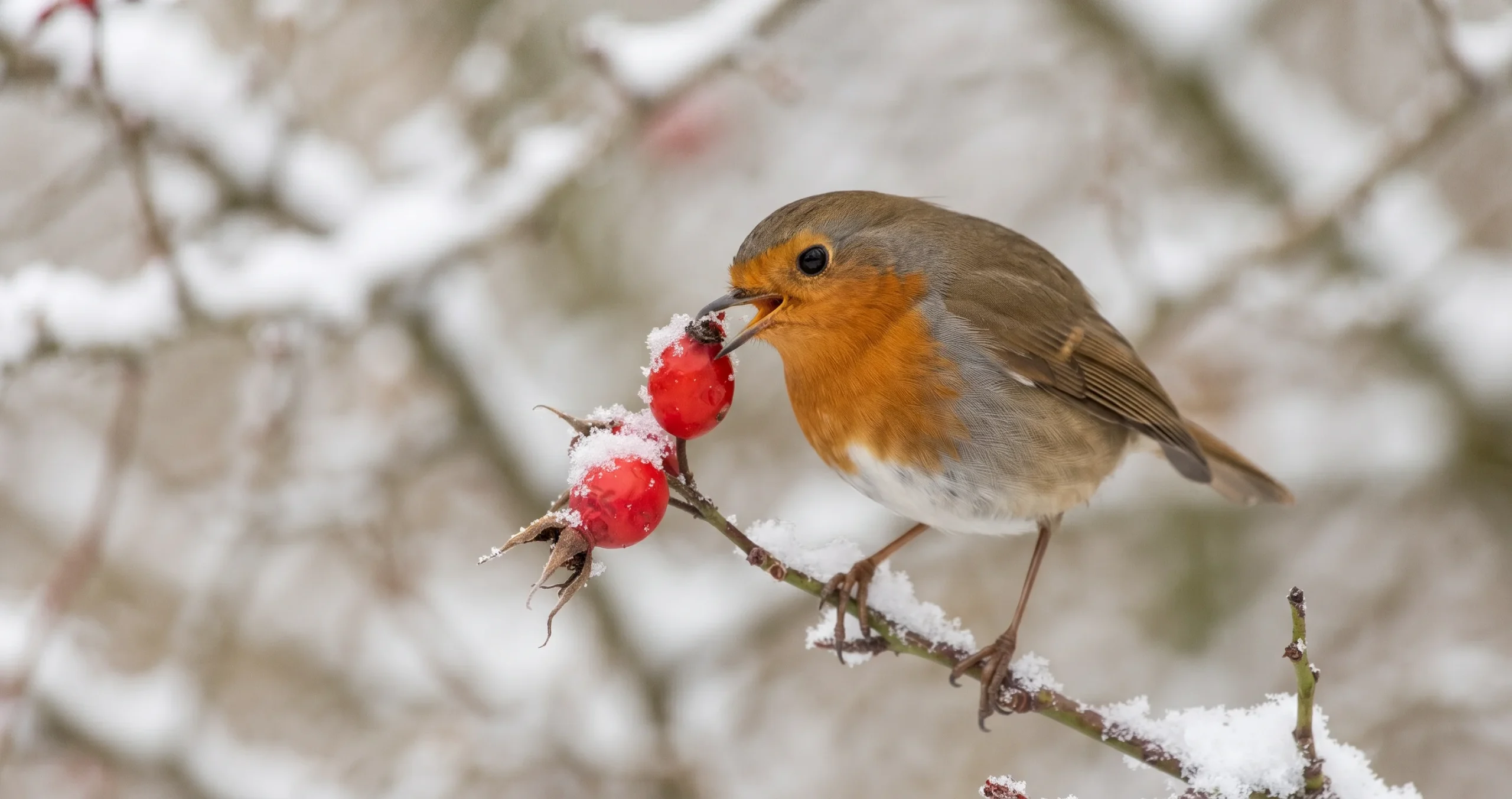
As temperatures decrease and insects become less abundant, many birds rely increasingly on naturally available fruits and seeds.
Rose hips provide an additional seasonal food source, particularly when they remain attached to branches during winter.
Their value depends on the rose species, fruit size, ripeness, and the wildlife present in the area.
Which Birds Eat Rose Hips?
Fruit-eating birds that may visit rose bushes include:
- American robins.
- Cedar waxwings.
- Northern mockingbirds.
- Various thrush species.
- European blackbirds.
- Fieldfares and redwings in their native ranges.
Some birds swallow smaller fruits whole, while others peck at the fleshy exterior of larger hips.
Small mammals, including squirrels and certain rodents, may also consume the fruits or their seeds.
How Birds Help Roses Spread
When animals swallow mature fruits, some seeds may pass through their digestive systems and be deposited elsewhere.
This natural seed dispersal mechanism allows roses to colonize suitable locations away from their parent plants.
However, the same process can contribute to the spread of invasive rose species, making responsible plant selection particularly important.
Creating a Wildlife-Friendly Winter Garden
Instead of harvesting every fruit, leave a generous portion on the rose bush for wildlife.
Combine native roses with other locally appropriate fruit-bearing shrubs, evergreen shelter, and seed-producing perennials.
A diverse garden offers birds more feeding opportunities throughout the changing seasons.
Culinary Uses and Important Safety Precautions
Rose hips have a naturally tart flavor that can complement sweet and savory preparations. They contain vitamin C and other naturally occurring plant compounds, although their nutritional composition varies according to species, ripeness, processing, and storage.
Traditional culinary uses include herbal teas, syrups, jams, jellies, fruit sauces, and soups.
Harvest Only From Suitable Plants
Collect fruits only from correctly identified rose plants with a known, safe growing history.
Avoid ornamental roses treated with pesticides unsuitable for edible crops. Washing alone cannot reliably remove systemic pesticides absorbed into plant tissues.
Do not collect fruits from polluted roadsides, chemically treated public landscapes, or unfamiliar plants.
How to Prepare Rose Hips Safely
Proper preparation is important because the fine hairs surrounding the seeds can irritate the mouth, throat, and digestive tract.
- Select ripe, undamaged fruits.
- Wash them thoroughly under running water.
- Remove the stems and dried flower remnants.
- Cut larger fruits in half lengthwise.
- Carefully scrape out the seeds and irritating hairs.
- Rinse the remaining flesh before processing.
When making teas, syrups, or cooked preparations, use a sufficiently fine filter to remove any remaining hairs.
Making Rose Hip Tea
Prepared and thoroughly cleaned hips can be steeped in hot water to produce a pleasantly tart herbal infusion.
Dried hips can also be used, provided they have been properly prepared and stored.
Avoid making medicinal claims about homemade rose hip tea. It is a traditional beverage, not a substitute for medical treatment.
For homemade preserves intended for room-temperature storage, follow a tested food-preservation recipe rather than relying on an improvised canning method.
How to Plant and Grow Roses for Hips
Producing attractive fruits begins with selecting a suitable rose and providing favorable growing conditions.
Choose a Sunny Location
Most roses perform best with at least six hours of direct sunlight each day.
A sunny location supports flowering, while adequate spacing allows air to circulate around the foliage.
Prepare Well-Drained Soil
Roses generally prefer fertile soil that retains some moisture without remaining waterlogged.
Incorporating mature compost can improve suitable garden soil, particularly where organic matter is limited.
Avoid planting roses in locations where water regularly collects around their roots.
Water and Fertilize Appropriately
Water newly planted roses regularly while their roots become established.
Apply fertilizer according to soil conditions and the requirements of the selected rose. Excessive nitrogen can encourage leafy growth at the expense of flowering.
Encourage Natural Pollination
Choose varieties with accessible flowers and avoid unnecessary insecticide applications, particularly during flowering.
Planting a variety of nectar- and pollen-producing species nearby can help support visiting pollinators.
Successful pollination improves the opportunity for fruit formation, although fertility and growing conditions also influence the final result.
Pruning and Winter Maintenance
Pruning requirements differ considerably among rose groups.
Many repeat-flowering roses benefit from pruning in late winter or early spring, while certain once-flowering shrub and climbing roses bloom on older growth and require different timing.
If autumn fruit production is your priority, avoid unnecessarily removing healthy branches carrying developing hips.
Leave mature fruits in place through winter where practical, then remove remaining damaged or unwanted growth during the appropriate pruning period.
Common Mistakes to Avoid
Several gardening practices can unintentionally reduce fruit production or diminish its benefits.
| Common mistake | Better approach |
|---|---|
| Deadheading throughout autumn | Leave selected faded flowers intact |
| Choosing roses solely for flower size | Select reliable fruit-producing varieties |
| Planting invasive roses | Choose locally appropriate native species |
| Harvesting every fruit | Leave some for wildlife |
| Using treated ornamental fruits in food | Harvest from known, food-safe plants |
| Leaving irritating hairs in preparations | Remove seeds and filter thoroughly |
Frequently Asked Questions
Are all rose hips edible?
Rose hips from correctly identified true roses are generally edible when properly prepared. However, fruits from chemically treated ornamental plants should be avoided, and the irritating internal hairs must be removed.
Why does my rose bush not produce hips?
Continuous deadheading, insufficient pollination, unfavorable growing conditions, or low fertility in certain hybrid varieties can prevent fruit development. Some cultivars naturally produce very few hips.
Should I leave rose hips on the bush during winter?
Yes, especially if you want to support wildlife and maintain seasonal garden color. Healthy fruits can remain attached until birds consume them or they naturally deteriorate.
Can rose hips survive frost?
Many mature hips tolerate light frost and remain visible during winter. Repeated freezing and thawing can eventually affect their texture and appearance.
Can you grow roses from hip seeds?
Yes, provided the seeds are viable. Many rose seeds require a period of cold, moist conditions before germination, and seedlings from hybrid roses may differ considerably from their parent plants.
Do rose hips attract birds to every garden?
Not necessarily. Bird visits depend on geographic location, available food, surrounding habitat, and the characteristics of the rose fruits.
What other shrubs provide winter food for birds?
Native dogwoods, winterberry holly, chokeberries, and other regionally suitable shrubs can complement fruit-bearing roses.
Conclusion
Rose hips are much more than decorative fruits left behind after flowering. They represent the final stages of the rose’s reproductive cycle, provide seasonal food for wildlife, and offer interesting culinary possibilities when prepared safely.
By selecting suitable varieties, encouraging pollination, and reducing late-season deadheading, gardeners can enjoy attractive rose bushes long after their flowers have faded.
Native species are particularly worth considering because they can support local biodiversity without introducing potentially invasive plants.
Whether you grow roses for their flowers, colorful fruits, or wildlife value, allowing some hips to develop is a simple way to extend the seasonal interest of your garden.
Sometimes, one of the most beneficial gardening decisions is simply leaving nature to complete its own cycle.
External Sources
1. How to Grow Roses
Professional horticultural guidance covering rose cultivation, deadheading, pruning, fruit development, and the importance of hips for winter birds. Royal Horticultural Society. https://www.rhs.org.uk/plants/roses/growing-guide/
2. How to Select and Use Roses in the Garden
University-based information covering ornamental rose varieties, fruit production, wildlife benefits, culinary applications, and pesticide precautions. Iowa State University Extension. https://yardandgarden.extension.iastate.edu/how-to/how-select-and-use-roses-garden
3. Rose Hips: Behold the Fruit of the Rose Plant
Botanical garden resource explaining fruit coloration, seasonal development, ornamental characteristics, and wildlife value. Iowa State University Extension. https://www.bbg.org/article/hip_hip_hooray_for_roses