
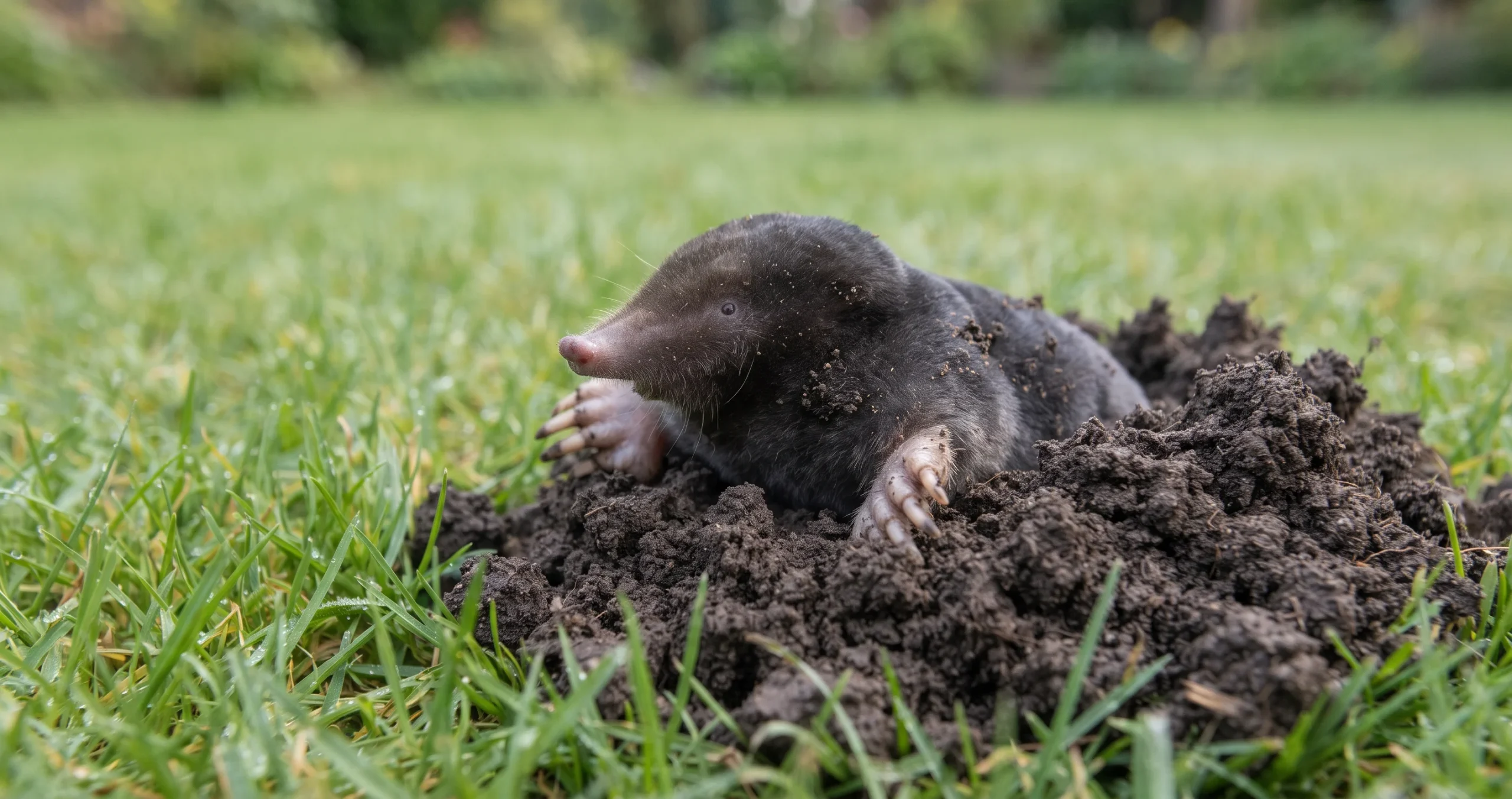
Finding raised tunnels across your lawn or discovering damaged plants in your vegetable garden can be frustrating. Many gardeners immediately blame moles, assuming these underground mammals feed on roots, bulbs, and other plant tissues.
However, the common belief behind the moles eat roots myth overlooks an important distinction between moles and other burrowing animals. Moles primarily feed on earthworms, insects, and other soil-dwelling invertebrates rather than garden plants.
Voles and pocket gophers, on the other hand, regularly consume vegetation and can cause considerable damage to roots and bulbs.
Understanding the differences between these animals can help you protect your garden without wasting time on ineffective control methods or unnecessarily harming beneficial wildlife.
Table of Contents
- The Moles Eat Roots Myth Explained
- What Do Moles Actually Eat?
- How Mole Tunnels Differ From Vole Runways
- Identifying Mole, Vole, and Gopher Damage
- Why the Mole Root-Eating Myth Persists
- How to Protect Garden Bulbs and Plant Roots
- Effective and Responsible Ways to Manage Moles
- Does Controlling Grubs Get Rid of Moles?
- The Benefits of Moles in Your Garden
- Frequently Asked Questions
The Moles Eat Roots Myth Explained
Despite their reputation as destructive garden pests, moles are primarily insectivorous mammals. Their specialized bodies are adapted for searching underground for animal prey rather than feeding on vegetation.
Unlike voles and pocket gophers, moles are not rodents. They belong to the family Talpidae, a group of mammals with specialized adaptations for underground life.
Their powerful front feet, pointed snouts, and sensitive sensory systems allow them to locate food beneath the soil surface.
Although moles can damage plants indirectly through tunneling, they do not normally consume healthy plant roots as a regular part of their diet.
How Moles Can Damage Plants Without Eating Them
As a mole excavates tunnels, it displaces soil around plant roots. This activity can loosen young seedlings, disturb shallow root systems, and create air pockets that reduce contact between roots and surrounding soil.
Affected plants may wilt or become unstable, particularly during dry weather.
These symptoms help explain why the moles eat roots myth remains widespread among gardeners.
What Do Moles Actually Eat?
Moles spend much of their lives searching for food within underground tunnel networks. Their diet depends on the species, local soil conditions, and availability of prey.
Earthworms are particularly important food sources for many common North American moles.
Other potential food sources include:
- Beetle larvae and white grubs.
- Soil-dwelling insect larvae.
- Earthworms.
- Small slugs and other invertebrates.
- Various insects encountered underground.
Moles have relatively high energy requirements and must feed regularly. Their tunnel networks allow them to search productive areas of soil repeatedly.
Why Moles Are Attracted to Gardens
Garden soil often contains abundant organic matter, moisture, and soil-dwelling organisms.
Regular watering, compost applications, and mulching can create favorable conditions for earthworms and other invertebrates. These conditions may also attract moles.
The presence of moles does not automatically indicate an unhealthy garden or a grub infestation. In many cases, it simply reflects the availability of underground prey.
How Mole Tunnels Differ From Vole Runways
One of the easiest ways to identify the animal responsible for garden damage is to examine the soil surface.
Moles and voles create noticeably different patterns as they move through their habitats.
Mole Tunnels
Moles excavate underground passageways using their broad, powerful front feet.
Shallow feeding tunnels often appear as raised ridges running across lawns, flower beds, or vegetable gardens. Deeper excavation may produce rounded piles of loose soil known as molehills.
These raised tunnels can make lawns uneven and disturb the roots of nearby plants.
Vole Runways
Voles are small rodents that commonly travel through narrow pathways at or near ground level.
Their runways may appear as flattened or closely clipped strips of grass, particularly beneath dense vegetation, mulch, or melting snow.
Unlike mole ridges, vole runways generally do not consist of raised soil.
Voles may also create underground burrows or occupy existing mole tunnels, allowing them to reach plant roots and bulbs without being easily detected.
Pocket Gopher Tunnels
Pocket gophers are burrowing rodents that feed extensively on plant material.
Their underground activity commonly produces fan-shaped or crescent-shaped soil mounds, often with an off-center plugged entrance.
Unlike moles, pocket gophers may directly consume roots, tubers, and other underground plant tissues.
Identifying Mole, Vole, and Gopher Damage
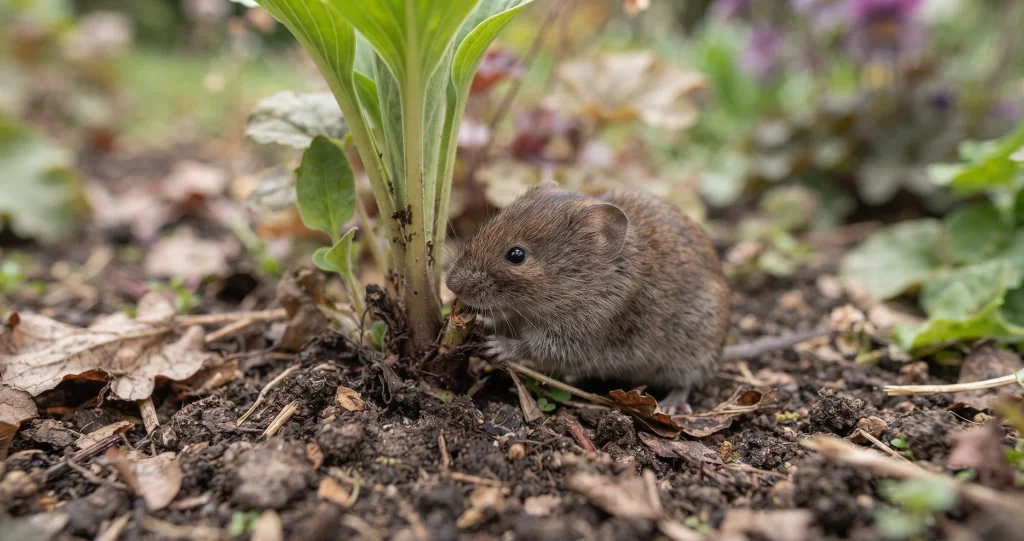
Correct identification is the foundation of effective garden pest management. Although these three mammals can occupy similar environments, the damage they cause often differs considerably.
| Characteristic | Moles | Voles | Pocket gophers |
|---|---|---|---|
| Main diet | Earthworms and insects | Plant material | Roots and vegetation |
| Surface activity | Raised soil ridges | Flattened grass pathways | Excavated soil mounds |
| Mound shape | Generally rounded | Usually absent | Crescent or fan-shaped |
| Root damage | Mostly indirect | Direct chewing | Direct consumption |
| Bulb damage | Uncommon | Common in susceptible plants | Possible |
| Animal classification | Insectivorous mammal | Rodent | Rodent |
Signs of Mole Damage
Look for raised soil ridges, rounded molehills, uneven lawns, and plants that have become loose without obvious chewing damage.
Grass growing above shallow tunnels may turn brown when its roots lose contact with moist soil.
Signs of Vole Damage
Voles frequently leave small tooth marks on bulbs, stems, roots, and tree bark.
They may chew around the base of young trees, removing bark in a process called girdling. Severe girdling can interrupt the movement of nutrients and eventually kill the tree.
Signs of Pocket Gopher Damage
Pocket gophers can cause plants to wilt suddenly by consuming substantial portions of their root systems.
Missing underground vegetables and distinctive soil mounds are additional clues.
Why the Mole Root-Eating Myth Persists
The moles eat roots myth continues because gardeners often discover damaged vegetation alongside obvious mole activity.
However, the presence of a tunnel does not necessarily identify the animal responsible for chewing a plant.
Different Animals Can Share Underground Pathways
Voles and other small rodents sometimes travel through tunnels previously excavated by moles.
These underground passages provide sheltered access to food and allow rodents to move around without being exposed to predators.
A gardener may therefore notice mole tunnels while the actual feeding damage comes from another animal.
Underground Damage Is Difficult to Observe
Unlike leaf-eating insects, burrowing mammals usually cause damage out of sight.
By the time a plant begins to wilt, the animal responsible may have moved elsewhere.
Examining the damaged roots for chewing marks and comparing nearby tunnel patterns can provide more reliable evidence than assuming every underground disturbance is caused by a mole.
How to Protect Garden Bulbs and Plant Roots
Understanding the moles eat roots myth allows gardeners to focus on physical protection rather than unnecessary treatments.
Several practical methods can reduce damage from underground rodents while preserving beneficial soil organisms.
Install Protective Wire Baskets
Planting bulbs inside galvanized wire baskets can help prevent rodents from reaching them.
Choose a mesh size appropriate for the animal involved, with enough room for roots and shoots to develop naturally.
For vulnerable bulbs, approximately ¼-inch hardware cloth can provide a useful physical barrier.
Protect Raised Garden Beds
Rodent-resistant wire mesh installed beneath a raised bed can help prevent pocket gophers and other burrowing animals from entering from below.
Secure the mesh along the edges to minimize gaps, and select corrosion-resistant materials suitable for prolonged soil contact.
This approach is particularly useful for gardens containing carrots, potatoes, and other vulnerable underground crops.
Manage Dense Vegetation and Mulch
Voles often use dense grass, weeds, and thick ground cover as shelter.
Keep vegetation trimmed around vulnerable young trees and avoid piling mulch directly against their trunks.
Mulch remains valuable for moisture retention and soil protection, so targeted management is generally preferable to removing it from the entire garden.
Choose Less Attractive Bulbs
Daffodils and ornamental alliums are generally less attractive to many bulb-eating rodents than tulips and crocuses.
Planting a mixture of species can help reduce the risk of losing an entire flower display. However, less attractive plants are not guaranteed to remain untouched.
Effective and Responsible Ways to Manage Moles
Not every mole requires removal. Minor tunneling in an established garden may be tolerable, especially when plants remain healthy.
When damage becomes disruptive, management should begin with the least intrusive suitable methods.
Repair Minor Surface Damage
Gently press displaced soil back into place around affected plants to restore contact between the roots and surrounding soil.
Level molehills where necessary and repair damaged lawn areas. Monitor the site for renewed activity before deciding whether further intervention is worthwhile.
Avoid Excessive Irrigation
Consistently wet lawns may provide favorable conditions for some mole prey and make shallow excavation easier.
Water according to plant requirements rather than following an unnecessarily frequent schedule.
Do not deliberately dry out healthy garden beds simply to discourage moles.
Consider Commercial Repellents Carefully
Some castor oil-based repellents may temporarily discourage certain mole species, but their effectiveness varies.
Use only products labeled for the intended location and follow the manufacturer’s instructions.
Ultrasonic stakes, homemade chemical mixtures, and vibrating devices should not be regarded as dependable solutions.
Seek Professional Help for Persistent Damage
Species-specific trapping is considered one of the more reliable approaches when serious mole damage requires intervention.
However, trapping regulations differ by location, and equipment can endanger pets and other wildlife if used incorrectly.
A qualified wildlife management professional can help identify the animal and recommend appropriate, legal control methods.
Avoid pouring bleach, fuel, or household chemicals into tunnels. Such practices can contaminate soil and harm organisms unrelated to the problem.
Does Controlling Grubs Get Rid of Moles?
Another misconception closely associated with the moles eat roots myth is that eliminating lawn grubs will automatically eliminate moles.
Although moles consume white grubs, these insect larvae represent only one potential food source.
Earthworms and other underground invertebrates can sustain mole populations even when grub numbers are relatively low.
When Grub Treatment Is Necessary
White grubs can damage lawns by feeding directly on grass roots.
Affected turf may develop irregular brown patches and lift easily from the soil because its root system has been weakened.
Before applying any treatment, inspect the soil to confirm that damaging grub populations are present.
Treat grub infestations according to the identified species, seasonal development, and local university extension recommendations.
Applying insecticides solely because mole tunnels are present is unlikely to provide a dependable solution and may unnecessarily affect beneficial soil organisms.
The Benefits of Moles in Your Garden
Despite their potential to disturb lawns and planting beds, moles play several ecological roles.
Natural Soil Aeration
Mole tunneling creates underground channels that can influence the movement of air and water through the soil.
These effects depend on soil composition, tunnel depth, and environmental conditions.
Consumption of Soil-Dwelling Insects
Moles consume various invertebrates, including some insect larvae capable of damaging garden plants.
However, they are generalist predators rather than dedicated pest-control animals. They also consume earthworms and other beneficial organisms.
For a closer look at the underground ecosystem, explore our guide to earthworm anatomy and how worms interact with garden soil.
Supporting Biodiversity
Moles form part of the natural food web and provide prey for predators such as owls and foxes.
Recognizing their ecological role encourages gardeners to balance wildlife management with practical plant protection.
Frequently Asked Questions
Do moles eat vegetable roots?
Moles primarily consume animal prey. Chewed vegetable roots are more likely to indicate vole or pocket gopher activity, although occasional consumption of plant material by moles has been reported.
Do moles eat flower bulbs?
Flower bulbs are not a normal primary food source for moles. Voles, mice, and pocket gophers are more likely to be responsible for missing or chewed bulbs.
Can moles kill plants without eating them?
Yes. Tunneling can disturb roots, displace soil, and cause young plants to dry out.
Does removing grubs eliminate moles?
Not reliably. Moles can continue feeding on earthworms and other underground invertebrates.
Are moles active during winter?
Yes. Moles remain active throughout the year, although they may move into deeper soil when surface conditions become cold or unfavorable.
Are coffee grounds effective against moles?
There is insufficient scientific evidence that coffee grounds provide reliable mole control.
Can moles and voles occupy the same garden?
Yes. Voles may even use underground tunnels previously created by moles.
Conclusion
The moles eat roots myth often leads gardeners to blame the wrong animal for damaged plants.
Moles primarily hunt underground invertebrates, while voles and pocket gophers regularly feed on vegetation, including vulnerable roots and bulbs.
Recognizing raised tunnels, surface runways, soil mounds, and chewing marks can help identify the actual source of damage.
Physical barriers, responsible soil management, and targeted pest-control methods offer a more practical approach than unnecessary chemical treatments.
By understanding the differences between these underground animals, gardeners can protect valuable plants while respecting the ecological importance of wildlife.
External Sources
1. Moles
Research-based information covering mole diets, underground tunnels, plant damage, repellents, trapping, and common misconceptions. University of California IPM. https://ipm.ucanr.edu/home-and-landscape/moles/?utm_source
2. Voles (Meadow Mice)
Detailed guidance covering vole biology, surface runways, vegetation damage, physical barriers, and responsible management. University of California IPM. https://ipm.ucanr.edu/home-and-landscape/voles/?utm_source
3. Pocket Gophers
Educational resource explaining pocket gopher feeding habits, distinctive soil mounds, underground root damage, and management methods. University of California IPM. https://ipm.ucanr.edu/home-and-landscape/pocket-gophers/?utm_source.