
Most trees reveal their beauty through leaves and flowers. But one remarkable maple becomes even more captivating after its leaves have fallen.
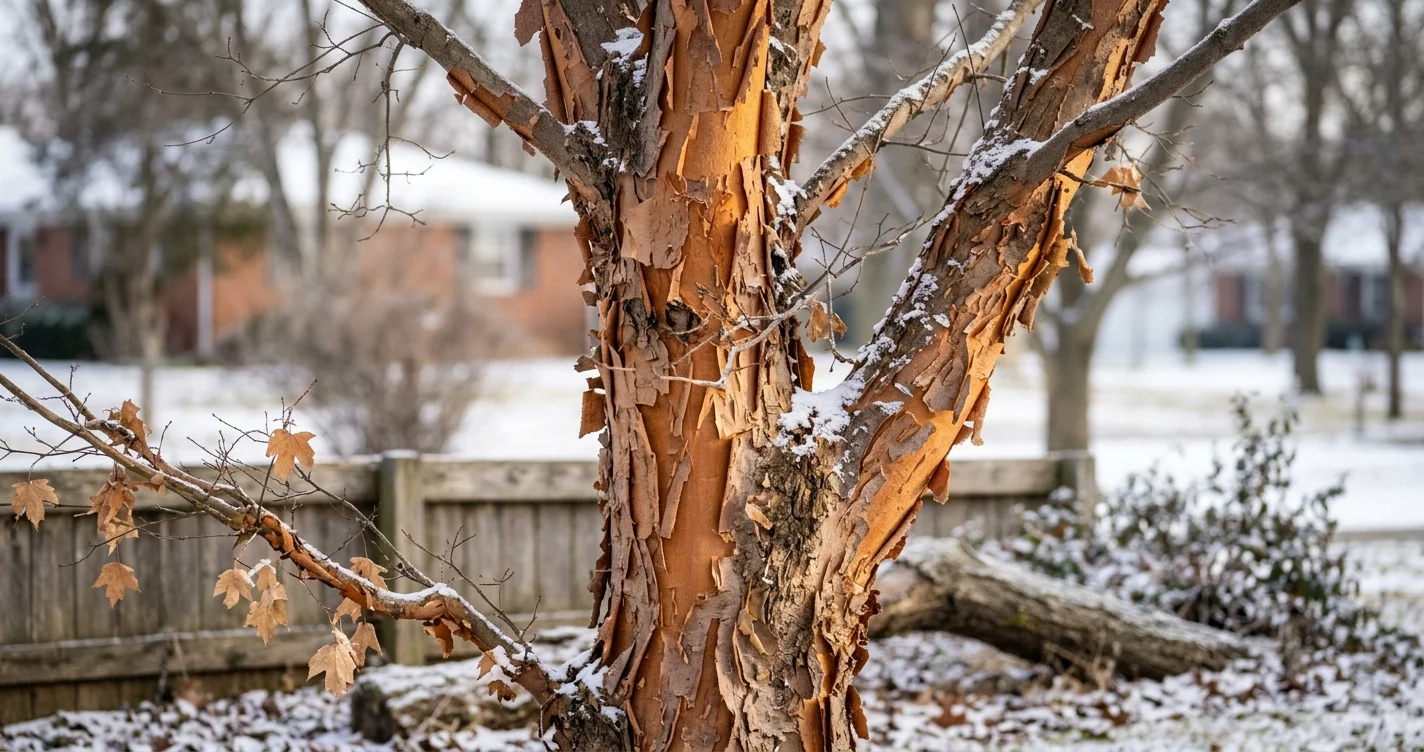
On a cold winter morning, when the garden is nearly bare, the paperbark maple stands out with curling ribbons of cinnamon-colored bark. In low sunlight, its trunk can appear to glow with shades of copper, amber, and reddish brown.
This extraordinary ornamental tree, known botanically as Acer griseum, offers something many landscape trees cannot: visual interest throughout the entire year, especially in winter.
Native to central China, paperbark maple is admired for its peeling bark, manageable size, attractive branching structure, and brilliant autumn foliage.
Yet its unusual appearance is only part of the story. Understanding how its bark develops, why its leaves turn red, and what its roots need can help gardeners grow a healthier, longer-lived tree.
For homeowners seeking a distinctive small shade tree or an elegant garden focal point, paperbark maple deserves serious consideration.
Table of Contents
- What Is a Paperbark Maple?
- Paperbark Maple Bark: The Science Behind Its Peeling Layers
- Why Paperbark Maple Looks Beautiful in Every Season
- How Big Does a Paperbark Maple Grow?
- The Best Growing Conditions for Paperbark Maple
- How to Plant a Paperbark Maple Tree
- Watering, Mulching, and Pruning
- Common Paperbark Maple Problems
- Wildlife Benefits and Ecological Considerations
- In Your Own Yard: Designing With Paperbark Maple
- Frequently Asked Questions
What Is a Paperbark Maple?
Paperbark maple (Acer griseum) is a deciduous ornamental tree belonging to the soapberry family, Sapindaceae.
It is native to central China, where it occurs in forested landscapes.
The species became known to Western horticulture in the early twentieth century and has since become a prized specimen tree in botanical gardens and residential landscapes.
A Maple With Unusual Leaves
Unlike many familiar maples, paperbark maple has trifoliate leaves.
Each leaf consists of three separate leaflets, creating a distinctive texture.
The upper surfaces are generally dark green, while the undersides can appear lighter and somewhat hairy.
This foliage gives the tree a refined appearance during spring and summer.
The Famous Cinnamon-Colored Bark
Its most recognizable characteristic is the exfoliating bark.
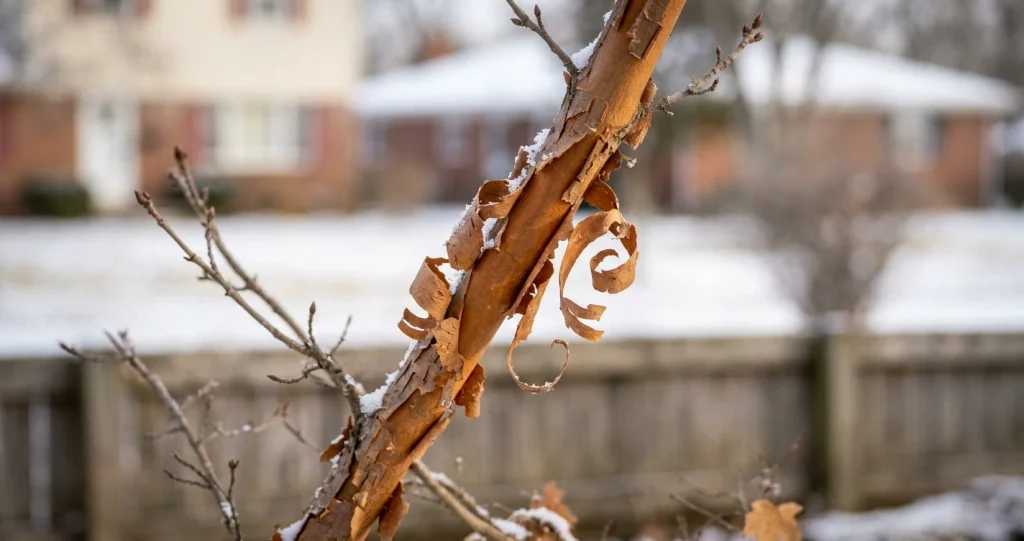
Thin outer layers gradually separate from the trunk and larger branches, forming curled sheets.
These translucent or papery strips reveal fresh bark beneath.
The effect becomes especially dramatic during winter, when leaves no longer obscure the trunk.
A Tree With a Distinctive History
Paperbark maple has attracted horticultural interest for generations because of its exceptional ornamental qualities.
However, cultivated populations have historically faced genetic diversity concerns.
Many older cultivated trees trace their origins to a relatively limited number of introductions.
Conservation organizations have worked to broaden the genetic diversity represented in botanical collections.
This makes the species interesting not only as a landscape tree but also as an example of the importance of plant conservation.
Paperbark Maple Bark: The Science Behind Its Peeling Layers
The peeling bark of paperbark maple is more than a decorative feature.
It reflects the way woody trees grow, protect their living tissues, and continually replace older outer layers.
How Tree Bark Develops
As a tree grows, its trunk expands in diameter.
This expansion is produced by the vascular cambium, a thin layer of actively dividing cells that generates new wood inward and conducting tissues outward.
Farther toward the surface, protective tissues develop as part of the bark.
The cork cambium produces cork cells that help protect the trunk from water loss, physical damage, and environmental stress.
As the trunk enlarges, older outer tissues may stretch, crack, or separate.
Different tree species develop different bark patterns depending on how these tissues form and age.
Why Paperbark Maple Peels in Thin Sheets
In paperbark maple, the outer bark separates in relatively thin, curling layers.
This creates the familiar papery ribbons that remain partly attached to the trunk.
The newly exposed surfaces often display rich reddish-brown or copper tones.
Over time, these surfaces weather and darken.
The combination of old and newly exposed bark creates a layered appearance that changes throughout the year.
Does Peeling Bark Mean the Tree Is Sick?
Usually, the characteristic peeling of paperbark maple is completely normal.
Healthy trees naturally shed portions of their outer bark as part of their growth.
However, not every bark problem should be dismissed as normal exfoliation.
Large areas of dead tissue, deep wounds, oozing, fungal growth, or extensive branch dieback may indicate injury or disease.
The key distinction is between normal papery peeling and abnormal damage to living tissues.
Should You Remove the Loose Bark?
It is generally best to leave naturally peeling bark undisturbed.
Pulling attached strips can damage underlying tissues, especially when bark has not fully separated.
The curling bark is also the tree’s defining ornamental feature.
Allowing it to exfoliate naturally preserves its appearance and avoids unnecessary injury.
Why Winter Makes the Bark More Visible
During summer, leaves and surrounding vegetation can partially conceal the trunk.
In winter, the absence of foliage exposes the tree’s branching structure and bark.
Low-angle sunlight can intensify the warm colors and create shadows beneath the curled strips.
Snow or pale winter backgrounds may increase the visual contrast.
This seasonal effect explains why paperbark maple is often planted where its trunk can be appreciated from windows, walkways, and outdoor seating areas.
Why Paperbark Maple Looks Beautiful in Every Season
Although its winter bark receives the most attention, paperbark maple offers ornamental interest throughout the year.
Spring: Fresh Leaves and Delicate Growth
In spring, new trifoliate leaves emerge as temperatures rise.
Their fine texture contrasts with the tree’s rugged, peeling trunk.
Small, inconspicuous flowers may also appear.
These flowers are not usually the main reason gardeners grow the species.
Summer: An Elegant Green Canopy
During summer, paperbark maple develops a rounded or irregular crown.
Its dark green foliage provides a soft visual backdrop for the cinnamon-colored bark.
The tree’s relatively modest size makes it suitable for many residential landscapes.
Autumn: Brilliant Red and Orange Foliage
Fall color is another major attraction.
Paperbark maple leaves often turn shades of orange, red, and reddish bronze.
Color intensity varies with weather, soil conditions, and individual trees.
The warm foliage complements the copper-colored trunk.
Winter: The Main Attraction
After leaf drop, the bark becomes the focal point.
Curled strips catch the light, revealing multiple shades of brown and copper.
The tree’s branching structure also becomes easier to appreciate.
For gardens dominated by evergreen foliage or dormant perennials, paperbark maple can provide a striking winter accent.
How Big Does a Paperbark Maple Grow?
Paperbark maple is generally considered a small to medium-sized ornamental tree.
In cultivated landscapes, it commonly reaches approximately 20–30 feet tall, although older specimens can become larger under favorable conditions.
Its crown often spreads about 15–25 feet.
Slow to Moderate Growth
Paperbark maple typically grows more slowly than many fast-growing shade trees.
This can make it easier to accommodate in residential landscapes.
However, slower growth also means that establishing a mature-looking specimen requires patience.
Single-Trunk and Multi-Stem Forms
Some trees develop a single main trunk, while others grow with multiple stems.
Multi-stem specimens can display particularly attractive bark because more trunk surface remains visible near eye level.
The preferred form depends on landscape design and nursery availability.
Planning for Mature Size
Even a relatively small tree needs adequate growing space.
Consider nearby buildings, overhead wires, patios, and other trees before planting.
Providing enough room for the mature crown and root system helps reduce future maintenance problems.
The Best Growing Conditions for Paperbark Maple
Paperbark maple is adaptable to many temperate gardens, but it performs best when its roots have consistent moisture, good drainage, and adequate space.
Sunlight and Exposure
Full sun to partial shade generally works well.
In cooler climates, full sun can support strong growth and attractive autumn color. In hotter regions, some afternoon shade may reduce heat stress.
A sheltered planting site can also help protect young trees from drying winds.
Soil and Drainage
Paperbark maple prefers fertile, well-drained soil with adequate organic matter.
Slightly acidic to neutral soil is often suitable, although the species can tolerate a range of conditions.
Poor drainage is a concern because prolonged saturation can reduce oxygen around the roots.
Improving the planting environment is usually more beneficial than relying on fertilizers.
Climate and Cold Hardiness
Paperbark maple is commonly recommended for USDA Hardiness Zones 4–8, although performance varies with local conditions.
It generally tolerates cold winters well once established.
Hot, dry summers may be more challenging, particularly where soil moisture is limited.
Moisture Requirements
Young trees benefit from consistent watering during establishment.
Established specimens can tolerate some temporary dryness, but prolonged drought may cause stress.
Mulching and maintaining healthy soil help conserve moisture.
How to Plant a Paperbark Maple Tree
Correct planting gives this relatively slow-growing tree a better opportunity to develop strong roots.
Choose the Right Season
Early spring and fall are often suitable planting periods, depending on local climate.
Avoid planting during extreme heat, severe drought, or when the ground is frozen.
Prepare a Wide Planting Hole
Dig a hole approximately two to three times wider than the root ball, but no deeper than necessary.
Locate the root flare, where the trunk broadens into the major roots.
Position it at or slightly above the surrounding soil surface.
Backfill primarily with the original soil, provided it is suitable for planting.
Check the Roots
Container-grown trees sometimes develop circling roots.
Inspect the root ball before planting and correct problematic roots when practical.
Severe root defects may require professional assessment.
Water Thoroughly
Water after planting to settle the soil around the roots.
Continue monitoring moisture throughout the establishment period.
Avoid allowing the soil to remain continuously saturated.
Watering, Mulching, and Pruning
Paperbark maple generally requires modest maintenance once established in a suitable location.
Mulching the Root Zone
Apply a layer of organic mulch around the tree, keeping it away from the trunk.
Mulch helps moderate soil temperature, retain moisture, and reduce competition from lawn grasses.
Avoid piling mulch against the bark.
Pruning for Structure
Paperbark maple often develops an attractive natural shape.
Pruning should focus on removing damaged, crossing, or poorly attached branches.
Extensive pruning is usually unnecessary.
Late winter or another locally appropriate pruning period can be suitable, although maples may release sap from pruning wounds in late winter or spring. This sap flow is generally not harmful to healthy trees.
Fertilizing Only When Needed
Healthy paperbark maples growing in suitable soil may require little supplemental fertilizer.
A soil test can help identify actual nutrient deficiencies.
Excessive fertilization may encourage unnecessary growth without addressing underlying soil problems.
Common Paperbark Maple Problems
Paperbark maple is often considered relatively trouble-free, but environmental stress and certain pests or diseases can affect it.
Drought Stress
Leaf browning, premature leaf drop, and reduced growth may occur during prolonged dry periods.
Consistent watering during establishment and appropriate mulching can help reduce stress.
Root and Drainage Problems
Waterlogged soil can interfere with root function.
Planting too deeply may also contribute to decline.
Correct placement and suitable drainage are important preventive measures.
Insect and Disease Issues
Like other maples, paperbark maple may occasionally experience scale insects, leaf spots, or other problems.
Verticillium wilt is a potential concern for maples, although susceptibility varies.
Unexplained branch dieback or rapid decline warrants evaluation by a qualified arborist.
Slow Growth
Slow growth is a normal characteristic of the species.
However, extremely limited growth accompanied by poor foliage may indicate insufficient moisture, compacted soil, or root problems.
Wildlife Benefits and Ecological Considerations
Paperbark maple can contribute to the structure and diversity of a landscaped garden.
Its branches may provide perching opportunities for birds, while its foliage and flowers can support some insects.
However, it is not native to North America.
A Beautiful Ornamental, Not a Native Replacement
Paperbark maple is primarily valued for its ornamental features.
For gardeners prioritizing native wildlife habitat, regionally native trees may provide stronger relationships with local insects and other organisms.
A balanced landscape can include ornamental specimens alongside native trees, shrubs, and wildflowers.
Conservation Beyond the Garden
Paperbark maple also has an interesting conservation story.
The species is considered threatened in its native range, and botanical institutions have worked to improve the genetic diversity of cultivated collections.
The Morton Arboretum has participated in research and conservation efforts involving paperbark maple.
Choosing responsibly propagated nursery stock supports cultivation without encouraging the collection of wild plants.
In Your Own Yard: Designing With Paperbark Maple
The most effective way to showcase paperbark maple is to treat it as a year-round focal point.
Plant Where Winter Sunlight Reaches the Bark
A location receiving low winter sunlight can emphasize the tree’s copper tones.
Consider planting it where the trunk is visible from a frequently used window or garden path.
Create Contrast With Evergreens
Dark green evergreen shrubs can provide a dramatic background for the peeling bark.
Their foliage helps emphasize the tree’s warm colors during winter.
Allow enough spacing to prevent surrounding plants from hiding the trunk.
Add a Simple Underplanting
Low-growing, shade-tolerant plants can complement paperbark maple without competing visually.
Choose species suited to the site’s moisture and light conditions.
Avoid disturbing established tree roots when adding plants.
Let the Bark Remain the Star
Paperbark maple rarely needs elaborate landscaping.
A simple planting area, attractive groundcover, and thoughtful lighting can highlight its natural character.
The peeling bark provides its own remarkable texture.
Frequently Asked Questions
1. How quickly does paperbark maple grow?
Paperbark maple is generally a slow-growing tree. Annual growth varies with age, soil conditions, moisture, and climate. Gardeners should expect a gradual increase in size rather than the rapid growth associated with some common shade trees.
2. Is paperbark maple suitable for a small backyard?
Yes, it can be an excellent choice for many smaller landscapes. Its moderate mature size, attractive branching, and year-round ornamental interest make it useful as a specimen tree. However, adequate space for its roots and crown remains essential.
3. Should I peel the loose bark off a paperbark maple?
It is best to leave the bark alone. Natural exfoliation is a normal feature of the species, and attached strips may still protect underlying tissues. Pulling them away can cause unnecessary damage.
Conclusion
Imagine looking through a garden window on a gray December afternoon.
Most deciduous trees stand bare, their branches silhouetted against the winter sky. But one small tree catches the light with curling ribbons of copper-colored bark.
That is the quiet magic of paperbark maple.
Its beauty does not disappear when autumn ends. Instead, winter reveals the feature that makes this remarkable tree so distinctive.
With suitable soil, adequate moisture, careful planting, and patience, paperbark maple can become a long-lasting focal point in a residential landscape.
For gardeners seeking a small ornamental tree with brilliant fall foliage and unforgettable winter character, few choices offer quite the same combination.
Sometimes, the most beautiful part of a tree is what remains after the leaves are gone.
External Sources
1. Arnold Arboretum — Paperbark Maple
Paperbark maple frequently produces fruits that contain no viable seeds, a phenomenon associated with parthenocarpy. This makes the tree unusually difficult to propagate from seed. The Arnold Arboretum also describes its complex flower biology. Harvard University.
2. Arnoldia — Paperbark Maple: Acer griseum
Although paperbark maple is usually grown as a small ornamental tree, plant explorers documented an extraordinary specimen in China in 1995, estimated at approximately 88.6 feet tall. This challenges the assumption that the species always remains small. Arnold Arboretum. University of Pennsylvania / Arnold Arboretum.
3. Cambridge University Botanic Garden — Acer griseum
Cambridge University Botanic Garden deliberately positioned its paperbark maple so low winter sunlight shines through the thin, peeling bark, emphasizing its warm copper tones. The species name griseum also refers to the grayish undersides of its leaves. Cambridge University Botanic Garden.