
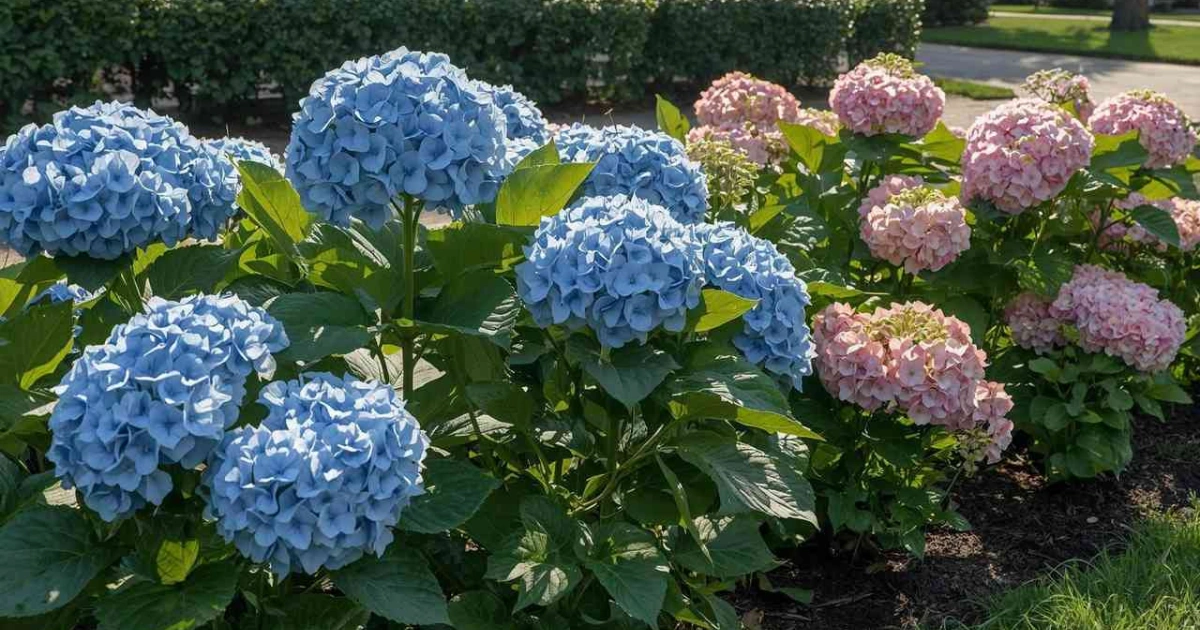
Learn the correct way to prune Hydrangea macrophylla, understand old wood blooming habits, and avoid the common mistakes that prevent hydrangeas from flowering.
Hydrangeas are among the most beloved flowering shrubs in home gardens, but they are also one of the most frequently pruned incorrectly. Many gardeners unknowingly remove flower buds months before they bloom, resulting in lush green plants with few or no flowers.
The key to successful pruning lies in understanding how your hydrangea produces blooms. Bigleaf hydrangeas (Hydrangea macrophylla) flower on old wood, meaning the buds for next year’s flowers develop on stems during the previous growing season. Pruning at the wrong time can eliminate an entire season of blooms.
This guide explains exactly when and how to prune bigleaf hydrangeas while preserving their spectacular flower display.
Understanding Old Wood Blooming Hydrangeas
The most important fact about Hydrangea macrophylla is that it blooms on old wood.
What does “old wood” mean?
Old wood refers to stems that grew during the previous year. During summer and early autumn, these stems begin forming flower buds that remain dormant through winter and open the following growing season.
Because the flower buds already exist before winter arrives, improper pruning can remove them before they have a chance to bloom.
Common Bigleaf Hydrangea Types
Many popular hydrangeas belong to this category, including:
- Mophead hydrangeas
- Lacecap hydrangeas
- Traditional French hydrangeas
- Many heirloom cultivars
Before pruning, always identify which type of hydrangea you have, as pruning requirements differ among species.
Why Hydrangeas Fail to Bloom
One of the most common gardening frustrations is a healthy hydrangea that produces leaves but no flowers.
Typical causes include:
- Pruning in autumn
- Pruning in late winter
- Heavy spring pruning
- Winter bud damage
- Late spring frosts
- Excessive fertilizer
In many cases, incorrect pruning is the primary reason flowers fail to appear.
The Best Time to Prune Hydrangeas
Late Summer: The Ideal Pruning Window
The safest time to prune Hydrangea macrophylla is immediately after flowering finishes.
For most climates, this occurs between:
- Late July
- August
- Early September
At this stage, the plant has completed its flowering cycle but has not yet fully developed next year’s flower buds.
What to Remove After Flowering
Focus only on:
- Spent flower heads
- Weak stems
- Damaged growth
- Dead branches
Avoid cutting deeply into healthy stems.
How to Deadhead Hydrangea Flowers
Deadheading keeps plants tidy and encourages healthy growth.
Follow these steps:
- Locate the faded flower head.
- Follow the stem downward.
- Find the first strong pair of healthy buds.
- Make a clean cut just above those buds.
This method removes the old flower while preserving developing buds for the next season.
Why Bud Placement Matters
The uppermost bud pairs often contain next year’s flower clusters.
Removing these buds means removing future blooms.
When in doubt, prune less rather than more.
Late Summer Thinning for Healthier Plants
As hydrangeas mature, they can become crowded.
Selective thinning improves:
- Air circulation
- Disease resistance
- Light penetration
- Overall plant structure
Which Stems Should Be Removed?
Remove:
- Weak, spindly stems
- Non-flowering shoots
- Crossing branches
- Damaged growth
Do not remove large numbers of healthy flowering stems.
A good rule is to thin gradually rather than dramatically reshape the shrub.
Spring Hydrangea Care
What to Do in Late Winter and Early Spring
Many gardeners assume spring is the time for major pruning.
For bigleaf hydrangeas, this is usually a mistake.
During February and March, only remove:
- Dead wood
- Winter-killed tips
- Broken branches
Leave healthy stems untouched.
Identifying Living Buds
Healthy buds typically appear:
- Plump and firm
- Green or reddish-green
- Positioned in pairs along stems
If living buds are visible, avoid cutting below them.
Understanding Hydrangea Stem Structure
Knowing how hydrangea stems develop helps prevent pruning errors.
Current-Year Stems
New stems produced this season will become the framework for future blooms.
These stems should generally remain intact.
Flower Buds
Flower buds begin developing during summer and continue maturing through autumn.
They remain dormant throughout winter before opening the following year.
Older Wood
Mature stems can remain productive for several years.
However, very old stems may eventually become less vigorous.
Rejuvenating an Overgrown Hydrangea
Older shrubs sometimes require rejuvenation.
Instead of cutting the entire plant back, use gradual renewal pruning.
The One-Third Method
Each year:
- Remove approximately one-third of the oldest stems
- Cut them near the base
- Leave younger stems intact
Over three years, the plant becomes renewed without sacrificing all flowers.
This method preserves flowering while encouraging fresh growth.
Hydrangea Pruning Mistakes to Avoid
Pruning in Autumn
Many gardeners trim hydrangeas in fall to prepare for winter.
Unfortunately, flower buds are already present by this time.
Autumn pruning often removes next year’s blooms.
Cutting Everything Back in Spring
Unlike some hydrangea species, bigleaf hydrangeas do not respond well to hard spring pruning.
Severe cuts frequently eliminate flower buds.
Removing Healthy Buds
The buds visible on stems during winter and early spring are often next season’s flowers.
Always inspect stems carefully before making cuts.
Treating All Hydrangeas the Same
Different hydrangea species have different pruning requirements.
For example:
- Bigleaf hydrangeas bloom on old wood.
- Panicle hydrangeas bloom on new wood.
- Smooth hydrangeas bloom on new wood.
Identifying the species is essential before pruning.
Seasonal Hydrangea Pruning Calendar
February–March
- Remove dead wood only.
- Trim frost-damaged tips.
- Preserve healthy buds.
July–August
- Deadhead spent flowers.
- Perform light shaping.
- Remove damaged growth.
August–September
- Thin overcrowded stems.
- Improve airflow.
- Avoid heavy pruning.
Autumn–Winter
- Leave stems intact.
- Protect developing buds.
- Avoid unnecessary cuts.
Benefits of Proper Hydrangea Pruning
Correct pruning provides several advantages:
- More flowers each season
- Stronger plant structure
- Improved disease resistance
- Better airflow through the shrub
- Longer plant lifespan
A few careful cuts at the right time can dramatically improve flowering performance.
Frequently Asked Questions
Should I cut my hydrangea to the ground every year?
No. Bigleaf hydrangeas bloom on old wood. Cutting them to the ground removes the stems that contain next year’s flower buds.
When is the safest time to prune Hydrangea macrophylla?
Immediately after flowering, usually in late summer, is the safest time to perform pruning and deadheading.
Why did my hydrangea not bloom this year?
Common causes include winter damage, late frosts, and pruning that removed flower buds during autumn, winter, or spring.
Can I remove old flowers in spring?
Yes, but proceed carefully. Remove only the faded flower head and avoid cutting into healthy buds below it.
How do I rejuvenate an old hydrangea?
Remove one-third of the oldest stems at the base each year over a three-year period. This gradual method encourages renewal while maintaining flowering.
Final Thoughts
Successful hydrangea pruning starts with understanding how the plant flowers. Because Hydrangea macrophylla blooms on old wood, preserving existing stems is essential for abundant blooms the following season.
The best approach is simple: deadhead after flowering, remove damaged wood in spring, and avoid heavy pruning during autumn and winter. By working with the plant’s natural growth cycle rather than against it, gardeners can enjoy healthier shrubs and a spectacular display of flowers year after year.
SEO Information
Primary Keyword: Hydrangea pruning guide
Related Keywords:
- Pruning hydrangeas
- Hydrangea macrophylla care
- Old wood hydrangeas
- When to prune hydrangeas
- Hydrangea flower buds
- Bigleaf hydrangea pruning
- Hydrangea blooming cycle
- Hydrangea maintenance
Internal Linking Suggestions (secretsofthegreengarden.com)
- Why Hydrangeas Fail to Bloom and How to Fix It
- The Complete Guide to Growing Hydrangeas
- Best Flowering Shrubs for Long-Lasting Summer Color
External Linking Suggestions
- University of Massachusetts Extension Hydrangea Resources
- Missouri Botanical Garden Hydrangea Plant Finder
- Royal Horticultural Society Hydrangea Growing Advice
Meta Description: Learn exactly when and how to prune Hydrangea macrophylla. This hydrangea pruning guide explains old wood blooming, deadheading, seasonal care, and common mistakes that prevent flowering.