
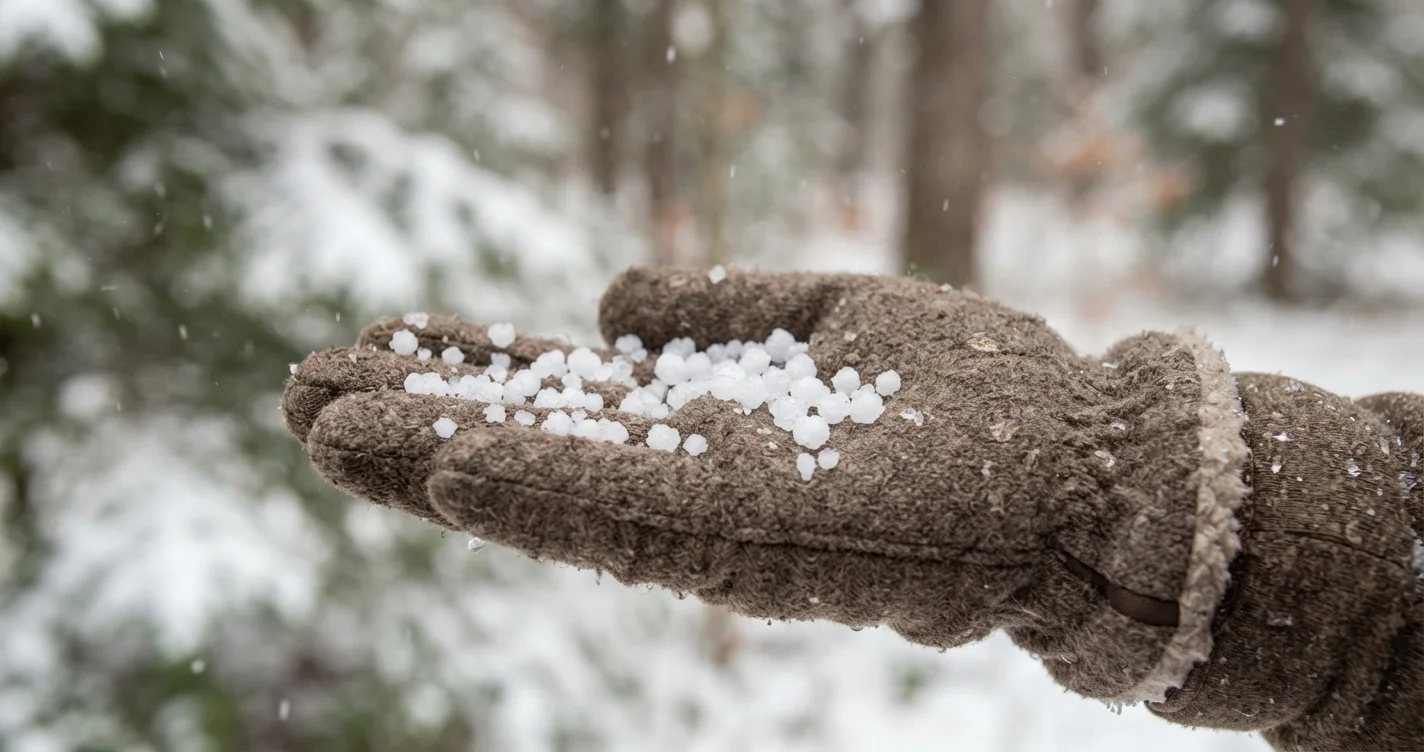
Imagine stepping into your garden on a cold November morning and discovering hundreds of tiny white pellets scattered across the grass. They look like miniature hailstones, but when you pick one up, it crumbles between your fingers like a tiny snowball.
What you have discovered may be graupel, one of nature’s more unusual forms of frozen precipitation.
Understanding graupel vs sleet vs hail reveals how temperature, moisture, and air movement shape the ice particles that fall from winter clouds.
Although these three types of precipitation may look similar from a distance, they form through remarkably different atmospheric processes. They also behave differently when they land on garden plants, rooftops, sidewalks, and soil.
Learning to recognize them can turn an ordinary winter shower into a fascinating lesson in atmospheric science.
Table of Contents
- What Is Graupel?
- What Is Sleet?
- What Is Hail?
- Graupel vs Sleet vs Hail: The Science Behind Their Formation
- How to Identify Frozen Precipitation
- How Ice Pellets Affect Garden Plants and Wildlife
- Why Different Types of Ice Can Fall During the Same Storm
- In Your Own Yard: Observing Winter Ice Pellets
- Frequently Asked Questions
What Is Graupel?
Graupel is a type of frozen precipitation that forms when supercooled water droplets freeze onto falling snow crystals.
Sometimes called snow pellets or soft hail, graupel typically appears as small, white, rounded particles resembling miniature Styrofoam beads.
Unlike ordinary snowflakes, graupel usually lacks a clearly recognizable crystalline shape.
How Graupel Gets Its Unusual Appearance
As a snowflake travels through a cloud containing supercooled water droplets, these droplets collide with its surface and freeze.
This process, known as riming, gradually covers the original snow crystal with a white, irregular coating of ice.
If enough droplets accumulate, the snowflake becomes almost completely hidden inside a rounded pellet.
Common Characteristics of Graupel
- White and opaque appearance.
- Soft, crumbly texture.
- Usually measures approximately 2–5 millimeters across.
- May bounce slightly when landing.
- Often occurs during cold-weather showers.
Graupel can briefly accumulate on lawns, garden beds, and outdoor furniture, creating a landscape that looks as though it has been sprinkled with tiny white beads.
Because of its relatively fragile structure, graupel generally causes less physical damage to vegetation than similarly sized hailstones.
What Is Sleet?
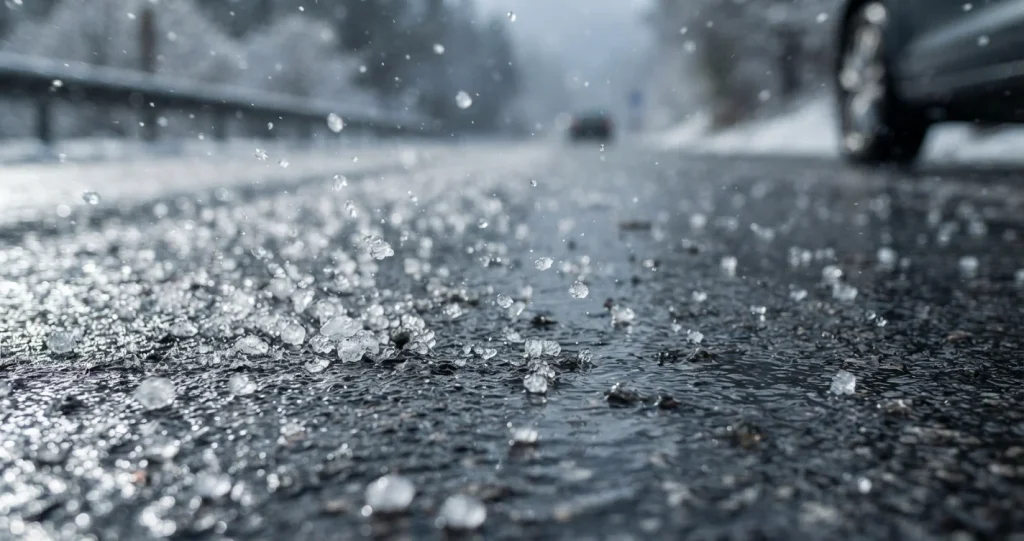
In the United States, sleet refers to small ice pellets that form when melted or partially melted snow refreezes before reaching the ground.
These pellets are generally denser, harder, and more transparent than graupel.
Sleet is particularly common during winter storms involving several layers of air at different temperatures.
How Sleet Forms
Snowflakes begin falling from cold clouds and encounter a layer of warmer air.
Within this warmer layer, the snowflakes partially or completely melt.
As the resulting precipitation continues downward, it enters another layer of below-freezing air near the ground.
If this cold layer is sufficiently deep and cold, the droplets refreeze into ice pellets before reaching the surface.
Common Characteristics of Sleet
Sleet usually appears translucent or transparent. The pellets are often less than 5 millimeters across and have a hard texture.
They frequently bounce when striking pavement, windows, or metal surfaces, producing a distinctive tapping sound.
When enough sleet accumulates, it can create slippery conditions on sidewalks, roads, and garden paths.
Unlike freezing rain, sleet reaches the ground in an already frozen state.
What Is Hail?
Hail is frozen precipitation produced by thunderstorms with sufficiently strong updrafts.
These powerful rising air currents help support growing ice particles within clouds, allowing them to collect additional supercooled water droplets.
Hailstones can range from small, pea-sized pieces of ice to much larger stones capable of damaging buildings, vehicles, and vegetation.
Why Hailstones Sometimes Have Layers
As hailstones grow, they may encounter different temperatures and amounts of liquid water.
Under some conditions, droplets freeze rapidly, trapping air bubbles and creating cloudy ice. Under other conditions, water freezes more slowly, producing relatively clear ice.
These changing growth conditions can create alternating layers within a hailstone.
Not every hailstone develops clearly visible layers, however.
Can Hail Fall During Winter?
Although hail is commonly associated with spring and summer thunderstorms, it can also occur during colder months when atmospheric conditions support thunderstorm development.
Season alone is therefore insufficient to identify a particular type of frozen precipitation.
The particle’s structure, hardness, size, and weather conditions provide more useful clues.
Graupel vs Sleet vs Hail: The Science Behind Their Formation
All three forms of precipitation contain frozen water, but their differences emerge from the journeys they take through the atmosphere.
Supercooled Water: Liquid Below Freezing
One of the most fascinating features of winter clouds is that water can remain liquid even when its temperature falls below 32°F (0°C).
This phenomenon is known as supercooling.
When supercooled droplets encounter an ice crystal, they can freeze onto its surface. This interaction plays an important role in the development of both graupel and hail.
The National Weather Service describes this accumulation of frozen droplets as riming, an important mechanism through which ice particles grow inside clouds. National Weather Service
Graupel: A Snowflake Wearing an Ice Coat
Graupel begins with a snow crystal that collects supercooled droplets.
As these droplets freeze, they create an irregular coating containing tiny air pockets that contribute to the pellet’s opaque appearance.
This porous structure also explains why graupel is relatively lightweight and easily crushed.
Sleet: A Journey Through Warm and Cold Air
Sleet develops through a different atmospheric process.
Instead of gradually collecting an icy coating, falling snow partially or completely melts before freezing again.
The depth and temperature of the atmospheric layers influence whether precipitation reaches the ground as snow, sleet, or freezing rain.
Even when temperatures at ground level remain unchanged, conditions higher in the atmosphere can alter the type of precipitation reaching your garden.
Hail: Ice Growing Inside a Thunderstorm
Thunderstorm updrafts carry ice particles through cloud regions containing supercooled liquid water.
As the particles collect additional moisture, they become larger and heavier.
Eventually, the hailstones fall when the upward-moving air can no longer support them.
According to NOAA’s National Severe Storms Laboratory, the speed at which collected water freezes also influences whether a hailstone develops clear or cloudy ice. NOAA National Severe Storms Laboratory
How to Identify Frozen Precipitation
A few simple observations can help you distinguish between these three atmospheric phenomena.
Graupel vs Sleet vs Hail Comparison Chart
| Characteristic | Graupel | Sleet | Hail |
|---|---|---|---|
| Appearance | Opaque white | Clear or translucent | Clear, cloudy, or layered |
| Texture | Soft and crumbly | Hard and compact | Hard and dense |
| Typical size | 2–5 mm | Around 5 mm or smaller | 5 mm or larger |
| Formation | Riming of snow crystals | Refreezing precipitation | Growth inside thunderstorms |
| Sound on impact | Soft tapping | Sharp rattling | Loud tapping or pounding |
| Common conditions | Cold-weather showers | Winter storms | Thunderstorms |
| Potential plant damage | Generally low | Usually limited | Potentially severe |
These characteristics are useful identification guidelines, although natural ice particles do not always fit perfectly into distinct categories.
The Gentle Squeeze Test
Once the storm has safely passed, collect a small pellet and gently press it between your gloved fingers.
Graupel often crumbles under light pressure, while sleet and hail generally retain their solid structure.
Observe the Color
Graupel usually resembles tiny white snowballs.
Sleet often looks like miniature beads of transparent ice, while hailstones may display a mixture of clear and cloudy areas.
Listen to the Precipitation
Sleet frequently produces a sharp rattling sound against windows and rooftops.
Graupel tends to sound softer, while larger hailstones may strike surfaces with considerable force.
How Ice Pellets Affect Garden Plants and Wildlife
Different forms of frozen precipitation can have very different consequences for backyard ecosystems.
Graupel and Garden Vegetation
Light graupel showers generally cause little direct physical damage to established plants.
However, the cold conditions accompanying these showers may affect frost-sensitive vegetables, flowers, and container plants.
Tender vegetation often benefits from suitable seasonal protection.
Sleet and Frozen Garden Surfaces
Sleet can accumulate around plant bases, across garden pathways, and on outdoor containers.
When temperatures fluctuate around freezing, accumulated pellets may partially melt and refreeze, creating harder icy surfaces.
These conditions can temporarily restrict access to garden beds and outdoor equipment.
Hail and Plant Damage
Hailstones can tear leaves, bruise fruit, damage stems, and break delicate branches.
The extent of damage depends on the size of the hailstones, wind speed, storm duration, and the type of vegetation exposed.
After a hailstorm, examine damaged plants before pruning. Many plants can recover if their roots and essential growing tissues remain healthy.
Effects on Backyard Wildlife
Accumulated frozen precipitation can temporarily make seeds, insects, and other food sources more difficult for wildlife to access.
Evergreen shrubs, native hedges, and protected brush piles provide sheltered spaces for many small animals during unfavorable weather.
Covered bird feeders can also help keep supplemental food dry.
Why Different Types of Ice Can Fall During the Same Storm
Winter weather rarely follows perfectly predictable patterns.
Temperatures and moisture levels can vary considerably throughout a cloud system.
A storm may begin with snow, transition into sleet, and eventually produce freezing rain.
Graupel may also appear during intermittent snow showers when atmospheric conditions favor riming.
These transitions demonstrate why meteorologists examine temperatures at multiple atmospheric heights rather than relying exclusively on ground-level measurements.
Sleet vs Freezing Rain
Although both can develop under similar atmospheric conditions, sleet and freezing rain behave differently.
Sleet freezes before reaching the ground. Freezing rain remains liquid during its descent and creates an icy coating when it strikes sufficiently cold surfaces.
Freezing rain can be particularly damaging when ice accumulates on trees, power lines, and other exposed structures. National Weather Service
In Your Own Yard: Observing Winter Ice Pellets
Your backyard can become a small outdoor weather laboratory during the colder months.
Create a Simple Observation Station
Before a winter shower arrives, prepare a few basic items:
- A dark-colored collection tray.
- A small ruler with millimeter markings.
- A magnifying glass.
- A notebook.
- A smartphone camera.
A dark surface makes white and transparent particles easier to examine.
Photograph the Ice Pellets
After the storm has safely passed, photograph representative particles beside the ruler.
Record their size, color, shape, and surface texture.
Work relatively quickly because small frozen particles may begin melting soon after collection.
Protect Sensitive Garden Plants
Before forecast winter storms, move frost-sensitive containers into sheltered locations and secure appropriate protective coverings over vulnerable crops.
Afterward, allow frozen foliage to thaw naturally rather than attempting to remove ice by force.
Keep a Winter Weather Journal
Record precipitation types throughout the season alongside outdoor temperatures, cloud conditions, and observations of wildlife.
Over time, these records can reveal interesting patterns in your local winter weather.
Always observe thunderstorms from inside a substantial building and wait until conditions are safe before collecting specimens.
Frequently Asked Questions
1. Is graupel the same as soft hail?
Graupel is sometimes called soft hail because of its rounded shape and fragile structure. However, it is generally distinguished from conventional hail by its smaller size, lower density, and formation around heavily rimed snow crystals.
2. Can graupel occur when temperatures are above freezing?
Yes. Graupel can form in below-freezing clouds and survive its descent through slightly warmer air. Whether it reaches the ground depends on particle size, atmospheric temperatures, and how quickly it melts.
3. Which causes the most damage to garden plants: graupel, sleet, or hail?
Hail generally presents the greatest risk of direct physical damage because of its hardness, potential size, and impact force. Graupel and sleet are usually less damaging on impact, although associated freezing conditions can still harm sensitive vegetation.
Conclusion
The next time tiny white pellets appear across your winter garden, take a moment to appreciate the atmospheric journey behind them.
Understanding graupel vs sleet vs hail helps reveal the invisible processes that transform water into remarkably different forms of frozen precipitation.
From delicate snow crystals coated in frozen droplets to dense hailstones growing inside thunderstorms, each particle carries clues about the atmosphere above us.
Even something as small as a crumbly white pellet resting on a garden leaf can tell an extraordinary story about nature.
External Sources
1. Understanding Lightning: Thunderstorm Electrification
When graupel particles collide with smaller ice crystals inside thunderstorms, they exchange electrical charges, contributing to the formation of lightning. National Weather Service. National Weather Service.
2. NOAA Weather Glossary: Ice Pellets
Not all sleet particles consist entirely of solid ice. Some contain a small snow pellet enclosed within a thin, frozen shell. National Oceanic and Atmospheric Administration.
3. NOAA Severe Weather 101: Hail Basics
Despite being made of ice, hailstones need liquid water to grow. At temperatures below −40°F (−40°C), cloud water is frozen, limiting further growth through the collection of liquid droplets. NOAA National Severe Storms Laboratory.