
A shrub can become more colorful after losing every one of its leaves. In the middle of winter, when the garden is dominated by shades of gray and brown, clusters of brilliant red branches can create the illusion of flames rising from the snow.
This is the remarkable beauty of red twig dogwood. But maintaining that vivid winter display requires an understanding of red twig dogwood pruning and the relationship between stem age and bark color.
Unlike many ornamental shrubs, red twig dogwood is often grown primarily for its young stems rather than its flowers. As branches age, they gradually lose their brilliant coloration and develop a duller appearance.
Renewal pruning encourages the production of fresh shoots that can restore the shrub’s striking winter display.
With the right timing, growing conditions, and maintenance techniques, this adaptable plant can provide seasonal beauty while supporting backyard wildlife.
Table of Contents
- What Is Red Twig Dogwood?
- Red Twig Dogwood Pruning: The Science Behind Brighter Winter Stems
- The Best Time to Prune Red Twig Dogwood
- Two Effective Pruning Methods
- The Best Growing Conditions for Bright Winter Color
- Popular Red Twig Dogwood Varieties
- Wildlife Benefits of Red Twig Dogwood
- Common Pruning and Growing Mistakes
- In Your Own Yard: Creating a Colorful Winter Garden
- Frequently Asked Questions
What Is Red Twig Dogwood?
Red twig dogwood is a common name used for several closely related deciduous shrubs belonging to the genus Cornus.
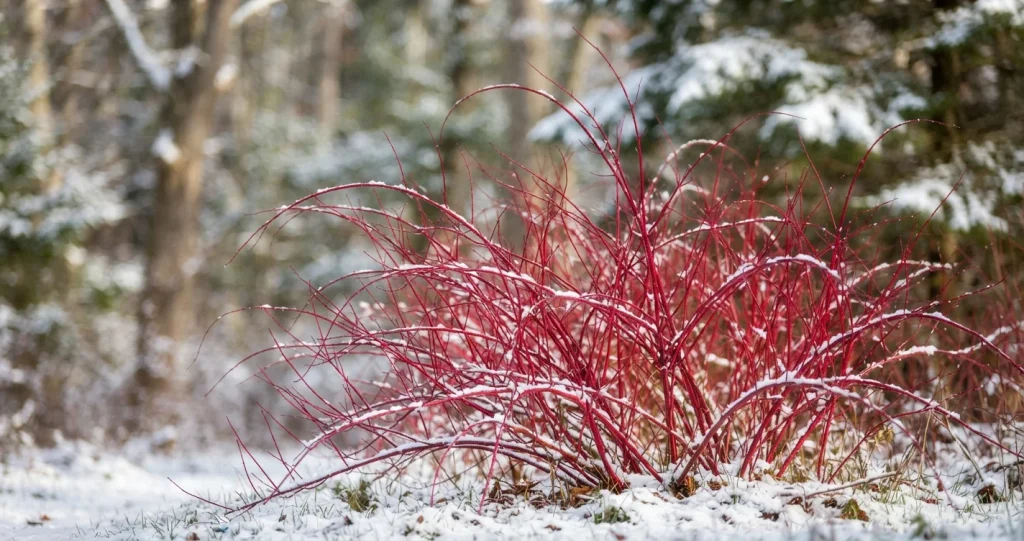
These plants are particularly valued for their brightly colored stems, which become highly visible after autumn leaf drop.
Although their flowers, foliage, and berries provide additional seasonal interest, their winter branches are often the main attraction.
Red Osier Dogwood
Red osier dogwood (Cornus sericea) is native to much of North America.
It naturally occurs in moist habitats, including streambanks, wetlands, woodland edges, and low-lying areas.
Its ability to tolerate moist soil makes it useful in many landscapes where other ornamental shrubs may struggle.
Tatarian Dogwood
Tatarian dogwood (Cornus alba) is native to parts of Asia.
It is widely cultivated in North American gardens for its colorful stems and attractive foliage.
Some cultivars feature variegated leaves, providing additional visual interest during spring and summer.
A Shrub With Year-Round Appeal
Red twig dogwoods generally produce clusters of small, pale flowers in spring or early summer.
These may be followed by light-colored fruits that attract birds.
The foliage can develop reddish or purple tones in autumn, depending on the species and cultivar.
After leaf drop, the stems become the dominant ornamental feature.
Red Twig Dogwood Pruning: The Science Behind Brighter Winter Stems
The secret to maintaining brilliant winter color lies in the age of the branches.
Young stems generally display stronger coloration than older, thicker branches. Understanding this difference explains why renewal pruning is so effective.
Why Young Stems Are Brighter
The red coloration of young dogwood stems is associated with pigments called anthocyanins.
These pigments also contribute to red and purple coloration in many leaves, flowers, and fruits.
In plants, anthocyanins can play roles in responding to environmental stress and protecting tissues from excessive light.
Their accumulation is influenced by genetics, temperature, light exposure, and tissue development.
The precise intensity of winter stem color varies among dogwood species and cultivars.
Why Older Branches Become Dull
As branches mature, their outer protective tissues change.
Older stems often develop thicker, rougher bark that appears grayish, brown, or muted red.
Although these branches remain functional, they may lose much of their ornamental appeal.
A shrub dominated by older wood can therefore appear less colorful than one containing numerous young shoots.
How Renewal Pruning Encourages New Growth
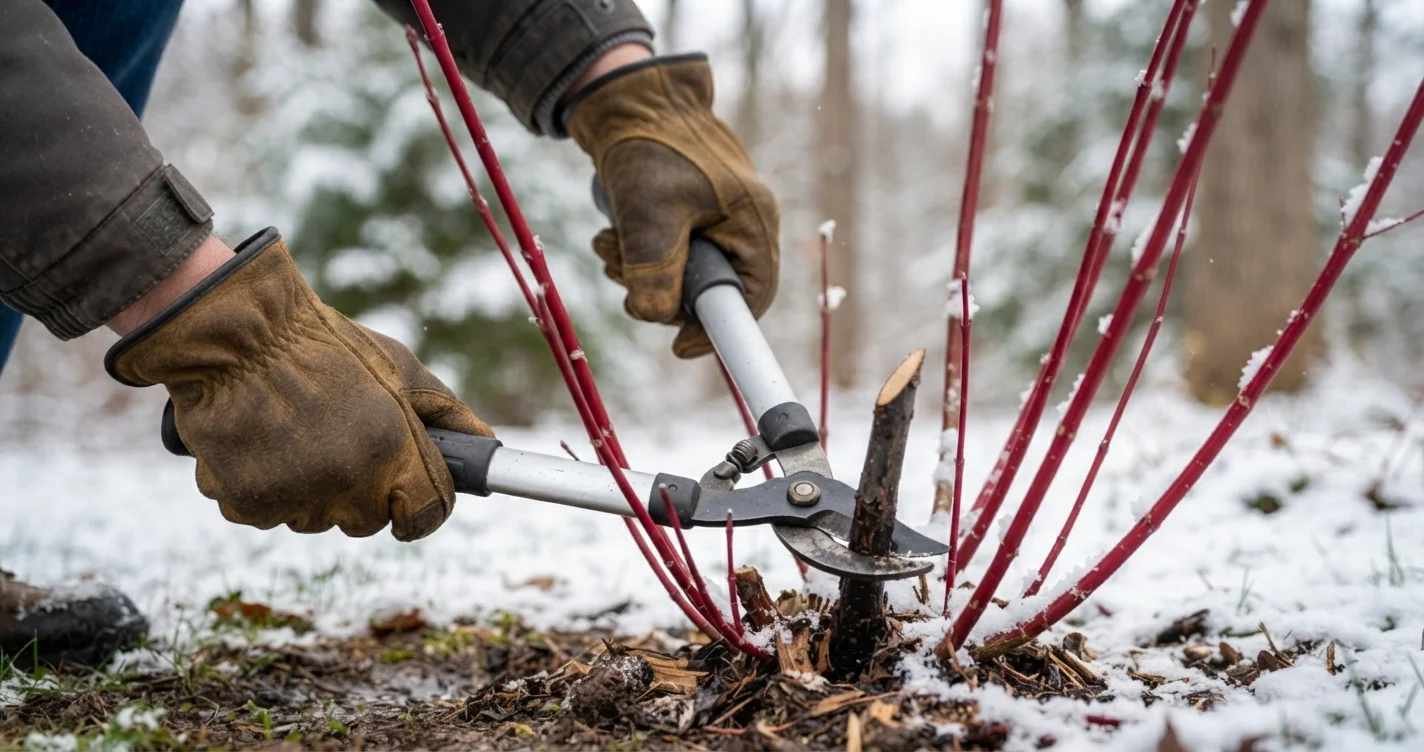
Removing selected older branches near ground level allows the shrub to direct growth into younger stems.
Established dogwoods can produce new shoots from dormant buds near the base of the plant.
These shoots develop during spring and summer before becoming prominent in the following winter landscape.
Renewal pruning does not immediately change the color of existing branches. Instead, it gradually replaces older wood with younger, more colorful growth.
The Influence of Sunlight and Temperature
Red twig dogwoods often develop their strongest stem coloration in sunny locations.
Seasonal temperature changes can also influence the appearance of their pigments.
Cold weather and the absence of foliage make the red branches especially noticeable during winter.
However, pruning alone cannot guarantee intense coloration. Cultivar selection and suitable growing conditions remain equally important.
The Best Time to Prune Red Twig Dogwood
Late winter to early spring is generally the preferred time for renewal pruning.
The shrub is still dormant or beginning to emerge from dormancy, making its branching structure easier to examine.
Enjoy the Winter Display First
Pruning too early in winter removes the colorful stems when they are most attractive.
Waiting until late winter allows gardeners to enjoy the display for most of the cold season.
Once the risk of the most severe winter weather has passed, pruning can prepare the shrub for new spring growth.
Why Summer Pruning Is Less Suitable
Heavy summer pruning removes actively growing foliage and may reduce the plant’s ability to produce and store energy.
It can also interfere with fruit development and wildlife habitat.
Light corrective pruning may occasionally be necessary, but major renewal pruning is generally better performed during dormancy.
Consider Local Climate
Gardeners in southern states may prune earlier than those living in northern regions.
Rather than following a fixed calendar date, observe local weather conditions and the shrub’s stage of development.
Ideally, major pruning should take place before substantial spring leaf growth begins.
Two Effective Pruning Methods
There are two main approaches to maintaining colorful dogwood stems: gradual renewal pruning and more intensive rejuvenation pruning.
The best choice depends on the shrub’s age, health, and purpose in the landscape.
Method 1: Annual Renewal Pruning
Annual renewal pruning is an excellent option for gardeners who want to maintain a natural-looking shrub while encouraging brighter winter stems.
In late winter or early spring:
- Identify the oldest, thickest, and dullest branches.
- Remove approximately one-quarter to one-third of these older stems near ground level.
- Preserve the younger, brightly colored branches.
- Repeat the process each year as necessary.
This technique gradually renews the shrub while maintaining its overall shape, size, and wildlife value.
University extension specialists recommend selective removal of older stems as a reliable maintenance technique for red twig dogwoods. Ask Extension+1
Method 2: Hard Rejuvenation Pruning
Hard rejuvenation pruning, sometimes called coppicing, involves cutting the entire shrub back close to ground level.
For healthy, established plants, one approach is to shorten all stems to approximately 9 inches above the ground every three years.
The plant responds by producing vigorous new shoots during the following growing season.
This method can create a more uniform display of colorful winter branches. However, it temporarily removes the shrub’s established structure and may reduce flower and fruit production. Virginia Tech
Comparing the Two Methods
| Feature | Renewal pruning | Hard rejuvenation pruning |
|---|---|---|
| Frequency | Annually | Approximately every 3 years |
| Stems removed | 25–33% of older stems | All stems |
| Shrub structure | Largely preserved | Temporarily removed |
| Winter color | Gradually renewed | More uniform new growth |
| Wildlife shelter | Better preserved | Temporarily reduced |
| Best suited for | Routine maintenance | Healthy, overgrown shrubs |
For most wildlife-friendly residential gardens, gradual renewal pruning offers a useful balance between visual appeal and ecological value.
The Best Growing Conditions for Bright Winter Color
Even correctly pruned dogwoods need suitable growing conditions to produce healthy, colorful stems.
Sunlight
Full sun generally encourages the strongest winter stem coloration.
Red twig dogwood can tolerate partial shade, but deeply shaded plants may develop less vibrant branches.
Choose a location with generous sunlight whenever possible.
Soil and Moisture
Red osier dogwood naturally grows in moist environments and can tolerate relatively wet soils.
It generally performs well in fertile soil with consistent moisture.
Its adaptability makes it a useful candidate for rain gardens, pond margins, and naturally damp areas. Plant Finder
Climate
Red twig dogwoods are particularly well suited to regions with cold winters and moderate summers.
Hardiness varies by species and cultivar.
Many red osier dogwood selections grow successfully in USDA Hardiness Zones 3–7, although some tolerate colder conditions.
Hot summers may increase environmental stress and disease susceptibility.
Watering and Mulching
Water newly planted shrubs regularly during establishment.
Apply 2–3 inches of organic mulch around the root zone to conserve moisture and moderate soil temperature.
Keep mulch away from direct contact with the stems.
Popular Red Twig Dogwood Varieties
Different cultivars offer variations in stem color, foliage, and mature size.
Cardinal Dogwood
Cornus sericea ‘Cardinal’ is appreciated for its brilliant red winter branches.
Its vivid coloration creates a particularly striking contrast against snow and evergreen foliage.
Arctic Fire Dogwood
Arctic Fire Red is a relatively compact selection of red osier dogwood.
Its smaller growth habit makes it attractive for foundation plantings, mixed borders, and residential gardens with limited space.
Siberian Dogwood
Cornus alba ‘Sibirica’ is known for its bright red stems.
It can create a dramatic winter display when planted in groups.
Yellow Twig Dogwood
Although it produces yellow rather than red stems, Cornus sericea ‘Flaviramea’ makes an excellent visual companion.
Combining red and yellow-stemmed cultivars can create a colorful winter landscape without relying on flowers.
Wildlife Benefits of Red Twig Dogwood
Red twig dogwood offers considerably more than ornamental winter color.
The native red osier dogwood can contribute to a healthy backyard ecosystem.
Flowers for Pollinating Insects
Clusters of small white flowers appear during late spring or early summer.
These blossoms provide resources for visiting pollinators, including bees and other insects.
Berries for Birds
After flowering, red osier dogwood can produce clusters of pale fruits.
These provide seasonal food for various birds.
Maintaining some mature branches through selective pruning can help preserve the shrub’s reproductive potential.
Shelter and Habitat
The dense arrangement of branches provides cover for small birds and other wildlife.
The species also serves as a host plant for certain butterfly larvae. North Carolina Extension Gardener Plant Toolbox
Gardeners prioritizing biodiversity may prefer gradual renewal pruning over regularly cutting the entire plant back.
Common Pruning and Growing Mistakes
Red twig dogwood is relatively adaptable, but several common mistakes can reduce its ornamental value.
Trimming Only the Branch Tips
Repeatedly shortening the tops of branches leaves much of the older wood in place.
This can encourage crowded growth without effectively renewing the colorful stems.
Selective removal near the base is generally more useful.
Pruning Newly Planted Shrubs Too Severely
Young shrubs need time to establish their root systems.
Allow newly planted dogwoods to develop before beginning intensive rejuvenation pruning.
Growing in Deep Shade
Insufficient sunlight may contribute to weaker stem coloration and less vigorous growth.
Consider the plant’s location before increasing pruning intensity.
Ignoring Underground Spread
Red osier dogwood naturally spreads through suckering.
Monitor its boundaries in smaller gardens and remove unwanted shoots when necessary.
In Your Own Yard: Creating a Colorful Winter Garden
Red twig dogwood becomes particularly attractive when its surroundings emphasize the color of its branches.
Plant Against Dark Evergreens
Evergreen shrubs and conifers provide a contrasting background that makes red stems appear even brighter.
This combination remains visually interesting throughout winter.
Combine Red and Yellow Stems
Plant red twig and yellow twig dogwoods together to create a layered display of warm colors.
Allow adequate space for each shrub’s mature size.
Add Winter-Flowering Plants
Winter jasmine and other suitable cold-season flowering shrubs can complement red twig dogwood.
Their yellow blossoms introduce another layer of seasonal interest.
Create a Wildlife-Friendly Rain Garden
In suitable climates, native red osier dogwood can form part of a rain garden that temporarily collects runoff.
Combine it with regionally appropriate moisture-tolerant grasses, sedges, and flowering perennials.
Follow a Simple Annual Maintenance Routine
Enjoy the colorful stems throughout winter.
In early spring, remove selected older branches. During summer, monitor moisture and growth. In autumn, allow the foliage to fall naturally and watch the younger stems become increasingly prominent.
This seasonal rhythm helps maintain an attractive shrub without unnecessary maintenance.
Frequently Asked Questions
1. Should red twig dogwood be pruned every year?
Annual renewal pruning is often beneficial for established shrubs. Removing approximately one-quarter to one-third of the oldest stems encourages fresh growth while preserving the plant’s natural structure. Hard rejuvenation pruning is an alternative for healthy specimens that need more extensive renewal.
2. Why are my red twig dogwood branches turning brown?
Older branches naturally develop duller bark as they mature. Insufficient sunlight and environmental stress may also affect coloration. Selective pruning encourages younger, brighter stems. However, brittle branches, sunken lesions, or extensive dieback may indicate a separate health problem.
3. Can I cut red twig dogwood completely to the ground?
Healthy, established red twig dogwoods often tolerate hard rejuvenation pruning. Cutting stems back to several inches above ground level can stimulate vigorous new growth. However, this approach temporarily reduces shelter, flowering, and potentially fruit production. Gradual renewal is often preferable in wildlife-friendly gardens.
Conclusion
Imagine looking across a snow-covered garden and discovering dozens of brilliant crimson stems standing against the white landscape.
Their color comes from living growth produced months earlier.
Proper red twig dogwood pruning helps maintain this remarkable seasonal display by encouraging young branches to replace older, duller wood.
Combined with adequate sunlight, consistent moisture, and thoughtful cultivar selection, renewal pruning can keep these shrubs attractive for years.
Their flowers, fruits, and dense branches also provide opportunities to support backyard biodiversity.
While many plants disappear into winter dormancy, red twig dogwood turns the coldest season into its most spectacular moment.
Sometimes, a garden needs only a handful of colorful branches to bring winter back to life.
External Sources
1. Why Some Stems Are Red — Scientific Research
Researchers discovered that the red pigments in dogwood stems help protect their photosynthetic tissues from excessive light exposure. Their brilliant color has a biological function beyond ornamental beauty. PubMed Central (PMC)
2. Virginia Cooperative Extension — Red Twig Dogwoods
Healthy, established dogwood shrubs can be cut back to just 9 inches above the ground approximately every three years to encourage vigorous, brightly colored new stems. Virginia Tech