
A fern that looks lush and healthy on a shaded summer porch can begin shedding hundreds of tiny leaflets just weeks after being brought indoors. Surprisingly, the problem may have less to do with the cold outside than with the warm, dry air inside your home.
Proper Boston fern winter care begins with understanding how indoor heating, reduced sunlight, and changing moisture levels affect this moisture-loving houseplant.
The Boston fern (Nephrolepis exaltata ‘Bostoniensis’) is admired for its graceful, arching green fronds and naturally full appearance. However, winter conditions can make maintaining that tropical beauty challenging.
Brown tips, crispy leaflets, and thinning foliage are common seasonal problems.
Fortunately, adjusting humidity, watering habits, and plant placement can often reduce unnecessary leaf drop and help your fern remain healthy until spring.
Table of Contents
- Understanding the Boston Fern
- Boston Fern Winter Care: The Science Behind Leaf Drop
- Signs Your Boston Fern Is Struggling in Winter
- How to Increase Indoor Humidity
- How Often to Water a Boston Fern in Winter
- Finding the Best Winter Location
- Pruning, Fertilizing, and Repotting
- Common Boston Fern Winter Care Mistakes
- In Your Own Yard: Preparing Your Fern for Seasonal Changes
- Frequently Asked Questions
Understanding the Boston Fern
The Boston fern is a cultivated form of the sword fern, a species associated with tropical and subtropical environments.
Its long, arching fronds consist of numerous small green leaflets, giving the plant its distinctive feathery appearance.
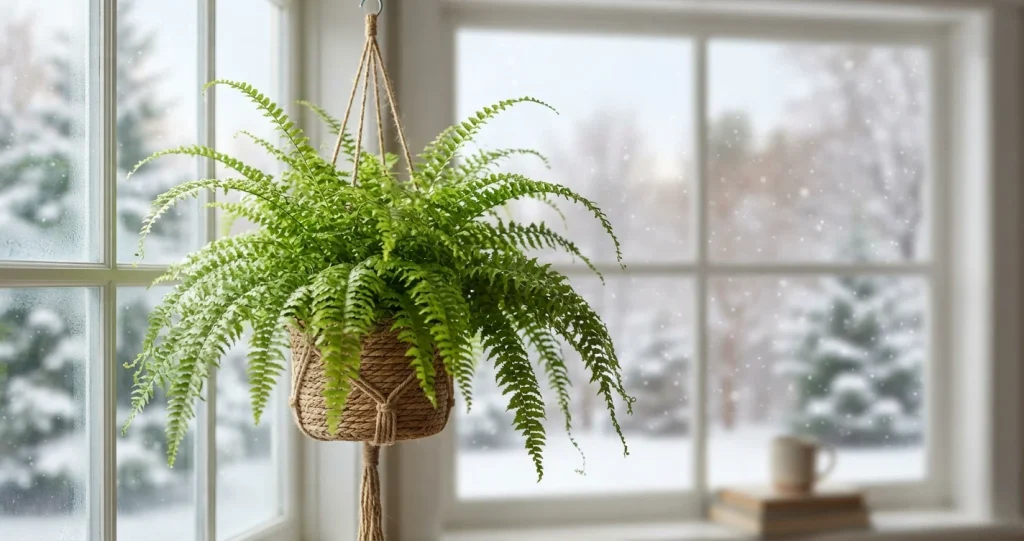
Boston ferns are popular in hanging baskets, decorative containers, shaded porches, and indoor living spaces.
A Plant Adapted to Humid Environments
In suitable natural environments, sword ferns grow where moisture is relatively abundant and temperatures remain moderate to warm.
Their foliage is adapted to conditions that differ considerably from those found inside many heated homes during winter.
Dry indoor air, fluctuating temperatures, and limited daylight can place considerable stress on these plants.
Why Boston Ferns Shed Their Leaflets
Some shedding is a natural part of fern development.
Older fronds gradually decline as the plant produces new growth.
However, excessive leaf drop, particularly when accompanied by browning and crispy foliage, often indicates unfavorable growing conditions.
Identifying the underlying problem is the first step toward improving the plant’s appearance.
Boston Fern Winter Care: The Science Behind Leaf Drop
Understanding how ferns exchange moisture with their surroundings explains why winter can be such a difficult season indoors.
How Ferns Lose Water Through Their Leaves
Like other vascular plants, Boston ferns release water vapor through microscopic openings called stomata.
This process, known as transpiration, helps move water and dissolved minerals through the plant.
When the surrounding air becomes dry, the difference in moisture between the leaf and the atmosphere increases.
Under these conditions, water loss can increase if the plant’s stomata remain open.
If the roots cannot replace lost moisture quickly enough, the foliage may begin to dry out.
How Indoor Heating Changes Humidity
Cold outdoor air generally contains less moisture than warm summer air.
When this air enters a home and is heated without additional moisture, its relative humidity decreases.
Central heating systems, radiators, and space heaters can therefore create conditions quite different from those Boston ferns prefer.
A fern placed near a heating vent may experience particularly rapid moisture loss.
Why Watering Alone Cannot Solve the Problem
It is tempting to add more water whenever a fern develops brown leaf tips.
However, soil moisture and atmospheric humidity are two different environmental factors.
A fern can experience dry-air stress even when its potting mix contains sufficient moisture.
Excessive watering may instead reduce oxygen around the roots, making it more difficult for the plant to absorb water effectively.
Successful Boston fern winter care requires balancing root-zone moisture with suitable atmospheric humidity.
How Shorter Winter Days Affect Growth
During winter, reduced daylight often slows photosynthesis and growth.
A fern growing more slowly may use less water than it did during summer.
However, indoor heating can simultaneously increase evaporation from the potting mix.
This combination explains why a fixed watering schedule is often less effective than regularly checking soil moisture.
Signs Your Boston Fern Is Struggling in Winter
Boston ferns often provide visible warning signs when their growing conditions become unfavorable.
Learning to recognize these symptoms can help you identify the problem before extensive foliage loss occurs.
Brown, Crispy Leaf Tips
Dry air is a common cause of brown leaf tips.
However, underwatering, excessive fertilizer, and accumulated mineral salts may produce similar symptoms.
Check the potting mix and indoor humidity before changing your watering routine.
Yellowing and Falling Leaves
When numerous leaflets turn yellow and fall, the plant may be experiencing environmental stress.
Insufficient light, low humidity, excessive watering, and natural aging can all contribute to this problem.
The New York Botanical Garden identifies inadequate light as one possible cause of persistent leaflet shedding in Boston ferns. NYBG Mertz Library Reference
Wilting Despite Moist Soil
Wilting accompanied by persistently wet soil may indicate root problems.
Healthy roots require oxygen to function properly.
When drainage is inadequate, roots can deteriorate and lose their ability to absorb moisture.
Common Symptoms and Solutions
| Symptom | Possible cause | Suggested action |
|---|---|---|
| Crispy brown tips | Low humidity | Increase humidity |
| Dry, brittle fronds | Underwatering | Check soil moisture |
| Yellow, soft foliage | Excessive watering | Improve drainage |
| Excessive leaf drop | Low light or humidity | Adjust growing conditions |
| Bleached foliage | Excessive direct sunlight | Provide filtered light |
| Fine webbing | Spider mites | Inspect and isolate the plant |
Several problems can occur simultaneously, so avoid diagnosing your fern based on a single symptom.
How to Increase Indoor Humidity
Improving humidity is one of the most important aspects of Boston fern winter care.
Many indoor ferns benefit from relative humidity levels of approximately 40–50%, according to Purdue University Extension. ag.purdue.edu
Use a Humidifier
A humidifier offers a relatively consistent way to increase indoor humidity.
Place it near the fern without directing a continuous stream of mist onto the foliage.
A small digital hygrometer can help monitor humidity levels.
Keep the humidifier clean and avoid creating excessively damp indoor conditions.
Group Houseplants Together
Grouping several houseplants may create a slightly more humid local environment as their leaves release moisture.
Leave enough space between plants to maintain reasonable air circulation.
This method works best as a supplementary measure rather than a replacement for a humidifier.
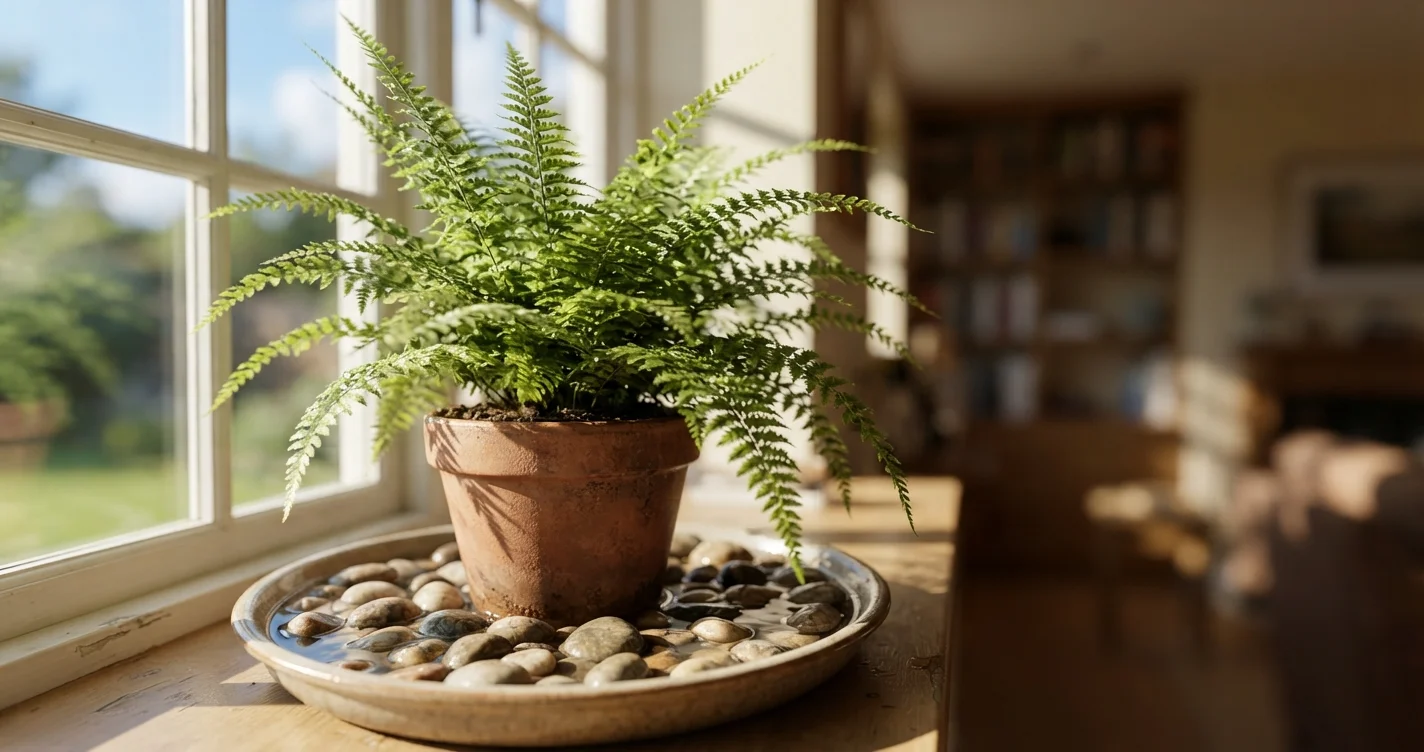
Try a Pebble Tray
Fill a shallow tray with pebbles and add water below the upper surface of the stones.
Place the fern’s container on top, ensuring that its base remains above the water.
Evaporation may provide a modest increase in humidity immediately around the plant, although the effect is generally limited.
Understand the Limitations of Misting
Light misting temporarily moistens foliage, but its effect on atmospheric humidity is usually short-lived.
A humidifier provides more consistent results.
Occasional misting may help remove dust, but it should not be the main strategy for preventing winter leaf drop.
How Often to Water a Boston Fern in Winter
Boston ferns prefer consistent moisture, but their roots also require adequate drainage.
Finding the balance between overly dry and saturated soil is essential.
Check the Soil Before Watering
Instead of watering on a fixed schedule, examine the surface of the potting mix regularly.
When the surface begins to dry slightly, check the moisture beneath it.
The root ball should generally remain lightly and evenly moist.
Water Thoroughly and Allow Drainage
Use room-temperature water and distribute it evenly across the potting mix.
Allow excess water to drain through the container’s drainage holes.
Empty the saucer afterward to prevent the roots from sitting in standing water.
Adjust Watering to Indoor Conditions
A fern in a cool room may require less frequent watering than one growing in a warmer, brighter location.
Container size, potting mix, humidity, and plant size also influence moisture requirements.
University of Wisconsin Extension recommends maintaining consistent moisture without keeping the growing medium saturated. Wisconsin Horticulture
Finding the Best Winter Location
Where you place your Boston fern can significantly influence its winter health.
Provide Bright, Indirect Light
An east-facing window is often a suitable location.
A position several feet away from a brighter south- or west-facing window may also work.
Avoid intense direct sunlight that can scorch delicate fronds.
Maintain Moderate Temperatures
Temperatures around 60–70°F are generally suitable for Boston ferns.
A relatively cool, stable indoor environment may help reduce moisture stress.
Keep the plant away from freezing drafts and sudden temperature changes. North Carolina Extension Gardener Plant Toolbox
Keep Away From Heating Vents
Radiators, fireplaces, and forced-air heating vents can expose foliage to warm, dry air.
Even when the room’s average humidity is acceptable, air moving directly across the fronds can accelerate drying.
Choose a location with gentle air circulation instead.
Consider a Bright Bathroom
A bathroom with sufficient natural light may offer favorable humidity conditions.
However, a windowless bathroom is unlikely to provide enough light unless suitable supplemental lighting is installed.
Pruning, Fertilizing, and Repotting
Winter maintenance should generally focus on preserving the fern rather than encouraging rapid growth.
Remove Dead Fronds
Use clean scissors to remove completely brown or dried fronds near their base.
Preserve healthy green foliage whenever possible.
Removing dead material improves the plant’s appearance and makes it easier to inspect for pests.
Reduce Fertilizer Applications
Boston ferns often grow more slowly during winter.
If the plant is producing little new growth, supplemental fertilizer is generally unnecessary.
Resume light feeding when active growth returns.
Excessive fertilizer can contribute to browning along the fronds.
Wait Until Spring to Repot
Unless drainage problems or root disease require immediate attention, spring is generally a better time for repotting.
Choose a container with drainage holes and a loose potting medium that retains moisture while allowing excess water to escape.
Avoid moving the plant into an unnecessarily large pot. Missouri Botanical Garden
Common Boston Fern Winter Care Mistakes
Small maintenance mistakes can gradually contribute to significant foliage loss.
Watering More to Compensate for Dry Air
Atmospheric humidity cannot be corrected simply by saturating the potting mix.
Treat dry air and soil moisture as separate environmental factors.
Keeping the Fern in a Dark Corner
Although Boston ferns tolerate filtered light, prolonged darkness can weaken growth and encourage shedding.
Provide adequate indirect daylight throughout winter.
Ignoring Indoor Pests
Scale insects, mealybugs, and spider mites can affect indoor ferns.
Inspect the undersides of fronds and areas near the base of the plant.
Remember that regularly arranged brown structures beneath fern leaflets may be sori, which produce spores, rather than insect pests.
Expecting Damaged Leaves to Recover
Brown, crispy leaf tissue will not become green again.
Instead of focusing on reversing existing damage, watch for reduced shedding and healthy new growth.
Recovery may take several weeks or longer, depending on growing conditions.
In Your Own Yard: Preparing Your Fern for Seasonal Changes
If your Boston fern spends summer outdoors, preparing it for indoor conditions before winter can reduce unnecessary stress.
Bring Your Fern Indoors Before Frost
Boston ferns are sensitive to freezing temperatures.
Monitor autumn forecasts and move outdoor containers into a protected indoor environment before frost arrives.
Clean and Inspect the Plant
Examine the foliage for insects, damaged fronds, and accumulated debris.
On a mild day, gently rinse the plant outdoors and allow excess water to drain before bringing it inside.
Keep it separate from other houseplants initially so you can monitor for pests.
Establish a Weekly Care Routine
Check soil moisture, monitor humidity, remove dead foliage, and inspect the plant for signs of stress.
Make gradual adjustments rather than repeatedly changing its location or watering habits.
Return the Fern Outdoors Gradually
Once spring temperatures become consistently mild and frost danger has passed, begin moving your fern outdoors.
Start with a protected, shaded location.
Gradual acclimation helps reduce stress from wind, sunlight, and changing temperatures.
NC Cooperative Extension recommends protecting outdoor Boston ferns from frost and reducing maintenance inputs during periods of limited winter growth. N.C. Cooperative Extension
Frequently Asked Questions
1. Why is my Boston fern dropping so many leaves in winter?
Low indoor humidity, inadequate light, inconsistent watering, and exposure to heating vents are common contributing factors. Check the growing conditions before increasing watering. Some shedding is natural, but extensive foliage loss may indicate environmental stress.
2. Should I mist my Boston fern every day during winter?
Daily misting is not essential and generally provides only temporary moisture. A humidifier, appropriate plant placement, and careful watering offer more consistent support. Occasional light misting can help clean the foliage.
3. Can a Boston fern recover after losing most of its leaves?
Yes, recovery is possible if the roots and crown remain healthy. Remove dried fronds, provide suitable humidity and indirect light, and maintain appropriate soil moisture. New fronds may emerge when growing conditions improve, particularly during spring.
Conclusion
Imagine looking at your Boston fern in the middle of January and discovering fresh green fronds unfurling from its center.
Outside, the garden remains dormant, but indoors, a little corner of greenery continues to grow.
The secret to successful Boston fern winter care is understanding the relationship between humidity, light, temperature, and soil moisture.
Consistent growing conditions, thoughtful watering, and protection from dry indoor heat can help reduce excessive leaf drop.
Some seasonal shedding may still occur, but with patience and appropriate care, your fern can enter spring in good condition.
Sometimes, keeping a tropical plant beautiful through winter is simply a matter of bringing a little of its natural environment indoors.
External Sources
1. https://planttalk.colostate.edu/topics/houseplants/1307-ferns/
Ferns hanging near the ceiling are exposed to warmer, drier air during the heating season, which can damage their fronds. PlantTalk Colorado
2. https://ag.purdue.edu/department/hla/extension/extension-publications-library/ext-pubs/ho-141-w.html
Indoor humidity can fall to 10–15%, while ferns generally prefer 40–50%. This difference can contribute to yellowing, brown tips, and leaflet loss. ag.purdue.edu
3. https://lancaster.unl.edu/dry-air-murder-ferns/
Even misting several times a day provides little lasting improvement in humidity, while repeatedly wetting the foliage may encourage disease. Nebraska