
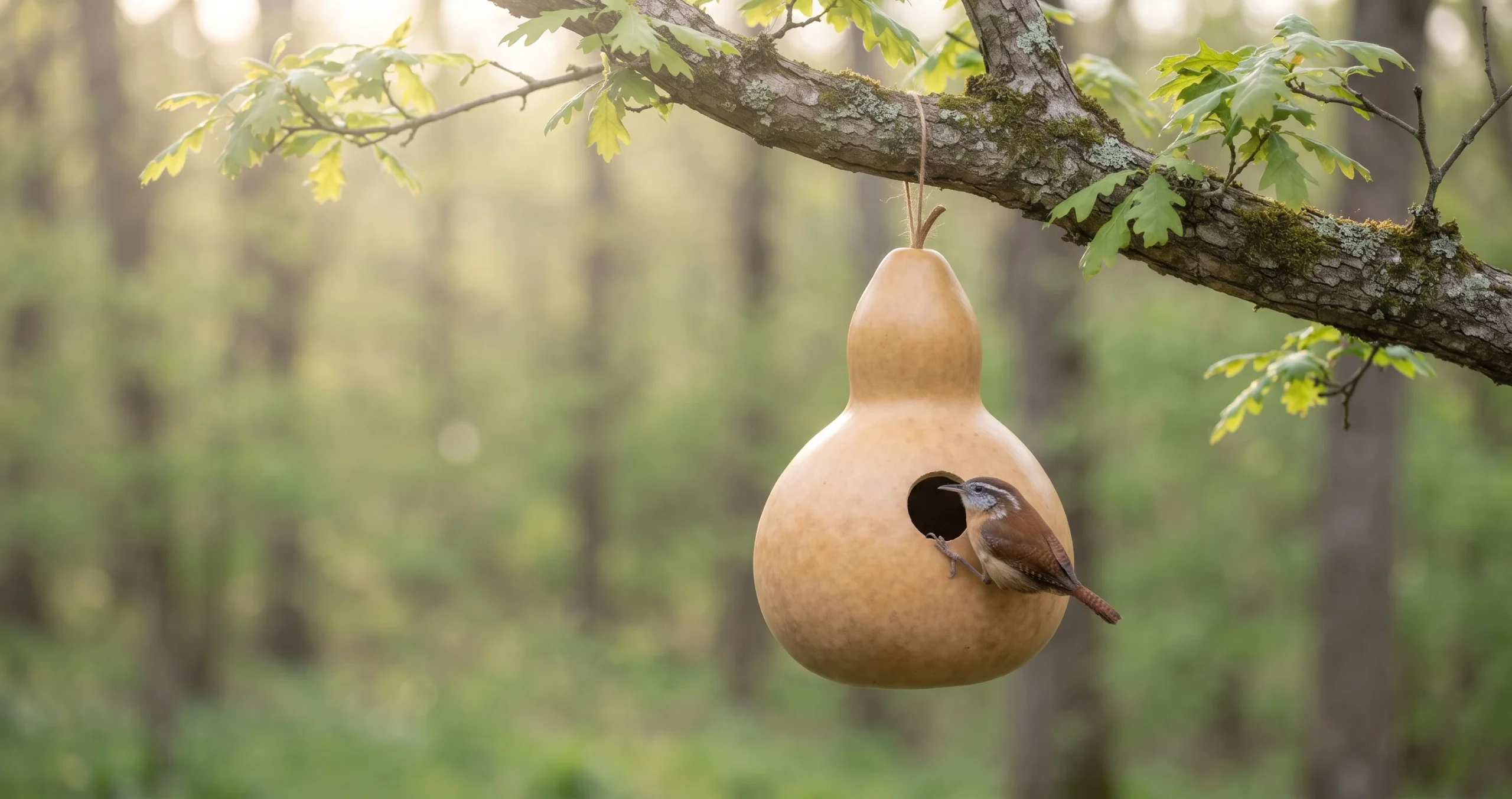
Making a gourd birdhouse is a rewarding way to turn a naturally grown fruit into a functional nesting shelter for backyard birds. With a properly dried hard-shell gourd, a few basic tools, and some careful preparation, you can create a rustic birdhouse that complements your garden while supporting local wildlife.
Unlike purely decorative garden ornaments, a well-designed nesting shelter serves a practical purpose. The secret is to provide suitable interior space, an appropriately sized entrance, adequate ventilation, and reliable drainage.
This step-by-step guide explains everything from selecting and drying gourds to preparing, hanging, and maintaining your finished birdhouse.
Table of Contents
- Why Gourds Make Good Birdhouses
- Choosing the Right Gourd
- Tools and Materials Needed
- How to Dry a Birdhouse Gourd
- Cleaning the Dried Gourd
- Drilling the Entrance Hole
- Adding Drainage and Ventilation Holes
- Sealing and Painting the Exterior
- Where and How to Hang Your Birdhouse
- Annual Cleaning and Maintenance
- Common Mistakes to Avoid
- Frequently Asked Questions
Why Gourds Make Good Birdhouses
Hard-shell gourds, particularly bottle gourds (Lagenaria siceraria), develop a firm, woody exterior as they mature and dry. Once their seeds and dried internal material are removed, they provide a hollow chamber that can resemble a natural nesting cavity.
Several North American birds naturally seek enclosed spaces for raising their young. Chickadees, wrens, bluebirds, and purple martins may use artificial nesting shelters when the dimensions and surrounding habitat meet their particular needs.
A properly prepared gourd birdhouse offers several advantages:
- Makes productive use of garden-grown materials.
- Requires relatively few construction tools.
- Provides potential nesting opportunities for cavity-nesting birds.
- Blends naturally into garden landscapes.
- Can be reused across multiple nesting seasons when maintained properly.
However, natural materials are not automatically suitable for every bird. Gourds with thin shells, inadequate ventilation, or unsuitable dimensions may offer less protection than purpose-built wooden nest boxes.
Choosing the Right Gourd
Bottle gourds, kettle gourds, and other large hard-shell varieties are generally suitable for this project. Their rounded lower chambers provide interior space, while their narrower upper sections can accommodate hanging hardware.
Look for a mature gourd with a sturdy shell, a generously rounded base, and no structural damage. Avoid specimens with deep cracks, soft patches, extensive decay, or unusually thin walls.
The size of the nesting chamber should match the intended bird species. Small birds such as chickadees need less interior space than bluebirds or purple martins.
If you are growing your own gourds, allow them to mature fully on the vine whenever growing conditions permit. Harvest them carefully when their stems begin drying, leaving a short section of stem attached.
Tools and Materials Needed
You do not need an elaborate woodworking workshop to complete this project.
Gather the following supplies:
- One fully mature, dried hard-shell gourd
- Electric drill
- Hole saw sized for the intended bird species
- 1/4-inch drill bit
- Pencil and measuring tape
- Soft scrubbing brush
- Sandpaper or small file
- Long-handled spoon or narrow scraping tool
- Weather-resistant hanging wire
- Optional water-based exterior finish
- Protective gloves, safety glasses, and an N95 dust mask
A padded work surface or secure support is also useful for preventing the rounded gourd from moving during drilling.
How to Dry a Birdhouse Gourd
Drying is usually the longest stage of the project. A freshly harvested gourd contains considerable moisture, and working with it too early can lead to decay or structural damage.
Prepare the freshly harvested gourd
Remove loose soil and surface debris using a damp cloth. Handle the shell gently to avoid bruising or puncturing it.
Place the gourd in a sheltered, dry location with good airflow. A ventilated shed, covered porch, or suitable drying rack can work well.
If you are drying several gourds, leave enough space between them for air circulation.
Allow several months for curing
Large hard-shell gourds commonly require several months to dry completely. Depending on their size, maturity, humidity, and ventilation, curing may take about three to six months or longer.
Do not rely exclusively on a calendar. The physical condition of the shell is a more useful indicator of readiness.
Recognize a fully dried gourd
A properly cured gourd generally feels noticeably lighter than it did at harvest. Its shell should be firm, with no damp or yielding areas.
Loose seeds may produce a rattling sound when shaken, although some dried internal material can remain attached.
Superficial discoloration or mold can develop during curing. Discard any gourd that becomes soft, extensively rotten, or structurally compromised.
Cleaning the Dried Gourd
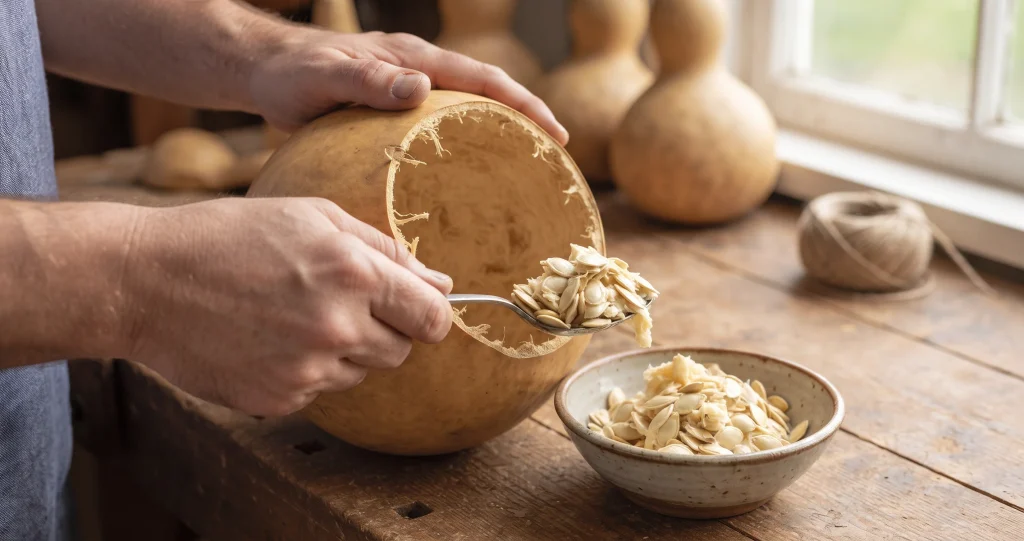
Once curing is complete, clean the exterior before beginning construction. Work outdoors or in a well-ventilated area, especially when handling gourds with visible surface mold.
Use water and a scrubbing brush to remove loose dirt and dried surface residue. Wear suitable protective equipment to reduce exposure to dust and mold particles.
Allow the shell to dry again before drilling.
After creating the entrance hole, remove the seeds and loose internal fibers using a narrow scraping tool. Avoid aggressively scraping the shell, since excessive pressure could weaken or puncture it.
The interior should remain naturally textured rather than polished smooth. A slightly rough surface below the entrance can help young birds climb toward the opening.
Drilling the Entrance Hole in Your Gourd Birdhouse
The entrance diameter influences which birds can access the nesting chamber. An unnecessarily large opening may also increase competition from other species.
Choose the intended bird species before selecting your drill bit.
Recommended birdhouse entrance hole sizes
| Bird species | Entrance diameter |
|---|---|
| House wren | 1–1 1/8 inches |
| Black-capped chickadee | 1 1/8 inches |
| Carolina chickadee | 1 1/8 inches |
| Tufted titmouse | 1 1/4 inches |
| Tree swallow | 1 3/8 inches |
| Eastern bluebird | 1 1/2 inches |
| Western bluebird | 1 1/2 inches |
| Carolina wren | 1 1/2 inches |
| Mountain bluebird | 1 9/16 inches |
These dimensions are based on species-specific nesting recommendations. Cornell’s NestWatch generally recommends a 1-inch opening for house wrens, while some university extension resources specify 1 1/8 inches.
Drill the opening carefully
Mark the entrance on the rounded side of the gourd, leaving enough space beneath it for the nest. The opening should face outward rather than upward, where rain could enter more easily.
Secure the gourd against a padded support and use an appropriately sized hole saw. Apply controlled pressure to avoid cracking the shell.
Smooth any sharp entrance edges with a small file or sandpaper. Do not install an exterior perch, since cavity-nesting birds do not require one and it may assist predators.
Adding Drainage and Ventilation Holes
Even a carefully positioned birdhouse can accumulate moisture during wet weather. Drainage and ventilation are essential design features rather than optional additions.
Drill drainage holes
Using a 1/4-inch drill bit, create approximately four drainage holes around the lowest part of the rounded base.
Position the openings so water can escape without collecting in depressions. Remove loose drilling debris and check that every hole remains unobstructed.
Add ventilation openings
Create several small ventilation holes near the upper sides of the shell, where they can encourage airflow while limiting direct exposure to rainfall.
Ventilation cannot fully compensate for a thin shell or prolonged exposure to intense sunlight. Choose a suitable installation location to reduce overheating.
Sealing and Painting the Exterior
A natural gourd can be left unfinished, but an appropriate exterior coating may help protect its shell against weathering.
If you decide to apply a finish, choose a water-based exterior product suitable for the intended use. White, cream, and other light colors absorb less solar heat than dark finishes.
Apply thin coats to the outside only and follow the manufacturer’s drying and curing instructions. Keep the nesting chamber unpainted and free from sealants, preservatives, and chemical residues.
Allow the finish to cure completely before installing the birdhouse. Check that paint has not blocked the drainage or ventilation openings.
Simple, natural finishes are generally preferable to elaborate decorations that interfere with the birdhouse’s function.
Where and How to Hang Your Gourd Birdhouse
Location can be just as important as construction. A correctly sized birdhouse may remain unused if placed in unsuitable habitat.
Choose a suitable mounting height
Different birds prefer different nesting environments.
| Bird species | Approximate mounting height | Preferred surroundings |
|---|---|---|
| House wren | 5–10 feet | Shrubs and garden edges |
| Black-capped chickadee | 5–15 feet | Mature trees and partial sunlight |
| Carolina wren | 3–6 feet | Sheltered areas near vegetation |
| Eastern bluebird | 3–6 feet | Open fields and lawns |
| Western bluebird | 4–6 feet | Open grassy areas |
These ranges are based on Cornell NestWatch guidance. NestWatch
Secure the birdhouse
Drill two opposing holes near the top of the gourd and thread weather-resistant wire through them. Secure the ends without leaving exposed sharp points.
For greater predator protection, consider attaching the shelter securely to a freestanding metal support equipped with a predator baffle. Purpose-built wooden nest boxes mounted on protected poles may be preferable for species such as bluebirds.
Avoid locations where cats, raccoons, or other climbing predators can easily reach the entrance.
Create a welcoming garden habitat
A nesting shelter is only one component of a wildlife-friendly garden. Native plants, fresh water, natural cover, and insect-rich vegetation also contribute to suitable bird habitat.
Fruit-bearing plants can offer additional seasonal resources. Discover how roses support garden wildlife in our guide to how rose hips form and why birds love them.
Install nesting shelters before the local spring breeding season begins, and allow birds to discover them without unnecessary disturbance.
Annual Cleaning and Maintenance
Inspect and clean your gourd birdhouse at least once a year, preferably after the breeding season when you have confirmed that it is no longer occupied.
Wear gloves and suitable dust protection while removing old nesting material. Use a narrow tool to loosen debris and rinse the chamber with water when necessary.
Allow the interior to dry thoroughly before reinstalling the shelter.
During your annual inspection, check for:
- Cracks or weakened shell areas
- Blocked drainage holes
- Damaged hanging hardware
- Peeling exterior finishes
- Structural decay
Never remove an active nest containing eggs or young birds. If the entrance is too small for effective cleaning, consider using a design with a secure removable access port or replacing the shelter with a more accessible nesting box.
Common Mistakes to Avoid
One frequent mistake is drilling a gourd before its shell has completely cured. Residual moisture may encourage decay and reduce durability.
Other common mistakes include choosing an oversized entrance, overlooking drainage, coating the interior, and hanging the shelter where predators can easily reach it.
Avoid installing a gourd in an exposed location where strong winds cause continuous swinging. Also, do not assume that every backyard bird will use an enclosed nesting shelter.
The design should prioritize the needs of wildlife rather than decorative appearance.
Frequently Asked Questions
How long does it take to dry a birdhouse gourd?
Drying generally takes several months, often about three to six months or longer. Large gourds and humid conditions may extend the curing period.
Can I make a birdhouse from a fresh gourd?
A fresh gourd should be fully cured before construction. Its high moisture content makes it more vulnerable to deterioration.
Should a gourd birdhouse have a perch?
No. Most cavity-nesting birds can enter without a perch, and adding one may make the entrance more accessible to predators.
What birds nest in dried gourds?
Wrens, chickadees, bluebirds, tree swallows, and purple martins may use appropriately designed gourds. Occupancy depends on entrance dimensions, interior space, local bird populations, and habitat.
Purple martins have specialized colony-housing requirements, so a general-purpose garden gourd should not automatically be considered suitable for them.
Can a gourd birdhouse stay outside all winter?
A sound, weather-resistant gourd may remain outdoors during winter. However, prolonged moisture, freezing conditions, and strong winds can shorten its usable life.
Why are birds not using my birdhouse?
Possible reasons include unsuitable entrance dimensions, insufficient interior space, poor placement, predator activity, or a lack of suitable surrounding habitat.
Birds may also need time to discover a newly installed nesting shelter.
How long will a gourd birdhouse last?
A well-cured gourd may remain usable for several nesting seasons. Its lifespan varies considerably with shell thickness, weather exposure, mounting conditions, and maintenance.
Replace it whenever structural deterioration makes it unsuitable for nesting.
Conclusion
Creating a gourd birdhouse is a practical gardening project that connects natural materials, creativity, and backyard wildlife conservation. With patience during curing and attention to construction details, a harvested gourd can become a functional nesting shelter.
Choose a sturdy specimen, drill an entrance appropriate for your target species, provide drainage and airflow, and keep the interior untreated. Secure the finished shelter in suitable habitat and inspect it between nesting seasons.
Combined with native vegetation, water sources, and responsible gardening practices, this simple project can contribute to a more welcoming environment for cavity-nesting birds.
External Sources
1. Gourd Birdhouses
Explain how to dry, prepare, drill, and hang natural gourds for nesting birds.
University of Nebraska–Lincoln Extension. https://lancaster.unl.edu/gourd-birdhouses/