
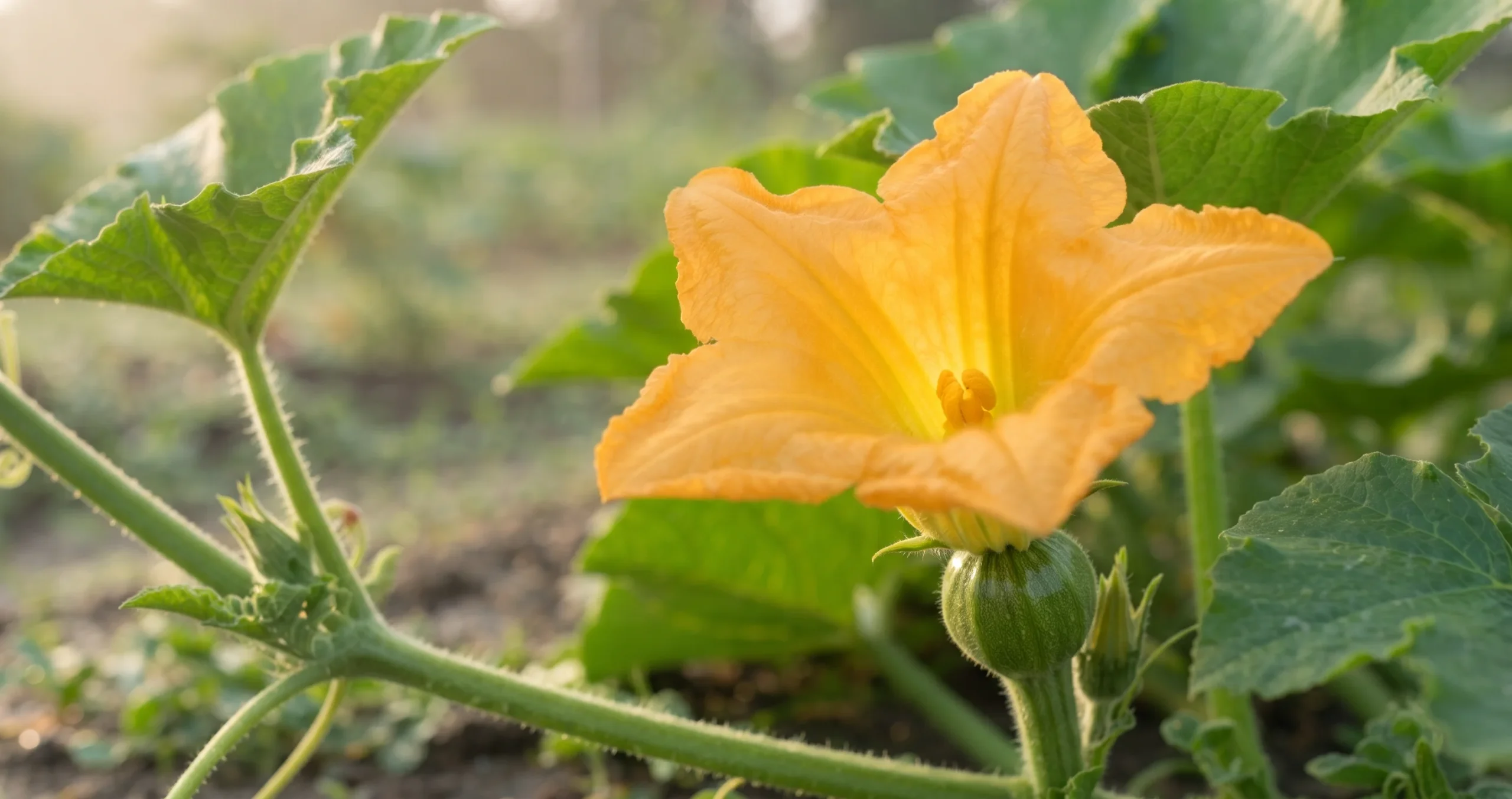
Understanding pumpkin male and female flowers is one of the most important steps toward growing a successful pumpkin harvest. Although pumpkin vines often produce dozens of bright yellow blossoms, only female flowers can develop into pumpkins, and successful pollination is usually necessary for fruit development.
Many gardeners become concerned when tiny pumpkins turn yellow, shrivel, and fall from the vine. Inadequate pollination is a common explanation, although environmental stress can also contribute.
Fortunately, identifying pumpkin flowers and transferring pollen by hand is relatively simple. With a little knowledge of pumpkin plant biology, you can support natural pollination and improve your chances of harvesting healthy, mature pumpkins.
Table of Contents
- Understanding Pumpkin Male and Female Flowers
- How to Identify Male Pumpkin Flowers
- How to Identify Female Pumpkin Flowers
- Why Male Flowers Usually Appear First
- How Bees Pollinate Pumpkin Flowers
- Why Baby Pumpkins Turn Yellow and Shrivel
- The Best Time to Pollinate Pumpkin Flowers
- How to Hand-Pollinate Pumpkins in 5 Easy Steps
- How to Attract More Pollinators
- Essential Tips for Growing Healthy Pumpkins
- Frequently Asked Questions
Understanding Pumpkin Male and Female Flowers
Pumpkins belong to the cucurbit family, which also includes squash, cucumbers, melons, and gourds. Most pumpkin plants are monoecious, meaning they produce separate male and female flowers on the same plant.
Both types of flowers are necessary for normal sexual reproduction. Male flowers produce pollen, while female flowers contain the structures needed to receive pollen and develop fruit.
Although pumpkin male and female flowers look similar from a distance, examining their stems and centers reveals several distinctive differences.
| Feature | Male pumpkin flower | Female pumpkin flower |
|---|---|---|
| Flower stem | Long and relatively thin | Usually shorter and thicker |
| Base of flower | No swollen ovary | Small, pumpkin-shaped ovary |
| Central structure | Pollen-bearing anthers | Lobed stigma |
| Primary function | Produces pollen | Receives pollen and develops fruit |
| Appearance | Usually emerges first | Often appears later |
| Fruit production | Does not produce fruit | Can develop into a pumpkin |
Recognizing these differences makes it easier to monitor flowering, identify pollination problems, and intervene when necessary.
How to Identify Male Pumpkin Flowers
Male pumpkin flowers are typically the first blossoms to appear on a developing vine. They grow on relatively long, slender stems without a rounded swelling directly beneath the petals.
Inside each male flower is a central pollen-bearing structure. When the flower is mature, its anthers carry yellow pollen that can be transferred by visiting insects.
Male flowers often appear in greater numbers than female flowers, particularly during the early stages of plant development.
Their presence is completely normal and does not indicate that something is wrong with the plant. Without a supply of viable pollen, female flowers would have difficulty producing fruit.
Avoid removing male flowers unnecessarily, especially when female blossoms are beginning to appear.
How to Identify Female Pumpkin Flowers
Female pumpkin flowers are most easily recognized by the small, rounded structure immediately beneath their yellow petals.
This structure is the ovary. It often resembles a miniature version of the mature pumpkin variety, sometimes displaying its characteristic shape or ribbing.
Inside the blossom is a lobed stigma designed to receive pollen. Once compatible pollen reaches the stigma, pollen tubes can grow toward the ovules, allowing fertilization to occur.
Following successful pollination and fertilization, the ovary can continue expanding into a pumpkin.
However, the presence of a miniature pumpkin does not guarantee that fruit will mature. The ovary is already present before pollination takes place.
Learning to distinguish pumpkin male and female flowers helps gardeners understand this important stage of fruit development.
Why Male Flowers Usually Appear First
It is common for pumpkin vines to produce numerous male flowers before the first female blossom opens.
This flowering pattern helps establish a supply of pollen before female flowers become available. Early male flowers also provide nectar and pollen that attract visiting insects.
The timing of female flower development depends on several factors, including plant maturity, variety, temperature, nutrition, and growing conditions.
Young vines may simply need additional time to develop. Excessive nitrogen fertilizer, extreme temperatures, or other environmental stresses may also affect flowering and fruit production.
If your pumpkin plant appears healthy but produces only male blossoms during its early growth, patience is often the best approach.
How Bees Pollinate Pumpkin Flowers
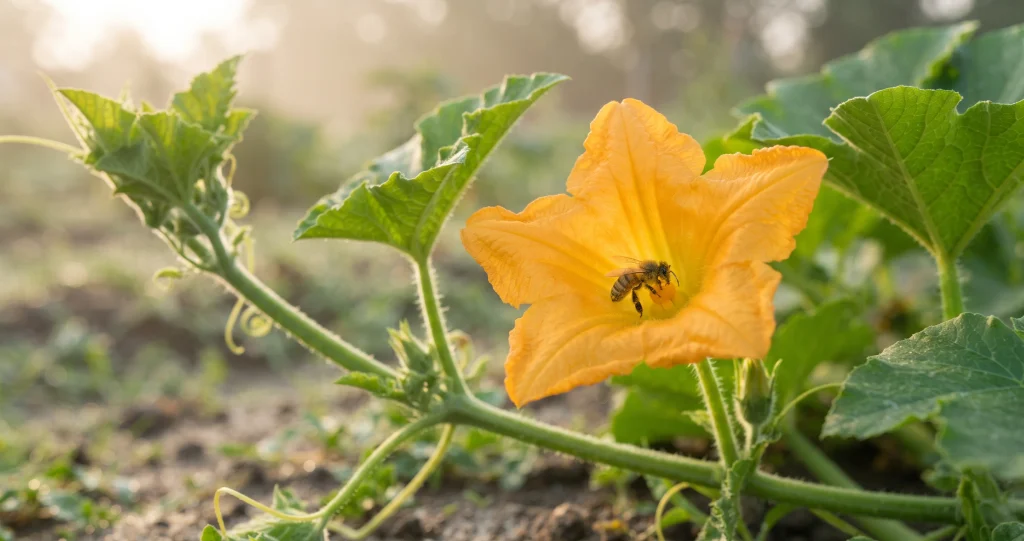
Pumpkin plants depend heavily on insects to move pollen between their blossoms. Although pumpkin male and female flowers may grow only inches apart, pollen still needs to reach the receptive surface of a female flower.
Bees perform this task naturally as they collect nectar and pollen. When a bee enters a male flower, pollen grains attach to its body and may be deposited inside the next female flower it visits.
Honeybees, bumblebees, and native squash bees are important pumpkin pollinators.
Squash bees are particularly interesting because they specialize in collecting pollen from plants belonging to the genus Cucurbita. These solitary bees often nest underground near gardens and agricultural fields.
Several insect visits may be necessary for sufficient pollen transfer. The effectiveness of each visit depends on the bee species, the availability of pollen, and environmental conditions.
Why Baby Pumpkins Turn Yellow and Shrivel
One of the most frustrating experiences for pumpkin growers is watching a promising miniature fruit stop growing and begin to decay.
Understanding pumpkin male and female flowers can help you identify several possible causes.
Inadequate pollination
When insufficient pollen reaches a female blossom, the developing ovary may fail to continue growing.
The miniature pumpkin gradually becomes yellow, soft, or shriveled before eventually falling from the vine.
Unfavorable weather
Persistent rain, strong winds, and cool mornings can reduce insect activity. Extremely hot weather can also interfere with successful reproduction.
Even a garden with plenty of bees may experience temporary pollination problems during unfavorable weather.
Inconsistent watering
Pumpkins develop extensive foliage and large fruits, making adequate moisture particularly important.
Drought stress or waterlogged soil can interfere with healthy fruit development, even when pollination has occurred.
Too much nitrogen
Excessive nitrogen fertilizer can encourage vigorous leaf and vine development at the expense of reproductive growth.
Instead of automatically adding more fertilizer when fruit production is disappointing, evaluate the plant’s overall growing conditions.
Natural fruit abortion
A healthy pumpkin plant may occasionally abandon developing fruits when it cannot support all of them. Existing pumpkins compete for the carbohydrates and other resources produced by the plant.
Not every shriveled pumpkin indicates a pollination failure.
The Best Time to Pollinate Pumpkin Flowers
Timing is particularly important when working with pumpkin male and female flowers.
Pumpkin blossoms generally open early in the morning and remain open for only a few hours. Many begin closing around midday, although the exact timing varies with temperature and weather.
Early morning is therefore the best time to inspect your vines and perform hand pollination. Look for freshly opened flowers with dry pollen and undamaged reproductive structures.
Avoid waiting until the petals begin to wilt or close. An individual flower generally has only one morning during which it is naturally open.
Checking your pumpkin plants regularly during flowering helps ensure that you do not miss this short opportunity.
How to Hand-Pollinate Pumpkins in 5 Easy Steps
Hand pollination is a straightforward technique that can supplement natural insect activity. It requires no specialized equipment and is especially useful in gardens experiencing low bee activity.
Before beginning, make sure both pumpkin male and female flowers are open on the same morning.
Step 1: Find a freshly opened male flower
Examine the vine for a bright yellow blossom growing on a narrow stem without a miniature pumpkin underneath.
Look inside to confirm that the central anthers contain visible yellow pollen.
Step 2: Find a receptive female flower
Locate an open blossom with a small, rounded ovary beneath its petals.
The central stigma should appear fresh and undamaged.
Step 3: Collect the pollen
Use a small, clean, dry paintbrush to gently collect pollen from the male flower.
Alternatively, remove a male blossom and carefully peel back its petals to expose the pollen-bearing anthers.
Step 4: Transfer pollen to the female flower
Gently brush the collected pollen across the lobes of the female flower’s stigma.
If you are using the male blossom directly, lightly touch its anthers against the stigma. Avoid crushing or damaging the delicate flower structures.
Fresh pollen from another male blossom can be used if necessary.
Step 5: Monitor the developing pumpkin
Leave the pollinated flower attached to the vine and allow it to close naturally.
Over the following several days, a successfully developing ovary should remain firm and gradually increase in size.
Hand pollination can improve pollen transfer, but it cannot guarantee fruit development when the plant is experiencing environmental stress.
How to Attract More Pollinators
Hand pollination is useful, but creating a garden that naturally attracts bees offers longer-term benefits.
Grow pollinator-friendly flowers
Plant a variety of flowering plants near your vegetable garden. Suitable choices include cosmos, sunflowers, zinnias, and regionally appropriate native wildflowers.
Choose plants with different flowering periods to provide food throughout the growing season.
Protect ground-nesting bees
Leave some suitable, well-drained ground undisturbed where practical. Many native bees construct underground nests rather than living in large colonies.
Avoid unnecessary cultivation around established nesting areas.
Limit pesticide use
Avoid applying insecticides to flowering plants whenever possible. If treatment is necessary, follow all label restrictions intended to protect pollinators.
Even products marketed for organic gardening can harm beneficial insects.
Remove protective row covers during flowering
Row covers can protect young pumpkin plants from certain pests, but they also prevent bees from accessing blossoms.
Once pumpkin male and female flowers begin opening, remove the covers to allow natural pollination unless you intend to manage pollination manually.
Essential Tips for Growing Healthy Pumpkins
Successful pollination is only one part of producing a healthy pumpkin harvest. Proper growing conditions help plants develop strong vines and support their expanding fruits.
Provide plenty of sunlight
Choose an open location receiving at least six hours of direct sunlight daily, preferably more.
Adequate sunlight supports photosynthesis and provides energy for flowering and fruit growth.
Prepare fertile, well-drained soil
Incorporate mature compost before planting to improve soil structure and moisture management.
Healthy soil supports extensive root development and helps plants withstand changing weather conditions.
Water deeply and consistently
Water around the base of the plant rather than routinely soaking its foliage.
Pumpkins generally benefit from about one inch of water per week as a starting point, with adjustments for rainfall, soil type, heat, and plant development.
Allow enough growing space
Traditional pumpkin varieties develop sprawling vines that require considerable room. Smaller bush varieties may be more suitable for compact gardens.
Follow the spacing recommendations provided for your particular variety.
Plant after the danger of frost
Pumpkins are warm-season crops that grow best once the soil has warmed sufficiently.
Planting too early in cold, wet soil can result in poor germination and slow establishment.
Monitor fruit development
Inspect your vines regularly for signs of pests, disease, moisture stress, and developing fruits.
Healthy foliage is essential because the leaves produce the energy needed to support pumpkin growth.
Frequently Asked Questions
Can a pumpkin plant pollinate itself?
Yes. Pollen from a male flower can fertilize a female flower on the same compatible pumpkin plant.
However, insects or manual pollen transfer are generally needed because the male and female reproductive structures occur in separate blossoms.
Why does my pumpkin plant have only male flowers?
Male blossoms naturally tend to appear before female flowers. Young plants may need more time to mature.
Persistent problems may also be associated with excessive nitrogen, unsuitable temperatures, or other growing stresses.
Can I remove male pumpkin flowers?
You can harvest some male flowers for culinary use, provided the plants have been grown and treated appropriately for edible blossoms.
However, leave enough flowers available to supply pollen for female blossoms and food for visiting bees.
Can zucchini pollen pollinate a pumpkin?
Some zucchini and pumpkin varieties belong to the same species, Cucurbita pepo, and can cross-pollinate.
Compatibility depends on the species involved. Such crossing generally affects the genetics of the resulting seeds rather than the recognizable variety of the current fruit.
Do you need two pumpkin plants to produce fruit?
No. A single healthy plant can produce both types of flowers.
Growing several compatible plants may nevertheless increase the likelihood of male and female blossoms opening simultaneously.
How can you tell whether a pumpkin flower was successfully pollinated?
The most practical indication is continued fruit growth over the following days.
A closing or wilting flower alone does not confirm successful pollination because this also occurs naturally in unpollinated blossoms.
Can you hand-pollinate pumpkins in the evening?
Evening pollination is generally less effective because pumpkin blossoms are usually closed by then.
Early morning, when pumpkin male and female flowers are freshly opened, offers the best opportunity.
Conclusion
Understanding pumpkin male and female flowers transforms the way you care for your pumpkin patch. Male flowers supply pollen, while female blossoms contain the ovaries that can develop into mature pumpkins.
Bees naturally connect these two reproductive structures, but gardeners can assist with hand pollination when insect activity is limited.
By inspecting flowers early in the morning, encouraging beneficial pollinators, maintaining consistent soil moisture, and providing suitable growing conditions, you can improve the chances of a productive harvest.
Sometimes, the difference between a vine covered in blossoms and a garden filled with pumpkins begins with a small transfer of pollen.
External Sources
1. Pollination of Cucurbita spp. (Squash and Pumpkin) Crops in Florida
Covers flower anatomy, pollinating insects, flowering times, and successful pollen transfer. University of Florida IFAS Extension. Access the article
2. Pumpkin Growing Guide
Covers cultivation, flower identification, hand pollination, and common fruit development problems. University of Saskatchewan. Access the article
3. Growing Pumpkins for the Home Garden
Covers watering, soil management, pollination, fruit development, and harvesting.
Mississippi State University Extension. Access the article