
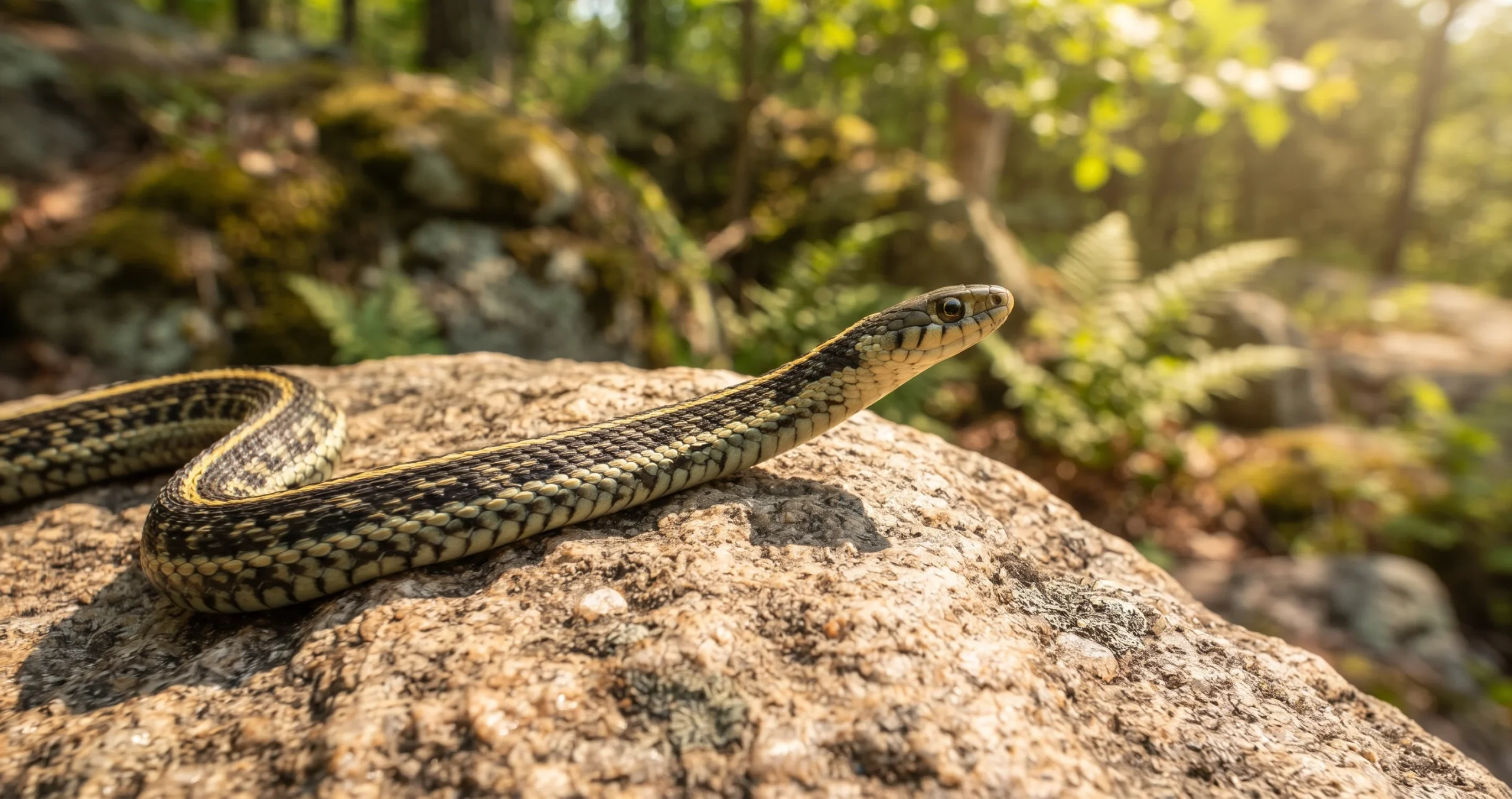
Are snakes slimy, or is their shiny appearance simply misleading? Despite their reputation for being slippery and unpleasant to touch, snakes actually have dry, scaly skin that serves several important biological functions.
Their distinctive skin helps protect them from injury, reduce water loss, and move through a variety of environments. Some snakes have smooth, glossy scales, while others have rougher, textured surfaces.
Understanding snake anatomy can help gardeners appreciate these often misunderstood reptiles. Many snakes are valuable members of backyard ecosystems, where they help regulate populations of rodents, slugs, and other small animals.
Table of Contents
- Are Snakes Slimy? The Truth Behind the Myth
- What Snake Skin Really Feels Like
- Why Snakes Look Wet and Glossy
- How Snake Scales Protect Against Moisture Loss
- Why Snakes Shed Their Skin
- Why Snakes Are Beneficial in Gardens
- How to Share Your Garden With Snakes Safely
- How to Identify Local Snakes
- Common Myths About Snake Skin
- Frequently Asked Questions
Are Snakes Slimy? The Truth Behind the Myth
One of the most persistent misconceptions about reptiles is that snakes are covered in a slippery layer of slime. This belief probably comes from their glossy appearance, flexible bodies, and association with damp environments.
However, snakes do not normally produce a coating of mucus like many amphibians do. Their outer skin consists of protective scales containing keratin, a structural protein also found in human fingernails and hair.
A healthy snake’s skin generally feels dry and firm, although its texture varies considerably between species. Some snakes feel remarkably smooth, while others have a slightly rough or ridged surface.
A snake that has recently been swimming may naturally be wet, but that moisture comes from its surroundings rather than a permanent slimy coating.
The next time someone asks, “Are snakes slimy?” the simple answer is no. Their shiny scales are an adaptation, not a layer of slime.
What Snake Skin Really Feels Like
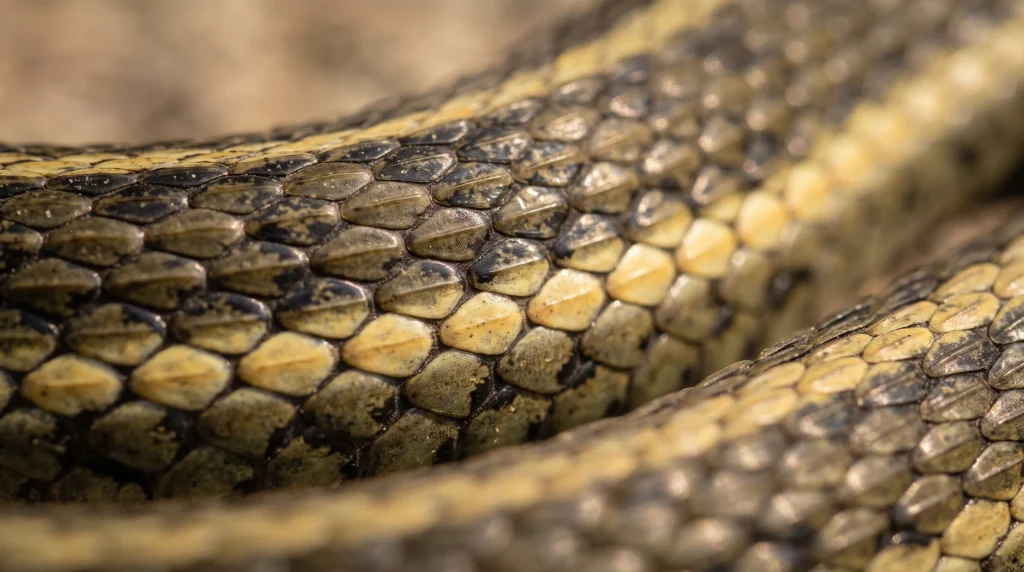
Snake skin is more complex than it might appear. Its outer surface contains overlapping scales connected by flexible areas of skin, allowing the animal to bend, stretch, and move.
These scales provide protection without preventing the flexibility that snakes need for crawling, climbing, swimming, and swallowing prey.
Smooth scales
Some snakes have relatively flat scales that create a smooth, polished appearance. Many kingsnakes and milk snakes are good examples of reptiles with smooth scales.
When light reflects from these surfaces, the snake may appear almost wet, even when completely dry.
Keeled scales
Other snakes have scales with a raised ridge running along their center. These are known as keeled scales, and they can give the skin a rougher, less glossy appearance.
Many garter snakes and watersnakes have keeled scales. The prominence of these ridges varies between species.
Belly scales
The underside of most land-dwelling snakes features broad scales that help the animal interact with the ground. Working together with the snake’s muscles, these scales assist movement across different surfaces.
They are particularly useful when traveling over soil, rocks, fallen leaves, and branches.
Why Snakes Look Wet and Glossy
The question “Are snakes slimy?” often arises because some species have an exceptionally shiny appearance. However, this shine is largely an optical effect created by the structure of their scales.
Smooth scales can reflect sunlight or artificial lighting, producing bright highlights across the body. Dark-colored snakes may appear particularly glossy because of the contrast between their pigmentation and reflected light.
Some species even display iridescence, producing subtle rainbow colors when viewed from different angles. This effect results from microscopic structures interacting with light rather than from oil or mucus covering the skin.
A snake may also appear more colorful and polished shortly after shedding. Its newly exposed outer skin is generally less worn than the layer it has just removed.
The glossy appearance of snake skin is therefore not a reliable indication of whether the animal is wet.
How Snake Scales Protect Against Moisture Loss
Unlike amphibians, which generally have relatively permeable skin, snakes possess a skin barrier adapted to reduce water loss.
Their keratinized outer skin and associated lipid barriers help limit the movement of water out of the body. This adaptation allows snakes to inhabit environments ranging from humid forests to dry grasslands and deserts.
However, snake skin is not completely waterproof. Snakes still need access to suitable moisture conditions, and their water requirements vary according to species, temperature, activity, and habitat.
Desert-dwelling snakes often combine their protective skin with behavioral adaptations, such as sheltering underground during the hottest parts of the day.
Understanding this protective function helps explain why the question “Are snakes slimy?” reflects a misunderstanding of reptile biology. Dry, protective skin is an important part of their survival strategy.
Why Snakes Shed Their Skin
Finding a long, transparent snakeskin near a garden shed, fence, or flower bed can be surprising. However, it is usually evidence of a completely natural biological process.
Snakes periodically replace their outer layer of skin through a process known as ecdysis. This allows them to accommodate growth and renew worn protective surfaces.
Unlike humans, who constantly lose tiny skin cells, snakes typically shed their outer skin in one continuous piece.
What happens before shedding?
Before shedding, a snake’s appearance often becomes dull or faded. Its eyes may develop a cloudy, bluish appearance as the old outer layer begins separating from the new one.
During this period, the snake may spend more time hiding because its vision is temporarily reduced.
Once the old skin is ready to come away, the snake rubs its head against a textured surface. It gradually crawls out of the discarded layer, often turning it inside out.
How often do snakes shed?
Shedding frequency depends on the species, age, growth rate, nutrition, and environmental conditions.
Young snakes generally shed more frequently because they are growing rapidly. Mature snakes continue shedding throughout their lives, although the intervals are often longer.
If someone asks, “Are snakes slimy after shedding?” the answer remains no. Their fresh scales may look brighter and shinier, but they are normally dry.
Why Snakes Are Beneficial in Gardens
Snakes are important predators in many natural and suburban environments. Although their presence can make gardeners uncomfortable, they contribute to the ecological balance of outdoor spaces.
Different species feed on different animals, helping maintain natural relationships between predators and prey.
Natural rodent control
Rat snakes, corn snakes, and many kingsnakes consume small mammals, including mice.
These rodents can damage vegetables, stored seeds, plant roots, and garden structures. Snakes help regulate their populations naturally, although they cannot guarantee a rodent-free garden.
Slug and invertebrate control
Some smaller snake species, including Dekay’s brownsnake, feed on slugs, snails, earthworms, and other small invertebrates.
Their diets demonstrate how even a small, easily overlooked reptile can participate in the garden food web.
Understanding the answer to “Are snakes slimy?” is one step toward replacing unnecessary fear with a more informed appreciation of these animals.
How to Share Your Garden With Snakes Safely
Living alongside wildlife does not mean allowing snakes unrestricted access to your home or frequently used outdoor spaces.
Instead, gardeners can maintain a healthy environment while taking sensible precautions to reduce unexpected encounters.
Give snakes plenty of space
If you discover a snake in your garden, stop and observe it from a safe distance. Do not attempt to touch, catch, corner, or kill it.
Many snakes will move away when given a clear escape route. Keep children and pets away until the animal has left.
Even nonvenomous snakes may bite when frightened or restrained.
Keep frequently used areas tidy
Maintain short grass around patios, walkways, and children’s play areas. Remove unnecessary clutter and avoid storing firewood directly against your house.
Snakes often seek sheltered locations where they can avoid predators and regulate their temperature. Keeping busy areas open makes unexpected encounters less likely.
Reduce rodent attractants
Store birdseed, animal feed, and other potential food sources in secure containers. Clean spilled seeds beneath feeders and protect compost bins from rodents.
Reducing rodent activity near buildings may also make those areas less attractive to snakes that feed on small mammals.
Avoid harmful pest-control methods
Glue traps can capture snakes and other unintended wildlife. Rodenticides may also present risks to predators through secondary poisoning.
Whenever practical, prioritize exclusion, sanitation, and targeted pest-management methods that minimize harm to wildlife.
How to Identify Local Snakes
Correct snake identification is much more important than determining whether a species has shiny or rough scales.
North America contains numerous snake species, and their appearance varies according to age, location, and individual coloration.
Use reliable regional resources
Consult your state wildlife agency, university cooperative extension service, or a reputable regional reptile field guide.
These resources can help distinguish common local species and explain which venomous snakes occur in your area.
If identification is necessary, take a photograph from a safe distance using your camera’s zoom function. Never approach a snake simply to obtain a clearer picture.
Avoid unreliable identification rules
Head shape, pupil shape, and color patterns alone are not dependable ways for inexperienced observers to determine whether a snake is venomous.
Some nonvenomous species flatten their heads when threatened, while certain venomous species lack the features commonly associated with dangerous snakes.
Treat unidentified snakes with caution and contact a qualified wildlife professional if one needs to be removed from a building or high-traffic area.
If a snakebite occurs and the species is unknown or potentially venomous, seek emergency medical attention immediately. Do not attempt to capture the snake, cut the wound, or extract venom.
Common Myths About Snake Skin
Several misconceptions about snakes have survived for generations, even though their biology tells a different story.
| Common myth | Scientific reality |
|---|---|
| Snakes are covered in slime. | Their skin is normally dry and scaly. |
| All snakes have smooth skin. | Some species have distinctly keeled scales. |
| Snakes are always cold. | Their body temperature changes with environmental conditions. |
| Snakes shed only when injured. | Shedding is a normal part of growth and skin renewal. |
| Shiny snakes are venomous. | Glossiness does not indicate venomousness. |
| All garden snakes are harmful. | Many contribute to natural prey population control. |
The question “Are snakes slimy?” illustrates how visual impressions can create inaccurate beliefs about wildlife.
Learning how reptiles function makes it easier to understand their behavior without needing to handle them.
Frequently Asked Questions
Are snakes slimy or dry to the touch?
Snakes are normally dry to the touch. Depending on the species, their scales may feel smooth, firm, or slightly rough, but they do not normally have a slimy external coating.
Why do snakes look oily?
Their polished scales reflect light, sometimes creating an oily or wet appearance. Certain species also have microscopic scale structures that produce iridescent colors.
Are snakes slimy when they live in water?
Aquatic and semiaquatic snakes have protective scales just like terrestrial species. Their bodies may be temporarily wet after swimming, but they do not have the mucus coating associated with many fish and amphibians.
Is snake skin made of keratin?
Yes. The outer protective scales contain keratin-based proteins that help resist abrasion and protect the underlying tissues.
Does shedding hurt snakes?
Normal shedding is a natural process and is not generally painful. However, incomplete shedding, disease, injuries, or unsuitable environmental conditions can create complications.
Are snakes slimy when they hatch?
Newly hatched snakes may initially be damp from fluids inside the egg. Once dry, their scales have the characteristic texture associated with their species.
Does finding snake skin mean a snake is still nearby?
Not necessarily. A discarded skin indicates that a snake previously occupied or passed through the area, but it does not establish its current location.
Should I remove snakes from my garden?
A snake that remains outdoors and away from frequently used areas can often be left undisturbed. If it presents a safety concern, contact a qualified local wildlife professional rather than attempting removal yourself.
Conclusion
Are snakes slimy? Despite their reputation, snakes possess dry, protective scales that may appear glossy, smooth, or textured depending on the species.
Their remarkable skin helps reduce moisture loss, resist everyday wear, and support movement through challenging environments. Regular shedding renews this protective covering throughout their lives.
For gardeners, understanding snake biology offers an opportunity to appreciate an often misunderstood part of the natural world. Many species contribute to balanced ecosystems by feeding on rodents and other small animals.
By respecting their space, learning about local species, and practicing responsible garden management, we can coexist with these fascinating reptiles while maintaining a safer outdoor environment.
External Sources
1. Snakes and Lizards of Minnesota
Covers dry scales, keratin, moisture retention, shedding, and reptile adaptations.
Minnesota Department of Natural Resources, Access the educational guide (PDF)
2. Snake Skin and Anatomy
Educational information about keratin, protective scales, and shedding.
Smithsonian Institution, Access the Smithsonian resource (PDF)