
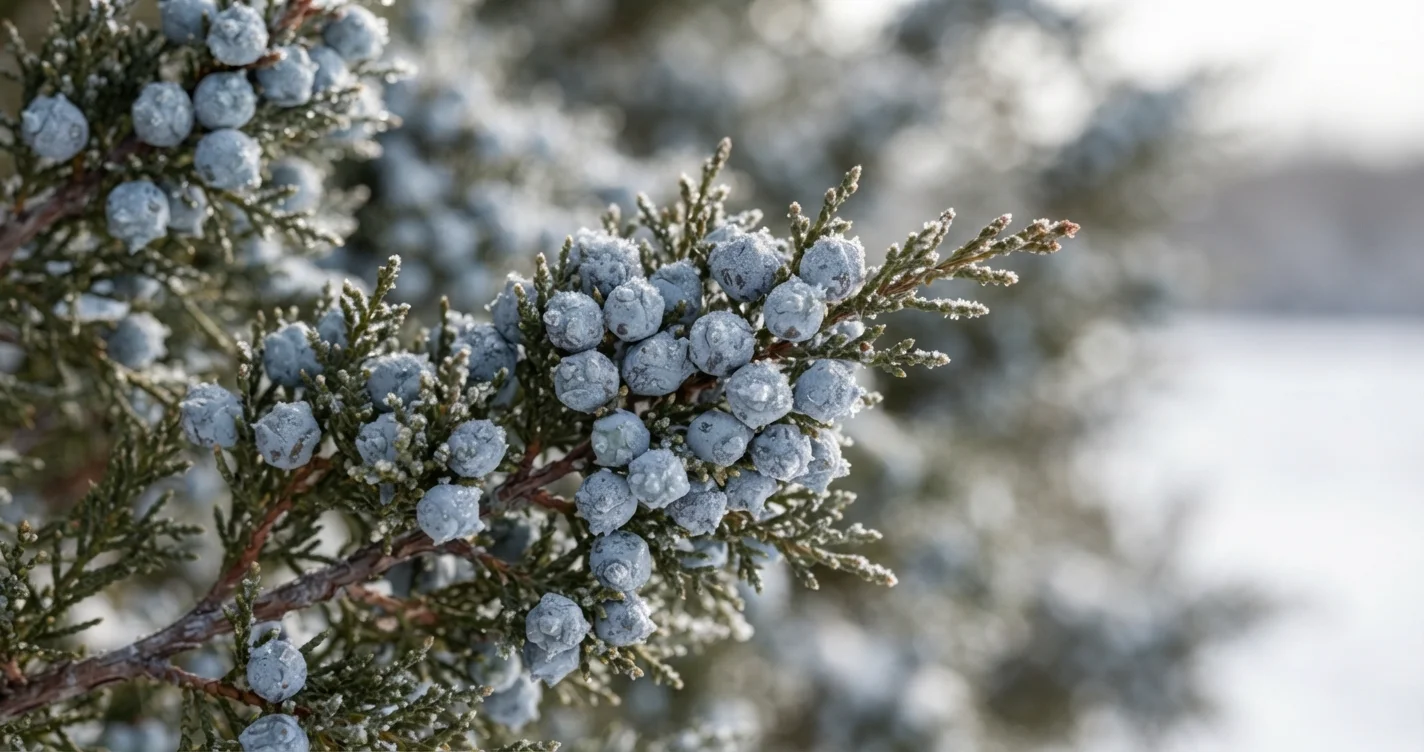
On a cold December morning, a seemingly quiet evergreen tree can suddenly come alive with dozens of hungry birds. Hidden among its dense branches are clusters of dusty blue berries, offering a valuable food source when much of the surrounding landscape lies dormant.
The eastern red cedar (Juniperus virginiana) is one of North America’s most adaptable native evergreen trees. It provides winter food and shelter for wildlife while thriving in many places where other trees struggle to establish themselves.
From rocky hillsides and abandoned fields to exposed garden boundaries, this remarkably resilient tree demonstrates how nature adapts to challenging growing conditions.
For gardeners interested in native plants, wildlife conservation, and low-maintenance landscaping, the eastern red cedar offers numerous benefits.
Table of Contents
- What Is the Eastern Red Cedar?
- How to Identify an Eastern Red Cedar
- Why the Eastern Red Cedar Thrives in Poor Soil
- A Natural Winter Food Source for Birds
- How Eastern Red Cedars Protect Wildlife in Winter
- Growing Eastern Red Cedar in Your Garden
- Common Problems and Planting Considerations
- In Your Own Yard: Creating a Wildlife-Friendly Landscape
- Frequently Asked Questions
What Is the Eastern Red Cedar?
Despite its common name, the eastern red cedar is not a true cedar. It belongs to the juniper genus, which is part of the cypress family, Cupressaceae.
Native to much of eastern and central North America, this evergreen grows in a remarkable variety of environments.
It can be found along roadsides, across abandoned farmland, on limestone outcrops, and throughout open woodlands.
Size and Growth Habit
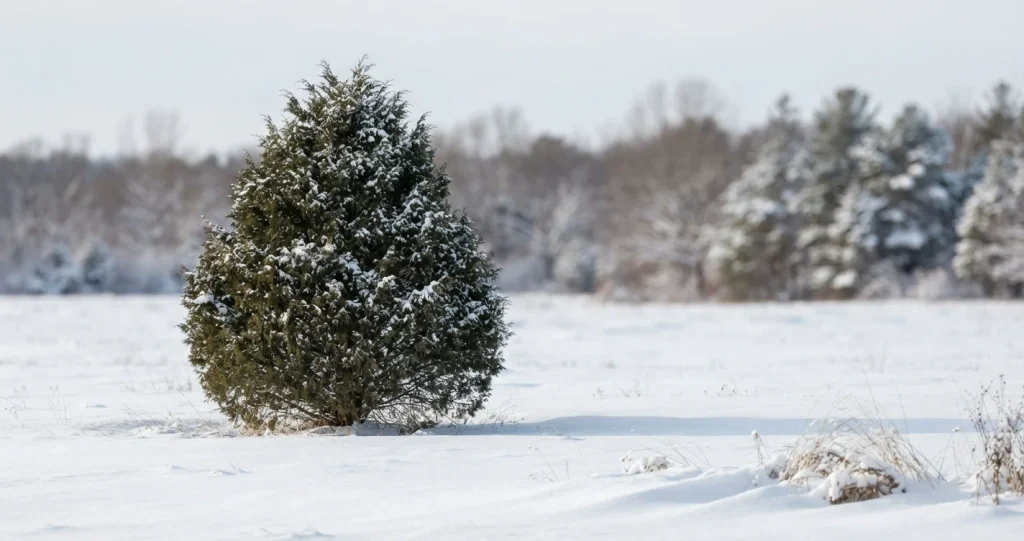
A mature eastern red cedar commonly reaches 30–50 feet in height, although larger specimens can develop under favorable conditions.
Young trees often have a narrow, pyramidal shape. As they mature, their crowns may become broader and more irregular.
Its evergreen foliage provides year-round visual interest, particularly during winter when surrounding deciduous trees lose their leaves.
A Pioneer Species
Eastern red cedar is considered a pioneer species because it can establish itself in open, disturbed environments.
Its ability to tolerate drought, exposed locations, and relatively infertile soils allows it to colonize places that may initially be unsuitable for more demanding trees.
However, its expansion into native grasslands can also create ecological challenges when natural disturbances such as fire are suppressed.
How to Identify an Eastern Red Cedar
Several distinctive features make this native evergreen relatively easy to recognize.
Evergreen Foliage
Mature foliage consists of small, overlapping, scale-like leaves arranged closely along the branches.
Young shoots may produce sharper, needle-like leaves.
During winter, the foliage may develop bronze, reddish-brown, or purplish tones, depending on the individual tree and growing conditions.
This seasonal color change does not necessarily indicate poor health.
Dusty Blue Berries
Female eastern red cedars produce small, rounded, bluish structures that resemble berries.
Botanically, these are modified seed cones with fleshy, fused scales.
Their characteristic blue-gray coating gives them a distinctive appearance among the evergreen foliage.
Reddish-Brown Bark
The bark is relatively thin and fibrous, often peeling into narrow strips as the tree matures.
Combined with its dense foliage and distinctive cones, this textured bark provides another useful identification clue.
Aromatic Wood
Eastern red cedar is also known for its fragrant, reddish heartwood.
Its distinctive aroma and natural resistance to decay have made the wood popular for storage chests, fence posts, and woodworking projects.
Why the Eastern Red Cedar Thrives in Poor Soil
Many garden trees require fertile soil, consistent rainfall, and carefully managed growing conditions. Eastern red cedar can often establish itself with considerably fewer resources.
Its resilience comes from several complementary adaptations.
An Efficient Evergreen Leaf Structure
The tree’s small, scale-like leaves have a relatively limited exposed surface compared with broad deciduous leaves.
Their protective outer covering helps reduce unnecessary water loss.
These characteristics are particularly useful in exposed locations where wind, sunlight, and limited soil moisture can increase environmental stress.
Roots That Adapt to Challenging Terrain
Eastern red cedar develops a root system influenced by local soil conditions.
In deeper soils, roots may penetrate relatively far below the surface. In shallow or rocky environments, they may spread laterally through available soil and rock crevices.
This adaptability helps the tree access moisture and establish itself on difficult terrain.
Tolerance of Relatively Infertile Soil
Eastern red cedar can grow in sandy, gravelly, rocky, and relatively nutrient-poor soils.
It also tolerates a broad range of soil pH conditions, including many alkaline soils associated with limestone landscapes.
However, tolerance of poor soil does not mean the tree prefers every difficult growing condition.
Persistent waterlogging, severe compaction, and excessive shade can interfere with establishment and long-term growth.
Surviving Periods of Drought
Once established, eastern red cedars often tolerate extended dry periods better than many common landscape trees.
Newly planted specimens still require consistent moisture while their root systems develop.
Over time, their evergreen leaf structure and adaptable roots help them cope with fluctuating water availability.
The USDA Forest Service identifies eastern red cedar’s rapidly developing taproot and extensive network of fibrous roots as important contributors to its drought tolerance. USFS Research & Development
A Natural Winter Food Source for Birds
Perhaps the most rewarding reason to grow an eastern red cedar is its ability to provide natural food during the colder months.
While many deciduous trees lose their fruits by early winter, mature female cedars may retain their berry-like cones for much longer.
Why Cedar Waxwings Love This Evergreen
Cedar waxwings are particularly fond of eastern red cedar cones.
These elegant birds frequently travel in flocks, moving between trees and shrubs in search of seasonal food.
When they discover a productive cedar, a previously quiet tree can become a remarkably busy feeding station.
Other birds that may consume eastern red cedar cones include:
- American robins.
- Eastern bluebirds.
- Northern mockingbirds.
- Yellow-rumped warblers.
- Northern bobwhites.
- Wild turkeys.
The species visiting a particular tree depend on its geographical location and surrounding habitat.
Male and Female Trees
Eastern red cedar is generally dioecious, meaning that male and female reproductive structures occur on separate trees.
Male trees produce pollen, while female trees develop the distinctive blue seed cones following pollination.
If attracting fruit-eating birds is your primary goal, select a female specimen and ensure that a compatible pollen-producing tree grows within pollination range.
Birds Help Plant Future Generations
The relationship between cedar trees and birds benefits both organisms.
Birds obtain food by consuming the cones, while some of the enclosed seeds pass through their digestive systems and are deposited elsewhere.
According to the USDA Forest Service, many cones remain attached throughout winter unless wildlife removes them, with much of the remaining seed dispersal occurring during February and March. srs.fs.usda.gov
This process helps explain why young cedars frequently appear along fence lines and beneath bird perches.
How Eastern Red Cedars Protect Wildlife in Winter
Food is only one of the resources that evergreen trees provide during winter.
Their persistent foliage also creates protected spaces when deciduous trees stand bare.
Shelter From Cold Winds
The dense branching structure of eastern red cedar can reduce wind exposure within and around its canopy.
Small birds may use these protected areas for resting and roosting during unfavorable weather.
Lower branches can also provide concealment for ground-dwelling wildlife.
Protection From Predators
Thick evergreen foliage offers visual concealment from potential predators.
Birds feeding in open areas may retreat into nearby evergreens when disturbed.
A landscape containing both open feeding areas and suitable shelter can therefore support a broader range of wildlife.
Benefits Beyond the Winter Months
Eastern red cedar continues supporting wildlife after winter ends.
Its branches may provide nesting locations, while its fibrous bark can serve as nesting material.
The tree is also a larval host plant for the juniper hairstreak butterfly, demonstrating its ecological importance beyond the bird population. North Carolina Sea Grant
Growing Eastern Red Cedar in Your Garden
Although eastern red cedar is relatively adaptable, thoughtful planting helps encourage healthy growth.
Ideal Growing Conditions
| Growing factor | Recommended conditions |
|---|---|
| Scientific name | Juniperus virginiana |
| USDA hardiness zones | 2–9 |
| Sunlight | Full sun preferred |
| Soil | Well-drained, sandy, loamy, or rocky |
| Typical mature height | 30–50 feet |
| Typical mature width | 10–20 feet or more |
| Water requirements | Low to moderate once established |
| Foliage | Evergreen |
| Wildlife value | Food, shelter, and nesting habitat |
Actual mature dimensions vary according to cultivar, soil, climate, and growing conditions.
Choose a Sunny Location
Eastern red cedar generally performs best in locations receiving at least six hours of direct sunlight daily.
A sunny garden boundary or an exposed hillside may provide suitable conditions.
Insufficient sunlight can result in thinner foliage and reduced growth.
Plant at the Correct Depth
Dig a planting hole approximately two to three times wider than the root ball, but no deeper than necessary to keep the root flare at ground level.
Backfill using the excavated soil and water thoroughly after planting.
Apply a 2–3-inch layer of organic mulch around the planting area, keeping it away from direct contact with the trunk.
Water During Establishment
Newly planted trees require regular moisture, especially during dry weather in their first growing seasons.
Check soil moisture before watering and allow excess water to drain.
Established specimens generally require less supplemental irrigation.
Limit Heavy Pruning
Eastern red cedar naturally develops an attractive shape and usually requires minimal pruning.
Remove damaged or dead branches when necessary.
Avoid cutting deeply into old, leafless wood, as junipers often regenerate poorly from these areas.
Common Problems and Planting Considerations
Even resilient native trees have limitations. Understanding these before planting can prevent future difficulties.
Cedar-Apple Rust
Eastern red cedar can serve as one of the hosts of cedar-apple rust, a fungal disease that alternates between susceptible junipers and apple-family trees.
During wet spring weather, infected cedar branches may develop unusual orange, gelatinous structures.
Gardeners growing apples or crabapples should consider disease-resistant cultivars and seek regional planting recommendations.
Bagworms and Other Pests
Bagworm caterpillars occasionally feed on cedar foliage and may cause extensive damage when populations become large.
Their spindle-shaped protective cases can resemble small plant structures hanging from branches.
Regular inspections help gardeners detect infestations before serious defoliation occurs.
Encroachment Into Native Grasslands
Although eastern red cedar is native, it can spread aggressively into certain prairie and grassland ecosystems.
Unchecked expansion may shade native grasses and reduce habitat availability for open-country wildlife.
In these environments, preserving existing grasslands may provide greater ecological benefits than planting additional trees.
Fire Risk Near Buildings
Eastern red cedar contains combustible foliage and can contribute to wildfire hazards.
In fire-prone regions, follow local defensible-space recommendations and avoid planting highly flammable evergreens immediately beside buildings.
In Your Own Yard: Creating a Wildlife-Friendly Landscape
An eastern red cedar can become the foundation of a diverse native garden when planted in an appropriate location.
Combine Evergreens With Native Berry-Producing Shrubs
Consider pairing your cedar with regionally appropriate native plants such as winterberry holly, American beautyberry, serviceberry, or native viburnums.
Different fruiting periods can extend the availability of natural food throughout the year.
Preserve Natural Feeding Areas
Allow suitable native grasses and wildflowers to retain their seed heads during winter.
These plants complement the food and shelter provided by evergreen trees.
Choose a Cultivar That Fits Your Space
Gardeners with limited space may prefer narrower cultivars such as ‘Taylor’.
Larger properties may accommodate the naturally spreading form of the species.
When winter bird food is a priority, confirm whether the selected cultivar produces seed cones.
Observe Your Winter Visitors
On quiet winter mornings, watch your cedar from indoors or from a comfortable distance.
Record the birds that visit, the times they arrive, and how their feeding behavior changes throughout the season.
You may discover that your evergreen attracts an entirely different community of birds in January than it does in July.
Frequently Asked Questions
1. Is eastern red cedar a good tree for poor soil?
Yes. Eastern red cedar tolerates many rocky, sandy, dry, and relatively infertile soils. However, adequate drainage and sunlight remain important. Young trees also require sufficient moisture while becoming established.
2. Do all eastern red cedar trees produce berries for birds?
Generally, only female trees produce the blue, berry-like seed cones. Male trees produce pollen. Gardeners interested in attracting fruit-eating birds should select a female tree and consider the availability of nearby pollen sources.
3. Does eastern red cedar stay green all winter?
Yes. Eastern red cedar retains its foliage throughout the year. However, some specimens develop bronze, brownish, or purplish tones during cold weather. This seasonal change is often natural.
Conclusion
The next time a flock of cedar waxwings descends upon a quiet evergreen, consider the remarkable relationship unfolding among its branches.
The eastern red cedar is more than a resilient landscape tree. It provides natural food, creates winter shelter, supports native insects, and grows in challenging environments.
When planted responsibly, it can bring lasting ecological value to a wildlife-friendly garden.
Even in the poorest soil and during the coldest months, nature finds remarkable ways to sustain life.
External Sources
1. A Tree That Survives in Seemingly Barren Soil
Eastern red cedar can survive in extremely infertile soils where few other plants grow, although harsh conditions may limit its size to that of a shrub. North Carolina Extension Gardener Plant Toolbox. NC State University. https://plants.ces.ncsu.edu/plants/juniperus-virginiana/.