
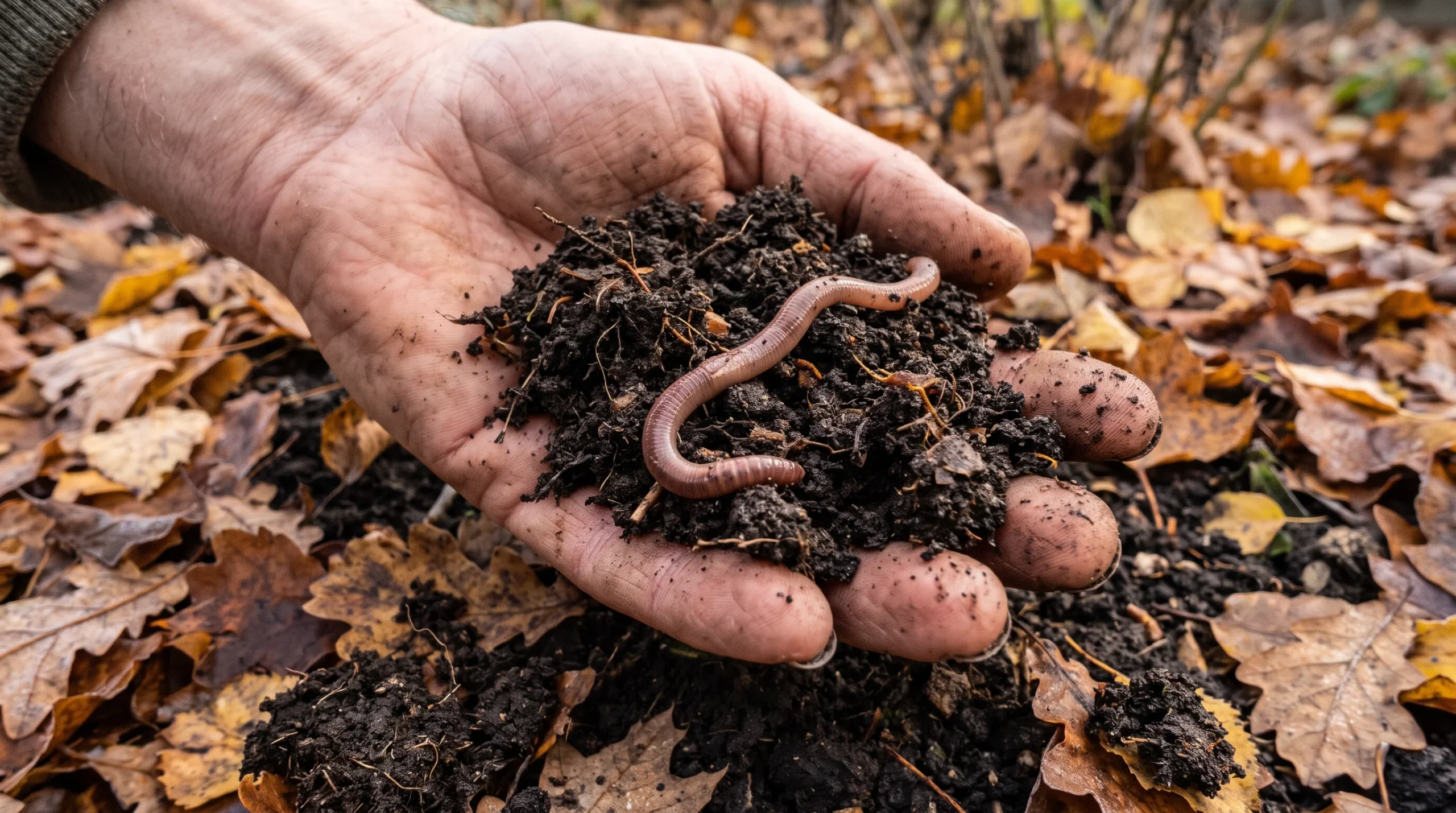
During spring and autumn, earthworms are often easy to find beneath fallen leaves, inside compost piles, and throughout moist garden soil. But when temperatures drop and the ground begins to freeze, these familiar garden inhabitants seem to disappear.
The survival strategies of earthworms in winter are surprisingly diverse. Some retreat into deeper soil, others become temporarily inactive, and certain species survive the cold season primarily through protective cocoons containing developing young.
Although the garden may appear dormant above ground, important biological processes continue beneath the surface.
Understanding how earthworms survive cold weather can help gardeners protect soil biodiversity, improve growing conditions, and prepare their gardens for a productive spring.
Table of Contents
- Where Do Earthworms Go in Winter?
- How Earthworms Survive Freezing Temperatures
- How Different Earthworm Species Survive Winter
- The Role of Earthworm Cocoons
- How Mulch and Fallen Leaves Protect Earthworms
- Why You Should Avoid Unnecessary Winter Digging
- When Earthworms Return in Spring
- Benefits of Earthworms for Soil Health
- How to Protect Earthworms in Your Garden
- Frequently Asked Questions
Where Do Earthworms Go in Winter?
Earthworms are sensitive to changes in soil temperature and moisture. Unlike mammals and birds, they cannot maintain a relatively constant body temperature independently of their surroundings.
As the soil becomes colder, their movements, feeding activity, and metabolism generally slow down. Their response depends on the species, local climate, soil conditions, and depth of freezing.
Many earthworms in winter move away from the exposed soil surface and seek more stable conditions underground.
Deep soil layers often experience smaller temperature fluctuations than the surface. Where the ground does not freeze completely, these deeper areas can provide suitable winter shelter.
However, not every earthworm has the ability to create deep burrows. Some species remain close to the surface and depend on other survival strategies.
How Earthworms Survive Freezing Temperatures
Earthworms have several ways of responding to unfavorable winter conditions. These adaptations allow many populations to persist even when individual worms do not survive.
Moving Below the Frost Line
Deep-burrowing earthworms can retreat into permanent underground tunnels as temperatures fall.
The frost line is the depth to which soil freezes during cold weather. Its position varies according to climate, soil moisture, snow cover, and the duration of freezing conditions.
By moving beneath frozen soil, earthworms can reduce their exposure to damaging temperatures.
Their underground activity may continue slowly whenever temperature and moisture conditions remain suitable.
Coiling Into a Protective Position
Some earthworms form small chambers within the soil and curl their bodies into a compact shape during unfavorable conditions.
This behavior can accompany a period of reduced activity and may help limit moisture loss.
Earthworms depend on moist skin for gas exchange, making protection from dehydration particularly important.
Coiling does not make every earthworm resistant to freezing. Survival still depends on the species and surrounding soil conditions.
Slowing Their Metabolism
Cold temperatures reduce the metabolic activity of earthworms, meaning they generally require less energy and consume less food.
Some species enter a dormant or temporarily inactive state until environmental conditions improve.
This is not identical to mammalian hibernation, although both strategies involve reduced activity during unfavorable seasons.
How Different Earthworm Species Survive Winter
Earthworms are often divided into three broad ecological groups based on where they live and how they obtain food.
These groups respond differently to cold weather because their habitats and burrowing behaviors are not identical.
Epigeic Earthworms: Surface Dwellers
Epigeic earthworms live primarily in decomposing organic material near the soil surface.
They are commonly associated with leaf litter, manure, and compost piles. The red wiggler (Eisenia fetida), frequently used in vermicomposting, belongs to this group.
Because they do not normally construct deep permanent burrows, these worms can be particularly vulnerable when their surroundings freeze.
Depending on the species, populations may persist through sheltered individuals, cold-tolerant cocoons, or suitable unfrozen organic material.
Endogeic Earthworms: Soil Dwellers
Endogeic earthworms live within mineral soil, where they create networks of predominantly horizontal burrows.
They consume soil containing decomposing organic matter and microorganisms.
During winter, some move into more favorable soil layers or become temporarily inactive within underground chambers.
Their ability to survive depends on their physiological adaptations and the severity of local freezing.
Anecic Earthworms: Deep Burrowers
Anecic earthworms create relatively deep, permanent vertical tunnels.
The common nightcrawler (Lumbricus terrestris) is a familiar example in many North American gardens, although it originated in Europe.
These worms frequently collect organic material from the surface and pull it into their burrows.
Their deep tunnels provide opportunities to escape surface freezing, making underground retreat an important survival strategy for these earthworms in winter.
| Earthworm group | Primary habitat | Possible winter survival strategy |
|---|---|---|
| Epigeic | Leaf litter and compost | Sheltered organic material and cocoons |
| Endogeic | Mineral soil | Deeper soil layers and reduced activity |
| Anecic | Permanent vertical burrows | Retreat below frozen surface soil |
These categories describe general ecological behavior rather than universal rules. Individual species can differ considerably in their tolerance of cold.
The Role of Earthworm Cocoons
Earthworm cocoons are small protective capsules containing fertilized eggs and developing embryos.
They are produced through the reproductive activity of mature earthworms and deposited in suitable soil or organic material.
Depending on the species, cocoons may resemble tiny yellowish, amber, or brown capsules.
How Cocoons Help Earthworms Survive Winter
In certain earthworm species, cocoons tolerate unfavorable environmental conditions better than active adults.
Development may slow or pause during cold periods, allowing young worms to emerge when conditions become suitable again.
This reproductive strategy helps populations recover even when some adult worms die during severe winter weather.
However, cocoons are not universally frost-proof. Their survival depends on species-specific adaptations, temperature, moisture, and exposure duration.
Protecting earthworms in winter therefore involves preserving both living adults and the soil habitats containing their developing offspring.
How Mulch and Fallen Leaves Protect Earthworms
A layer of organic material can make a considerable difference to the conditions beneath the soil surface.
In natural environments, fallen leaves accumulate during autumn, creating a protective covering over the ground. Gardeners can imitate this process by leaving suitable organic materials on cultivated beds.
Mulch Moderates Soil Temperature
Organic mulch slows heat loss from the soil and reduces sudden temperature fluctuations.
Although it cannot prevent freezing indefinitely, it can delay the penetration of frost and provide earthworms with more time to reach sheltered soil layers.
Fallen Leaves Provide Food and Shelter
Decomposing leaves support fungi, bacteria, and other organisms involved in nutrient cycling.
They also provide feeding material for many earthworm species when temperatures permit activity.
Suitable garden mulches include shredded autumn leaves, clean straw, mature compost, and untreated wood chips.
A loose layer of roughly 2–3 inches can be a practical starting point for many garden beds. Adjust the thickness according to drainage, climate, and plant requirements.
Why You Should Avoid Unnecessary Winter Digging
Turning garden soil during winter can expose sheltered earthworms to unfavorable temperatures and disrupt established underground habitats.
Deep digging may also damage permanent burrows and injure individual worms.
Working excessively wet soil creates another problem. It can damage soil structure, increase compaction, and reduce the spaces through which water and oxygen move.
Instead of routinely turning empty vegetable beds, consider covering them with suitable organic mulch and allowing natural decomposition to continue.
When Earthworms Return in Spring
Earthworms in winter do not necessarily remain inactive until a particular calendar date.
As soil temperatures rise and frozen layers thaw, surviving adults gradually resume feeding and burrowing. Cocoons may also begin hatching when environmental conditions become suitable.
Early spring rainfall often creates favorable moisture conditions for renewed activity.
In regions with mild winters, earthworms may remain active intermittently throughout the colder months.
Signs of renewed earthworm activity include small surface castings, partially buried leaves, visible burrow openings, and worms beneath moist organic material.
Benefits of Earthworms for Soil Health
In cultivated gardens and agricultural soils, many earthworm species contribute to important underground processes.
Improving Water Movement
Earthworm tunnels create channels that allow water to penetrate the soil. These channels may also provide pathways for developing plant roots.
Recycling Organic Matter
Earthworms consume decomposing plant residues and other suitable organic materials.
Their digestive processes contribute to decomposition and nutrient cycling, working alongside soil microorganisms.
Supporting Soil Structure
Earthworm castings can contribute to soil aggregation, helping create a more favorable physical environment for root development.
However, earthworms cannot compensate for every soil problem. Good drainage, appropriate organic matter management, and reduced compaction remain essential.
Supporting Wildlife
Earthworms are also part of the food web, providing nourishment for birds, amphibians, and various small mammals.
Not All Earthworms Are Beneficial Everywhere
Some introduced earthworms damage North American forest ecosystems by consuming protective leaf litter too rapidly.
Invasive jumping worms are particularly concerning because their feeding behavior can dramatically alter surface soil conditions.
Never release purchased composting worms or unused fishing bait into natural habitats.
How to Protect Earthworms in Your Garden
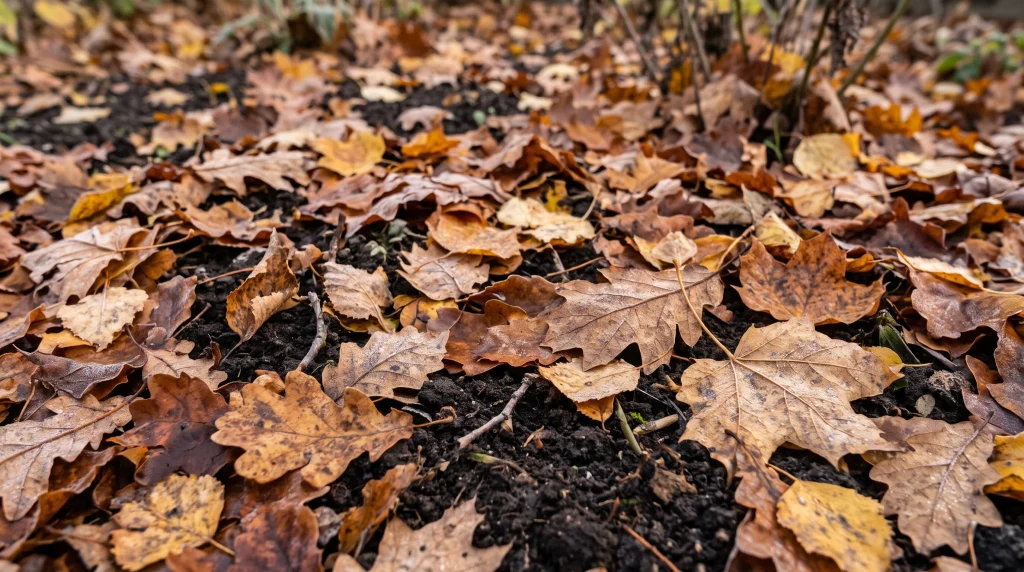
Supporting existing, noninvasive earthworms in winter begins with responsible soil management.
- Leave suitable organic material on garden beds to reduce exposure to severe temperature changes.
- Avoid unnecessary deep digging, particularly when the ground is frozen or saturated.
- Maintain good drainage without allowing the soil to become excessively dry.
- Use mature compost from reliable sources.
- Avoid unnecessary pesticide applications.
- Keep composting worms contained and avoid transferring potentially invasive worms or cocoons between locations.
Outdoor worm-composting bins deserve particular attention because they may freeze more rapidly than surrounding garden soil.
In cold climates, move vermicomposting systems into a suitable frost-free location or provide appropriate temperature protection.
Frequently Asked Questions
Do earthworms die when the ground freezes?
Some do, particularly species that cannot escape freezing conditions. Others survive in deeper soil or through cold-tolerant cocoons.
How deep do earthworms go in winter?
There is no universal depth. Deep-burrowing species may retreat several feet underground, while surface-dwelling species remain much closer to the surface.
Do earthworms hibernate?
Some earthworms in winter enter a period of reduced metabolic activity or dormancy. Others remain intermittently active when conditions are favorable.
Can earthworm cocoons survive frost?
Cocoons of certain species can survive winter conditions that kill adult worms. Their cold tolerance varies between species.
Does snow protect earthworms?
Yes, a sufficiently thick snow covering can insulate the ground and moderate soil temperature fluctuations. Its effectiveness depends on depth, density, and weather conditions.
Should I add earthworms to my garden in winter?
Generally, no. Improving soil conditions is preferable to introducing unfamiliar earthworm species that could become invasive or fail to survive.
Why are there no earthworms in my winter compost pile?
Low temperatures may cause worms to become inactive, migrate into sheltered areas, or die if the compost freezes. Their absence does not necessarily indicate poor compost quality.
Can earthworms survive being cut in half?
Cutting an earthworm does not normally produce two living worms. Limited regeneration is possible in some species, but serious injuries are frequently fatal.
Conclusion
The survival of earthworms in winter reveals how much activity and adaptation occur beneath seemingly lifeless garden soil.
While deep-burrowing species seek refuge below frozen ground, others rely on protected habitats, reduced metabolic activity, or resilient cocoons to carry their populations into spring.
Gardeners can support healthy cultivated soils by maintaining suitable organic cover, avoiding unnecessary winter digging, and protecting existing soil structure.
It is equally important to recognize that earthworms are not beneficial in every ecosystem and that introducing non-native species can have unintended consequences.
A thoughtfully managed winter garden protects more than dormant plants. It also preserves the complex underground ecosystem that contributes to decomposition, nutrient cycling, and the return of spring growth.
External Sources
1. Earthworms
Covers earthworm ecology, soil temperature, organic mulch, nutrient cycling, and soil structure. USDA Natural Resources Conservation Service. Read the authoritative PDF guide.
2. Earthworms
Explains winter survival, cocoons, deep-burrowing nightcrawlers, and invasive earthworm species. University of Minnesota Extension. Read the university extension article.
3. Earthworm Information
Covers ecological classifications, burrowing behavior, organic matter, reduced tillage, and soil fertility. University of California, Davis. Read the scientific agricultural resource.