
Table of Contents
- Why Chipmunks Seem More Active in Late Summer
- Meet the Eastern Chipmunk
- Understanding Chipmunk Food Caching Behavior
- Inside a Chipmunk Burrow
- Torpor vs. True Hibernation
- Why Activity Peaks in Late Summer and Fall
- Chipmunks in the Garden: Friend or Foe?
- Humane Ways to Protect Garden Beds and Bulbs
- Practical Tips
- Common Mistakes
- Frequently Asked Questions
- Conclusion
Why Chipmunks Suddenly Seem Everywhere in Late Summer (It’s All About Caching)
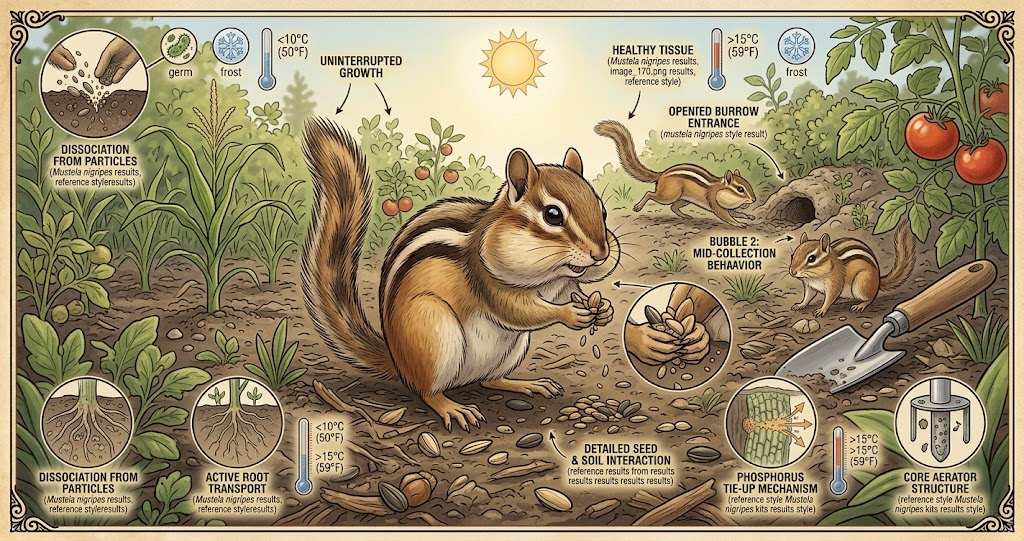
If it seems like chipmunks suddenly appear everywhere as summer begins to fade, you’re not imagining things. During late summer and early fall, chipmunk food caching behavior reaches its busiest period as these energetic little mammals prepare for the coming winter. They dart across patios with bulging cheeks, disappear into hidden burrows, and seem determined to gather every seed, acorn, and nut they can find.
Rather than a population explosion, what you’re witnessing is a predictable seasonal strategy. Eastern chipmunks spend much of late summer collecting and storing food underground, creating reserves that will sustain them through winter. At the same time, they’re expanding or maintaining their burrow systems and taking advantage of the season’s abundance of seeds, nuts, fruits, and other natural foods.
Although chipmunks sometimes frustrate gardeners by digging around bulbs or newly planted beds, they also play valuable ecological roles. Understanding why they become so visible at this time of year—and learning how to protect vulnerable plants without harming wildlife—can help homeowners coexist with these familiar backyard mammals.
Why Chipmunks Seem More Active in Late Summer
Late summer is one of the busiest seasons in a chipmunk’s year.
Trees begin producing acorns, hickory nuts, beechnuts, and other seeds. Gardens provide ripening vegetables and fallen fruits. Meadows produce abundant seeds, while insects remain plentiful.
Chipmunks respond by dramatically increasing the amount of time they spend foraging.
Because they make repeated trips between food sources and their burrows throughout the day, they’re much easier to notice than they were earlier in the summer.
Meet the Eastern Chipmunk
The eastern chipmunk (Tamias striatus) is the species most commonly encountered across much of eastern North America.
Recognizable by its reddish-brown coat and alternating dark and light stripes along the back, it is well adapted to forests, woodland edges, parks, suburban neighborhoods, and gardens.
Unlike tree squirrels, eastern chipmunks spend much of their lives close to the ground and rely on elaborate underground burrow systems for shelter and food storage.
Although western North America is home to many additional chipmunk species, their seasonal behaviors are broadly similar.
Understanding Chipmunk Food Caching Behavior
Food storage, or caching, is one of the eastern chipmunk’s defining behaviors.
Unlike gray squirrels, which often scatter small caches across many locations, eastern chipmunks primarily rely on larder caching.
What Is Larder Caching?
Instead of burying individual seeds over a wide area, chipmunks transport large quantities of food back to their underground burrows.
Special cheek pouches allow them to carry surprisingly large loads in a single trip.
Inside the burrow, food is stored in dedicated chambers where it remains available throughout winter.
Common cached foods include:
- Acorns
- Hickory nuts
- Beechnuts
- Maple seeds
- Sunflower seeds
- Corn
- Berries
- Mushrooms
- Small fruits
These food reserves are essential because chipmunks continue waking periodically during winter to feed.
Inside a Chipmunk Burrow
Many homeowners are surprised to learn how sophisticated chipmunk burrows can be.
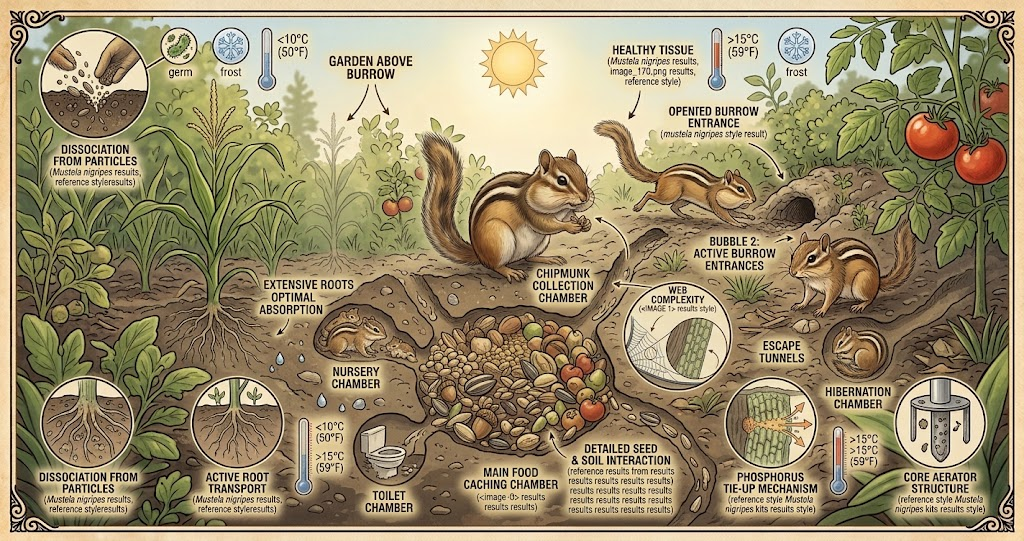
A typical burrow may extend several feet underground and include multiple specialized chambers.
These often include:
- Sleeping chamber
- Food storage chamber
- Nesting area
- Escape tunnels
- Waste chamber
Chipmunks are remarkably tidy animals.
Some burrows even include separate latrine areas, helping keep nesting chambers relatively clean.
The main entrance is often difficult to spot because chipmunks carry excavated soil away from the opening rather than leaving obvious mounds nearby.
The University of Wisconsin–Madison Extension provides excellent educational resources on eastern chipmunk biology and behavior:
https://hort.extension.wisc.edu/
Torpor vs. True Hibernation
One common misconception is that chipmunks hibernate continuously throughout winter.
They do not.
Instead, eastern chipmunks enter repeated periods of torpor.
What Is Torpor?
During torpor, body temperature, heart rate, and metabolism decrease substantially, allowing chipmunks to conserve energy.
Unlike true hibernators that remain continuously dormant for long periods, chipmunks periodically awaken.
Why Food Caches Matter
Because they wake repeatedly during winter, stored food becomes essential.
Rather than searching outside in freezing weather, chipmunks simply move through their burrows to feeding chambers stocked during late summer and autumn.
This is exactly why food caching becomes so intense before winter arrives.
Why Activity Peaks in Late Summer and Fall
Several biological factors combine to create the busy behavior homeowners notice.
Food Is Plentiful
Late summer provides one of the richest food supplies of the year.
Trees, shrubs, wildflowers, and gardens all produce seeds or fruits at roughly the same time.
Chipmunks take advantage of this abundance before winter.
Winter Is Approaching
Shortening days and changing temperatures influence seasonal behavior.
Although exact physiological mechanisms continue to be studied, decreasing daylight and seasonal environmental changes help synchronize food-gathering activities.
Juveniles Are Independent
Young chipmunks born earlier in the year become independent by late summer.
The presence of newly independent animals also increases the number of visible chipmunks moving through the landscape.
Chipmunks in the Garden: Friend or Foe?
Gardeners often have mixed feelings about chipmunks.
They sometimes dig around flower bulbs, sample strawberries, tomatoes, or peas, and may disturb freshly planted beds while searching for food.
However, chipmunks also contribute positively to backyard ecosystems.
Benefits include:
- Dispersing seeds
- Serving as prey for native predators
- Consuming some insects
- Helping move fungal spores important to forest health through mushroom consumption
Like many wildlife species, their ecological role involves both benefits and occasional conflicts.
Humane Ways to Protect Garden Beds and Bulbs
Complete exclusion is rarely practical.
Fortunately, several non-lethal methods can reduce damage while allowing chipmunks to continue playing their ecological role.
Protect Newly Planted Bulbs
One of the simplest solutions is using hardware cloth or wire mesh over newly planted bulb beds until the soil settles.
This discourages digging while allowing rain and sunlight to reach the planting area.
Plant Less Attractive Bulbs
Chipmunks often ignore bulbs such as:
- Daffodils
- Alliums
- Snowdrops
These can be excellent alternatives in areas with persistent digging.
Clean Up Fallen Seed
Bird seed scattered beneath feeders is highly attractive.
Regular cleanup reduces one of the easiest food sources around homes.
Harvest Produce Promptly
Leaving ripe fruits and vegetables in the garden provides additional food opportunities.
Frequent harvesting reduces attraction.
Reduce Easy Cover Near Sensitive Beds
Dense brush piles immediately beside vegetable gardens may provide convenient shelter.
Maintaining a balanced landscape with open sightlines around high-value planting areas can reduce repeated visits without removing natural habitat entirely.
If you’re planning bulb displays for next spring, our guide to protecting flower bulbs from wildlife offers additional practical ideas:
https://secretsofthegreengarden.com/how-to-protect-flower-bulbs-from-wildlife/
Practical Tips
- Harvest garden produce regularly.
- Store bird seed securely.
- Clean beneath feeders often.
- Protect newly planted bulbs with mesh.
- Plant daffodils or ornamental alliums in vulnerable areas.
- Observe chipmunks from a respectful distance.
- Appreciate their seasonal role in local ecosystems.
Common Mistakes
Assuming More Chipmunks Means Population Growth
Late-summer visibility usually reflects increased activity rather than a sudden increase in population.
Filling Burrow Entrances
Blocking active burrows may trap wildlife or encourage new digging nearby.
Leaving Bird Seed on the Ground
Spilled seed provides an easy food source that attracts repeated visits.
Trying to Eliminate Every Chipmunk
Complete removal is rarely practical and may disrupt natural ecological relationships.
Frequently Asked Questions
Why do chipmunks carry food in their cheeks?
Expandable cheek pouches allow them to transport large quantities of food efficiently back to underground storage chambers.
Do chipmunks really hibernate?
Not continuously. They enter repeated periods of torpor and wake periodically to eat stored food.
Why are chipmunks digging around my flower bulbs?
Freshly disturbed soil often attracts investigation, and some bulbs are edible. Protective mesh can reduce digging.
Are chipmunks beneficial?
Yes. They help disperse seeds, consume some insects, and contribute to healthy woodland ecosystems.
Should I feed wild chipmunks?
No. Wildlife experts generally recommend avoiding intentional feeding because it can alter natural behavior and increase dependence on human food sources.
Conclusion
The apparent explosion of chipmunk activity each late summer isn’t a mystery—it’s one of nature’s most efficient winter preparation strategies. By intensifying their food caching behavior, expanding underground food stores, and preparing for months of intermittent torpor, eastern chipmunks are simply responding to seasonal changes that have shaped their survival for thousands of years.
Although they occasionally create challenges in gardens, simple humane practices such as protecting bulbs, cleaning up bird seed, and harvesting ripe produce promptly usually provide effective solutions. Understanding the remarkable biology behind chipmunk food caching behavior allows gardeners to appreciate these busy little mammals while maintaining healthy, productive landscapes that support both plants and native wildlife.