
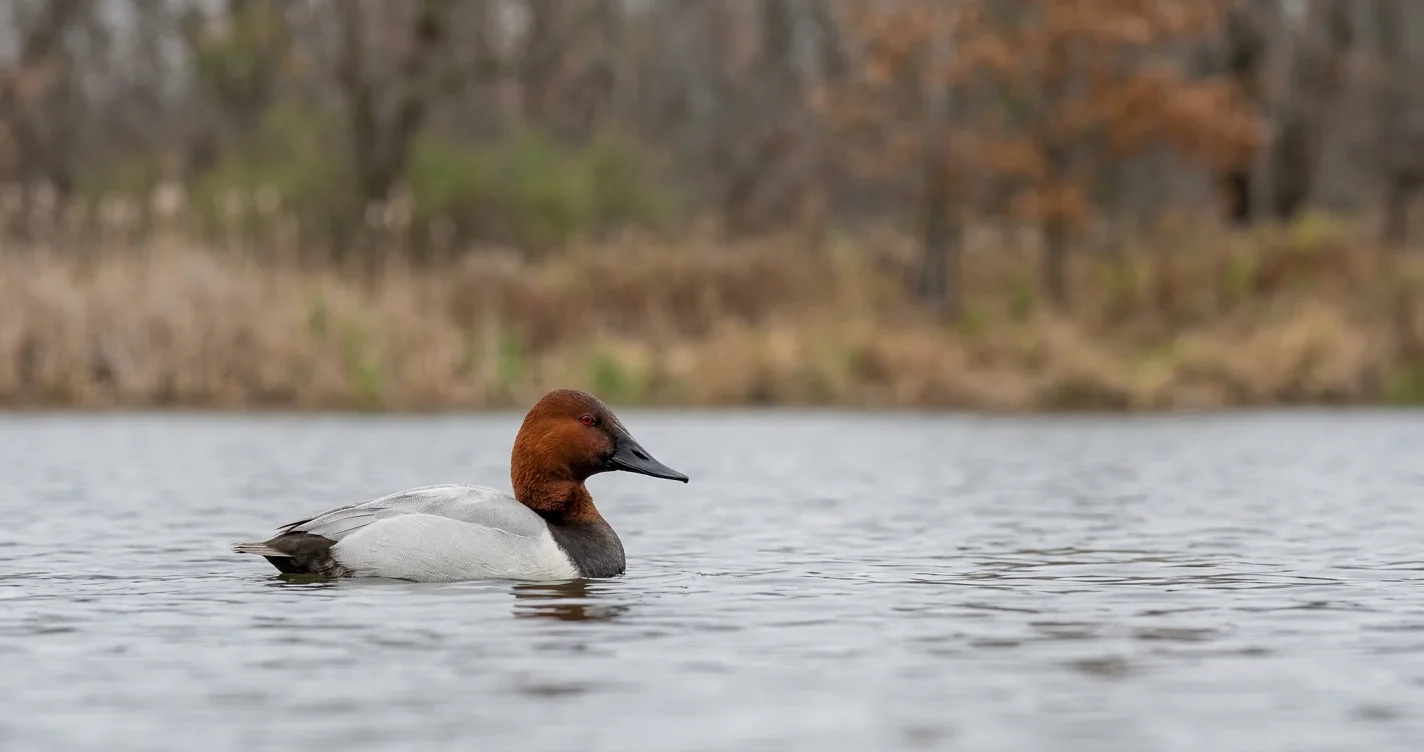
Imagine watching a quiet winter lake when a large duck with a rusty-red head suddenly disappears beneath the surface. There is no dramatic splash, no frantic movement—just a smooth dive into the cold water.
Several moments later, the bird reappears, sometimes with a piece of aquatic vegetation in its bill.
What happened underwater is one of the most fascinating feeding behaviors among North America’s waterfowl.
The canvasback duck (Aythya valisineria) is a powerful diving duck that often searches beneath lakes and wetlands for submerged plant parts, including energy-rich tubers and other underground storage structures.
While many ducks feed near the surface, canvasbacks can dive into deeper water, reach vegetation rooted in the sediment, and extract food that other birds may struggle to access.
Their winter survival depends on a remarkable combination of body design, diving ability, food availability, and healthy aquatic ecosystems.
Understanding how canvasbacks feed reveals a hidden connection between wintering waterfowl and the underwater gardens growing beneath our lakes.
Table of Contents
- What Is a Canvasback Duck?
- Why Canvasback Ducks Spend Winter on Open Water
- Canvasback Duck Diving: How They Reach Aquatic Plant Tubers
- The Aquatic Plants That Feed Canvasbacks
- How Canvasbacks Find Food Underwater
- Why Canvasbacks Sometimes Feed in Large Groups
- What Threatens Canvasback Winter Feeding Habitats?
- Why Canvasbacks Matter to Wetland Ecosystems
- In Your Own Yard: Helping Ducks and Aquatic Wildlife
- Frequently Asked Questions
What Is a Canvasback Duck?
The canvasback is one of North America’s largest diving ducks.
It belongs to the genus Aythya, which includes several species adapted to underwater feeding.
Canvasbacks are recognized by their distinctive sloping forehead, long bill, and streamlined profile.
How to Identify a Male Canvasback
During the breeding season and much of winter, adult males have a striking appearance.
Their heads and necks are reddish chestnut, contrasting with a dark chest and pale grayish-white back.
The back’s light coloration inspired the common name canvasback because it resembles pale canvas fabric.
Their eyes are often bright red, and their bills are dark.
What Female Canvasbacks Look Like
Females are more subtly colored.
They generally have brown heads, grayish-brown bodies, and dark bills.
Both sexes share the species’ distinctive long, sloping head profile.
This shape is particularly useful when distinguishing canvasbacks from similar diving ducks, such as redheads.
Where Canvasbacks Live
Canvasbacks breed mainly in the prairie pothole region and other wetland habitats of central and western North America.
During migration and winter, many move toward larger lakes, coastal bays, estuaries, and other suitable waters.
Wintering areas can include parts of the Atlantic, Pacific, and Gulf coasts, along with inland reservoirs and wetlands.
Their distribution changes with weather, food availability, and water conditions.
Why Canvasback Ducks Spend Winter on Open Water
Winter presents a major challenge for waterfowl.
As temperatures fall, shallow ponds may freeze, and aquatic food becomes more difficult to reach.
Canvasbacks often depend on bodies of water that remain accessible during the colder months.
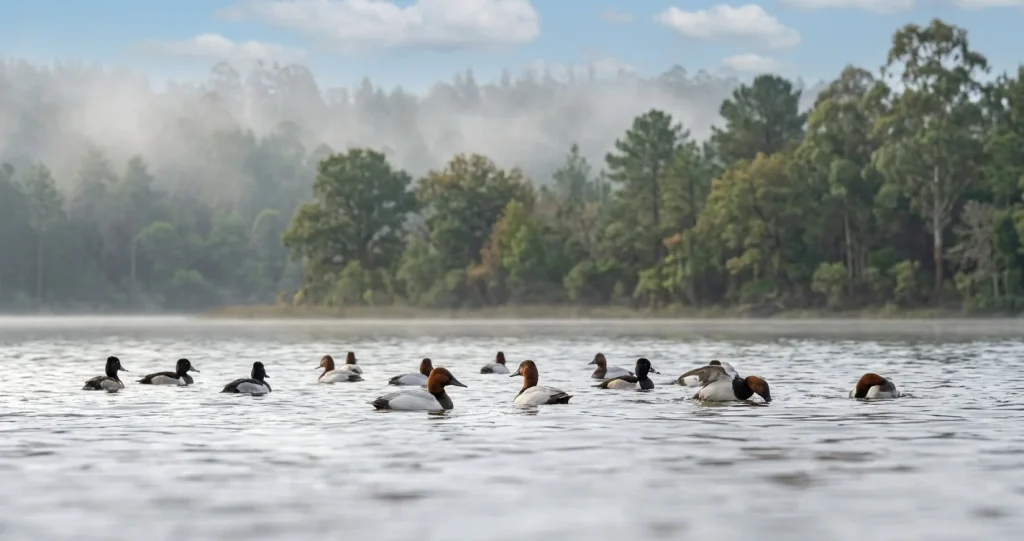
Open Water Provides Access to Food
Canvasbacks need unfrozen water to dive and forage.
Large lakes, coastal bays, and flowing waterways may remain open when smaller wetlands freeze.
These habitats can provide access to submerged plants and aquatic animals.
Winter Feeding Is an Energy Challenge
Birds must obtain enough energy to maintain body temperature, move between feeding areas, and support normal activity.
Cold weather can increase energy demands.
However, the amount of energy needed depends on wind, temperature, activity, and the bird’s condition.
Canvasbacks may spend considerable time feeding when suitable resources are available.
Why Winter Habitat Quality Matters
An open lake is not necessarily a good wintering habitat.
The water must also provide accessible food and relatively safe resting areas.
Water depth, aquatic vegetation, disturbance, and water quality can all influence habitat suitability.
This is why canvasbacks may concentrate in certain bays or wetlands rather than spreading evenly across every available lake.
Canvasback Duck Diving: How They Reach Aquatic Plant Tubers
The most remarkable part of canvasback feeding takes place below the surface.
These ducks are adapted to submerge their bodies, move through water, and locate food in aquatic vegetation or bottom sediments.
A Body Designed for Diving
Canvasbacks have streamlined bodies that help them move underwater.
Their legs are positioned relatively far back on the body compared with many dabbling ducks.
This arrangement supports swimming and diving propulsion, although it makes walking on land less graceful.
Their webbed feet provide the main force needed to move through water.
How a Canvasback Begins a Dive
A canvasback typically tips forward and submerges its body.
It then uses coordinated leg movements to descend.
Unlike dabbling ducks, which often feed by tipping their heads underwater while keeping their tails above the surface, canvasbacks regularly submerge completely.
Their diving behavior allows them to exploit submerged food resources.
Finding Food Beneath the Surface
Once underwater, a canvasback may search among aquatic plants or probe near the bottom.
The bird can use its bill to grasp vegetation and extract edible parts.
Depending on the habitat, it may consume tubers, rhizomes, seeds, or other plant tissues.
Canvasbacks also eat aquatic invertebrates, including mollusks and insects.
Their diets vary geographically and seasonally.
Why Tubers Are Valuable
Tubers are specialized plant structures that store energy, often in the form of carbohydrates.
For aquatic plants, these structures help support survival and regrowth.
For waterfowl, they can provide a concentrated food source.
Canvasbacks are especially associated with the underground storage structures of wild celery and certain other submerged aquatic plants.
However, tubers are not their only food, and some wintering populations rely heavily on animal prey.
How Deep Can Canvasbacks Dive?
Canvasbacks can forage in water deeper than that typically used by many dabbling ducks.
Their actual diving depth depends on habitat conditions and food distribution.
Most feeding dives are likely to target food within a depth range that is energetically worthwhile.
Diving deeper requires additional effort, so accessible food in suitable water depths is especially valuable.
What Happens After the Dive?
After reaching the surface, a canvasback may swallow food, reposition it in its bill, or prepare for another dive.
Repeated diving allows the bird to gather food from submerged vegetation beds.
The feeding sequence can appear almost effortless from shore, but it involves coordinated underwater movement and careful energy use.
The Aquatic Plants That Feed Canvasbacks
The relationship between canvasbacks and aquatic plants is so strong that the duck’s scientific name reflects one of its historically important food sources.
Wild Celery: A Famous Canvasback Food
Wild celery (Vallisneria americana) is a submerged aquatic plant native to North America.
It grows in freshwater habitats and produces long, ribbon-like leaves.
The plant can also develop underground storage structures used in vegetative reproduction and seasonal survival.
Historically, canvasbacks were strongly associated with feeding on wild celery in certain wintering areas.
The species name valisineria reflects this relationship.
Other Submerged Plants
Canvasbacks may also consume parts of pondweeds and other aquatic vegetation.
The exact plants available depend on local water chemistry, depth, sediment, and seasonal conditions.
Different wetlands support different plant communities.
Animal Foods Also Matter
Canvasbacks are often described as plant-feeding specialists, but their diet is more flexible than that description suggests.
In some coastal wintering areas, mollusks and other aquatic invertebrates can form a substantial part of their diet.
This flexibility allows canvasbacks to use habitats where preferred plant foods are limited.
It also means that conservation efforts must consider more than a single aquatic plant species.
How Canvasbacks Find Food Underwater
Underwater feeding requires birds to locate food in an environment where visibility can be limited.
Canvasbacks likely use several sensory and behavioral cues.
Vision in Aquatic Habitats
Water clarity influences how easily submerged vegetation can be detected.
In clear water, plant beds and other underwater features may be more visible.
In turbid water, visual detection can become more difficult.
Using the Bill to Explore
Diving ducks can use their bills to manipulate and locate food.
Canvasbacks may probe or grasp submerged vegetation and sediment-associated plant structures.
However, the relative importance of vision and touch in different feeding situations is not fully established.
Learning Productive Feeding Areas
Waterfowl can repeatedly use habitats where food is available.
Experience may influence where individuals forage and how they move between feeding locations.
Canvasbacks also respond to changing conditions, including ice formation, water levels, and disturbance.
Why Canvasbacks Sometimes Feed in Large Groups
Canvasbacks can gather in substantial flocks during migration and winter.
These concentrations are among the memorable sights of North American waterfowl watching.
Food Resources Can Attract Flocks
Productive aquatic habitats may support many feeding birds.
When food is concentrated in particular areas, canvasbacks may gather there.
The size of these groups varies with habitat and season.
Group Living and Safety
Flocking can provide benefits, including increased opportunities to detect approaching threats.
However, large groups may also experience competition for limited food.
The balance between these factors depends on local circumstances.
Disturbance Can Change Feeding Patterns
Boating, repeated close approaches, and other human activities can disturb resting or feeding ducks.
When birds are repeatedly forced to move, they may expend energy and lose feeding opportunities.
This can be particularly important during cold weather.
What Threatens Canvasback Winter Feeding Habitats?
Canvasbacks depend on healthy aquatic ecosystems.
When underwater plant communities decline, the effects can extend far beyond the plants themselves.
Poor Water Clarity
Submerged plants require sufficient sunlight for photosynthesis.
Sediment runoff and excessive algal growth can reduce the amount of light reaching underwater vegetation.
When light becomes limited, aquatic plant growth may decline.
Nutrient Pollution
Excess nutrients entering lakes and bays can stimulate algal blooms.
These blooms may shade submerged vegetation and alter water quality.
The effects vary among ecosystems, but nutrient management is often important for aquatic habitat restoration.
Loss of Wetlands
Wetland drainage, shoreline development, and changes in water management can reduce suitable waterfowl habitat.
The loss of shallow vegetated areas may affect feeding opportunities.
Invasive Species
Invasive aquatic plants and animals can alter food webs and habitat structure.
Some invasive species may provide food for certain ducks, while others can reduce native vegetation or change ecosystem conditions.
Their effects are complex and depend on location.
Climate and Changing Ice Conditions
Winter temperatures influence where open water remains available.
Changes in ice cover can affect waterfowl movements and habitat use.
However, the consequences vary across regions and interact with food availability, precipitation, and other environmental factors.
Why Canvasbacks Matter to Wetland Ecosystems
Canvasbacks are more than beautiful winter visitors.
They participate in aquatic food webs and connect habitats across large geographic areas.
Consumers of Aquatic Plants and Animals
By feeding on vegetation and invertebrates, canvasbacks interact with multiple parts of wetland ecosystems.
Their foraging can influence local food resources, although the magnitude of these effects varies.
Connections Between Distant Wetlands
Canvasbacks migrate between breeding, migration, and wintering areas.
This means their survival depends on habitat quality across multiple regions.
A bird wintering in a coastal bay may depend on breeding wetlands far inland during another part of the year.
Indicators of Habitat Conditions
Changes in waterfowl distribution and abundance can provide useful information about habitat conditions.
However, canvasback numbers alone cannot diagnose ecosystem health.
Water quality, vegetation surveys, and broader ecological monitoring are also necessary.
In Your Own Yard: Helping Ducks and Aquatic Wildlife
Most backyard ponds are too small or shallow to support wintering canvasbacks.
However, gardeners and homeowners can still help protect the watersheds and wetland habitats these birds depend on.
Reduce Fertilizer Runoff
Apply fertilizer only when plants need it.
Follow soil-test recommendations where appropriate.
Avoid spreading fertilizer before heavy rain or onto paved surfaces.
Reducing unnecessary nutrient runoff can help protect downstream water quality.
Plant Native Vegetation
Native plants around ponds, drainage areas, and garden edges can help stabilize soil.
Their roots may reduce erosion and slow surface runoff.
Choose species appropriate to local conditions.
Keep Soil Out of Waterways
Bare soil can wash into storm drains, streams, and lakes during rainfall.
Mulching, ground covers, and well-maintained vegetation can reduce erosion.
This helps limit sediment entering aquatic habitats.
Protect Natural Wetland Plants
Healthy native aquatic vegetation provides habitat and food for many organisms.
Avoid removing submerged plants unnecessarily.
For pond management or restoration projects, consult local guidance before introducing aquatic species.
Observe Waterfowl Responsibly
Use binoculars or a spotting scope to watch ducks from a distance.
Avoid repeatedly approaching feeding or resting flocks.
Respect protected areas and seasonal wildlife restrictions.
Support Wetland Conservation
Local watershed organizations, conservation groups, and habitat restoration programs often work to improve aquatic ecosystems.
Supporting these efforts can benefit waterfowl and many other species.
Frequently Asked Questions
1. What do canvasback ducks eat during winter?
Canvasbacks eat a mixture of aquatic plants and animals.
Their diet may include wild celery tubers, pondweed structures, seeds, mollusks, and other aquatic invertebrates.
The relative importance of these foods varies by region, habitat, and season.
2. How do canvasback ducks dive underwater?
Canvasbacks submerge their entire bodies and use their webbed feet to propel themselves underwater.
They search submerged vegetation and bottom habitats for edible plant parts and aquatic animals.
Their streamlined bodies and rear-positioned legs help support diving.
3. Where can you see canvasback ducks in winter?
Canvasbacks winter in suitable open-water habitats across parts of North America.
They may be found on large lakes, reservoirs, coastal bays, and estuaries.
Their distribution changes with weather, ice cover, food availability, and migration patterns.
Conclusion
A canvasback disappearing beneath a winter lake may seem like a simple moment of feeding.
But that brief dive reveals an extraordinary connection between bird anatomy, underwater plant biology, and wetland ecology.
The canvasback duck is adapted to search below the surface, where aquatic plant tubers and other food resources can help sustain it through winter.
Its feeding behavior depends on healthy submerged vegetation, suitable water conditions, and access to productive habitats.
Protecting those habitats benefits not only canvasbacks but also the many other organisms that share North America’s lakes and wetlands.
The next time a rusty-headed duck slips beneath the surface, imagine the hidden underwater landscape it is exploring.
Beneath the winter water lies an entire garden—and the canvasback knows where to look.
External Sources
Explain how canvasbacks dive underwater to reach aquatic plant tubers and rhizomes, and how their diet changes seasonally. Cornell University, All About Birds.
2. Canvasback (Aythya valisineria)
Support the species identification, distinctive sloping head, and preference for aquatic plant tubers, especially wild celery. U.S. Fish & Wildlife Service
3. The Big Four — Diving Ducks
Explain how the canvasback’s muscular neck, powerful feet, and specialized bill help it extract underwater plant structures. Ducks Unlimited, waterfowl conservation organization.