
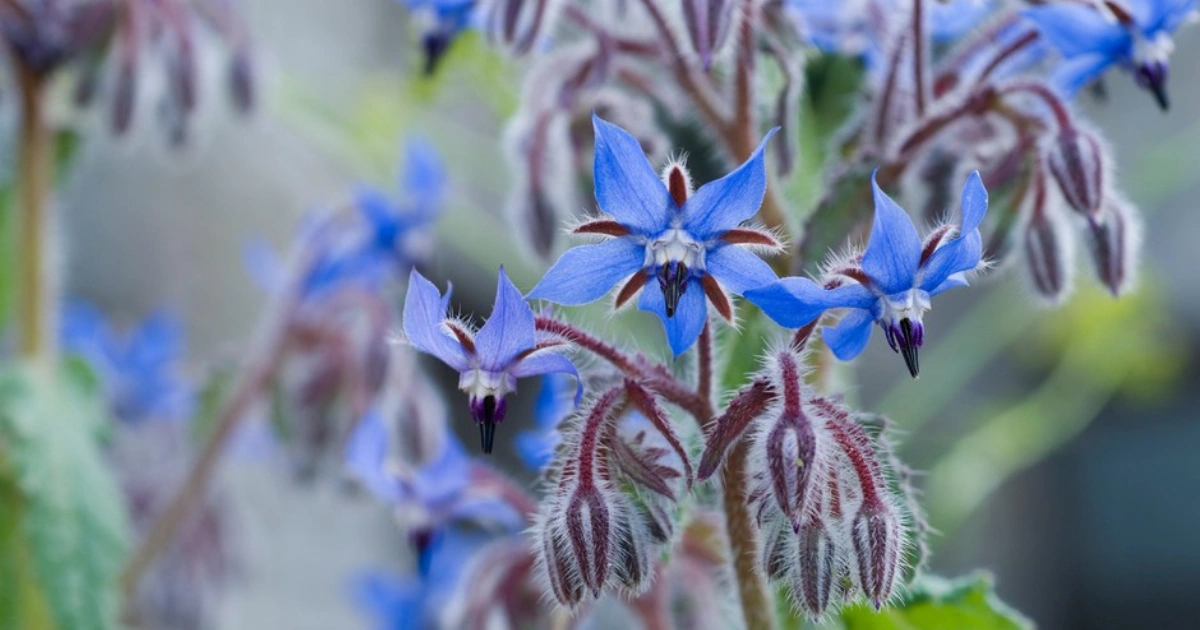
Discover everything you need to know about borage (Borago officinalis), from its distinctive blue flowers and pollinator benefits to cultivation tips, edible uses, and seed collection.
Borage is one of the most rewarding plants a gardener can grow. Known for its brilliant star-shaped blue flowers, fuzzy stems, and ability to attract pollinators, this annual herb has been cultivated for centuries in kitchen gardens, medicinal plots, and wildlife-friendly landscapes.
Beyond its ornamental appeal, borage is valued for supporting bees, improving biodiversity, enriching soil, and providing edible flowers and leaves. Its ability to self-seed and thrive in a wide range of conditions makes it a favorite among beginner and experienced gardeners alike.
In this complete guide, we’ll explore the anatomy, growing requirements, benefits, and uses of this fascinating plant.
What Is Borage?
Borage (Borago officinalis) is an annual flowering herb belonging to the Boraginaceae family. Native to the Mediterranean region, it has become naturalized in many parts of Europe, North America, and other temperate climates.
The plant is easily recognized by its:
- Bright blue star-shaped flowers
- Hairy stems and leaves
- Drooping flower buds
- Rough-textured foliage
- Rapid growth habit
Borage typically grows between 2 and 3 feet (60–90 cm) tall and blooms continuously from late spring through autumn.
Botanical Characteristics of Borage
Understanding the structure of borage helps gardeners identify and care for it properly.
Flowers
The most recognizable feature of borage is its striking flower.
Characteristics include:
- Five pointed blue petals
- Dark central anthers
- Star-shaped appearance
- Nectar-rich blooms
Although blue is most common, some varieties produce white or pale pink flowers.
Flower Buds
Before opening, borage flowers hang downward in graceful clusters.
These developing buds feature:
- Curved stems
- Hair-covered calyxes
- Drooping inflorescences
As flowers mature, they gradually turn upward.
Leaves
Borage leaves are covered with fine hairs and have a rough texture.
Young leaves:
- Are softer and more tender
- Have a mild cucumber-like flavor
Mature leaves:
- Become larger
- Develop a coarser texture
- Remain highly attractive to pollinators and beneficial insects
Stems
The stems are thick, hollow, and covered in bristly hairs.
These hairs help protect the plant from some herbivores and environmental stress.
Roots
Borage develops a strong taproot system that allows it to:
- Access moisture deep in the soil
- Improve soil structure
- Tolerate short dry periods
This deep-rooting habit also makes borage a valuable companion plant.
Seeds
After flowering, borage produces dark, textured seeds known as nutlets or achenes.
The seeds:
- Germinate readily
- Self-sow easily
- Remain viable for several years
Many gardeners find that once borage is introduced, it often returns naturally each season.
Why Gardeners Love Borage
Borage offers a combination of practical and ecological benefits rarely found in a single plant.
Exceptional Pollinator Plant
Borage is frequently listed among the best plants for bees.
Its flowers produce nectar continuously throughout the growing season, attracting:
- Honeybees
- Bumblebees
- Solitary bees
- Butterflies
- Hoverflies
Many beekeepers intentionally grow borage to support pollinator populations.
Companion Planting Benefits
Borage is often planted near vegetables and fruit crops.
Gardeners commonly pair it with:
- Tomatoes
- Strawberries
- Squash
- Cucumbers
- Peppers
The abundance of pollinators it attracts can improve fruit production and overall garden biodiversity.
Long Blooming Period
Unlike many flowering herbs that bloom briefly, borage continues producing flowers for months.
This extended flowering season provides a reliable food source for beneficial insects.
How to Grow Borage
One reason for borage’s popularity is its ease of cultivation.
Sunlight Requirements
Borage grows best in:
- Full sun
- Partial shade in hot climates
At least six hours of direct sunlight daily encourages vigorous flowering.
Soil Preferences
Borage adapts to many soil types but performs best in:
- Well-drained soil
- Moderately fertile ground
- Soil with good organic matter content
The plant tolerates less-than-perfect soil conditions better than many herbs.
Watering
Once established, borage is relatively drought tolerant.
Watering guidelines:
- Keep soil evenly moist during germination
- Water deeply during extended dry periods
- Avoid waterlogged conditions
Direct Sowing
Borage is usually grown from seed.
For best results:
- Sow seeds directly into the garden after frost danger passes.
- Plant seeds about ¼–½ inch deep.
- Space plants 12–18 inches apart.
- Keep soil lightly moist until germination.
Seedlings often emerge within one to two weeks.
Harvesting Borage
Different parts of the plant can be harvested throughout the growing season.
Harvesting Flowers
Flowers are best picked shortly after opening.
Uses include:
- Garnishes
- Salads
- Herbal beverages
- Decorative ice cubes
Their mild cucumber-like flavor makes them popular in summer recipes.
Harvesting Leaves
Young leaves are generally preferred because they are more tender.
Older leaves become rougher and are often cooked before consumption.
Collecting Seeds
Allow flowers to mature and dry naturally.
Once seeds darken and harden:
- Gather them carefully
- Dry completely
- Store in a cool, dry location
Properly stored seeds remain viable for future planting.
Borage in Wildlife Gardens
Borage contributes significantly to garden ecosystems.
Benefits include:
- Supporting pollinators
- Attracting predatory insects
- Increasing biodiversity
- Providing nectar during periods of limited floral resources
Its long flowering season makes it particularly valuable in wildlife-friendly landscapes.
Potential Drawbacks of Borage
Although borage is highly beneficial, gardeners should be aware of a few considerations.
Self-Seeding
Borage readily disperses seeds.
While many gardeners appreciate this trait, it can lead to volunteer seedlings appearing throughout the garden.
Large Growth Habit
Mature plants can become surprisingly large.
Proper spacing prevents overcrowding.
Rough Foliage
The hairy leaves may irritate sensitive skin during harvesting.
Wearing gloves can help prevent discomfort.
Frequently Asked Questions
Is borage an annual or perennial?
Borage is generally grown as an annual, although it often returns each year through self-seeding.
Does borage attract bees?
Yes. Borage is considered one of the best bee-friendly plants and is highly attractive to many pollinator species.
Can borage grow in poor soil?
Yes. While it performs best in moderately fertile, well-drained soil, borage tolerates a wide range of growing conditions.
Is borage good for companion planting?
Many gardeners use borage near tomatoes, strawberries, cucumbers, squash, and other crops to attract pollinators and beneficial insects.
Should I let borage self-seed?
That depends on your gardening goals. Allowing self-seeding provides a continuous supply of plants, while removing seed heads prevents spreading.
Final Thoughts
Borage is much more than a beautiful flowering herb. Its vibrant blue blossoms attract pollinators, its deep roots improve soil health, and its easy-growing nature makes it suitable for nearly any garden. Whether you’re interested in supporting wildlife, enhancing vegetable production, or simply enjoying months of colorful blooms, borage is a valuable addition to the landscape.
With minimal maintenance and exceptional ecological benefits, this versatile plant continues to earn its reputation as one of the most useful herbs for modern gardens.
SEO Information
Primary Keyword: Borage plant
Related Keywords:
- Borago officinalis
- Growing borage
- Borage flowers
- Pollinator-friendly plants
- Companion planting borage
- Bee-friendly herbs
- Edible flowers
- Wildlife garden plants
Internal Linking Suggestions (secretsofthegreengarden.com)
- Best Flowers for Attracting Bees to Your Garden
- Companion Planting Guide for Vegetable Gardens
- How to Create a Pollinator-Friendly Backyard
External Linking Suggestions
- Royal Horticultural Society Guide to Growing Borage
- University of Wisconsin Extension Pollinator Gardening Resources
- USDA Plant Database – Borago officinalis
Meta Description: Learn how to grow and identify the borage plant (Borago officinalis). Discover its botanical features, pollinator benefits, companion planting uses, seed collection tips, and garden advantages.