
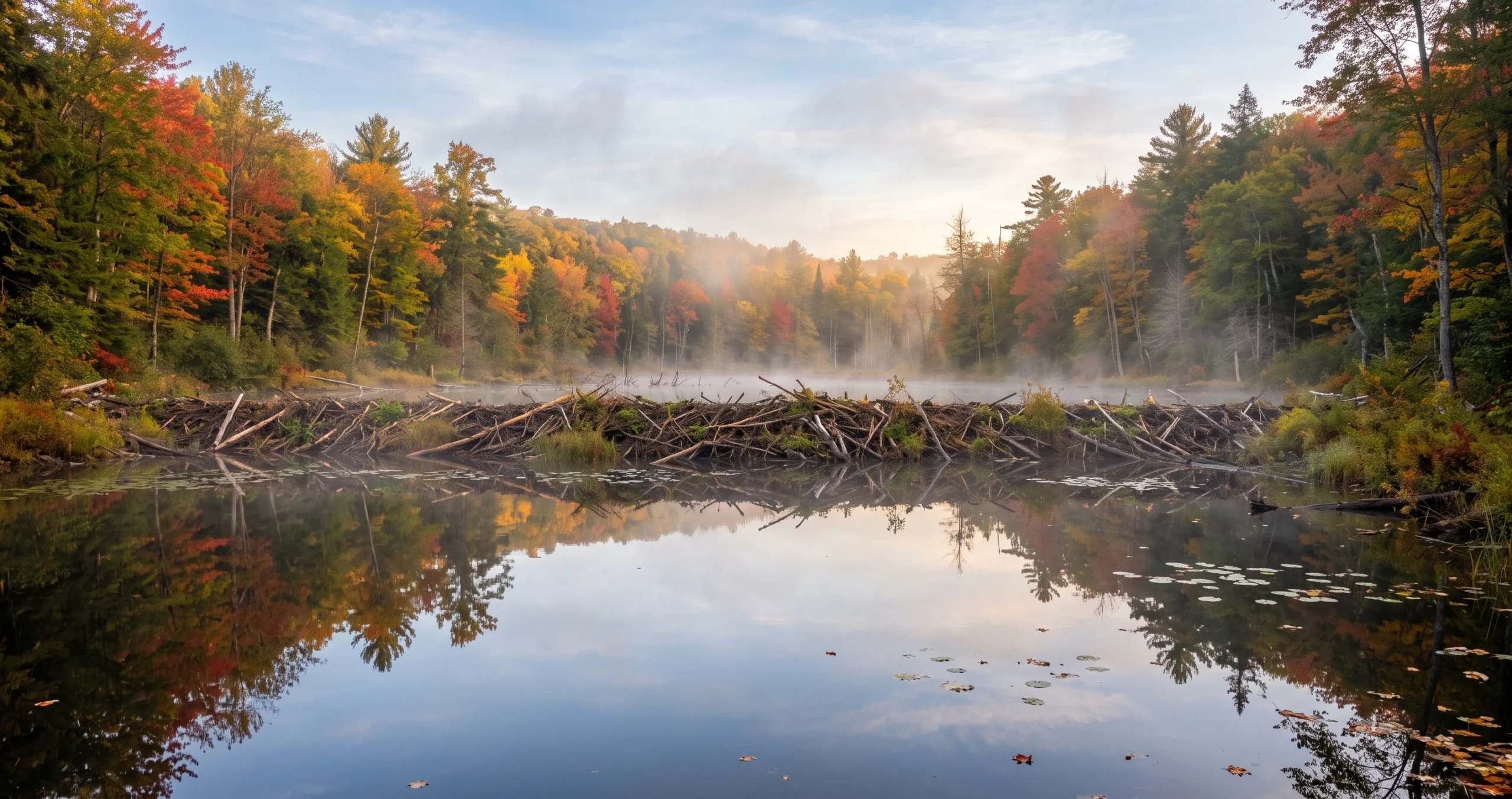
When people think about animals that shape landscapes, elephants or termites often come to mind. Yet few species transform ecosystems as dramatically as beavers. Through their instinctive dam-building behavior, these remarkable rodents alter rivers, create wetlands, improve biodiversity, and even influence how water moves across entire watersheds. The story of beavers ecosystem engineers is one of the clearest examples of how a single species can reshape its environment in ways that benefit hundreds of others.
Scientists increasingly recognize beavers as keystone species because their engineering activities create habitats that support fish, amphibians, birds, mammals, insects, and countless aquatic organisms. Recent research has also highlighted their potential role in reducing wildfire impacts, restoring degraded streams, and improving climate resilience. While beaver dams sometimes create conflicts with landowners, modern wildlife management increasingly emphasizes coexistence through practical, humane solutions rather than removal.
Table of Contents
- What Makes Beavers Ecosystem Engineers?
- How Beaver Dams Change Rivers
- Wetlands Created by Beavers Boost Biodiversity
- Improving Water Quality and Groundwater
- Beavers and Wildfire Mitigation
- Beaver Reintroduction Programs in the United States
- Conflicts with Property Owners
- Humane Solutions: Flow Devices and Coexistence
- Why Healthy Beaver Populations Matter
- Common Myths About Beavers
- Frequently Asked Questions
- Conclusion
What Makes Beavers Ecosystem Engineers?
An ecosystem engineer is an organism that physically changes its environment in ways that influence other species.
Beavers perfectly fit this definition.
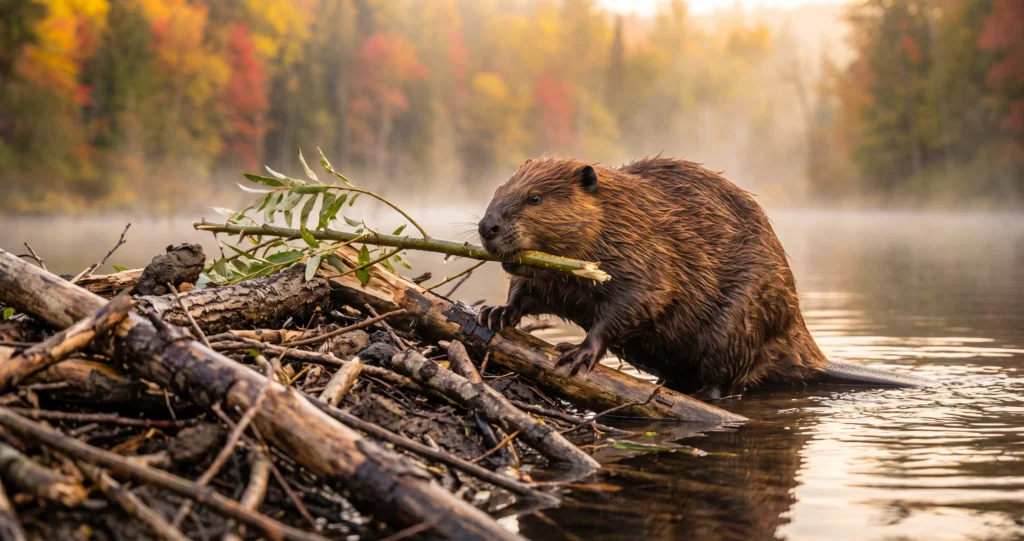
Using branches, mud, stones, and vegetation, they construct dams across streams and small rivers.
These structures slow flowing water and create ponds that can persist for years or even decades.
Unlike many animals that simply occupy habitats, beavers actively create entirely new ones.
Their engineering activities modify water movement, soil moisture, vegetation, nutrient cycling, and wildlife distribution throughout entire landscapes.
Few mammals outside humans produce such widespread ecological change.
How Beaver Dams Change Rivers
A flowing stream behaves very differently from a beaver pond.
Fast-moving water carries sediment downstream quickly.
After a dam is built, water slows dramatically.
Sediment begins settling on the pond bottom instead of continuing downstream.
The stream spreads outward, forming shallow wetlands and multiple channels.
Floodwaters become less abrupt because ponds temporarily store runoff before releasing it more gradually.
This process changes local hydrology in several important ways.
Groundwater levels often rise.
Streamflow becomes more stable during dry periods.
Water remains available longer into summer.
Over time, entire floodplains may become greener and more productive.
Beavers Ecosystem Engineers and Biodiversity
Perhaps the greatest ecological contribution of beavers lies in the diversity of habitats they create.
A single beaver pond supports numerous microhabitats.
Open water attracts ducks and other waterfowl.
Shallow marshes provide breeding sites for amphibians.
Standing dead trees become nesting locations for woodpeckers.
Young shrubs flourish around pond edges, benefiting browsing mammals.
Fish often use deeper pools created behind dams for shelter and overwintering.
Aquatic insects thrive among submerged vegetation.
Because different species require different habitats, the variety produced by beaver engineering dramatically increases biodiversity.
Studies consistently report higher numbers of birds, amphibians, mammals, reptiles, and aquatic organisms in landscapes influenced by beavers.
Improving Water Quality
Beaver ponds function as natural filtration systems.
Slower water allows suspended sediment to settle.
This reduces downstream turbidity.
Wetland plants absorb excess nutrients such as nitrogen and phosphorus.
Microorganisms living in pond sediments further process organic matter.
Together, these natural processes improve water quality entering downstream rivers.
Although beaver ponds are not appropriate solutions for every watershed, they frequently contribute to healthier aquatic ecosystems.
Groundwater Recharge
One overlooked benefit of beaver dams involves groundwater.
By slowing streamflow, ponds allow more water to seep into surrounding soils.
This recharge raises local water tables.
Nearby vegetation gains improved access to moisture during dry seasons.
Streams downstream may continue flowing longer because groundwater slowly returns stored water over time.
This natural storage system increases drought resilience throughout many watersheds.
Beavers and Wildfire Mitigation
One of the most exciting recent research areas involves wildfire resilience.
As climate change contributes to larger and more frequent wildfires in parts of North America, scientists have observed that beaver wetlands sometimes behave differently from surrounding landscapes.
Because beaver ponds store water and maintain saturated soils, nearby vegetation often remains greener during drought.
Several studies have documented wetlands created by beavers acting as natural fire breaks.
Although fires may still pass through these areas, burn severity can be substantially reduced compared with surrounding dry forests or grasslands.
Some post-fire surveys have found that beaver wetlands continue supporting wildlife even after severe regional fires.
Researchers emphasize that beavers are not a complete wildfire solution.
However, restoring natural wetlands may become one valuable component of broader landscape management strategies.
Beaver Reintroduction Programs in the United States
Following centuries of intensive trapping for the fur trade, beaver populations declined dramatically across much of North America.
During the twentieth century, wildlife conservation efforts helped many populations recover.
Today, several states have implemented or expanded beaver reintroduction and relocation programs.
The goals vary depending on local conditions.
Some projects focus on restoring degraded streams.
Others seek improved fish habitat or increased wetland biodiversity.
Several western states have relocated nuisance beavers from developed areas to remote watersheds where their engineering benefits stream restoration.
In places such as California, Colorado, Utah, Washington, and Oregon, researchers continue evaluating how restored beaver populations influence water availability, habitat quality, and ecosystem resilience.
Successful programs typically involve careful site selection, long-term monitoring, and collaboration between landowners, conservation groups, and wildlife agencies.
Why Healthy Beaver Populations Matter
The ecological influence of beavers extends well beyond individual ponds.
Healthy beaver populations create networks of wetlands across watersheds.
These interconnected habitats support migration corridors for wildlife.
They increase landscape diversity.
They store water during wet periods and release it gradually during drought.
Wetlands also capture carbon in accumulating organic sediments, contributing to long-term carbon storage.
Although local conditions vary, beaver restoration increasingly complements broader conservation efforts aimed at improving freshwater ecosystems.
If you enjoy learning how wildlife supports healthy landscapes, you may also enjoy our guide to beneficial pollinators and biodiversity at secretsofthegreengarden.com.
Conflicts with Property Owners
Despite their ecological value, beavers sometimes create genuine challenges.
Common concerns include:
- Flooded roads
- Damaged culverts
- Tree cutting near homes
- Flooded agricultural land
- Blocked drainage systems
These conflicts are often highly localized.
Historically, lethal removal was frequently used to address problems.
Today, many wildlife managers increasingly recommend coexistence strategies whenever practical.
Humane Solutions: Flow Devices
One of the most effective modern management tools is the use of flow devices.
Sometimes called “beaver deceivers” or pond levelers, these systems regulate water levels without requiring removal of the animals.
Flow devices typically involve pipes installed through or around dams.
Because water enters quietly beneath the pond surface, beavers often fail to detect the flow strongly enough to plug it.
The result is a stable pond maintained below a predetermined water level.
Properly designed flow devices can:
- Reduce flooding
- Protect roads
- Maintain wetlands
- Preserve beaver habitat
- Minimize repeated conflicts
Although not suitable everywhere, they have successfully resolved many long-term disputes between landowners and wildlife managers.
Protecting valuable trees with wire fencing or trunk guards provides another simple, non-lethal solution.
Balancing Conservation and Human Needs
Successful beaver management recognizes that both ecological benefits and property concerns are real.
Not every location can accommodate a beaver colony.
Likewise, removing every colony eliminates important environmental services.
Modern conservation increasingly focuses on identifying locations where coexistence provides the greatest long-term benefits while addressing legitimate infrastructure concerns through engineering rather than repeated removal.
This balanced approach often produces better outcomes for both people and wildlife.
For additional information about beaver restoration and coexistence, the U.S. Fish & Wildlife Service provides science-based educational resources:
https://www.fws.gov/
Common Myths About Beavers
Myth: Beaver dams always cause flooding.
False.
While localized flooding can occur, many dams slow runoff and reduce downstream flood peaks.
Myth: Beavers destroy forests.
False.
They selectively cut trees near water, creating habitat diversity rather than eliminating forests.
Myth: Beaver ponds are unhealthy.
False.
Many ponds support exceptionally rich communities of plants and animals while improving water quality.
Myth: The only solution is removing beavers.
False.
Flow devices, tree protection, and relocation programs often resolve conflicts effectively.
Myth: Every stream benefits equally from beavers.
Not necessarily.
Ecological outcomes depend on stream size, climate, geology, and surrounding land use.
Frequently Asked Questions
Why are beavers called ecosystem engineers?
Because they physically alter landscapes in ways that create habitats for many other species.
Do beaver dams help wildlife?
Yes. Beaver wetlands often increase habitat diversity for birds, fish, amphibians, mammals, reptiles, and aquatic insects.
Can beavers reduce wildfire damage?
Research suggests wetlands created by beavers may reduce burn severity in some landscapes by maintaining wetter vegetation and soils.
What is a flow device?
It is a water-control structure installed in or around beaver dams to regulate pond levels while allowing beavers to remain.
Are beaver reintroduction programs successful?
Many have shown positive ecological outcomes, although success depends on appropriate site selection, monitoring, and long-term management.
Conclusion
The story of beavers ecosystem engineers demonstrates how one animal can transform entire landscapes through simple, instinctive behaviors. By building dams, beavers reshape river systems, create wetlands, improve biodiversity, recharge groundwater, and contribute to healthier freshwater ecosystems. Their influence extends far beyond the ponds they construct, affecting water quality, wildlife habitat, and even landscape resilience during drought and wildfire.
As research continues, beavers are increasingly recognized not as nuisances but as valuable partners in ecosystem restoration. While conflicts with human infrastructure sometimes require thoughtful management, humane solutions such as flow devices have shown that coexistence is often possible. Protecting and restoring healthy beaver populations offers an opportunity to harness one of nature’s most effective ecosystem engineers while building more resilient landscapes for both wildlife and people.
2 Internal Link Suggestions:
- https://secretsofthegreengarden.com/how-pollinators-help-your-garden-thrive/
- https://secretsofthegreengarden.com/why-fireflies-are-important-for-healthy-gardens/
3 External Dofollow Authoritative Sources with URLs:
- U.S. Fish & Wildlife Service – Beavers: https://www.fws.gov/
- Beaver Institute: https://www.beaverinstitute.org/
- National Park Service – Beavers: https://www.nps.gov/