
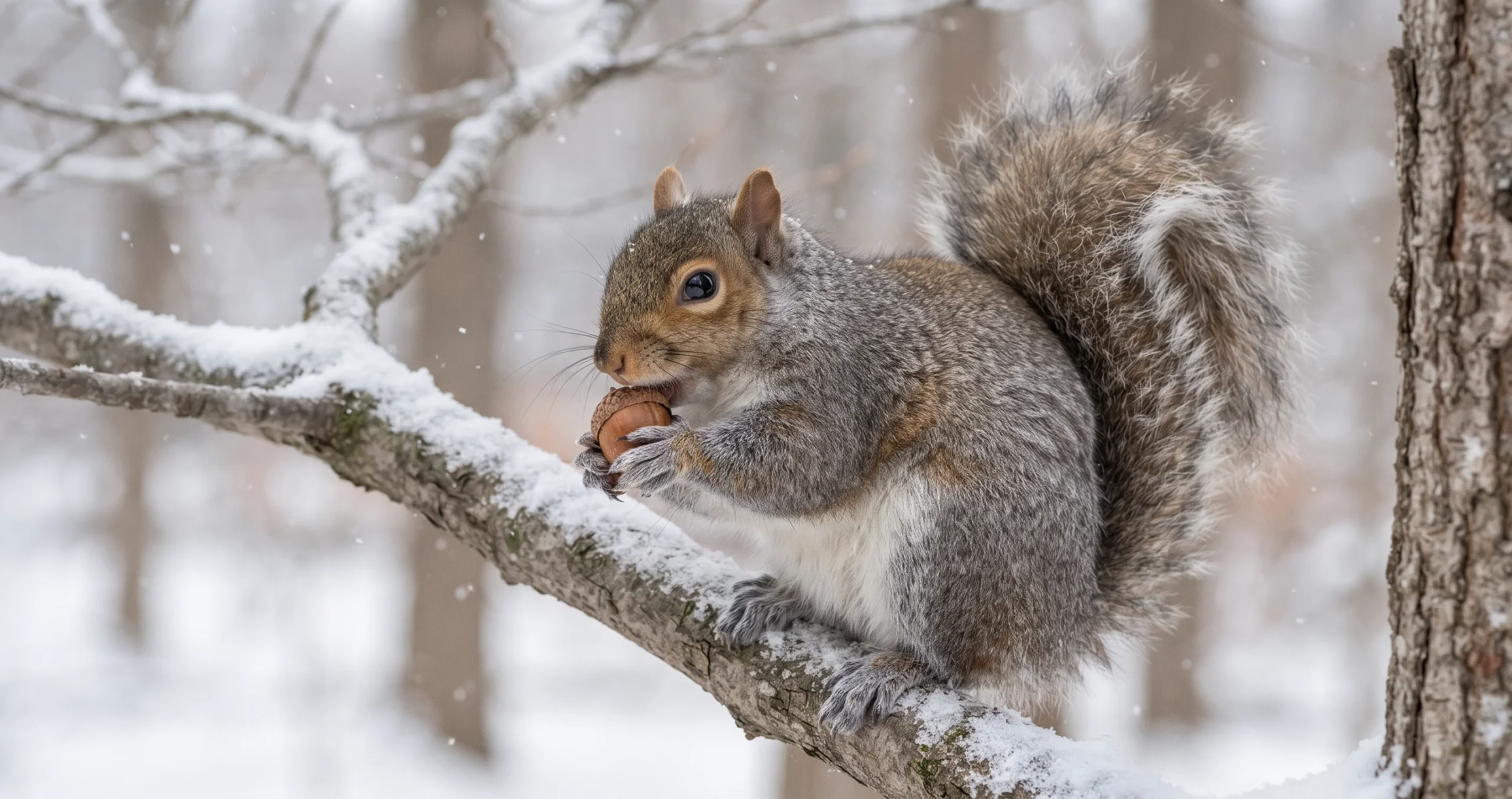
When winter arrives and snow covers the garden, squirrels often become less visible. The familiar animals that spend autumn collecting acorns suddenly seem to disappear, leaving many nature lovers wondering: do squirrels hibernate?
The answer depends on the species. Most familiar tree squirrels remain active throughout winter, while many ground squirrels enter true hibernation and spend months underground. Flying squirrels have another strategy, relying on protected shelters and shared body warmth.
Understanding these differences reveals fascinating winter survival adaptations and helps gardeners create outdoor spaces that support wildlife naturally.
Table of Contents
- Do Squirrels Hibernate? Understanding the Difference
- Tree Squirrels vs. Ground Squirrels
- How Tree Squirrels Survive Winter
- Where Squirrels Sleep During Winter
- How Squirrels Find Their Buried Nuts
- True Hibernation in Ground Squirrels
- How Flying Squirrels Survive Winter
- What Squirrels Eat During Winter
- How Squirrels Help Forests Grow
- How to Help Squirrels During Winter
- Frequently Asked Questions
Do Squirrels Hibernate? Understanding the Difference
The belief that all squirrels hibernate probably comes from their reduced activity during colder weather. Squirrels that regularly visit gardens during fall may remain hidden for extended periods when winter storms arrive.
However, spending several days inside a sheltered nest is not the same as hibernating. True hibernation involves substantial physiological changes, including reductions in metabolism, heart rate, breathing, and body temperature.
Eastern gray squirrels, American red squirrels, and fox squirrels generally remain active throughout winter. They depend on stored food, protective nests, and behavioral adaptations rather than prolonged hibernation.
Many ground-dwelling relatives, however, enter extended periods of hibernation inside underground burrows. This allows them to survive when temperatures are low and food is difficult to obtain.
Therefore, the answer to the question of whether squirrels hibernate depends on which member of the squirrel family you are observing.
Tree Squirrels vs. Ground Squirrels
The squirrel family, scientifically known as Sciuridae, includes tree squirrels, ground squirrels, flying squirrels, marmots, and chipmunks. Although these animals share certain characteristics, their winter survival strategies can differ considerably.
Tree squirrels spend much of their lives climbing, foraging, and sheltering in trees. Ground squirrels typically rely on underground burrows for protection and reproduction.
| Squirrel species | Typical winter behavior |
|---|---|
| Eastern gray squirrel | Remains active |
| American red squirrel | Remains active |
| Fox squirrel | Remains active |
| Northern flying squirrel | Remains active and may share shelters |
| Arctic ground squirrel | Enters prolonged hibernation |
| Golden-mantled ground squirrel | Hibernates underground |
| Uinta ground squirrel | Hibernates seasonally |
Not every ground squirrel follows exactly the same seasonal pattern. Climate, habitat, species, age, and reproductive condition can influence winter activity.
How Tree Squirrels Survive Winter
Tree squirrels must continue obtaining energy throughout the colder months. Their survival depends on preparation during warmer seasons and efficient use of available resources.
Storing Food Before Winter
During late summer and fall, many tree squirrels spend considerable time collecting seeds, acorns, and nuts. These foods provide valuable energy when fresh vegetation becomes scarce.
Eastern gray squirrels frequently distribute individual nuts among numerous small hiding places. This behavior, called scatter-hoarding, reduces the risk of losing their entire food supply to competitors.
American red squirrels often concentrate food in larger storage areas. Collections of conifer cones, sometimes called middens, provide an accessible winter food reserve.
Growing a Protective Winter Coat
Seasonal changes in fur help tree squirrels tolerate colder temperatures. Their bushy tails also provide additional protection when wrapped around their bodies during rest.
Although these adaptations reduce heat loss, squirrels still benefit from sheltered locations during particularly severe weather.
Reducing Activity During Storms
Tree squirrels do not need to remain outdoors continuously to survive winter. During heavy snowfall, freezing rain, or strong winds, they may spend extended periods inside their nests.
When conditions improve, they emerge to search for stored food and other available resources.
This flexible daily routine explains why squirrels sometimes appear to disappear during winter without actually hibernating.
Where Squirrels Sleep During Winter
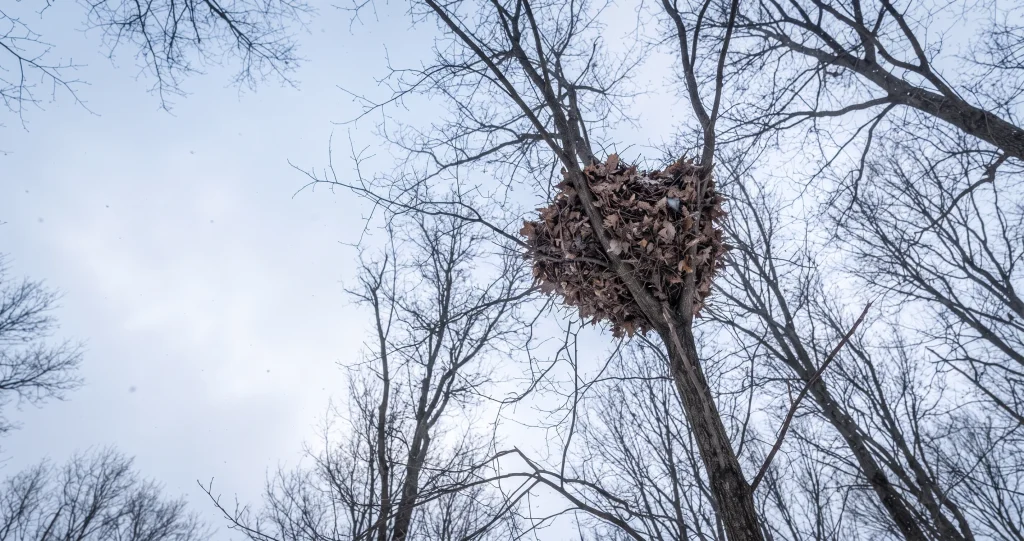
Tree squirrels commonly use two main types of shelter: leafy nests built among branches and natural cavities inside trees.
Both provide protection, but enclosed tree cavities can offer particularly valuable shelter during harsh weather.
Leafy Nests Called Dreys
A squirrel’s rounded nest is known as a drey. It is generally constructed from twigs, leaves, bark, moss, and other natural materials.
Unlike an ordinary open bird nest, a drey usually has an enclosed structure. Its layered materials help reduce exposure to wind and precipitation.
Squirrels may maintain more than one nest, allowing them to move between shelters when necessary.
Natural Tree Cavities
Hollow trunks and abandoned woodpecker holes provide additional resting opportunities. Their surrounding wood helps buffer outdoor temperature changes and reduces direct wind exposure.
Mature trees containing suitable cavities are therefore important components of winter wildlife habitat.
How Squirrels Find Their Buried Nuts
One of the most fascinating aspects of squirrel behavior is their ability to recover food hidden weeks or months earlier.
Rather than relying on a single ability, squirrels use a combination of spatial memory, smell, and environmental information.
Remembering Cache Locations
Research indicates that gray squirrels can remember the locations of previously buried food. Nearby trees, landscape features, and other spatial relationships help them navigate familiar areas.
This does not mean that every stored nut is recovered. Some caches are forgotten, stolen, or become inaccessible.
Squirrels can also detect food through their highly developed sense of smell. This helps them locate buried nuts beneath soil, leaves, and sometimes snow.
They may discover food stored by other squirrels as well as their own reserves.
Protecting Their Food Supplies
Competition for stored food can be intense. Distributing nuts across many locations reduces the risk associated with relying on a single storage site.
These behaviors help tree squirrels remain active throughout winter instead of depending on prolonged hibernation.
True Hibernation in Ground Squirrels
Unlike familiar backyard tree squirrels, many ground squirrels have developed the ability to enter prolonged hibernation. This adaptation allows them to survive extended periods when temperatures are low and food is unavailable.
Before winter, these animals prepare by accumulating energy reserves and occupying suitable underground shelters.
What Happens During Hibernation?
During periods of deep torpor, a ground squirrel’s metabolism slows dramatically. Its heart rate, breathing rate, and body temperature decrease, allowing it to use stored energy much more slowly.
Hibernation is not simply a long, uninterrupted sleep. Many hibernating ground squirrels periodically return to a warmer, more active physiological state before entering deep torpor again.
These cycles continue throughout the hibernation season.
The Remarkable Arctic Ground Squirrel
The Arctic ground squirrel (Urocitellus parryii) provides an extraordinary example of mammalian cold adaptation.
Depending on age, sex, and environmental conditions, Arctic ground squirrels may hibernate for about seven to eight months.
During deep torpor, their body temperature can temporarily fall below the normal freezing point of water without their tissues freezing. This remarkable ability involves specialized physiological adaptations that researchers continue to investigate.
Underground Winter Chambers
Ground squirrels use burrows that provide protection from predators and extreme surface weather.
These underground shelters offer a more stable environment than exposed ground. Suitable burrow conditions help reduce the energy required to survive winter.
The question of whether squirrels hibernate therefore has very different answers depending on their species and habitat.
How Flying Squirrels Survive Winter
Flying squirrels belong to the tree-dwelling branch of the squirrel family. Despite their name, they do not actually fly like birds. Instead, they glide between trees using a specialized membrane of skin extending between their limbs.
North American flying squirrels generally do not undergo prolonged winter hibernation.
Because they are primarily nocturnal, their winter activity often goes unnoticed. They emerge after dark to search for food when conditions are suitable.
Sharing Shelters for Warmth
Flying squirrels sometimes gather inside communal nests during winter.
By resting close together, they reduce individual heat loss and benefit from shared body warmth. Natural tree cavities and abandoned woodpecker holes can provide suitable shelters for this behavior.
During extremely cold weather, flying squirrels may reduce their activity and remain inside their nests for extended periods. Northern flying squirrels may also experience short periods of torpor.
Their winter strategy demonstrates that cooperation and suitable shelter can be effective alternatives to prolonged hibernation.
What Squirrels Eat During Winter
Tree squirrels depend on seasonally available food rather than following a completely fixed winter diet.
Their food choices vary according to species, habitat, and the availability of stored resources.
Typical winter foods include:
- Acorns and other tree nuts.
- Conifer seeds.
- Previously stored seeds.
- Tree buds and suitable bark tissues.
- Naturally available fungi.
As stored supplies become depleted, emerging buds and other early-season vegetation become increasingly important.
Poor seed production during autumn can make winter particularly challenging. This is one reason why diverse woodland habitats provide important advantages for wildlife.
How Squirrels Help Forests Grow
Squirrels do more than collect food for their own survival. Their seed-storage behavior also contributes to natural forest regeneration.
Not every buried nut is recovered. Some remain in suitable soil conditions long enough to germinate when temperatures rise.
Acorns buried away from their parent trees may have opportunities to develop into new seedlings. Other animals, soil conditions, moisture, and competition influence whether these seedlings survive.
This natural process makes squirrels important participants in seed dispersal.
For gardeners, a squirrel burying an acorn is a small example of a much larger ecological relationship between animals and plants.
How to Help Squirrels During Winter
Supporting squirrels does not necessarily require providing supplemental food. Preserving suitable habitat is often a more sustainable approach.
Preserve Native Trees
Native oaks, hickories, walnuts, and locally appropriate conifers can provide valuable food and shelter.
Select trees suited to your region, available garden space, and soil conditions.
Maintain Natural Shelter
Where it is safe to do so, preserve mature trees with natural cavities. These features can support squirrels, birds, insects, and other woodland animals.
Consult a qualified arborist if a damaged or hollow tree could threaten nearby buildings or people.
Leave Some Natural Ground Cover
Fallen leaves and natural vegetation contribute to healthy woodland and garden ecosystems.
Avoid Unnecessary Supplemental Feeding
Regular feeding may encourage squirrels to congregate around homes, increase competition, and contribute to unwanted wildlife conflicts.
Instead, prioritize naturally available foods and habitat diversity. If squirrels visit bird feeders, consider appropriate feeder designs that allow birds to access food without attracting excessive numbers of other animals.
Protect Wildlife From Household Hazards
Avoid using rodenticides where squirrels and other wildlife may encounter them. Keep pets under control, and inspect potential entry points around buildings before animals establish indoor nests.
Never seal an opening while wildlife may still be inside. Seek professional wildlife assistance when necessary.
Frequently Asked Questions
Do squirrels hibernate during winter?
Most tree squirrels do not hibernate. Many ground squirrel species, however, enter prolonged hibernation inside underground burrows.
Do gray squirrels hibernate?
No. Eastern gray squirrels remain active throughout winter, relying on stored food and protected nests.
Do squirrels sleep for several days in winter?
Tree squirrels may remain sheltered for extended periods during severe weather. This reduced activity is different from true hibernation.
Where do squirrels go when it snows?
Tree squirrels typically shelter inside leafy nests or natural tree cavities. Hibernating ground squirrels remain underground.
How do squirrels remember where they buried their nuts?
They use spatial memory alongside their sense of smell. These abilities help them recover food from numerous storage locations.
Do flying squirrels hibernate?
North American flying squirrels generally do not hibernate throughout winter. They may reduce their activity and share nests to conserve body heat.
How long do ground squirrels hibernate?
The duration depends on the species and environmental conditions. Arctic ground squirrels can hibernate for about seven to eight months.
Should I feed squirrels during winter?
Preserving native trees, natural food sources, and suitable shelter is generally preferable to establishing regular feeding stations.
Can squirrels find nuts beneath snow?
Yes. Squirrels can recover buried food beneath snow using memory, smell, and other environmental information. Deep or hardened snow can make this more difficult.
Conclusion
So, do squirrels hibernate? The answer depends entirely on the type of squirrel.
Tree squirrels remain active through winter, using stored nuts, insulating fur, and protected nests. Many ground squirrels enter true hibernation, dramatically reducing their energy requirements until favorable conditions return.
Flying squirrels demonstrate another remarkable strategy by sharing protected shelters and reducing activity during severe weather.
For gardeners and wildlife enthusiasts, preserving native trees, natural food sources, and undisturbed shelter areas offers a meaningful way to support these animals.
The next time a squirrel disappears during a winter storm, remember that it may simply be resting inside a carefully constructed nest, waiting for better weather before returning to its hidden food supplies.
External Sources
1. Arctic Ground Squirrel
Provide authoritative information about ground squirrel hibernation, seasonal energy reserves, underground shelters, and extreme cold adaptations. U.S. National Park Service. https://home.nps.gov/dena/learn/nature/arcticgroundsquirrel.htm
2. Why Do Squirrels Bury Nuts? (and Other Mysteries)
Explain squirrel food-storage behavior, cache recovery, spatial memory, seed dispersal, and natural forest regeneration. https://ssec.si.edu/node/769
3. Flying Squirrel
Support information about flying squirrel winter behavior, communal nesting, natural habitats, feeding habits, and seasonal activity. Minnesota Department of Natural Resources. https://www.dnr.state.mn.us/mammals/flyingsquirrel.html