
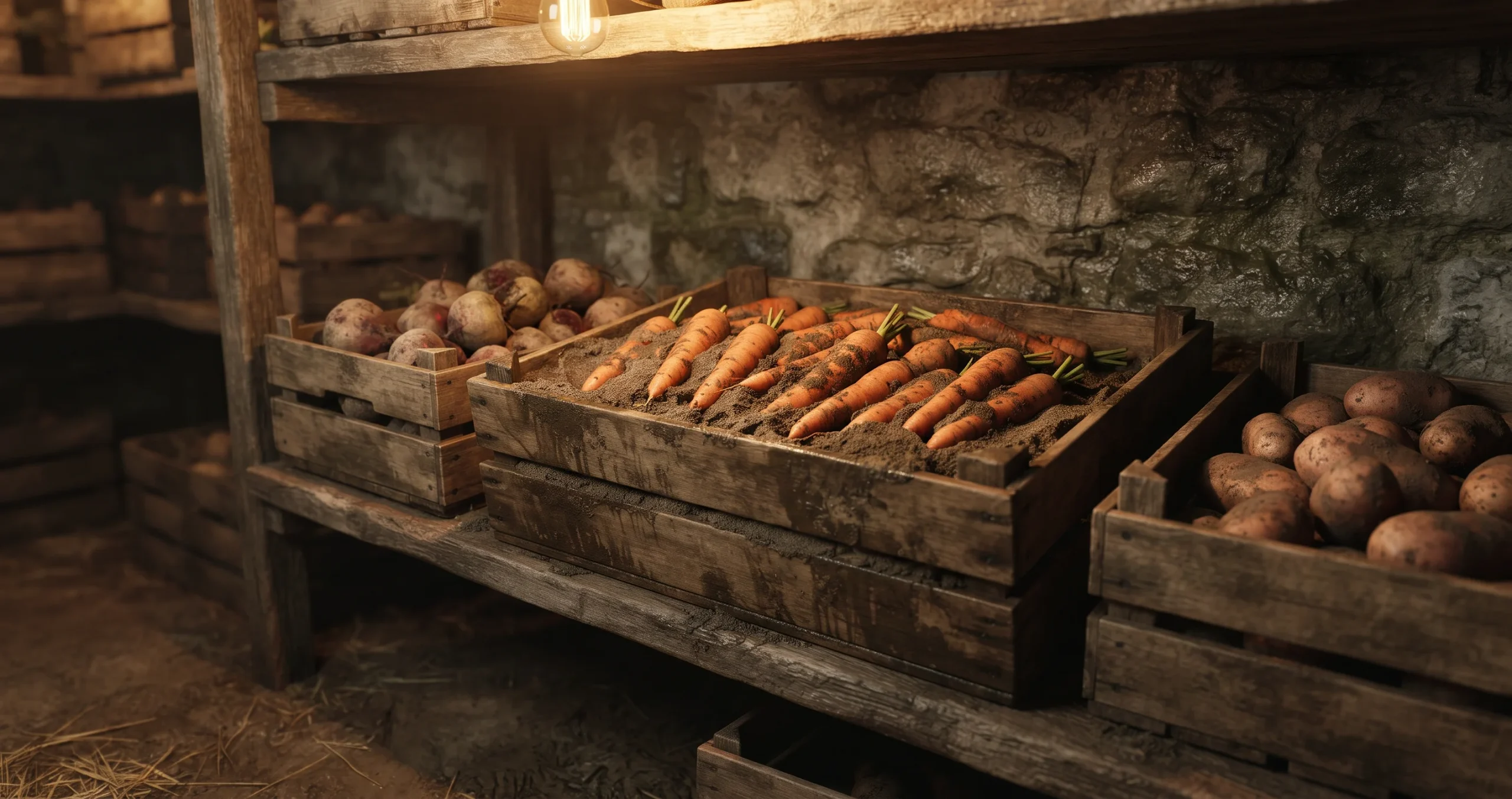
Imagine harvesting carrots, potatoes, beets, and winter squash in autumn and enjoying them from your own garden long after the first snowfall. With suitable storage conditions, many vegetables can remain fresh for weeks or even months without freezing or canning.
Learning how to store root vegetables for winter is a practical way to reduce food waste, preserve your harvest, and make the most of your vegetable garden throughout the colder months.
Traditional root cellars use naturally cool temperatures, controlled humidity, and darkness to slow deterioration. However, you do not necessarily need an underground cellar to benefit from these principles.
A suitable basement corner, an insulated garage storage area, or even a dedicated refrigerator can provide useful alternatives.
Table of Contents
- What Is a Root Cellar?
- Ideal Temperature and Humidity for Winter Vegetables
- How to Store Root Vegetables for Winter in Damp Sand
- How to Store Onions and Garlic
- How to Store Potatoes During Winter
- Best Storage Conditions for Winter Squash
- Why Apples Should Be Stored Separately
- How to Store Vegetables Without a Root Cellar
- A Monthly Vegetable Storage Check Routine
- Common Winter Vegetable Storage Mistakes
- Frequently Asked Questions
What Is a Root Cellar?
A root cellar is a storage area designed to maintain environmental conditions that help preserve harvested fruits and vegetables. Traditional cellars are often built underground or partially beneath the soil, where temperatures remain relatively stable.
Unlike vegetables that have been canned or frozen, freshly harvested vegetables continue to respire during storage. They gradually use stored energy and lose moisture, eventually affecting their texture and quality.
Cool temperatures slow these natural processes, while suitable humidity helps prevent excessive moisture loss.
A successful root cellar does not need to be elaborate. Its effectiveness depends primarily on providing conditions appropriate for the vegetables being stored.
Ideal Temperature and Humidity for Winter Vegetables
One of the most important principles when learning how to store root vegetables for winter is recognizing that different vegetables have different storage requirements.
Carrots and beets prefer cold, humid surroundings. Onions and garlic require much drier conditions, while winter squash generally stores better at slightly warmer temperatures.
Recommended winter vegetable storage conditions
| Vegetable | Approximate temperature | Relative humidity |
|---|---|---|
| Carrots | 32–40°F (0–4°C) | 90–95% |
| Beets | 32–40°F (0–4°C) | 90–95% |
| Parsnips | 32–40°F (0–4°C) | 90–95% |
| Turnips | 32–40°F (0–4°C) | 90–95% |
| Potatoes | 40–45°F (4–7°C) | 90–95% |
| Onions | 32–40°F (0–4°C) | 65–70% |
| Garlic | 32–40°F (0–4°C) | About 60–70% |
| Winter squash | 50–55°F (10–13°C) | About 50–75% |
These are approximate storage targets rather than universal requirements. Variety, intended use, and storage duration can influence the ideal conditions. UMN Extension+2
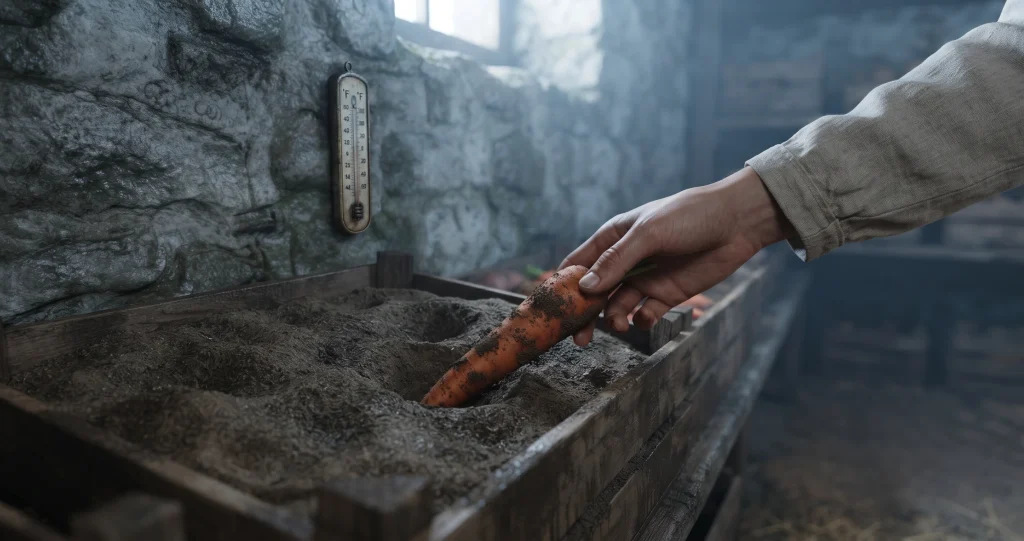
Use a thermometer and hygrometer to monitor your storage environment. These inexpensive instruments help you identify conditions that may encourage freezing, dehydration, or premature deterioration.
How to Store Root Vegetables for Winter in Damp Sand
Packing root vegetables in slightly damp sand is a traditional storage technique that helps maintain moisture around harvested carrots, beets, parsnips, and similar crops.
The method is particularly useful in cool storage areas where the surrounding air is not humid enough to prevent vegetables from shriveling.
Step 1: Select healthy vegetables
Choose mature, firm vegetables without serious cuts, bruises, soft patches, or visible mold.
Damaged vegetables generally deteriorate more quickly and should not be included in long-term storage batches.
Step 2: Remove the leafy tops
Trim the green foliage from carrots and beets, leaving a short section of stem without cutting into the root itself.
Gently brush away loose garden soil. Avoid scrubbing or damaging the protective outer surface before long-term storage.
Step 3: Prepare the storage container
Choose a clean wooden crate or suitable food-safe container with adequate ventilation.
Add a layer of clean, slightly damp sand to the bottom. The sand should feel lightly moist rather than wet or muddy.
Step 4: Arrange the vegetables
Place the vegetables in a single layer, leaving a little space between them.
Cover them with another layer of damp sand and repeat the process until the container is filled.
Keeping vegetables separated can make it easier to identify individual problems and limit direct contact between deteriorating roots.
Step 5: Move the container into cool storage
Place the container in a dark, cool, frost-free location.
Damp sand helps reduce moisture loss, but it cannot compensate for excessive warmth or freezing conditions. Check the sand periodically and avoid adding enough water to create saturated conditions.
How to Store Onions and Garlic
Onions and garlic require different conditions from carrots and beets. Instead of humid storage containers, these crops benefit from dry surroundings and good air circulation.
Cure onions and garlic before storage
Curing allows the outer skins and necks of harvested bulbs to dry. These protective layers help reduce moisture loss and limit opportunities for deterioration.
Spread freshly harvested bulbs in a sheltered, ventilated location away from strong direct sunlight. Depending on weather conditions, curing may take roughly two to three weeks.
The bulbs are generally ready for storage when their outer skins feel papery and their necks are thoroughly dry.
Choose breathable containers
Mesh bags, ventilated baskets, and shallow wooden crates are suitable for storing cured onions and garlic.
Avoid sealed plastic containers, damp sand, and persistently humid rooms. Trapped moisture can encourage mold and decay.
Properly cured storage varieties can remain usable for several months under suitable conditions, although individual storage life varies.
How to Store Potatoes During Winter
Potatoes are excellent candidates for winter storage when they are mature, healthy, and handled carefully after harvesting.
Unlike carrots, potatoes generally do not need to be packed in damp sand.
Prepare potatoes for storage
Allow mature potato skins to cure under suitable conditions before transferring the tubers into long-term storage. This helps strengthen the outer skin and heal minor surface injuries.
Remove loose soil gently and separate damaged potatoes from healthy ones.
Keep potatoes cool and dark
Store potatoes in ventilated crates, baskets, or breathable bags in a cool, dark location.
Temperatures around 40–45°F are a useful household storage target. Avoid freezing conditions and prolonged exposure to light.
Light exposure encourages greening and may be associated with increased concentrations of naturally occurring compounds called glycoalkaloids.
Discard extensively green, bitter, rotten, or heavily sprouted potatoes. Never taste a suspicious potato to determine whether it is safe.
Best Storage Conditions for Winter Squash
Butternut squash, pumpkins, acorn squash, and other winter squash varieties generally prefer warmer, drier conditions than most root vegetables.
A cold, humid cellar that works well for carrots may encourage deterioration in winter squash.
Prepare squash before storage
Harvest mature squash with intact skins and a short section of stem attached. Avoid carrying the fruits by their stems, since breaking the stem can create an entry point for decay.
Many winter squash varieties benefit from curing in a warm, ventilated environment. However, acorn squash generally does not require the same curing treatment.
Store squash on open shelves
Arrange squash in a single layer on clean shelves with space between individual fruits.
A location around 50–55°F is suitable for many varieties. Keep the surroundings reasonably dry and ventilated.
Inspect the area around each stem regularly, since deterioration may begin there before becoming obvious elsewhere.
Why Apples Should Be Stored Separately
Apples may seem like natural companions for winter vegetables because they also benefit from cool storage.
However, ripening apples release ethylene, a naturally occurring plant hormone that influences the development and aging of surrounding produce.
Ethylene exposure can negatively affect certain vegetables. Carrots, for example, may develop an unpleasant bitter flavor when stored near significant ethylene-producing fruit.
It can also encourage unwanted changes in potatoes and other sensitive crops.
Store apples and pears in a separate storage area whenever possible. Simply placing apples in another crate within the same poorly ventilated room may not provide sufficient separation.
How to Store Vegetables Without a Root Cellar
You do not need to build an underground structure to enjoy the benefits of winter vegetable storage. Many homes contain spaces that can be adapted for smaller quantities of produce.
The key to understanding how to store root vegetables for winter without a cellar is finding locations with suitable and relatively stable temperatures.
An unheated garage
An unheated garage can provide useful storage during winter, especially in regions with moderate temperatures.
Use insulated containers to reduce temperature fluctuations, but remember that insulation alone cannot prevent freezing during prolonged cold weather.
Keep produce away from vehicles, exhaust fumes, pesticides, fuel, and other chemicals.
A cool basement corner
Choose a basement area away from furnaces, hot water pipes, and heating vents.
A dark corner containing shelving and ventilated storage containers may work well for certain vegetables. Damp sand containers can help maintain localized humidity around carrots and beets.
Avoid creating excessive humidity throughout the basement, which could encourage household mold.
A dedicated refrigerator
A refrigerator maintained at 40°F or below can provide suitable short- or medium-term storage for smaller quantities of carrots, beets, and other appropriate vegetables.
Use perforated food-storage bags to reduce moisture loss while allowing some air exchange.
An insulated storage cabinet
A small insulated cabinet in a protected location may help moderate temperature changes. Include a thermometer and appropriate ventilation, and monitor conditions during severe weather.
A Monthly Vegetable Storage Check Routine
Knowing how to store root vegetables for winter also means monitoring their condition throughout the storage season.
A monthly inspection provides a useful opportunity to review your entire storage system. However, individual vegetables should ideally be checked weekly, particularly during the first few weeks and following major temperature changes.
Monthly storage checklist
| Inspection | What to look for |
|---|---|
| Temperature | Freezing risk or excessive warmth |
| Humidity | Condensation or shriveling vegetables |
| Carrots and beets | Soft spots, mold, and moisture loss |
| Potatoes | Sprouting, greening, and decay |
| Onions and garlic | Soft bulbs, moisture, and mold |
| Winter squash | Damaged stems and deteriorating skin |
| Ventilation | Blocked openings or stale, damp air |
| Pest protection | Rodent activity or damaged containers |
Remove spoiled vegetables promptly and inspect nearby produce. Use healthy vegetables that are beginning to lose quality before those that remain in excellent condition.
Label each container with the vegetable variety and harvest date. This makes it easier to rotate your supplies and avoid forgetting older batches.
Common Winter Vegetable Storage Mistakes
Even a well-designed storage area can fail when vegetables are handled incorrectly.
Avoid washing produce excessively before damp-sand storage, packing damaged vegetables with healthy ones, and using the same temperature and humidity conditions for every crop.
Other common problems include insufficient ventilation, storing apples alongside sensitive vegetables, and allowing storage containers to freeze.
Remember that root cellaring is intended for suitable whole, fresh produce. Cut, peeled, or cooked vegetables require appropriate refrigeration or another safe preservation method.
Frequently Asked Questions
How long can root vegetables last in a root cellar?
Under suitable conditions, carrots may retain good quality for roughly four to six months, while beets may last about one to three months. Actual storage life depends on variety, maturity, temperature, humidity, and condition at harvest. Yard and Garden
Can I store carrots and beets together in damp sand?
Yes. Both vegetables benefit from similarly cool and humid surroundings. Using separate containers can make inspection and inventory management easier.
Should I wash root vegetables before storing them?
For traditional damp-sand storage, gently remove loose soil without damaging the roots. Wash vegetables thoroughly under clean running water before preparing them for consumption.
Can I store vegetables in my garage during winter?
Yes, provided the garage maintains suitable temperatures and the produce is protected from freezing, pests, exhaust fumes, and chemicals. Conditions vary considerably across US climate zones.
Can onions and potatoes be stored together?
Separate storage is preferable because onions require drier surroundings than potatoes. Individual storage areas make it easier to maintain suitable humidity for each crop.
Can root vegetables freeze inside a cellar?
Yes. Poor insulation, severe outdoor temperatures, and uncontrolled ventilation can allow produce to freeze. Monitor temperatures regularly, especially during prolonged cold spells.
How can I tell if stored vegetables have spoiled?
Look for mold, sliminess, extensive softening, leaking liquid, or unpleasant odors. Discard rotten produce rather than attempting to preserve it through cooking or freezing.
Conclusion
Learning how to store root vegetables for winter allows you to enjoy more of your garden harvest throughout the colder months.
The most important principles are selecting healthy produce, maintaining appropriate temperatures and humidity, separating incompatible crops, and inspecting stored vegetables regularly.
Whether you use a traditional root cellar, a cool basement, or an adapted garage storage area, matching the environment to each vegetable can make a meaningful difference.
With careful preparation and consistent maintenance, your autumn harvest can continue providing fresh ingredients well into winter.
Internal Sources
1. How to Store Apples for Months
Explain how to preserve apples during winter using suitable storage temperatures, humidity, ventilation, and separation from ethylene-sensitive vegetables. Secrets of the Green Garden. https://secretsofthegreengarden.com/how-to-store-apples-for-months/
2. Why Carrots Taste Sweeter After Cold Weather and When to Harvest Them
Explain how cold temperatures influence carrot sweetness and help gardeners determine the appropriate harvesting time before winter storage. Secrets of the Green Garden. https://secretsofthegreengarden.com/why-carrots-taste-sweeter-after-cold-weather-and-when-to-harvest-them/
External Sources
1. Harvesting and Storing Home Garden Vegetables
Provide university-backed recommendations for harvesting vegetables, selecting suitable storage temperatures, managing humidity, and preserving produce quality. University of Minnesota Extension. https://extension.umn.edu/garden-and-home/yard-and-garden/gardening-in-minnesota/harvesting-and-storing-home-garden-vegetables?utm_source
2. The Commercial Storage of Fruits, Vegetables, and Florist and Nursery Stocks
Provide scientific information about postharvest storage, vegetable respiration, temperature requirements, humidity, and ethylene sensitivity. USDA Agricultural Research Service — Agricultural Handbook 66. https://www.ars.usda.gov/northeast-area/beltsville-md-barc/beltsville-agricultural-research-center/food-quality-laboratory/docs/ah66/?utm_source
3. Freezing Fall Veggies
Explain research-based alternatives to traditional root cellaring, including appropriate methods for freezing carrots and other fall vegetables. National Center for Home Food Preservation. https://nchfp.uga.edu/blog/freezing-fall-veggies?utm_source