
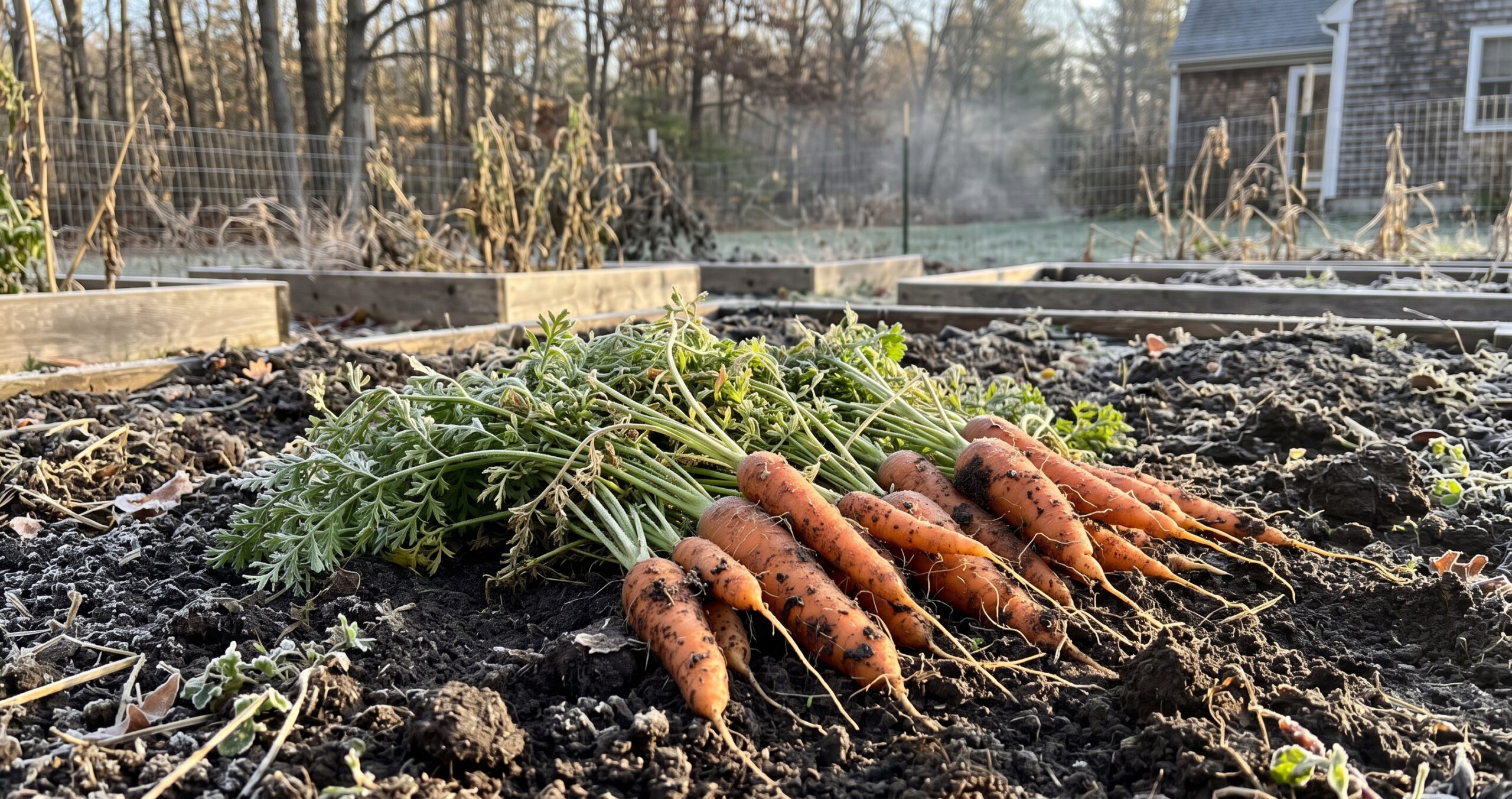
Gardeners often notice that carrots harvested during cool autumn weather taste sweeter than those pulled during the heat of summer. The idea of carrots sweeter after frost has a real physiological basis, but the explanation is more complicated than simply exposing roots to freezing temperatures. Cool growing conditions can influence how carrots produce, transport, and store sugars, sometimes improving their flavor before winter arrives.
However, not every carrot becomes sweeter after a frost. Variety, maturity, soil conditions, previous temperatures, and the severity of cold exposure all influence the final result. Understanding these factors helps home gardeners choose the right harvest window, protect their crops, and store carrots without sacrificing quality.
Table of Contents
- Why Cold Weather Can Make Carrots Taste Sweeter
- Carrots Sweeter After Frost: What Science Actually Shows
- How Sugar Metabolism Changes in Cold Weather
- Frost Versus Freezing Damage
- Why Carrot Variety and Maturity Matter
- When to Harvest Carrots for the Best Flavor
- Regional Harvest Timing Across the United States
- How to Protect Carrots in the Soil
- Should You Leave Carrots in the Ground All Winter?
- How to Harvest Carrots Without Damaging Them
- How to Store Carrots After Harvest
- Common Mistakes That Reduce Carrot Quality
- Frequently Asked Questions
- Conclusion
1. Why Cold Weather Can Make Carrots Taste Sweeter
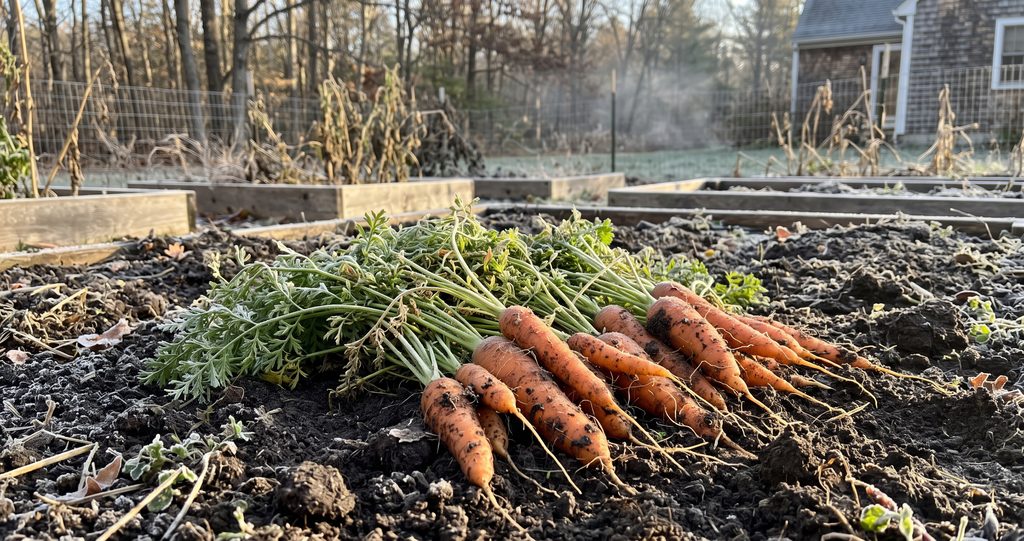
Carrots (Daucus carota subsp. sativus) are cool-season vegetables that store carbohydrates in their enlarged taproots.
These carbohydrates support the plant’s growth and future reproductive development. They also contribute to the flavor that makes carrots appealing as a fresh vegetable.
Carrot sweetness comes primarily from soluble sugars, including sucrose, glucose, and fructose. Their relative amounts vary according to cultivar, maturity, growing conditions, and postharvest handling.
During cool weather, the balance between sugar production, transport, use, and storage can change.
Under suitable conditions, these changes may increase the concentration of soluble sugars in the root or influence how sweet the carrot tastes.
Cold weather can also affect texture, water content, and the balance between sweetness and other flavor compounds.
Consequently, the familiar observation that autumn carrots taste sweeter is plausible, but it should not be interpreted as a universal response to frost.
2. Carrots Sweeter After Frost: What Science Actually Shows
The expression carrots sweeter after frost is common in gardening advice, particularly in regions with cold autumns.
Its scientific basis lies in plant responses to low temperatures, including changes in carbohydrate metabolism and the accumulation of soluble compounds associated with cold acclimation.
However, a crucial distinction exists between cool weather and actual freezing.
A carrot may experience favorable sugar-related changes during several weeks of cool growth before the first frost occurs.
A brief frost may therefore coincide with improved sweetness without being the sole cause.
What research supports
Plant physiology research establishes that soluble sugars can participate in cold acclimation by influencing osmotic balance and helping protect cellular structures.
Research on carrot roots has also examined changes in carbohydrate composition during growth and storage.
Nevertheless, the magnitude and direction of these changes depend on environmental conditions and the plant’s physiological state.
It would be inaccurate to claim that every carrot gains a fixed percentage of sugar after one freezing night.
What gardeners can reasonably expect
Carrots grown during a mild autumn may develop a pleasant balance of sweetness and flavor.
Those exposed to moderate cold while remaining healthy can sometimes taste noticeably sweeter than comparable roots harvested earlier.
Other carrots may show little difference, particularly if they were already mature, naturally high in sugar, or exposed to conditions that limit healthy growth.
The best conclusion is that cold weather can favor sweetness under certain conditions, but frost itself does not guarantee improvement.
3. How Sugar Metabolism Changes in Cold Weathe
To understand why carrots sometimes taste sweeter in autumn, it helps to examine how plants manage carbohydrates.
During photosynthesis, carrot leaves use light energy to produce sugars from carbon dioxide and water.
These sugars can be transported through the phloem to growing tissues and the storage root.
The root then uses or stores carbohydrates according to the plant’s developmental stage and environmental conditions.
Sucrose, glucose, and fructose
Sucrose is an important transported and stored sugar in carrots.
Glucose and fructose are also present and contribute to sweetness.
The relative proportions of these sugars matter because they differ in perceived sweetness and participate in different metabolic pathways.
Enzymes involved in sucrose synthesis, breakdown, and carbohydrate transport help regulate these concentrations.
Cold exposure can alter enzyme activity, respiration, and the balance between carbohydrate production and consumption.
However, the exact response is not identical across carrot varieties or temperature conditions.
Sugars and cold acclimation
Soluble sugars can contribute to cellular protection during cold acclimation.
They affect osmotic properties and can help stabilize biological structures under dehydration-related stress.
This does not mean that sugar acts as a perfect antifreeze or makes carrot roots immune to freezing.
Instead, sugar accumulation is one component of a broader physiological response involving membranes, proteins, water balance, and metabolic regulation.
Why slower growth may influence flavor
As temperatures decline, plant growth and respiration often slow.
Under certain conditions, changes in carbohydrate use and storage can influence soluble sugar concentrations in roots.
But photosynthesis also declines when temperatures become too low or leaves are damaged.
Therefore, cold conditions do not automatically cause sugars to accumulate indefinitely.
A healthy carrot exposed to gradual autumn cooling is very different from a severely frozen root whose tissues have been injured.
4. Frost Versus Freezing Damage
One of the most important lessons for gardeners is that frost and destructive freezing are not the same thing.
Frost generally refers to ice crystals forming on exposed surfaces when conditions allow moisture to freeze.
The temperature at the soil surface can differ considerably from the temperature measured above the ground.
Carrot roots are partially protected because they grow underground, where temperatures usually change more slowly than the surrounding air.
Light frost
A light frost may damage exposed foliage while leaving the underground root unaffected.
If the carrot remains healthy, it may continue to be suitable for harvesting and storage.
In some gardens, this period coincides with the development of desirable sweetness.
However, a light frost does not guarantee a measurable improvement in flavor.
Hard freezes
A prolonged period of freezing weather can eventually lower soil temperatures enough to threaten the roots.
When damaging ice formation occurs within plant tissues, cell membranes may be disrupted.
After thawing, injured carrots can become soft, watery, discolored, or more vulnerable to decay.
The severity of injury depends on the temperature reached by the root, the duration of exposure, and the plant’s acclimation.
Why soil temperature matters
Air temperature alone cannot determine whether underground carrots have frozen.
Soil moisture, snow cover, mulch, planting depth, and the duration of cold weather all affect root-zone temperature.
A brief cold night may leave roots safely unfrozen, while an extended cold spell can eventually penetrate deeper into the soil.
For practical harvesting decisions, gardeners should consider the forecast, soil conditions, and expected duration of freezing rather than relying on a single air-temperature threshold.
5. Why Carrot Variety and Maturity Matter
Not all carrots have the same flavor potential.
Different cultivars vary in sugar composition, texture, color, root shape, and adaptation to growing conditions.
Some are selected for fresh sweetness, while others emphasize storage performance, uniformity, or processing characteristics.
Genetics influence sweetness
A naturally sweet cultivar may taste excellent before frost.
Another variety may remain comparatively mild even after several weeks of cool weather.
This variation helps explain why two gardeners can report different results despite experiencing similar autumn temperatures.
Carrots sweeter after frost should therefore be understood as a possible environmental response, not a trait shared equally by every cultivar.
Maturity influences quality
Young carrots often have a tender texture and pleasant flavor.
As roots mature, their sugar content, water content, and texture can change.
Harvesting too early may produce small roots that have not developed their expected flavor or size.
Leaving carrots in the ground excessively long can also reduce quality, especially if the plants begin transitioning toward reproductive growth.
The ideal harvest stage depends on the variety and intended use.
6. When to Harvest Carrots for the Best Flavor

For many home gardeners, the best harvest window occurs when carrots have reached usable size and experienced a period of cool growing weather.
Seed packets provide an approximate number of days to maturity, but actual development depends on temperature, soil conditions, and planting date.
Rather than relying exclusively on the calendar, inspect a few representative roots.
Check root size
Gently move soil away from the carrot shoulder to assess its diameter.
Compare the size with the expected characteristics of the cultivar.
A mature carrot does not necessarily need to be exceptionally large.
In fact, oversized roots may develop less desirable textures.
Taste a sample
The simplest practical test is to harvest one or two carrots and evaluate their flavor.
If the roots are sweet, crisp, and properly developed, there is no need to wait for a frost.
If conditions remain favorable, leaving some carrots in the ground for additional cool weather may be worthwhile.
Watch the weather
Harvest before prolonged freezing threatens unprotected roots.
Gardeners expecting severe cold should prioritize crop protection or timely removal.
Waiting for frost is not worth sacrificing the harvest to damaging soil freezes.
The goal is to combine adequate maturity, healthy growth, and favorable cool-season conditions.
7. Regional Harvest Timing Across the United States
The ideal harvest period varies substantially across American growing regions.
A fall carrot crop in northern Minnesota faces very different conditions from one in coastal California or southern Georgia.
USDA Plant Hardiness Zones provide useful information about average annual extreme minimum temperatures, but they do not directly predict first frost dates or soil-freezing schedules.
Local weather records and forecasts are more useful for planning individual harvests.
Northeast and Great Lakes
In states such as New York, Vermont, Michigan, and Wisconsin, fall carrots are commonly harvested from early autumn into late fall, depending on planting date and local conditions.
Cool weather can support good flavor development.
However, gardeners should prepare for increasingly frequent freezes as winter approaches.
Heavy mulch or other protection may extend the harvest window, but frozen soil can eventually make digging difficult.
Upper Midwest and northern Plains
Regions such as Minnesota, North Dakota, and northern Iowa can experience rapid transitions from mild autumn weather to severe cold.
Gardeners should aim to mature carrots before sustained freezing conditions.
Protected roots may remain harvestable longer, but leaving them exposed to prolonged cold increases risk.
In these regions, storage in a suitable cool environment may be more reliable than attempting to leave an entire crop outdoors through winter.
Pacific Northwest
Western Washington and Oregon often experience relatively mild, wet winters compared with continental northern regions.
Carrots may remain harvestable in the ground for extended periods where soils do not freeze deeply.
Good drainage is particularly important because saturated soil can contribute to root deterioration.
Eastern parts of these states experience colder continental conditions and require different harvest planning.
Southeast and Gulf Coast
In states such as Georgia, Alabama, and parts of Florida, carrots are frequently grown during the cooler portion of the year.
Fall, winter, or early spring harvests may be possible depending on location.
Here, excessive heat can be a greater limitation than severe winter freezing.
Cool-season production can improve overall root quality without requiring frost.
Southwest and California
In mild parts of Arizona and California, carrots can be productive during fall and winter.
Higher elevations and inland valleys may experience significant freezes, while coastal areas often remain comparatively mild.
Planting schedules should reflect local conditions rather than statewide averages.
Across all regions, carrots sweeter after frost is a useful observation to investigate, not a universal harvest instruction.
8. How to Protect Carrots in the Soil
Carrots can remain in garden soil during cool weather when drainage is adequate and roots are protected from damaging freezes.
Mulching is one of the simplest ways to extend the harvest season.
Using straw and leaves
Apply a loose insulating layer of clean straw or dry leaves over the carrot bed before the soil freezes deeply.
The amount needed depends on climate, weather exposure, and the severity of expected cold.
In northern regions, a substantial mulch layer may help delay soil freezing, but it cannot guarantee protection throughout every winter.
Mulch works by reducing temperature fluctuations and slowing heat loss from the soil.
It does not generate heat or make carrots completely freeze-proof.
Row covers and low tunnels
Floating row covers can protect foliage and provide modest temperature moderation.
Low tunnels offer additional protection, particularly when combined with suitable mulching practices.
However, these structures have limits during prolonged severe cold.
Gardeners should monitor conditions beneath covers rather than assuming that protected roots cannot freeze.
Soil moisture and drainage
Carrots need consistent moisture during growth, but poorly drained soil can cause problems during winter.
Waterlogged conditions increase the risk of root deterioration and make harvesting difficult.
Raised beds or well-drained garden sites may be preferable in regions with heavy winter rainfall.
A healthy soil structure helps maintain the balance between moisture retention and drainage.
9. Should You Leave Carrots in the Ground All Winter?
Leaving carrots in the ground can be an effective storage strategy in suitable climates.
However, success depends on the severity of winter, soil drainage, mulch protection, and the presence of rodents or other animals that may feed on roots.
Advantages of in-ground storage
Carrots can remain fresh in cool soil without requiring a separate storage room.
Gardeners may harvest only the amount needed for immediate use.
The method can also reduce handling damage associated with digging and transporting large quantities.
Limitations and risks
Frozen soil may prevent harvesting even if the roots themselves remain usable.
Repeated freezing and thawing can damage root tissues.
Excessively wet conditions may encourage decay, while rodents can consume stored crops.
Carrots left until spring may also begin renewed growth or develop less desirable texture as their reproductive cycle progresses.
In climates with severe winters, harvesting before prolonged freezing and storing the roots indoors is often more dependable.
For a practical explanation of mulching and winter storage, the University of Maryland Extension guide to growing carrots recommends organic mulch to protect fall-planted carrots and describes suitable postharvest storage conditions.
University of Maryland Extension
10. How to Harvest Carrots Without Damaging Them
Harvesting technique affects how well carrots retain their quality.
Roots that are bruised, cracked, or broken are more vulnerable to moisture loss and decay during storage.
Loosen the soil first
If the soil is compacted, use a garden fork to loosen it beside the carrot row.
Keep the tool far enough away to avoid piercing the roots.
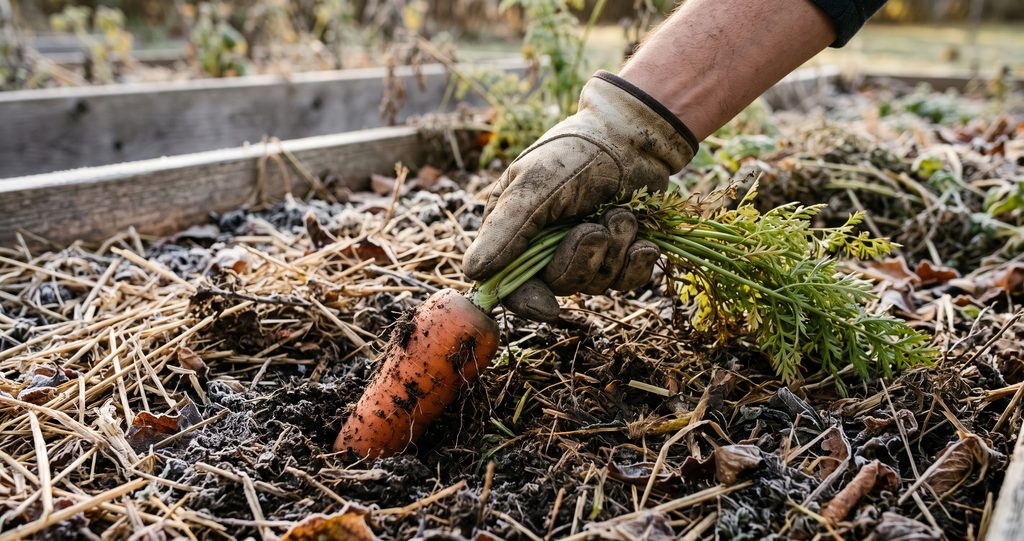
Lift gently rather than pulling forcefully on the foliage.
In loose, moist soil, some carrots can be removed by hand without damage.
Inspect the harvest
Separate healthy, intact carrots from those showing cracks, soft spots, or signs of disease.
Use damaged but otherwise sound roots promptly after trimming away affected portions as appropriate.
Discard carrots showing significant decay or spoilage.
For longer storage, choose mature, firm, undamaged roots.
Remove the tops
Cut or twist off the green tops soon after harvesting, leaving a short stub.
Removing the foliage reduces moisture loss from the roots.
Avoid cutting deeply into the carrot shoulder, which can create wounds that encourage deterioration.
11. How to Store Carrots After Harvest

Proper storage preserves the quality developed during the growing season.
For long-term storage, carrots require cold temperatures, high relative humidity, and adequate sanitation.
Refrigerator storage
Small quantities can be kept in a refrigerator.
Remove the green tops and place carrots in a suitable perforated bag or container that limits moisture loss without allowing excessive condensation.
Keep them away from decaying produce and inspect them periodically.
Root cellar storage
Mature carrots can remain in good condition for months under suitable storage conditions.
Iowa State University Extension recommends approximately 32–35°F with very high relative humidity for long-term carrot storage. Under appropriate conditions, storage life may reach several months.
Clean containers, stable temperatures, and regular inspection are essential.
Sand or sawdust storage
In a cool cellar, carrots may be packed in slightly moist, clean sand or suitable sawdust.
The packing material helps limit moisture loss.
It should not be soaking wet, and roots should be inspected periodically for signs of deterioration.
Avoid ethylene exposure
Apples, pears, and some other fruits release ethylene, a plant hormone that can influence the flavor and quality of stored carrots.
Carrots exposed to ethylene may develop undesirable bitter compounds.
Store them separately from significant ethylene-producing fruit whenever possible.
Cold storage preserves quality but does not guarantee that carrots will continue becoming sweeter after harvest.
12. Common Mistakes That Reduce Carrot Quality
One mistake is assuming that carrots must experience frost before they are worth harvesting.
Another is leaving mature roots exposed to prolonged freezing in the hope of improving sweetness.
Both approaches can sacrifice good-quality vegetables unnecessarily.
Excessive soil moisture, drought stress, and poor nutrition may also affect root development and flavor.
Harvesting oversized carrots can produce tougher textures in some cultivars.
Finally, storing carrots with their foliage attached or allowing harvested roots to dry out can reduce crispness.
The most reliable approach combines suitable variety selection, steady growth, careful harvest timing, and proper storage.
13. Frequently Asked Questions
Do carrots really get sweeter after frost?
Some carrots develop greater sweetness during cool autumn conditions, and a light frost may coincide with this change. However, the response varies by cultivar, maturity, and environmental conditions.
How many frosts do carrots need to become sweeter?
There is no scientifically established universal number. Carrots may develop desirable flavor before frost, and repeated freezing does not guarantee additional sweetness.
Can carrots survive freezing temperatures?
Carrot roots may survive light frost because soil provides insulation. Prolonged freezing that reaches the roots can cause damage.
Are winter carrots sweeter than summer carrots?
Winter-grown or fall-harvested carrots may taste sweeter under suitable conditions, but cultivar, maturity, and growing practices also influence flavor.
Can carrots remain in the ground after the first frost?
Yes, provided the roots remain healthy and the soil has not frozen to damaging depths. Mulching can extend the harvest window in suitable climates.
What is the best temperature for storing carrots?
Long-term storage is generally best near 32°F, with very high humidity and protection from freezing injury.
14. Conclusion
The science behind carrots sweeter after frost begins with carbohydrate metabolism and the ways plants respond to cool temperatures.
Under suitable conditions, autumn cooling can influence sugar accumulation and improve the flavor of some carrot varieties.
However, a frost is not a guaranteed sweetness treatment, and prolonged freezing can damage the roots.
For gardeners across the United States, the best harvest strategy is to allow carrots to mature during favorable cool weather while protecting them from severe cold.