
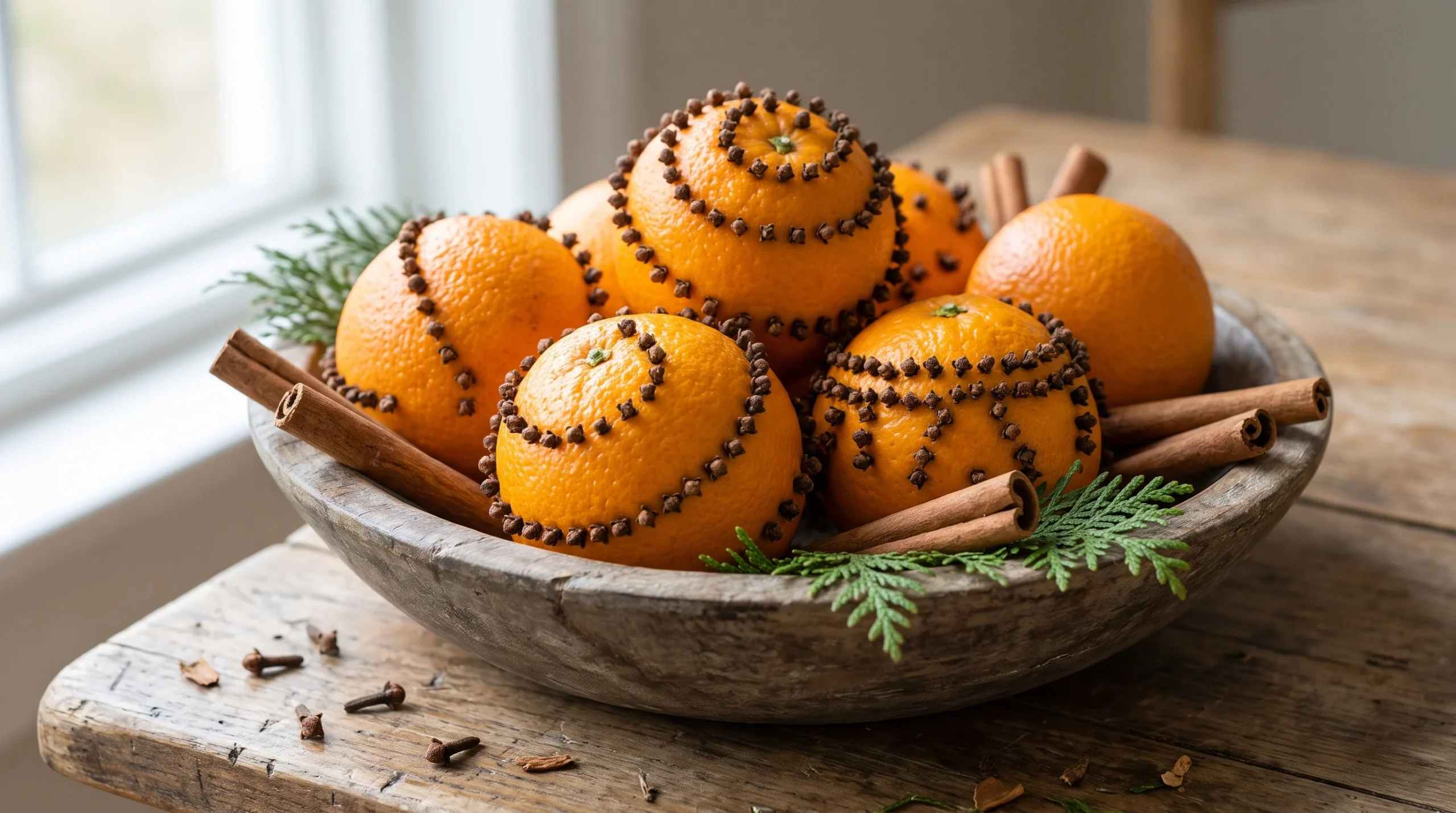
Few natural holiday decorations combine fragrance, simplicity, and traditional charm quite like an orange studded with whole cloves. The combination of citrus and warm spices creates a pleasant seasonal aroma without requiring artificial fragrances or complicated materials.
A clove orange pomander is an inexpensive craft that can bring a festive atmosphere to your home during late autumn and winter. With careful preparation and suitable drying conditions, these decorative oranges can last well beyond the holiday season.
Whether displayed in a wooden bowl, suspended from a ribbon, or arranged alongside pinecones and evergreen branches, pomanders offer a beautiful alternative to many disposable seasonal decorations.
This step-by-step guide explains how to make them, prevent mold, encourage proper drying, and compost them responsibly afterward.
Table of Contents
- What Is a Clove Orange Pomander?
- Supplies Needed to Make Pomanders
- How to Make Clove Oranges Step by Step
- How Long Do Pomanders Take to Dry?
- How to Prevent Clove Oranges From Molding
- Creative Ways to Display Pomanders
- How Long Do Clove Oranges Last?
- Common Mistakes to Avoid
- How to Compost Old Pomanders
- Frequently Asked Questions
What Is a Clove Orange Pomander?
A modern orange pomander is a decorative citrus fruit covered with whole cloves. The cloves are inserted directly into the orange peel, creating attractive patterns while releasing their characteristic spicy fragrance.
Historically, pomanders were scented objects containing aromatic substances. Over time, oranges decorated with cloves became associated with traditional winter crafts and holiday celebrations.
The combination works particularly well because both orange peel and cloves contain naturally aromatic compounds.
As the fruit gradually dries, it shrinks, becomes lighter, and develops a firmer texture. A successfully dried clove orange pomander may retain a subtle fragrance for several months or longer.
Fresh Versus Dried Pomanders
There are two main ways to enjoy this traditional decoration.
Fresh pomanders are made for immediate seasonal display. They offer a noticeable citrus fragrance but have a relatively short lifespan because the fruit still contains considerable moisture.
Dried pomanders require more patience and careful handling. Their fragrance may become less intense over time, but they can remain attractive for much longer when stored correctly.
Supplies Needed to Make Pomanders
One of the advantages of making clove oranges is that the project requires only a few readily available materials.
| Material | Purpose |
|---|---|
| Fresh, firm oranges | Forms the base of the decoration |
| Whole cloves | Creates patterns and adds fragrance |
| Wooden toothpick or skewer | Makes small starter holes |
| Ground cinnamon (optional) | Adds a complementary seasonal scent |
| Powdered orris root (optional) | Traditional fragrance fixative |
| Cotton ribbon or natural twine | Allows decorative hanging |
| Paper towel | Absorbs surface moisture |
| Wire cooling rack | Encourages airflow during drying |
Choosing the Right Oranges
Select firm oranges with intact skins and no bruises, soft patches, or visible mold.
Small or medium-sized oranges are often easier to decorate and may dry more readily than particularly large fruits.
Avoid oranges that have already begun to deteriorate. Starting with healthy fruit improves the chances of creating a successful clove orange pomander.
Choosing Whole Cloves
Whole cloves are the dried flower buds of the clove tree. Their pointed stems make them suitable for inserting into citrus peel.
Ground cloves cannot replace whole cloves in this craft because they do not provide the same decorative structure.
Use fresh, fragrant whole cloves for the best aromatic results.
Using Cinnamon and Orris Root
Ground cinnamon can add a warm, complementary fragrance to the finished decoration.
Powdered orris root, traditionally obtained from certain iris rhizomes, has historically been used as a fragrance fixative in potpourri and pomanders.
Both ingredients are optional. Neither should be considered a guaranteed method of preventing mold, and powdered ingredients should be handled carefully to avoid inhaling dust.
How to Make Clove Oranges Step by Step
Making pomanders requires no specialized crafting experience. Beginners can start with a simple striped pattern before experimenting with more elaborate designs.
Step 1: Wash and Dry the Oranges
Rinse the oranges under running water to remove surface dirt and residue.
Dry each fruit thoroughly with a clean kitchen towel. Removing surface moisture is particularly important if you intend to preserve the decoration for several months.
Step 2: Plan Your Decorative Pattern
Decide how you want the cloves to appear on the orange.
Straight lines, spirals, diamonds, stars, and circular patterns are attractive options. Use temporary rubber bands as guides if you want evenly spaced designs.
If you plan to decorate the finished fruit with ribbon, leave enough space for the ribbon between the cloves.
Step 3: Make Small Holes in the Peel
Use a wooden toothpick or skewer to create shallow holes in the orange peel.
Avoid puncturing the fruit more deeply than necessary, as excessive damage can release juice and create additional moisture.
Work on small sections at a time to make inserting the cloves easier.
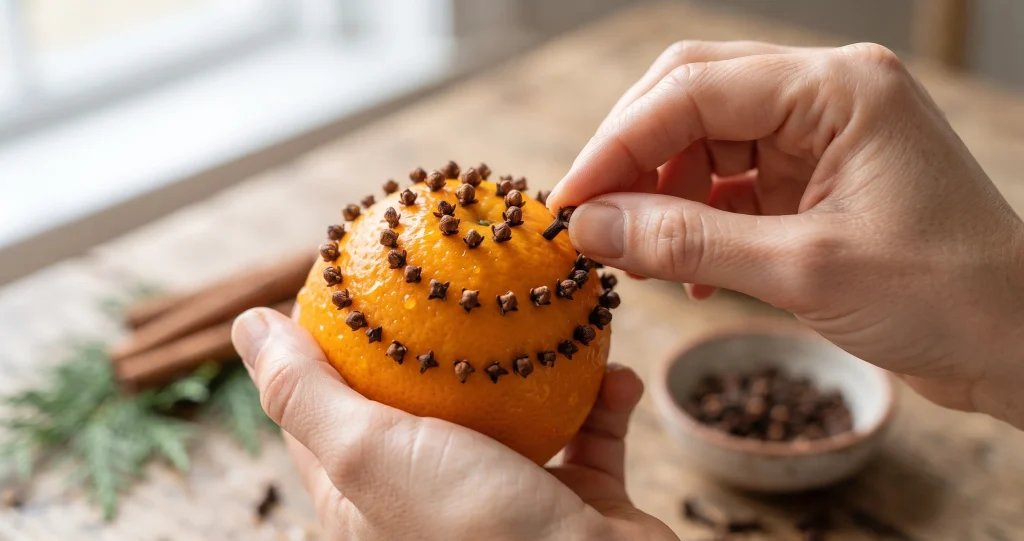
Step 4: Insert the Whole Cloves
Gently push the pointed stem of each clove into a prepared hole until its rounded head rests against the peel.
Continue following your chosen design, leaving small gaps between the cloves to accommodate the fruit’s natural shrinkage.
For a traditional appearance, decorate most of the orange’s surface.
Step 5: Add Optional Fragrant Spices
If desired, lightly coat the decorated orange with a mixture of ground cinnamon and powdered orris root.
This step adds fragrance but is not essential. A simple combination of oranges and whole cloves can produce an attractive result without additional ingredients.
Avoid adding water or other liquids to the spice mixture.
Step 6: Allow the Pomander to Dry
Place the decorated orange on a wire rack in a dry, well-ventilated room away from direct sunlight.
Turn it periodically so that every surface receives adequate airflow. Inspect the fruit regularly for signs of spoilage.
Alternatively, hang it securely in a suitable drying location.
Step 7: Add the Finishing Touches
Once the fruit has dried thoroughly, decorate it with cotton ribbon, natural twine, or other suitable materials.
Your finished clove orange pomander is now ready to become part of a seasonal display.
How Long Do Pomanders Take to Dry?
Drying time depends on the size of the orange, indoor humidity, temperature, airflow, and drying method.
Traditional drying methods generally require several weeks. University extension craft guidance describes drying periods of roughly three to six weeks, although individual results vary.
Air-Drying Pomanders
Air-drying is a straightforward option that requires no electrical equipment.
Choose a room with consistently low humidity and adequate ventilation. Keep the oranges separated rather than stacking them together.
Turn the fruit regularly and inspect the underside, where moisture may accumulate.
Using a Food Dehydrator
A food dehydrator can accelerate moisture removal if it accommodates whole oranges.
Clemson University Extension recommends temperatures of approximately 100–115°F (38–46°C) for drying pomanders. Follow the appliance manufacturer’s guidance and check the fruit regularly.
How to Recognize a Fully Dried Pomander
A successfully dried pomander generally develops several noticeable characteristics:
- A considerably lighter weight.
- A smaller, slightly wrinkled appearance.
- A firm, hardened exterior.
- No leaking juice, soft patches, or unpleasant odors.
Drying times are estimates rather than guarantees. A dry-looking exterior does not necessarily mean that the center has finished drying.
How to Prevent Clove Oranges From Molding
Mold is one of the most common problems associated with homemade pomanders.
Because oranges naturally contain considerable moisture, successful preservation depends on encouraging drying before extensive spoilage occurs.
Maintain Good Air Circulation
Avoid placing freshly decorated oranges inside sealed plastic containers or tightly packed baskets.
A wire rack or hanging arrangement allows air to reach more of the fruit’s surface.
Avoid Humid Locations
Bathrooms, damp basements, and poorly ventilated kitchens are generally unsuitable drying environments.
Choose a dry indoor location with relatively stable conditions.
Inspect the Fruit Regularly
Check each pomander for fuzzy growth, unusual discoloration, leaking juice, or soft areas.
If visible mold develops, discard the affected orange rather than attempting to salvage it. Remove it from the display to prevent contact with neighboring decorations.
Do Not Rely Entirely on Cloves
Although cloves contain naturally occurring aromatic compounds with antimicrobial properties, they do not guarantee that a whole orange will remain free from spoilage.
Proper drying and regular inspection remain essential.
Creative Ways to Display Pomanders
Once prepared, clove oranges can complement a wide range of traditional and contemporary holiday decorations.
Create a Natural Table Centerpiece
Arrange several pomanders in a shallow wooden or ceramic bowl alongside cinnamon sticks, dried citrus slices, and pinecones.
Keep fresh oranges sufficiently separated to allow ventilation.
Make Hanging Holiday Ornaments
Attach decorative ribbons to lightweight, fully dried pomanders.
Hang them securely from sturdy branches, decorative hooks, or other suitable supports.
Decorate an Entryway
A small basket of fragrant oranges can provide a welcoming seasonal touch near your home’s entrance.
Choose a location away from moisture, direct heat, and open flames.
Prepare Handmade Holiday Gifts
A fully dried clove orange pomander makes an attractive handmade decorative gift.
Package it in a breathable paper container and include simple instructions for keeping it dry.
Keep pomanders away from young children and pets that might chew the fruit, swallow whole cloves, or become tangled in decorative ribbons.
How Long Do Clove Oranges Last?
The lifespan of a pomander depends primarily on how thoroughly it dries and how it is stored.
| Type of pomander | Expected lifespan |
|---|---|
| Freshly decorated orange | About one week, depending on conditions |
| Pomander undergoing drying | Several weeks, with regular inspection |
| Thoroughly dried pomander | Several months to a few years under favorable conditions |
Although successfully dried pomanders may remain decorative for years, their fragrance gradually becomes weaker.
Store them in breathable containers in a dry cupboard between holiday seasons. Inspect them before bringing them out again, and discard any that show mold or insect damage.
Avoid refreshing the fragrance by soaking the fruit or spraying it with water, as additional moisture may encourage deterioration.
Common Mistakes to Avoid
Small preparation and storage mistakes can significantly affect the finished decoration.
| Common mistake | Recommended approach |
|---|---|
| Selecting bruised oranges | Begin with firm, undamaged fruit |
| Piercing the fruit too deeply | Make shallow starter holes |
| Packing cloves too tightly | Allow space for shrinkage |
| Drying in sealed containers | Provide adequate ventilation |
| Ignoring mold growth | Discard affected fruit promptly |
| Storing partially dried pomanders | Allow thorough drying before storage |
| Placing decorations near candles | Keep dried materials away from flames |
How to Compost Old Pomanders
One advantage of this traditional craft is that its main ingredients are organic materials that can generally be composted.
When an untreated clove orange pomander reaches the end of its decorative life, it can be returned to the natural decomposition cycle instead of being thrown away.
Remove Noncompostable Decorations
Remove ribbons, synthetic strings, metal hooks, decorative beads, and any other noncompostable attachments.
Avoid composting decorations containing artificial fragrances, glitter, adhesives, or unsuitable chemical treatments.
Break the Fruit Into Smaller Pieces
If practical and safe, break the dried fruit into smaller pieces to encourage decomposition.
Do not force a knife through an extremely hardened pomander, as this could cause injury.
Add It to a Balanced Compost Pile
Mix the orange and cloves with other suitable organic materials. Cover the fruit with dry leaves, shredded cardboard, or existing compost to discourage pests.
Small quantities of citrus are generally suitable for conventional backyard composting, although excessive amounts are less appropriate for small worm bins.
During colder months, decomposition may slow considerably. Our guide to winter composting tips explains how to manage kitchen scraps and other organic materials throughout the colder season.
Frequently Asked Questions
Can I make pomanders without orris root?
Yes. Orris root is an optional traditional fragrance fixative. Fresh oranges and whole cloves are sufficient to make a simple pomander.
Why is my clove orange pomander turning brown?
Some darkening and wrinkling are normal during drying. However, spreading soft patches, fuzzy growth, or unpleasant odors indicate possible spoilage.
Can I use lemons instead of oranges?
Yes. Lemons, limes, and other suitable citrus fruits can be decorated using the same general technique. Drying times and fragrance will vary.
Can I eat an orange after making a pomander?
No. Pomanders should be treated as decorative crafts rather than food, especially after prolonged display, handling, or drying under uncontrolled conditions.
Do clove oranges repel insects?
Cloves contain aromatic compounds that may influence certain insects. However, homemade pomanders should not be relied upon as proven household pest-control products.
Why are my cloves falling out?
Oranges shrink as they lose moisture, which can loosen some cloves. Gently reposition loose cloves during drying when possible.
Can I reuse pomanders next Christmas?
Yes, provided they have dried thoroughly, remained free from mold and pests, and been stored in suitable conditions.
Conclusion
Making a clove orange pomander is a simple way to enjoy the colors, fragrances, and traditional crafts associated with the holiday season.
With fresh oranges, whole cloves, careful preparation, and adequate ventilation, you can create beautiful decorations that complement a naturally styled home.
The most important step is managing moisture. Proper drying, regular inspection, and suitable storage help reduce the risk of mold and extend the life of the finished decoration.
Once its decorative purpose has ended, an untreated pomander can generally be composted alongside other suitable organic materials.
This traditional craft brings together creativity, seasonal fragrance, and thoughtful resource use, demonstrating how ordinary natural ingredients can become memorable holiday decorations.
External Sources
1. Holiday Decorating With Orange Pomanders
Covers preparation, decorative patterns, drying temperatures, mold prevention, and expected longevity. Clemson University Extension. https://hgic.clemson.edu/holiday-decorating-with-orange-pomanders/
2. The Pleasure of Pomanders
Educational information about pomander history, traditional ingredients, preparation techniques, and fragrance preservation. The Herb Society of America. https://blog.herbsociety.org/the-pleasure-of-pomanders/