
On a freezing winter evening, a wooden birdhouse that stood empty all afternoon may suddenly become a shelter for several bluebirds. Instead of nesting, the birds are gathering to spend the night together. This behavior makes a bluebirds winter nest box setup an interesting way to support backyard wildlife during cold weather.
Bluebirds are often associated with spring, when their brilliant blue feathers and cheerful songs announce the breeding season. Yet in many parts of North America, these birds remain active through winter, searching for food and sheltered places to rest.
Eastern, Western, and Mountain Bluebirds have different winter ranges and habits, but all may benefit from suitable habitat and protection from severe weather.
Understanding why bluebirds sometimes share nest boxes, how to prepare a safe shelter, and which winter foods they naturally use can help gardeners make their yards more welcoming.
Table of Contents
- Why Bluebirds Huddle Together in Winter
- How Many Bluebirds Can Share a Nest Box?
- Bluebirds Winter Nest Box: Preparing a Safe Shelter
- Choosing the Right Nest Box Location
- Cleaning and Maintaining Bluebird Boxes
- Winter Foods That Help Bluebirds
- Providing Water During Freezing Weather
- How to Help Bluebirds During Cold Spells
- Watching Winter Bluebirds Without Disturbing Them
- Common Mistakes to Avoid
- Frequently Asked Questions
Why Bluebirds Huddle Together in Winter
Bluebirds do not use nest boxes only for raising chicks. Outside the breeding season, they may also enter cavities to sleep or escape harsh nighttime conditions.
This behavior is called roosting.
During winter, small birds face a difficult balance. They must maintain body temperature while obtaining enough energy from food that may be harder to find.
A sheltered cavity can reduce exposure to wind and precipitation, making nighttime conditions less demanding.
Sharing a Shelter Can Reduce Heat Loss
When several bluebirds occupy a confined space, their combined body heat may help create a warmer microenvironment.
Birds can also reduce heat loss by fluffing their feathers, tucking their heads, and choosing protected sleeping positions.
Huddling may provide additional benefits when birds settle close together.
However, a nest box is not a heated room, and the degree of warming depends on the number of birds, box design, outdoor temperature, and airflow.
A dry, well-constructed shelter is more important than attempting to make a box completely airtight.
Why Some Bluebirds Stay Through Winter
Not all bluebirds migrate in the same way.
Some Eastern Bluebirds remain in parts of their breeding range year-round, while others move southward as winter approaches.
Western and Mountain Bluebirds also show seasonal movements that vary by region and weather.
Food availability, local climate, and habitat influence where birds spend the colder months.
In suitable areas, bluebirds may continue using open fields, woodland edges, orchards, and suburban landscapes throughout winter.
Winter Roosting Is Different From Nesting
A nesting bluebird typically uses a cavity to lay eggs and raise young during the breeding season.
Winter roosting serves a different purpose: providing a temporary place to rest overnight.
A roosting group may include several birds, while breeding pairs generally defend their chosen nest sites.
Finding bluebirds entering a box during winter does not necessarily mean they are preparing to breed.
How Many Bluebirds Can Share a Nest Box?
The number of bluebirds sharing a winter cavity varies.
Sometimes only one or two birds use a shelter. On other occasions, several individuals may crowd into the same space.
Reports of communal bluebird roosting include groups of roughly six to ten birds, with occasional larger gatherings.
These observations should not be treated as a standard capacity for every nest box.
The available space, species, weather, and behavior of the birds all influence how many can safely occupy a cavity.
Do Bluebirds Always Roost Together?
No. Communal roosting is an occasional behavior rather than something every bluebird does each winter night.
Some birds use natural tree cavities, while others settle in different sheltered locations.
A nest box that remains empty during winter is not necessarily unsuitable.
Birds may already have adequate shelter elsewhere or may not be present in the area.
Should You Build a Larger Box?
A standard bluebird nest box can sometimes serve as a winter roost, but it should not be enlarged simply to attract the largest possible group.
Oversized boxes may introduce other problems, including greater exposure to weather or competition from other cavity-nesting species.
Use a proven bluebird box design appropriate to the species in your region.
Specialized communal roosting boxes exist, but they are different from ordinary breeding boxes and should be selected with attention to ventilation, drainage, and predator protection.
Bluebirds Winter Nest Box: Preparing a Safe Shelter
Preparing a bluebirds winter nest box begins with the same basic principles used for successful nesting: suitable dimensions, safe materials, drainage, and protection from predators.
A good box should provide shelter without trapping moisture or becoming dangerously hot during sunny periods.
Choose Untreated Wood
Natural, untreated wood is a practical material for bluebird boxes.
Cedar and other durable woods are commonly used because they withstand outdoor conditions reasonably well.
Avoid pressure-treated wood where potentially harmful preservatives could contact the birds.
The interior should have enough texture for birds to grip while entering and leaving.
A roughened surface or shallow interior grooves beneath the entrance can help young birds climb out during the breeding season.
Use the Correct Entrance Size
For Eastern Bluebirds, an entrance hole approximately 1½ inches in diameter is widely used.
Western and Mountain Bluebirds may require slightly different dimensions depending on the recommended regional design.
An appropriately sized entrance helps limit access by some larger competing birds.
However, entrance size alone does not prevent every predator or competitor from entering.
Consult a regional bluebird organization before choosing a box design.
Keep Ventilation and Drainage Open
Ventilation openings help prevent overheating and allow air exchange.
Drainage holes in the floor help moisture escape after rain or snow.
Do not seal these openings to make the box warmer.
A completely enclosed, poorly ventilated box can trap condensation and create unhealthy conditions.
The goal is to reduce direct exposure to wind and precipitation while maintaining appropriate airflow.
Install a Predator Guard
Predator protection is one of the most important features of a safe bluebird box.
Raccoons, snakes, cats, and other animals may investigate nesting or roosting cavities.
A smooth metal pole fitted with a properly designed baffle can reduce access by climbing predators.
Mounting the box on a freestanding pole is generally preferable to attaching it directly to a tree or fence where predators can climb more easily.
Choosing the Right Nest Box Location
The location of a bluebird box affects how easily birds can find it and how safely they can use it.
Bluebirds generally favor relatively open habitats with scattered trees or low vegetation.
Suitable places include meadows, orchards, open lawns, and field edges.
Provide Open Space
Bluebirds often search for insects from low perches during warmer months.
In winter, they may use similar open areas while also visiting shrubs and trees that provide berries.
A box placed near open habitat is more likely to match their usual preferences than one hidden deep inside dense woodland.
Consider Wind and Weather
Choose a location that avoids the strongest prevailing winds when practical.
A securely mounted box with a sound roof can provide protection from rain and snow.
However, do not sacrifice predator safety simply to place the box in a sheltered corner.
The box should remain stable during storms and should not swing excessively.
Avoid Busy Feeding Areas
A nest box does not need to be immediately beside a bird feeder.
Placing it too close to heavily used feeding stations may increase disturbance or competition.
Provide some separation between sleeping cavities and locations where many birds gather to eat.
Cleaning and Maintaining Bluebird Boxes
A bluebird box should be inspected and maintained before the coldest part of the year.
Cleaning is especially important after the breeding season.
Remove Old Nesting Material
Once nesting has completely finished and the box is unoccupied, open it and remove the old nest.
Check for damaged wood, loose screws, blocked drainage holes, and evidence of parasites.
Use gloves and wash your hands afterward.
Avoid disturbing active nests, eggs, or birds.
Should You Add Straw or Wood Shavings?
Some winter-roosting advice suggests adding a small amount of dry bedding to specialized roost boxes.
However, ordinary bluebird nest boxes do not necessarily require added material.
Excessive bedding can retain moisture, reduce usable space, or introduce contaminants.
Avoid cotton, fabric scraps, dryer lint, and long fibers that could become entangled around birds.
For standard nest boxes, a clean, dry interior is generally a sensible starting point unless a trusted species-specific design recommends otherwise.
Inspect Without Disturbing Roosting Birds
Check the box during daylight when birds are clearly absent.
Avoid opening an occupied box at night or during freezing weather.
If you discover bluebirds using the box, minimize unnecessary inspections.
The benefit of observing them does not outweigh the risk of forcing birds out of shelter during severe cold.
Winter Foods That Help Bluebirds
Bluebirds are best known for eating insects, but their diet changes seasonally.
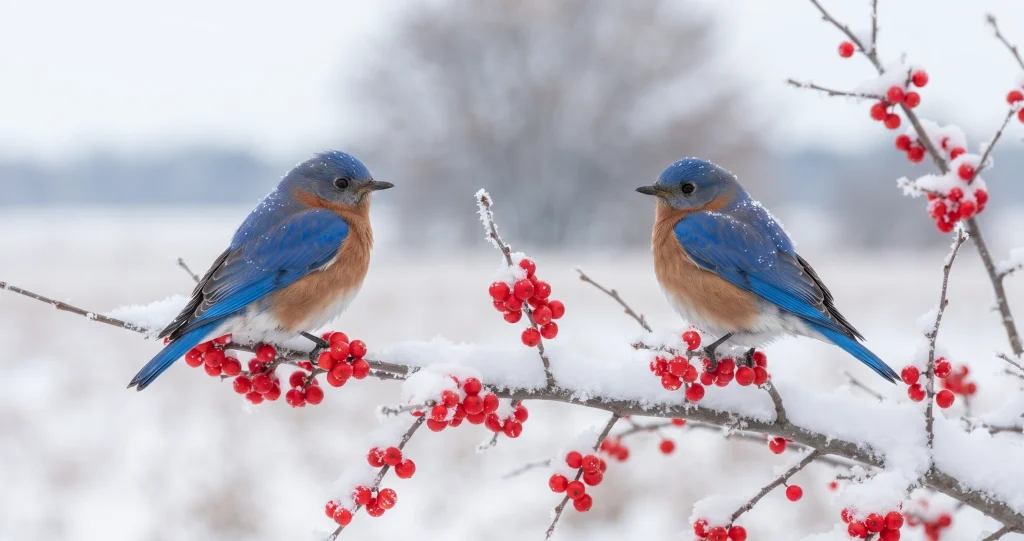
During winter, many bluebirds rely more heavily on fruits and berries when insects become scarce.
Providing suitable natural foods is often one of the most valuable ways to support them.
Native Berries
Fruit-bearing native shrubs and trees can provide food during cold weather.
Depending on the region, bluebirds may eat fruits from eastern red cedar, winterberry holly, serviceberry, dogwood, and other native plants.
The availability of fruit varies by species and season.
Some berries disappear early in winter, while others remain attached to branches longer.
A diverse planting of locally appropriate shrubs can offer a more dependable food supply than relying on one species.
Mealworms
Bluebirds may visit feeding stations offering mealworms.
Live mealworms are commonly accepted, particularly by birds already accustomed to supplemental feeding.
Dried mealworms may also be offered, although acceptance varies.
Use commercially raised mealworms intended for feeding animals rather than insects collected from potentially contaminated areas.
Offer small, fresh portions and remove uneaten food before it spoils.
Suet and Fat-Rich Foods
Some bluebirds may sample suet or specially prepared soft foods, especially during cold weather.
However, bluebirds are not as consistently attracted to traditional suet feeders as woodpeckers or nuthatches.
Use commercially prepared bird-safe products and avoid salty, seasoned, or spoiled foods.
Suet should be treated as a possible supplemental option, not an essential part of every bluebird feeding plan.
Avoid Bread and Processed Foods
Bread, crackers, salty snacks, and sweetened human foods are poor choices for wild bluebirds.
They do not provide the balanced nutrition birds obtain from natural foods.
Fresh berries, suitable insects, and well-maintained habitat are more appropriate.
Providing Water During Freezing Weather
Birds need water during winter, even when snow covers the ground.
Snow can provide moisture, but accessible liquid water may still be useful.
A shallow birdbath can serve bluebirds and other backyard species.
Use a Safe Heated Birdbath
In freezing regions, a purpose-built heated birdbath can help keep water available.
Follow the manufacturer’s electrical safety instructions.
Place the bath on a stable surface and keep the water shallow.
Never add salt, antifreeze, or other chemicals to prevent freezing.
Keep Water Clean
Replace dirty water regularly.
Remove leaves, droppings, and debris before they accumulate.
Clean the birdbath using an appropriate bird-safe method and rinse thoroughly.
Fresh water is more beneficial than a neglected basin containing contaminated water.
How to Help Bluebirds During Cold Spells
Cold weather does not automatically mean bluebirds require human intervention.
Healthy wild birds have natural strategies for coping with seasonal conditions.
However, gardeners can improve the surrounding habitat and reduce avoidable hazards.
Maintain Natural Shelter
Native shrubs, evergreen trees, and brushy habitat can provide shelter from wind.
Dead trees with natural cavities may also offer valuable roosting sites when they can be retained safely.
Do not leave hazardous trees standing where they threaten buildings, roads, or people.
Where safe, preserving suitable cavity habitat benefits many bird species beyond bluebirds.
Reduce Pesticide Use
Bluebirds depend heavily on insects during much of the year.
Reducing unnecessary insecticide applications helps maintain natural prey populations.
A diverse landscape with native plants can support insects and other organisms that contribute to the local food web.
Keep Cats Indoors
Free-roaming cats can threaten birds throughout the year.
Keeping pet cats indoors or within secure outdoor enclosures reduces predation risk.
This is particularly important around birdhouses, feeders, and birdbaths.
Maintain Boxes Before Severe Weather
Repair damaged roofs, loose mounts, and blocked drainage holes before cold conditions become severe.
Avoid major modifications while birds are actively using the shelter.
A stable, dry, predator-protected box is more valuable than a complicated structure that requires frequent disturbance.
Watching Winter Bluebirds Without Disturbing Them
Watching bluebirds enter a box near sunset can be a memorable winter experience.
The safest approach is to observe from a distance.
Watch the Evening Routine
Bluebirds may approach a cavity shortly before darkness.
Some investigate the entrance, perch nearby, or enter briefly before settling.
Use binoculars rather than approaching the box repeatedly.
Avoid bright lights and flash photography after dark.
Avoid Opening Occupied Boxes
Opening a box during winter can force birds to leave a protected space.
This is especially risky during severe cold or storms.
If birds are already inside, allow them to remain undisturbed.
Record Observations
Keep notes about the date, temperature, weather, and number of birds observed entering or leaving.
Remember that the number of birds seen near a box may not equal the number sleeping inside.
Photographs taken from a distance can document behavior without disturbing the birds.
For another example of winter bird behavior, explore the article on why crows gather in winter roosts. Crows and bluebirds use very different sleeping arrangements, but both illustrate how birds respond socially to seasonal conditions.
Common Mistakes to Avoid
One common mistake is sealing ventilation holes in an attempt to keep the box warmer.
Poor airflow can increase moisture accumulation and create unhealthy conditions.
Another mistake is placing the box where predators can easily climb to the entrance.
Mounting a box directly on a tree without suitable protection may increase risk.
Some gardeners also add excessive bedding, assuming that more material always means better insulation.
Others repeatedly open boxes to check whether birds are sleeping inside.
Finally, providing spoiled mealworms, moldy suet, or dirty water can create problems rather than help.
A safe winter setup emphasizes appropriate construction, natural habitat, cleanliness, and minimal disturbance.
Frequently Asked Questions
Do bluebirds sleep in nest boxes during winter?
Yes. Bluebirds sometimes use nest boxes as nighttime shelters outside the breeding season. However, not every bluebird uses a box, and suitable natural cavities may also serve as roosting sites.
How many bluebirds can fit in one nest box?
Several bluebirds may share a cavity, and reports include groups of roughly six to ten or occasionally more. The number varies, and a standard nest box should not be enlarged simply to accommodate a crowd.
Should I put a blanket inside a bluebird box?
No. Blankets and fabric scraps can retain moisture and create entanglement hazards. A clean, dry box with appropriate ventilation and drainage is preferable.
What do bluebirds eat when insects are scarce?
Winter bluebirds often eat more fruits and berries. They may also accept mealworms and occasionally other suitable supplemental foods.
Should I close the ventilation holes in winter?
No. Proper ventilation helps prevent condensation and excessive moisture. Follow a tested box design rather than sealing openings completely.
Can I check the box at night?
Avoid opening an occupied box at night. Disturbing roosting birds during cold weather can force them to leave valuable shelter and expend additional energy.
Conclusion
Bluebirds gathering inside a nest box on a cold winter night demonstrate how adaptable these familiar birds can be.
Shared shelter may reduce exposure to harsh weather, while suitable cavities provide a protected place to rest.
The best way to help is straightforward: maintain a properly designed nest box, install predator protection, preserve natural berry-producing plants, offer clean water, and avoid disturbing birds that are already roosting.
A thoughtful bluebirds winter nest box setup can become one small part of a healthier backyard habitat, supporting bluebirds through winter and preparing the landscape for their return to spring nesting activity.
External Sources
1. Educational guidance on safe nest box construction, placement, monitoring, and maintenance. Cornell NestWatch.