
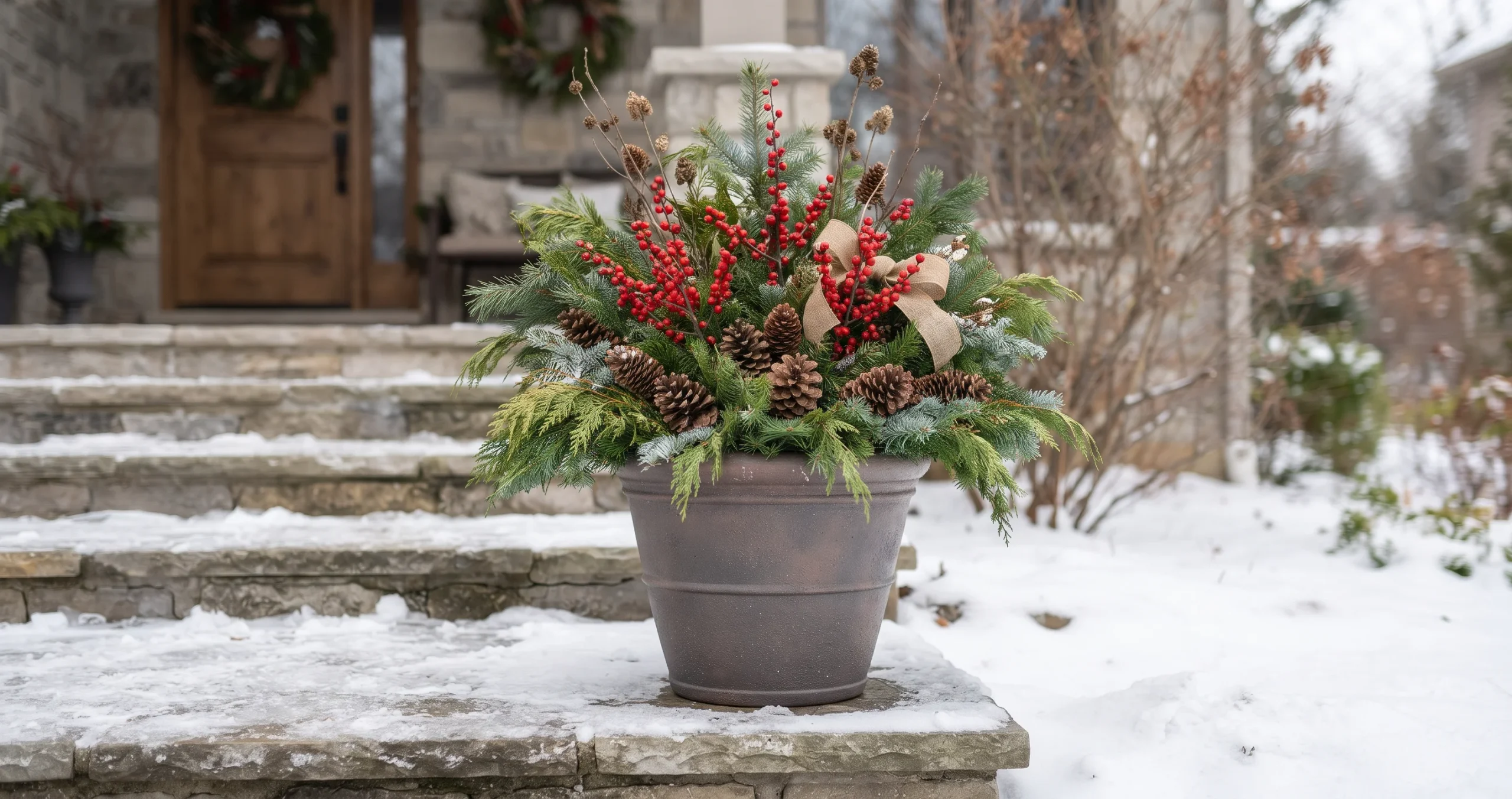
When the last autumn flowers fade and garden beds settle into winter, your front porch can still look beautiful. A winter evergreen planter brings fresh greenery, colorful branches, and natural textures to an otherwise quiet landscape. Best of all, you can create one using cut evergreen boughs, a sturdy container, and materials gathered responsibly from your garden.
Unlike a traditional planted arrangement, an evergreen porch pot does not need living roots to remain attractive. Its branches are arranged in moist potting soil, which can freeze around the stems in cold weather and help hold the design in place.
The secret is choosing greenery that stays attractive outdoors, arranging it with balanced proportions, and protecting the container from winter damage. With a few practical techniques, you can create a seasonal display that looks welcoming from late fall through much of winter.
Table of Contents
- What Is a Winter Evergreen Planter?
- Choosing a Frost-Proof Container
- Preparing the Soil and Securing the Stems
- The Best Evergreen Boughs for Winter Planters
- Designing With the Thriller-Filler-Spiller Method
- How to Make a Winter Evergreen Planter Step by Step
- Adding Winterberry, Dogwood, Hydrangeas, and Pinecones
- Preventing Drainage and Freezing Problems
- Harvesting Evergreen Branches Responsibly
- How Long Winter Porch Pots Last
- Refreshing and Maintaining Your Arrangement
- Frequently Asked Questions
What Is a Winter Evergreen Planter?
A winter evergreen planter is a decorative outdoor arrangement made primarily from cut evergreen branches. It is commonly displayed beside a front door, on porch steps, or near a garden entrance.
Instead of relying on actively growing plants, the arrangement uses sturdy stems that retain their needles or foliage during cold weather. Fir, pine, cedar, spruce, and boxwood are popular choices.
Colorful branches, berries, seed heads, and pinecones provide additional visual interest. These materials can be arranged in layers to create a display that resembles a miniature winter landscape.
A winter evergreen planter differs from a container holding live shrubs. The cut branches will eventually dry out, so the arrangement is seasonal rather than permanent.
That distinction matters when planning watering, drainage, and maintenance.
Choosing a Frost-Proof Container
The container is the foundation of the entire design. It must support the weight of the branches and tolerate the temperature changes common during winter.
Which materials work best?
Weather-resistant resin, fiberglass, and some heavy-duty plastic containers are practical options. They are relatively lightweight and less likely to crack when exposed to freezing conditions.
Certain concrete and high-fired ceramic planters are also suitable, provided the manufacturer rates them for outdoor freezing temperatures.
Ordinary terracotta can be vulnerable because absorbed moisture expands as it freezes. A decorative pot that survives summer weather may crack after repeated winter freeze-thaw cycles.
For a winter evergreen planter, prioritize durability over appearance alone.
Choose a stable size
A medium or large planter generally offers better stability than a narrow, lightweight pot.
Tall branches can catch strong winds, especially on exposed porches. A broad base and sufficient weight help prevent tipping.
If you are reusing a summer planter, remove dead annuals and inspect the container for existing cracks.
Choose a location where the finished arrangement will not obstruct steps, handrails, or doorways.
Preparing the Soil and Securing the Stems
One of the simplest ways to anchor evergreen branches is to use potting soil already inside the container.
The soil should be slightly moist when the branches are inserted. In freezing weather, moisture within the potting mix can turn to ice and help stabilize the stems.
Why moist soil works
Moist potting mix provides resistance around inserted branches. Once frozen, it can hold the arrangement more firmly.
However, the soil should not be saturated. Excess water increases weight and can contribute to drainage problems or container damage.
A practical approach is to moisten dry potting mix until it feels evenly damp but does not release water when gently squeezed.
Insert branches before the soil freezes solid. Trying to force stems into frozen soil can break branches or damage the container.
Additional support for windy locations
In sheltered locations, compacted potting mix may provide sufficient support.
For taller or heavier designs, use a removable internal support, such as a suitable branch grid or a purpose-made floral support.
Avoid creating a rigid structure that presses outward against the pot walls as temperatures change.
Remember that freezing soil can help secure stems, but it should not be the only protection against wind.
The Best Evergreen Boughs for Winter Planters
Different evergreens contribute different shapes, colors, and textures. Combining several types creates a more natural-looking arrangement.
Cedar: Soft, graceful greenery
Cedar foliage adds a feathery texture that works beautifully around the middle and edges of a planter.
Its flexible sprays soften the outline of upright branches.
Depending on the species and growing conditions, cut cedar can retain an attractive appearance for weeks in cool weather.
Pine: Long needles and flowing movement
Pine branches introduce a looser, more open shape.
Long needles provide contrast against compact foliage, while flexible stems can extend beyond the container rim.
Pine works particularly well as a trailing or outward-reaching element.
Fir: Dense, classic evergreen structure
Fir branches often provide rich green color and relatively good needle retention.
Their needles and branching patterns make them useful for filling gaps and creating a full, layered appearance.
Freshly cut fir is especially attractive when combined with pine or cedar.
Spruce: Strong texture and structure
Spruce has a firmer appearance, with shorter, often sharper needles.
Its branches can create strong horizontal lines or a defined central silhouette.
Needle retention varies by species and conditions, so choose fresh material and monitor it for drying.
Boxwood: Compact foliage and refined shape
Boxwood offers small, dense leaves rather than needles.
Its compact texture makes it useful near the front of the arrangement, where it can conceal exposed stems and soil.
Use healthy, pest-free branches and avoid bringing questionable plant material into areas with valuable landscape boxwoods.
Designing With the Thriller-Filler-Spiller Method
The familiar thriller-filler-spiller approach works just as well for cut winter greenery as it does for summer container gardens.
It organizes the arrangement into three visual layers.
Thriller: Create height
The thriller is the tallest element.
Red-twig dogwood stems, upright spruce branches, or slender decorative branches can establish a strong vertical shape.
Position the tallest materials near the center of a planter viewed from all sides. For a pot placed against a wall, position them slightly toward the back.
Filler: Build fullness
Filler branches occupy the middle of the design.
Fir, cedar, and boxwood can create volume around the taller stems.
Vary branch lengths and directions to avoid making the arrangement look like a rigid cone.
Spiller: Soften the edges
Spiller materials extend outward or gently downward over the container rim.
Long-needled pine, flexible cedar, and selected evergreen sprays can create this effect.
The goal is not to cover the entire pot. A few carefully positioned branches can make the design feel more relaxed and natural.
How to Make a Winter Evergreen Planter Step by Step
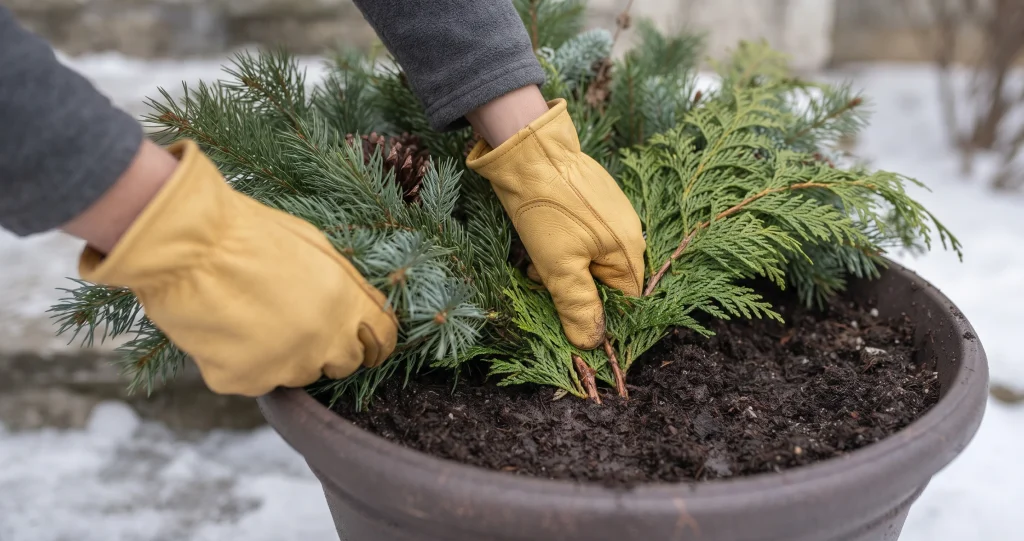
Creating a balanced winter evergreen planter is easier when you work from the tallest materials toward the lowest branches.
Step 1: Prepare your container
Choose a clean, frost-resistant pot with functional drainage holes.
Fill it with potting mix, leaving enough space below the rim to prevent soil from spilling when branches are inserted.
Moisten the soil lightly if it is dry.
Step 2: Add the tallest branches
Begin with red-twig dogwood or sturdy upright evergreen stems.
Insert them deeply enough to remain stable without forcing them against the bottom of the container.
Step back and check the overall height before adding more material.
Step 3: Build the middle layer
Arrange fir, spruce, or cedar around the taller branches.
Rotate the container as you work if it will be viewed from multiple directions.
For a porch pot positioned against a wall, concentrate the most attractive foliage toward the front and sides.
Step 4: Add trailing greenery
Insert flexible pine or cedar branches around the outer edge.
Allow selected stems to extend beyond the rim, creating movement and a softer outline.
Keep the arrangement balanced so heavy branches do not pull the pot toward one side.
Step 5: Add decorative accents
Place winterberry stems, dried hydrangea flower heads, or pinecones where they will be clearly visible.
Use a restrained selection rather than filling every gap with decorations.
Natural differences in height, texture, and color make the finished arrangement more interesting.
Step 6: Check stability
Gently test whether the stems remain secure.
If the soil is still unfrozen, firm it around the branches and add suitable internal support where needed.
Position the planter in its final location before severe freezing weather makes it difficult to move.
Adding Winterberry, Dogwood, Hydrangeas, and Pinecones
Evergreen foliage provides the foundation, but contrasting materials make the arrangement memorable.
Winterberry for seasonal color
Winterberry holly produces bright berries that can create a striking contrast against green foliage.
Use branches with intact berries and position them where they will not be crushed by heavier greenery.
Winterberry berries are not edible for people and can be harmful if swallowed. Keep berry-bearing decorations away from young children and pets that may chew them.
Red-twig dogwood for height
Red-twig dogwood stems provide vivid color after their leaves have fallen.
Their upright shape makes them ideal for the thriller portion of a winter evergreen planter.
A few stems are usually more effective than a crowded bundle.
Dried hydrangeas for soft texture
Dried hydrangea flower heads introduce muted brown, cream, or faded pink tones.
They work especially well in rustic arrangements.
However, they are relatively fragile and may deteriorate quickly in heavy rain, snow, or strong wind.
Pinecones for natural detail
Pinecones provide familiar winter texture without requiring artificial ornaments.
They can be nestled between branches or attached to sturdy supports.
Use clean, dry pinecones and avoid collecting material from protected areas.
Preventing Drainage and Freezing Problems
Drainage remains important even when the container holds cut branches rather than living plants.
Rainwater and melting snow can collect inside a pot, particularly if drainage holes become blocked.
Keep drainage holes open
Inspect the bottom of the container before filling it.
Avoid placing the pot directly over a surface that seals its drainage openings.
Pot feet or a suitable raised stand can improve drainage, provided the planter remains stable.
Avoid excessive watering
Moist soil helps secure the stems, but a waterlogged container can develop problems during freezing weather.
Add small amounts of water only when conditions are mild enough for it to soak into the mix.
Do not pour water into a frozen container in an attempt to create a solid block of ice.
Protect vulnerable surfaces
A winter evergreen planter can leave moisture stains on wood, stone, or painted porch surfaces.
Use an appropriate protective stand or tray arrangement that does not trap standing water against the container.
Check the area periodically during thawing weather.
Harvesting Evergreen Branches Responsibly
Fresh greenery is often available from garden pruning, local tree farms, or florists.
If collecting from your own plants, remove only a modest amount of healthy growth and preserve the plant’s natural structure.
Prune without damaging the plant
Use clean, sharp pruning tools.
Cut branches just outside an appropriate lateral branch or growth point rather than leaving long stubs.
Avoid removing large amounts of foliage from one side of an evergreen.
Different species respond differently to pruning. Some conifers do not regenerate readily from old, bare wood.
Respect property and wildlife
Never collect branches from public parks, protected habitats, or private property without permission.
Inspect greenery for bird nests, insects, and other wildlife before cutting.
Choose healthy material without obvious signs of disease or pest infestation.
Locally sourced greenery also reduces the risk of accidentally transporting plant pests over long distances.
How Long Winter Porch Pots Last
A winter evergreen planter can remain attractive for several weeks and sometimes much longer in consistently cold conditions.
Longevity depends on the evergreen species, freshness of the branches, sun exposure, wind, and moisture.
Cold temperatures generally slow moisture loss. However, bright winter sun and drying winds can cause foliage to brown even when the air feels cold.
A sheltered porch often provides better conditions than an exposed, south-facing location.
Signs that greenery needs replacing
Watch for excessive needle drop, brittle branches, fading foliage, and visible mold.
Some browning is natural as cut material ages.
Replace unattractive branches rather than assuming the entire arrangement must be discarded.
A winter evergreen planter does not need to remain unchanged from November through March.
Refreshing and Maintaining Your Arrangement
Inspect your arrangement every week or two, especially after storms.
Remove broken stems and replace greenery that has lost its color or shape.
If the soil is frozen, avoid forcing new branches into it. Wait for a thaw or use an existing support that allows damaged stems to be replaced safely.
Decorative berries and dried flowers may need refreshing more frequently than evergreen foliage.
Frequently Asked Questions
Can I make a winter evergreen planter without floral foam?
Yes. Moist potting soil is a common alternative for outdoor arrangements. It supports inserted branches and may freeze around them during cold weather. Taller designs may require additional support.
Do evergreen porch pots need sunlight?
Cut evergreen branches do not need sunlight for growth because they are no longer rooted plants. In fact, strong sunlight can accelerate drying. A cool, sheltered location often helps maintain their appearance.
Can I reuse the potting soil in spring?
Often, yes, provided the soil is clean, drains properly, and has not become contaminated with diseased plant material. Remove the old branches and inspect the mix before reusing it. For new container plants, refreshing or replacing part of the potting mix may improve its structure.
Conclusion
A winter evergreen planter is a practical way to bring natural color and texture to a porch during the coldest months.
Start with a frost-resistant container, use slightly moist soil to anchor the stems, and combine cedar, pine, fir, spruce, or boxwood with colorful branches and seasonal accents.
The thriller-filler-spiller method provides an easy structure, while responsible harvesting, good drainage, and occasional refreshing help the arrangement remain attractive.
With thoughtful materials and a little maintenance, an evergreen porch pot can transform an ordinary entrance into a welcoming winter display.
External Sources
1. Fresh Cut Greens and Winter Decor
Explain how moist soil freezes around evergreen stems, helping keep the arrangement stable and attractive. University of Minnesota — Fresh Cut Greens and Winter Decor
2. Creating Eye-Catching Winter Evergreen Containers
Support the selection of pine, fir, spruce, holly, and arborvitae, along with decorative red-twig dogwood and birch branches. Illinois Extension — Winter Evergreen Containers