
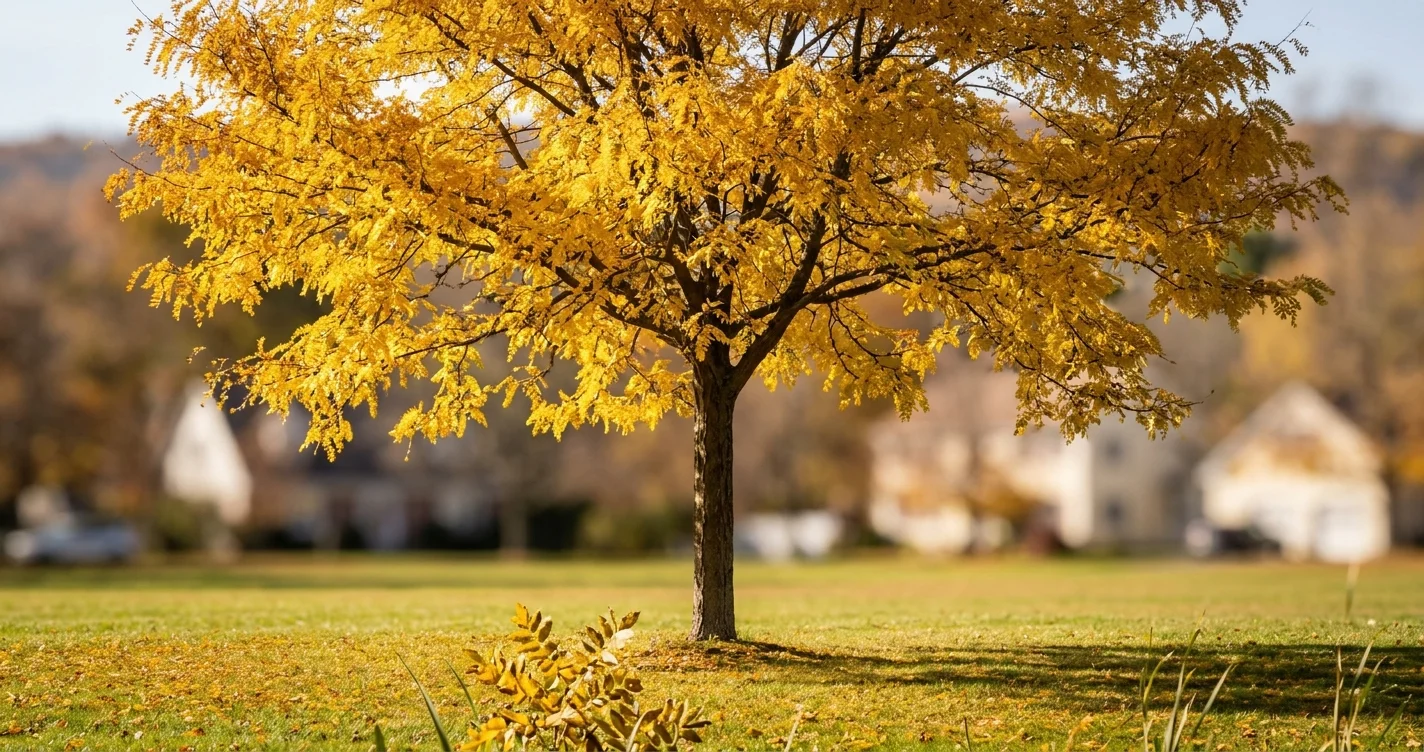
A tree can grow tall enough to shade an entire backyard while still allowing sunlight to reach the grass beneath it. That sounds almost contradictory, especially if you’re familiar with the deep shadows cast by maples and oaks.
Yet the thornless honey locust does exactly that.
With its delicate, fernlike leaves, airy canopy, and remarkable ability to tolerate challenging urban conditions, this North American tree has become a familiar sight along streets, in parks, and across residential landscapes.
Its beauty comes from an unusual combination of features. The foliage creates a soft, filtered shade rather than a dense canopy, while its adaptable root system can survive in many difficult soil environments.
But the thornless honey locust is not indestructible. Its roots can sometimes interfere with pavement, certain cultivars develop structural problems, and insect pests may affect trees under stress.
Understanding how this tree grows reveals why it can be an excellent landscape choice—and why thoughtful planting still matters.
Table of Contents
- What Is a Thornless Honey Locust?
- Thornless Honey Locust: The Science Behind Its Light Shade
- Why Honey Locust Roots Are So Adaptable
- How Fast Does a Thornless Honey Locust Grow?
- The Best Growing Conditions for Honey Locust
- Popular Thornless Honey Locust Varieties
- Wildlife Benefits and Ecological Considerations
- Common Problems With Thornless Honey Locust Trees
- Planting and Caring for a Thornless Honey Locust
- In Your Own Yard: Making the Most of Light Shade
- Frequently Asked Questions
What Is a Thornless Honey Locust?
The honey locust (Gleditsia triacanthos) is a deciduous tree native to central and eastern North America.
Wild honey locust trees are famous for their formidable thorns, which can grow directly from the trunk and branches.
However, thornless forms have become popular in landscaping because they offer much of the species’ ornamental appeal without the conspicuous defensive spines.
The Difference Between Wild and Thornless Trees
Thornless honey locust is often associated with Gleditsia triacanthos var. inermis, a naturally occurring thornless form of the species.
Many cultivated varieties are selected for their attractive foliage, growth habit, and reduced production of seedpods.
These trees generally have compound leaves made up of numerous small leaflets.
Their open crowns create a distinctive, finely textured appearance.
How Large Can They Become?
Depending on the cultivar and growing conditions, thornless honey locust trees commonly reach approximately 30–70 feet tall.
Their crowns may spread broadly, making them useful for shading lawns, patios, and other outdoor spaces.
Growth varies with soil quality, moisture, climate, and maintenance.
A young tree in favorable conditions may grow relatively quickly, while an older tree typically slows as it matures.
Why Landscapers Appreciate Them
Thornless honey locust trees are valued for several practical reasons.
Their small leaflets create filtered shade, their foliage often turns golden yellow in fall, and established trees can tolerate a range of urban stresses.
Many cultivars also produce relatively little fruit compared with wild honey locust trees.
These qualities make them attractive for residential yards, streetscapes, and public landscapes.
Thornless Honey Locust: The Science Behind Its Light Shade
One of the most remarkable features of thornless honey locust is its ability to provide shade without completely blocking sunlight.
The secret lies in the architecture of its leaves and canopy.
Small Leaflets Allow Light to Pass Through
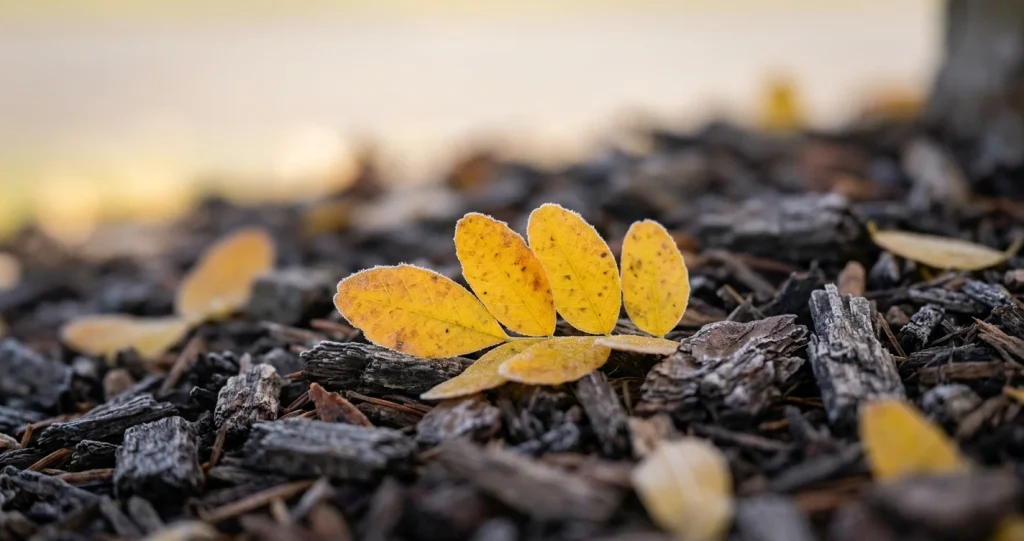
Unlike trees with broad, overlapping leaves, honey locust has compound leaves divided into many small leaflets.
Some leaves are once-pinnate, while others are twice-pinnate, creating an especially fine texture.
This arrangement allows sunlight to pass through numerous small gaps in the canopy.
The result is a shifting pattern of light and shadow across the ground.
Instead of forming a continuous dark ceiling, the foliage produces a more open, dappled effect.
Canopy Structure Matters as Much as Leaf Shape
Light penetration depends on more than individual leaves.
Branch spacing, crown density, pruning history, tree age, and growing conditions all influence how much sunlight reaches the ground.
Thornless honey locust often develops an open branching structure, particularly when compared with densely crowned shade trees.
However, mature trees can still create substantial shade.
The degree of light filtering varies among cultivars and individual specimens.
Why Grass Sometimes Grows Better Beneath It
Lawns often struggle beneath dense shade trees because turfgrass receives insufficient light.
The relatively open canopy of honey locust can allow more sunlight to reach the lawn.
This may make turf establishment easier than beneath some heavily shading species.
However, sunlight is only one factor.
Tree roots compete with grass for water and nutrients, while soil compaction and poor drainage can create additional problems.
Shade-tolerant grasses or alternative groundcovers may still be necessary.
Tiny Leaves Can Simplify Fall Cleanup
Honey locust leaflets are small and lightweight.
When they fall, they may settle between grass blades or break down relatively quickly under favorable conditions.
This can make autumn cleanup less demanding than with large, leathery leaves.
However, heavy leaf accumulation can still affect lawns.
The amount of debris also depends on the size of the tree and surrounding landscape.
The Role of Seasonal Sunlight
Because honey locust is deciduous, it loses its leaves during fall.
This allows more sunlight to reach the ground during winter.
In climates with cold winters, seasonal light penetration can be useful around gardens and outdoor living areas.
During summer, the canopy provides partial shade that may reduce direct solar exposure.
The actual cooling effect depends on canopy size, location, and surrounding surfaces.
Why Honey Locust Roots Are So Adaptable
Honey locust has a reputation for tolerating challenging growing environments.
Its root system plays an important role in that adaptability.
Roots Respond to Soil Conditions
Like many trees, honey locust develops roots according to soil structure, oxygen availability, moisture, and physical obstacles.
In suitable soil, roots can extend widely beyond the trunk.
Their distribution is influenced by available resources rather than following one fixed pattern.
This flexibility helps the species establish in different landscape settings.
Tolerance Does Not Mean Unlimited Strength
Honey locust can tolerate certain urban stresses, including moderate drought after establishment and a range of soil conditions.
However, severe compaction, prolonged waterlogging, restricted rooting space, and repeated mechanical damage can still weaken the tree.
A tree surviving in difficult soil is not necessarily growing at its full potential.
Can Roots Damage Sidewalks?
Yes, under some conditions.
Honey locust roots may grow near the soil surface, particularly where oxygen, moisture, and suitable soil are concentrated.
As roots enlarge, they can contribute to pavement displacement when growing beneath sidewalks or other hard surfaces.
The risk depends on planting distance, soil volume, pavement construction, and root development.
Providing adequate rooting space is important for long-term success.
Why Planting Space Matters
A tree planted in a narrow strip between concrete surfaces may have limited access to water and oxygen.
Even a relatively adaptable species can struggle when root growth is severely restricted.
Larger planting areas generally provide better conditions for healthy root development.
This is especially important for trees expected to remain in place for decades.
How Fast Does a Thornless Honey Locust Grow?
Thornless honey locust is commonly considered a relatively fast-growing shade tree.
Under favorable conditions, young trees may add roughly one to two feet or more of height annually.
Actual growth varies considerably.
Early Growth
Young trees often devote energy to establishing roots while developing their trunks and branches.
Consistent moisture during establishment supports healthy growth.
Once established, the tree may become more tolerant of occasional dry periods.
Growth Slows With Age
As trees mature, annual height growth generally decreases.
Energy is increasingly allocated to maintaining existing tissues, expanding the crown, and reproduction.
This is a normal part of tree development.
Why Fast Growth Requires Structural Care
Rapid growth can sometimes produce long branches or weakly attached stems.
Early structural pruning can help encourage a strong central leader and appropriately spaced branches.
Corrective pruning is generally easier when the tree is young.
The Best Growing Conditions for Honey Locust
Thornless honey locust is adaptable, but it performs best when basic environmental needs are met.
Sunlight
Full sun is generally preferred.
The tree can tolerate some partial shade, but strong light supports vigorous growth and canopy development.
Soil
Honey locust grows in a variety of soil textures, including loam, clay, and sandy soils.
Good drainage is beneficial.
Although the species tolerates some difficult soil conditions, prolonged saturation can damage roots.
Water
Newly planted trees need consistent moisture while establishing.
Once established, honey locust can tolerate periods of drought better than many less adaptable ornamental trees.
However, extended drought may still cause leaf drop, reduced growth, or branch dieback.
Climate
Honey locust is grown across a broad portion of the United States, including many regions with cold winters and warm summers.
Cold hardiness varies somewhat by cultivar.
Local extension recommendations can help identify varieties suited to regional conditions.
Popular Thornless Honey Locust Varieties
Choosing the right cultivar can make a substantial difference in appearance, maintenance, and long-term performance.
Sunburst Honey Locust
‘Sunburst’ is known for its brilliant yellow new foliage, which gradually turns green as the leaves mature.
It creates a striking contrast with darker trees and shrubs.
This cultivar is generally considered fruitless, although it can be susceptible to certain diseases, including canker.
Skyline Honey Locust
‘Skyline’ typically develops a more upright, pyramidal crown than some spreading cultivars.
It is often selected for street plantings and landscapes where a relatively structured appearance is desirable.
It is generally described as a seedless male cultivar.
Shademaster Honey Locust
‘Shademaster’ has an attractive branching pattern and dark green foliage.
Its relatively broad crown can provide useful filtered shade over lawns and outdoor seating areas.
It is commonly selected for its low pod production.
Imperial Honey Locust
‘Imperial’ is generally more compact than many other honey locust cultivars.
It may suit landscapes where a large, spreading tree would be difficult to accommodate.
Unlike some fruitless selections, it can produce occasional seedpods.
Cultivar descriptions and characteristics are documented by the Morton Arboretum. The Morton Arboretum
Wildlife Benefits and Ecological Considerations
Although thornless honey locust is often planted primarily for shade, it can also contribute to local wildlife habitat.
Flowers and Pollinating Insects
Honey locust produces relatively inconspicuous greenish flowers.
These flowers may attract bees and other insects when nectar and pollen are available.
Their ecological value depends partly on cultivar characteristics and the surrounding plant community.
Food for Wildlife
Seed-producing honey locust trees develop long pods containing seeds and sweetish pulp.
Some mammals and birds consume portions of these fruits.
However, fruitless cultivars provide little or none of this particular food resource.
Honey locust also serves as a host plant for certain insects, including some butterfly and moth larvae. North Carolina Extension Gardener Plant Toolbox
The Importance of Tree Diversity
Honey locust has been planted extensively in urban environments.
Overreliance on one species can increase vulnerability to pests and diseases.
The Morton Arboretum advises considering alternative tree species to maintain diversity in city and suburban landscapes. The Morton Arboretum
A diverse mixture of suitable trees generally creates a more resilient landscape than repeated planting of one popular cultivar.
Common Problems With Thornless Honey Locust Trees
Even a tough tree can develop problems.
Understanding common issues helps gardeners recognize early warning signs.
Mimosa Webworm
Mimosa webworm larvae feed on honey locust foliage and create webbed clusters of leaves.
Heavy infestations can cause browning and premature leaf loss.
Damage is often more noticeable during summer.
Honey Locust Plant Bugs and Spider Mites
Plant bugs can damage developing leaves, while spider mites may cause discoloration and stress during hot, dry weather.
Healthy trees can sometimes tolerate moderate damage without major long-term consequences.
Canker Diseases
Certain fungal pathogens can cause cankers on branches or trunks.
Affected areas may develop sunken bark, dieback, or discoloration.
Stress from drought, mechanical injuries, or poor growing conditions may increase vulnerability.
Root Problems and Restricted Soil
Roots need oxygen, water, and adequate space.
Severely compacted or poorly drained soil can interfere with root function.
Restricted rooting environments may contribute to declining vigor even when the tree initially appears healthy.
University of Illinois Extension identifies webworms, mites, plant bugs, borers, and cankers among potential honey locust problems. Illinois Extension
Planting and Caring for a Thornless Honey Locust
Good planting practices can help a thornless honey locust develop a healthy root system and stable crown.
Plant at the Correct Depth
Locate the root flare, where the trunk begins widening into the major roots.
Position the tree so this flare remains at or slightly above the surrounding soil surface.
Planting too deeply can contribute to root and trunk problems.
Provide Adequate Space
Consider the tree’s mature height and canopy spread before selecting a location.
Allow sufficient distance from buildings, overhead wires, sidewalks, and underground utilities.
A tree that fits comfortably when young may require considerably more space at maturity.
Water During Establishment
Newly planted trees need regular monitoring.
Water deeply when appropriate, allowing moisture to reach the developing root zone.
Adjust watering according to rainfall, soil drainage, and weather.
Avoid keeping the root zone continuously saturated.
Mulch Carefully
Apply an appropriate layer of organic mulch around the tree, extending outward where space permits.
Keep mulch away from direct contact with the trunk.
Mulch can help moderate soil temperature, conserve moisture, and reduce competition from turfgrass.
Prune for Structure
Young honey locust trees may benefit from structural pruning to establish a strong central leader and well-spaced branches.
Remove damaged or competing branches selectively.
Large pruning jobs or trees near utilities should be handled by qualified arborists.
In Your Own Yard: Making the Most of Light Shade
A thornless honey locust can be particularly useful where gardeners want summer shade without creating a completely dark landscape.
Create a Comfortable Seating Area
Planting a suitable cultivar near a patio or seating area can provide filtered sunlight during summer.
The moving leaflets create an attractive pattern of light and shadow.
Account for mature canopy size and root space when planning the location.
Grow Plants Beneath the Canopy
The relatively open shade may support certain turfgrasses, woodland-edge perennials, or shade-tolerant groundcovers.
However, roots compete for moisture.
Choose plants adapted to both partial shade and relatively dry soil conditions.
Use Native Plants Where Appropriate
In regions where honey locust is native, combining it with locally appropriate shrubs, grasses, and wildflowers can create a more ecologically connected landscape.
Outside its native range, compare it with regionally native shade trees before planting.
Plan for Long-Term Maintenance
Even a low-maintenance tree benefits from periodic inspection.
Watch for dead branches, trunk damage, unusual leaf discoloration, and changes in growth.
Early attention to structural or health problems can help protect the tree’s long-term value.
Frequently Asked Questions
1. Do thornless honey locust trees have invasive roots?
Honey locust roots can spread widely and may grow near the soil surface. They can contribute to sidewalk or pavement displacement under certain conditions, particularly where rooting space is restricted. However, this does not mean every tree will damage nearby structures. Proper placement and adequate soil volume reduce potential conflicts.
2. Is thornless honey locust a good shade tree for a small yard?
It can be suitable for some medium-sized yards, especially when a compact cultivar is selected. However, many thornless honey locust trees eventually become large. Gardeners should consider mature height, canopy spread, root space, and proximity to buildings before planting.
3. Are thornless honey locust trees messy?
Many thornless cultivars produce few or no seedpods, making them easier to maintain than fruiting honey locust trees. Their small leaflets often require less raking than large leaves. However, fallen twigs, occasional pods, and seasonal leaf litter may still require cleanup.
Conclusion
Return to that backyard where sunlight filters gently through a tall, graceful canopy.
The grass beneath the tree still receives patches of light, while the patio enjoys welcome relief from the summer sun.
This is the distinctive appeal of the thornless honey locust.
Its delicate compound leaves create airy shade, while its adaptable root system allows it to tolerate many conditions that challenge less resilient landscape trees.
Yet its toughness should not be confused with immunity to stress.
Thoughtful cultivar selection, adequate rooting space, structural pruning, and responsible maintenance remain essential.
For gardeners seeking a fast-growing shade tree with fine-textured foliage and a relatively open canopy, thornless honey locust can be a rewarding choice.
Sometimes, the most useful shade tree is not the one that blocks the most sunlight—but the one that allows just enough light to pass through.
External Sources
1. The Morton Arboretum — Thornless Honey-Locust — Botanical characteristics, cultivar descriptions, drought tolerance, and landscape use. The Morton Arboretum
2. North Carolina State Extension — Thornless Honey Locust — Identification, wildlife benefits, growing conditions, and common pests. North Carolina Extension Gardener Plant Toolbox
3. Virginia Tech Extension — Thornless Common Honeylocust — Cultivar selection, planting recommendations, and disease concerns. Virginia Tech
4. Oregon State University — Thornless Honeylocust — Tree morphology, environmental tolerance, and ornamental characteristics. Oregon State University