
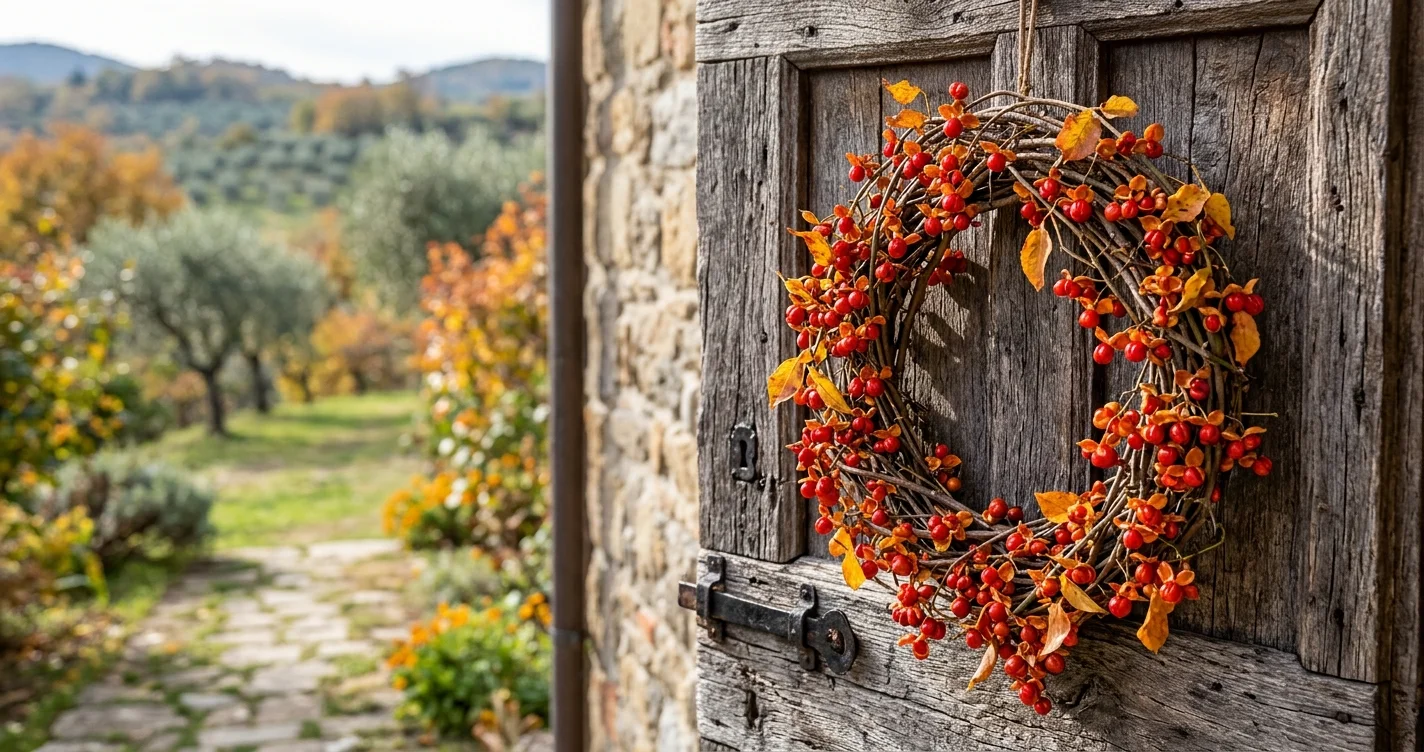
A branch covered in brilliant orange and red berries might look like the perfect finishing touch for a fall wreath. But that beautiful vine could be hiding a serious ecological problem.
Two bittersweet vines grow in North America, and although their colorful fruits look remarkably similar, their effects on native ecosystems can be very different.
The American vs Oriental bittersweet distinction is especially important during fall and winter, when gardeners, florists, and nature lovers collect decorative branches.
American bittersweet (Celastrus scandens) is a native North American climbing vine that provides food and habitat for wildlife. Oriental bittersweet (Celastrus orbiculatus), introduced from East Asia, is an invasive species in many parts of the United States.
Both produce colorful fruits surrounded by papery capsules. Both climb trees and shrubs. And both can appear in woodland edges, hedgerows, and disturbed landscapes.
The critical difference is that Oriental bittersweet can spread aggressively, overwhelm vegetation, and contribute to the decline of native plant communities.
Even more surprisingly, holiday decorations made from invasive bittersweet can help spread its seeds.
Learning to distinguish these vines before cutting decorative branches is a simple but meaningful step toward protecting local ecosystems.
Table Of Contents
- What Are American and Oriental Bittersweet?
- American vs Oriental Bittersweet: The Science of Identification
- Why Oriental Bittersweet Is So Invasive
- Why Bittersweet Decorations Can Spread Invasive Plants
- How to Identify Bittersweet Before Cutting Branches
- Where American and Oriental Bittersweet Grow
- What Should You Do if You Find Oriental Bittersweet?
- In Your Own Yard: A Responsible Fall Decorating Checklist
- Why Protecting American Bittersweet Matters
- Frequently Asked Questions
What Are American and Oriental Bittersweet?
American and Oriental bittersweet belong to the same botanical genus, Celastrus.
Both are woody, deciduous climbing vines that produce colorful fruit capsules in fall.
Despite their similarities, their geographic origins and ecological behavior differ significantly.
American Bittersweet: The Native Vine
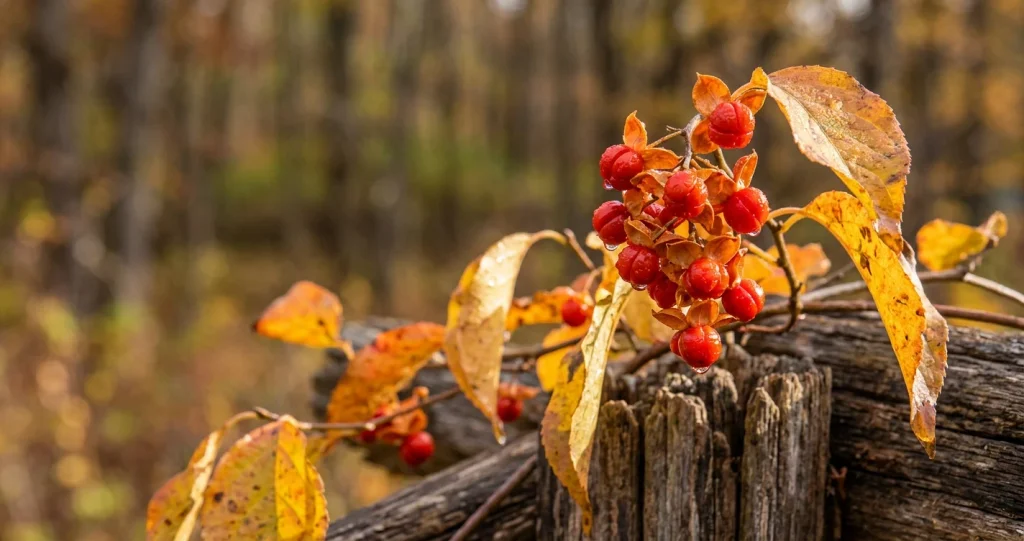
American bittersweet (Celastrus scandens) is native to much of eastern and central North America.
It naturally occurs along woodland edges, in thickets, and in other suitable habitats.
Its twisting stems climb nearby vegetation, while its flowers and fruits provide resources for wildlife.
American bittersweet can grow vigorously under favorable conditions, so it still needs thoughtful placement in managed gardens.
However, it is part of the native ecosystems in which it evolved.
Oriental Bittersweet: The Introduced Vine
Oriental bittersweet (Celastrus orbiculatus) originated in East Asia.
It was introduced to North America as an ornamental plant and became popular for its attractive fruits and climbing growth habit.
Over time, it escaped cultivation and spread into natural areas.
Today, it is considered invasive in many eastern and central U.S. states.
It can climb into tree canopies, form dense tangles, and compete with native vegetation for sunlight and space.
Why Their Similar Appearance Matters
The two species share many visual characteristics.
Both produce yellowish to orange fruit capsules that open to reveal bright red or orange-red seeds covered by fleshy arils.
Both develop woody climbing stems.
And both may be encountered in the same general regions.
Fortunately, several botanical features can help separate them.
American vs Oriental Bittersweet: The Science of Identification
The most reliable field identification begins with the arrangement of flowers and fruits.
Leaf shape and capsule color can provide supporting clues, but they are less dependable when used alone.
1. Fruit Placement: The Most Useful Clue
American bittersweet typically produces flowers and fruit clusters near the ends of its branches.
These clusters are called terminal inflorescences.
When the fruits mature, they often form conspicuous groups at the tips of stems.
Oriental bittersweet generally produces flowers and fruits along the stems, emerging from the leaf axils.
A leaf axil is the point where a leaf joins the stem.
As a result, Oriental bittersweet may display numerous fruit clusters distributed along much of a branch.
This difference is especially useful when examining fruiting vines in fall.
However, damaged branches, incomplete specimens, and hybrid plants can complicate identification.
2. Fruit Capsule Color
American bittersweet often develops orange-colored fruit capsules.
Oriental bittersweet commonly produces yellow capsules that split open to reveal reddish arils.
This creates a striking yellow-and-red appearance.
However, capsule colors can vary with maturity and environmental conditions.
A yellow capsule alone is not sufficient proof of Oriental bittersweet.
Similarly, an orange capsule does not guarantee that a plant is American bittersweet.
Fruit placement remains a stronger clue.
3. Leaf Shape
American bittersweet leaves are often somewhat elongated, with shapes ranging from oval to broadly lance-shaped.
Oriental bittersweet leaves tend to be more rounded or broadly oval.
Both species have toothed leaf margins.
Because leaf shape varies within each species, identification should never rely exclusively on this feature.
Young shoots and shaded leaves may look different from mature leaves growing in full sunlight.
4. Flower Arrangement
Flowers provide another important identification feature.
American bittersweet generally produces flowers in terminal clusters.
Oriental bittersweet typically produces flowers in clusters arising from leaf axils.
This distinction can help identify plants before fruit develops.
However, flowers are small and may require close inspection.
5. Growth Habit
Both species climb by twining around supporting vegetation.
Oriental bittersweet often grows aggressively and can form dense mats or extensive climbing networks.
It may cover shrubs, climb mature trees, and spread across forest edges.
American bittersweet can also become a substantial woody vine, but it generally behaves differently within its native ecological communities.
Growth vigor alone is not a reliable identification method.
Quick Identification Comparison
| Feature | American bittersweet | Oriental bittersweet |
|---|---|---|
| Scientific name | Celastrus scandens | Celastrus orbiculatus |
| Origin | Native to North America | Native to East Asia |
| Fruit placement | Usually at branch tips | Usually along stems at leaf axils |
| Capsule color | Often orange | Often yellow |
| Leaf shape | Frequently more elongated | Frequently more rounded |
| Ecological status | Native species | Invasive in many U.S. regions |
| Decorative use | Requires responsible sourcing | Avoid using fruiting material |
The most useful rule is simple: examine where the fruits attach before considering color or leaf shape.
Why Oriental Bittersweet Is So Invasive
Oriental bittersweet is not merely a fast-growing ornamental vine.
Its biological characteristics allow it to spread into many natural habitats and alter existing plant communities.
Rapid Climbing Growth
Oriental bittersweet can grow over shrubs and trees.
Its twining stems wrap around supporting vegetation and extend toward sunlight.
As the vine expands, it can create dense foliage that shades the plants beneath it.
This reduces the light available to smaller native species.
Competition for Resources
Like other plants, Oriental bittersweet requires water, nutrients, and sunlight.
Dense infestations may compete with native vegetation for these resources.
Young trees and shrubs can be particularly vulnerable when covered by vigorous climbing vines.
Physical Damage to Trees
Large Oriental bittersweet vines may wrap tightly around tree trunks and branches.
Over time, expanding stems can contribute to constriction and structural stress.
Heavy vine growth also increases the amount of vegetation supported by a tree.
During storms, this additional weight and wind resistance may contribute to branch damage or tree failure.
Seed Production and Dispersal
Oriental bittersweet produces conspicuous fruits that attract some birds and other animals.
When animals consume the fleshy arils, seeds may be dispersed away from the parent plant.
This helps the vine establish in new locations.
Human movement of fruiting branches can create additional opportunities for spread.
Hybridization With American Bittersweet
One especially concerning issue is hybridization.
American and Oriental bittersweet can hybridize where their ranges overlap.
This complicates conservation because hybridization may threaten the genetic integrity of native American bittersweet populations.
It also makes visual identification more difficult in some circumstances.
When a specimen has mixed or ambiguous characteristics, professional identification may be necessary.
Why Bittersweet Decorations Can Spread Invasive Plants
The bright berries of bittersweet have long made these vines attractive for seasonal decorations.
Branches are used in wreaths, garlands, table arrangements, and dried floral displays.
But decorative use can become a pathway for invasive plant dispersal.
The Hidden Problem With Fruiting Branches
A freshly cut Oriental bittersweet branch may contain numerous mature seeds.
These seeds can remain viable after the branch is removed from the plant.
If fruits fall outdoors, they may eventually reach suitable growing conditions.
Discarded decorations can also introduce seeds into garden waste or natural areas.
Birds Can Spread Seeds From Decorations
Birds may consume fruits displayed outdoors.
When the seeds pass through the digestive system, some may be deposited in other locations.
This means an attractive wreath hanging on a porch could potentially contribute to seed dispersal.
The risk depends on fruit maturity, seed viability, wildlife access, and local conditions.
Why Mislabeling Matters
Decorative bittersweet is not always accurately identified.
Sellers may use the general name bittersweet without distinguishing the two species.
A buyer may therefore purchase invasive Oriental bittersweet while believing it is the native American species.
For this reason, a common name on a product label is not sufficient confirmation.
Safer Decorating Alternatives
Consider using locally appropriate, noninvasive materials such as dried grasses, pinecones, fallen leaves, or responsibly sourced evergreen branches.
Reusable artificial berry stems can also provide seasonal color without carrying viable seeds.
If using native plant materials, verify their identity and collect them only where permitted.
How to Identify Bittersweet Before Cutting Branches
A few careful observations can prevent confusion.
Examine an Entire Fruiting Stem
Look at the full length of a branch rather than a single berry cluster.
If fruit clusters occur repeatedly along the stem, Oriental bittersweet is more likely.
If fruits are concentrated near branch tips, American bittersweet is more likely.
Remember that broken or incomplete branches may conceal the original arrangement.
Check the Leaves When Available
Leaf shape can support an identification.
More rounded leaves suggest Oriental bittersweet, while somewhat elongated leaves may suggest American bittersweet.
However, neither pattern is definitive.
Observe Capsule Color
Yellow capsules are often associated with Oriental bittersweet.
Orange capsules are more typical of American bittersweet.
Use this feature alongside fruit arrangement.
Look for Multiple Clues
The strongest field identification combines fruit placement, flower arrangement when available, leaf characteristics, and overall plant structure.
If the identification remains uncertain, avoid collecting the vine.
A local university Extension office or native plant organization may be able to help.
Where American and Oriental Bittersweet Grow
Both species can occur in overlapping regions, particularly in eastern North America.
Their habitat preferences also overlap.
Woodland Edges
Bittersweet vines often grow where sunlight reaches the edges of forests.
These locations provide climbing supports and relatively favorable light conditions.
Roadsides and Disturbed Areas
Oriental bittersweet frequently establishes in disturbed habitats.
Road construction, vegetation clearing, and soil disturbance can create opportunities for invasive plants.
Hedgerows and Abandoned Fields
Shrub thickets and abandoned fields can provide suitable climbing structures.
These habitats may support dense bittersweet growth.
Gardens and Landscapes
Ornamental planting has contributed to the historical spread of Oriental bittersweet.
In some areas, plants continue to appear in gardens because seeds arrive from nearby infestations.
Local regulations may restrict the sale, transport, or cultivation of Oriental bittersweet.
What Should You Do if You Find Oriental Bittersweet?
Finding an invasive vine does not always mean immediate removal is simple.
The appropriate response depends on infestation size, location, and the surrounding vegetation.
Confirm the Identification
Before removing a vine, make sure it is Oriental bittersweet.
Mistaken identification could lead to unnecessary removal of native American bittersweet.
Hybrid plants may require additional evaluation.
Remove Small Seedlings Carefully
Young seedlings may sometimes be removed by hand when the soil is moist.
Removing the root system helps reduce the chance of regrowth.
Monitor the area because additional seedlings may emerge from seeds already present in the soil.
Manage Established Vines Safely
Large woody vines can be difficult to remove.
Pulling heavy vines from trees may damage branches or create safety hazards.
For established infestations, consult local Extension guidance or qualified land-management professionals.
Control may require repeated treatments and long-term monitoring.
Dispose of Fruiting Material Responsibly
Keep fruiting branches and seeds contained during removal.
Follow local invasive-plant disposal recommendations.
Avoid placing viable fruits in areas where they could establish new plants.
Do not assume ordinary backyard composting will reliably destroy every seed.
In Your Own Yard: A Responsible Fall Decorating Checklist
Autumn decorating can celebrate nature without unintentionally spreading invasive species.
Identify Before Harvesting
Examine the vine while it is still attached to the plant.
Fruit placement is easier to assess when the full branch structure is visible.
Take clear photographs if you need help with identification.
Choose Native or Noninvasive Materials
Use decorations made from materials that do not threaten local ecosystems.
Native plant materials should be collected responsibly and only where harvesting is allowed.
Avoid Moving Unknown Fruiting Vines
If you cannot confidently identify bittersweet, leave it in place until its identity is confirmed.
Transporting fruiting material can increase the risk of moving viable seeds.
Inspect Purchased Decorations
Check wreaths and arrangements for unfamiliar berries or seed-bearing vines.
Ask sellers for botanical names and sourcing information.
If identification cannot be confirmed, choose another decorative material.
Monitor Garden Edges
Inspect fences, hedgerows, and woodland margins for climbing vines.
Young Oriental bittersweet plants are often easier to manage than large established infestations.
Support Native Plant Conservation
Native vines, shrubs, and trees contribute to local ecological relationships.
Protecting native plant communities can support birds, insects, and other wildlife.
Consider participating in local invasive-plant removal or habitat restoration programs.
Why Protecting American Bittersweet Matters
American bittersweet is part of North America’s native plant diversity.
Protecting it involves more than preserving an attractive ornamental vine.
Native Plant Relationships
American bittersweet participates in ecological relationships with local wildlife.
Its fruits may be consumed by birds and other animals.
Its climbing growth also contributes to the structure of certain habitats.
Competition From Oriental Bittersweet
In areas where Oriental bittersweet becomes abundant, native plants may experience increased competition.
American bittersweet may also face challenges from habitat changes and hybridization.
Conservation Begins With Identification
Gardeners can help by learning the differences between native and invasive bittersweet.
Avoiding the movement of Oriental bittersweet seeds is a practical conservation action.
Accurate identification also helps prevent unnecessary removal of native vines.
Frequently Asked Questions
1. What is the easiest way to tell American bittersweet from Oriental bittersweet?
Fruit placement is usually the most useful field clue.
American bittersweet typically produces fruit clusters near branch tips, while Oriental bittersweet generally produces fruits along the stems at leaf axils.
Capsule color and leaf shape can provide supporting evidence, but hybrids and unusual growth patterns may complicate identification.
2. Is Oriental bittersweet illegal to grow or sell in the United States?
Regulations vary by state.
Some states prohibit or restrict the sale, transport, or planting of Oriental bittersweet because of its invasive behavior.
Check current state agriculture or invasive-species regulations before buying, planting, or transporting bittersweet.
3. Can I use American bittersweet for holiday decorations?
Native American bittersweet may be used responsibly where collection is legal and the species is not locally protected.
However, accurate identification and sustainable sourcing are essential.
Avoid collecting from wild populations where removal could harm native plant conservation.
For a lower-risk option, use noninvasive decorative materials that contain no viable seeds.
Conclusion
A vine covered in glowing orange and red berries can transform an ordinary fall arrangement into something beautiful.
But the American vs Oriental bittersweet distinction reveals why appearance alone is not enough when choosing natural decorations.
American bittersweet is a native species with ecological value, while Oriental bittersweet is an invasive vine capable of spreading through natural habitats and competing with native vegetation.
The most useful identification clue is fruit placement: American bittersweet usually bears clusters at branch tips, while Oriental bittersweet typically produces fruit along its stems.
By identifying plants carefully, avoiding invasive fruiting material, and choosing responsible decorative alternatives, gardeners can celebrate the season while helping protect local ecosystems.
The next time you see a branch glowing with autumn berries, look closely at where those fruits grow.
External Sources
1. Oriental vs. American Bittersweet
Explains the difference between fruit clusters at branch tips and fruits growing along stems, with photographic comparisons. Illinois Extension.
Describes conservation concerns, including habitat pressures, invasive competition, hybridization, and harvesting branches for decorations. Massachusetts Government.