
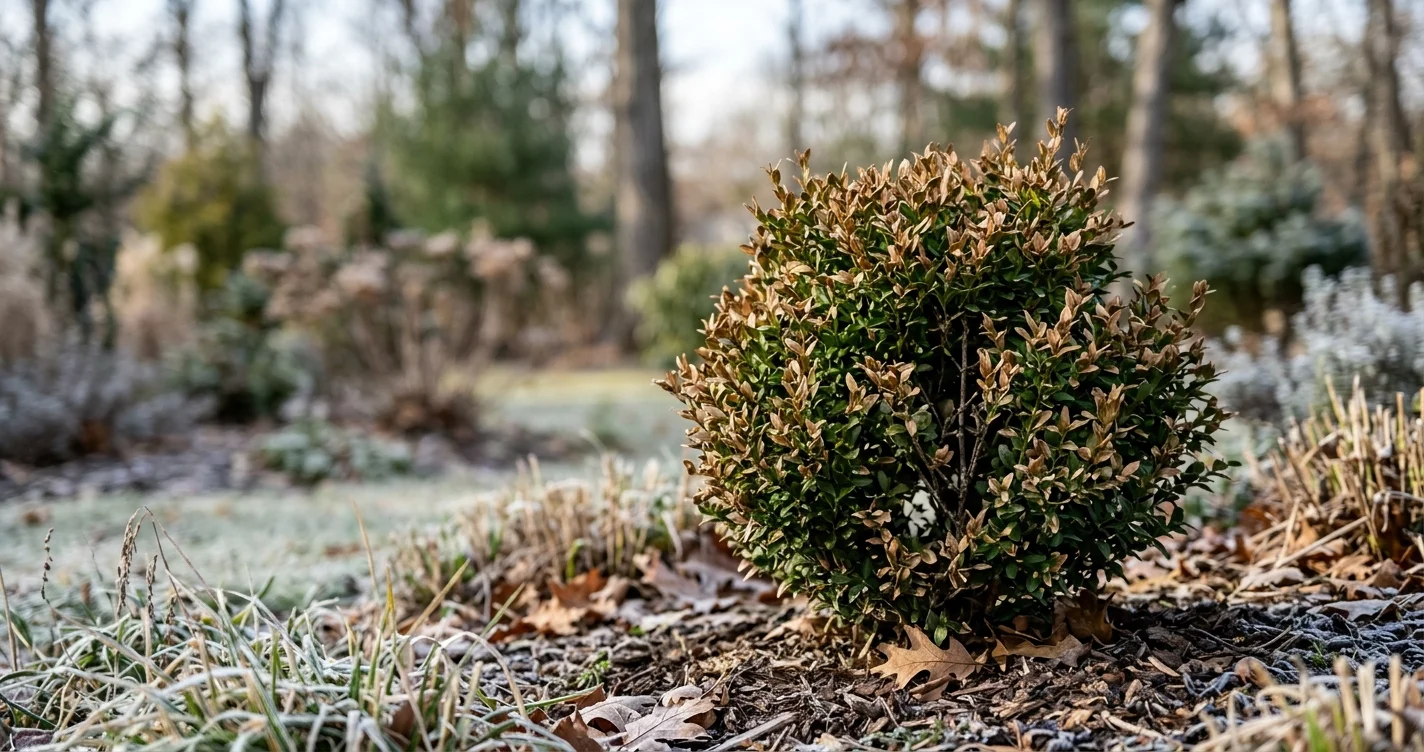
A pine tree can survive freezing temperatures, heavy snow, and bitter winter winds—yet still emerge in spring with brown, dried-out needles. Even stranger, the damage may have started while the tree was surrounded by snow.
How can an evergreen dry out during the coldest, wettest-looking season of the year?
The answer is a winter problem called desiccation, sometimes known as winter burn. Winter desiccation evergreens experience occurs when foliage loses moisture faster than the roots can replace it, often because the soil is frozen or unusually dry.
Unlike deciduous trees, which shed most of their leaves before winter, evergreens retain foliage that can continue losing water even during cold weather.
This creates a hidden challenge: sunlight and wind may draw moisture from needles and leaves while frozen ground prevents the roots from absorbing enough water.
The result can be brown needle tips, scorched-looking leaves, and damaged branches that become especially noticeable in late winter or early spring.
Fortunately, understanding how winter desiccation works can help gardeners recognize the warning signs and reduce the risk of damage.
Table Of Contents
- What Is Winter Desiccation?
- Winter Desiccation Evergreens: The Science Behind Winter Burn
- Which Evergreens Are Most Vulnerable?
- What Does Winter Desiccation Look Like?
- Winter Desiccation vs. Other Causes of Evergreen Browning
- Why Newly Planted Evergreens Are at Greater Risk
- How to Prevent Winter Desiccation in Evergreens
- Can Brown Evergreens Recover?
- In Your Own Yard: A Practical Winter Evergreen Checklist
- Three Common Mistakes That Make Winter Burn Worse
- Frequently Asked Questions
What Is Winter Desiccation?
Winter desiccation is a form of moisture-related injury affecting plants during cold weather.
It occurs when water loss from foliage exceeds the amount of water available for replacement.
Evergreens are particularly vulnerable because they retain needles or leaves throughout winter.
Why Evergreens Keep Losing Water
Plants lose water through a process called transpiration.
Water moves from plant tissues into the surrounding air, primarily through tiny openings called stomata.
Evergreen plants generally reduce their water loss during winter, but they do not always stop it completely.
On sunny or windy days, exposed foliage may continue losing moisture.
If roots cannot absorb enough water, plant tissues can become dehydrated.
Why Winter Burn Often Appears in Spring
Winter desiccation injury may develop gradually.
Needles and leaves can remain green for a period even after damage has occurred.
As temperatures rise, affected tissues may become brown, bronze, or reddish.
This delayed appearance explains why gardeners sometimes discover winter injury only after the worst cold weather has passed.
Winter Desiccation Evergreens: The Science Behind Winter Burn
The relationship between frozen soil, plant water movement, sunlight, and wind explains why evergreens can dry out during winter.
Several environmental factors often work together.
Frozen Soil Limits Water Uptake
Plant roots absorb water from the surrounding soil.
When soil freezes, much of its water becomes unavailable for normal root uptake.
Root activity also slows as temperatures decline.
Even when snow covers the ground, roots may be unable to access sufficient liquid water.
This creates a mismatch between water supply and water loss.
The foliage may continue losing moisture while the root system cannot replace it quickly enough.
Sunlight Can Increase Water Stress
Bright winter sunlight warms exposed needles and leaves.
This can influence leaf temperature and water loss, particularly when the surrounding air remains cold and dry.
South-facing and southwest-facing portions of evergreen plants often receive stronger winter sunlight in the Northern Hemisphere.
These exposed areas may show more injury than shaded foliage.
However, the pattern varies depending on local conditions and plant species.
Wind Removes Moisture From Foliage
Wind can increase water loss by removing the humid layer of air surrounding plant surfaces.
Cold, dry winds may therefore contribute to winter desiccation.
Evergreens planted in open areas or near exposed building corners can be particularly vulnerable.
Wind damage and sunlight exposure often occur together.
Low Humidity Increases the Drying Effect
Winter air can contain relatively little water vapor, especially during cold, dry weather.
When the air around foliage has a strong drying effect, moisture loss may increase.
The combination of dry air, wind, and limited root water uptake can place evergreen tissues under considerable stress.
Why Some Evergreens Resist Damage Better
Evergreens possess several adaptations that help reduce water loss.
Many conifers have narrow needles with protective waxy surfaces.
Broadleaf evergreens often have thick, leathery leaves.
These features can reduce moisture loss, but they do not make plants immune to winter injury.
Tolerance varies by species, cultivar, age, establishment, and growing conditions.
Which Evergreens Are Most Vulnerable?
Some evergreen plants are more likely to experience winter desiccation under certain conditions.
Newly planted specimens, plants growing near the edge of their cold-hardiness range, and those exposed to strong winter winds may be especially vulnerable.
Arborvitae
Arborvitae are popular evergreen shrubs used for privacy screens and hedges.
Their dense foliage can be exposed to drying winds and winter sunlight.
Some arborvitae develop normal seasonal bronze coloration, which should not automatically be mistaken for injury.
However, extensive brown, dry foliage may indicate winter desiccation or another problem.
Boxwood
Boxwoods can develop bronze or brownish foliage during winter.
Some discoloration is a normal response to cold temperatures.
However, severe winter burn may cause leaves to become dry, brittle, or extensively browned.
Boxwoods can also suffer from diseases and other stresses that produce similar symptoms.
Rhododendrons
Rhododendrons retain broad evergreen leaves.
During cold weather, their leaves may curl and droop.
This is often a normal response to low temperatures rather than evidence of permanent damage.
However, exposed leaves can develop brown edges or patches when winter desiccation occurs.
Pines and Spruces
Many conifers tolerate winter conditions well, but they can still experience moisture-related injury.
Needle tips or exposed branches may become brown.
Newly planted trees are often more vulnerable because their root systems have not fully established.
However, needle browning can also result from insects, diseases, salt exposure, or normal seasonal needle shedding.
What Does Winter Desiccation Look Like?
Recognizing the pattern of injury can help distinguish winter desiccation from other problems.
Brown Needle Tips
Some conifers develop brown or reddish-brown needle tips.
Damage may be concentrated on exposed branches.
In severe cases, entire needles or shoots can become brown.
Scorched Leaf Edges
Broadleaf evergreens may show brown margins or irregular patches.
The leaves can appear dry or burned.
This is why the condition is often called winter burn.
Damage on the Windward Side
Branches facing prevailing winter winds may experience greater moisture loss.
In some landscapes, injury is more pronounced on the side exposed to wind.
Browning Above the Snow Line
Snow can shield lower foliage from drying wind and direct sunlight.
As a result, the portion of an evergreen protected by snow may remain greener than exposed branches above it.
This pattern can be a useful clue, although it is not conclusive.
Delayed Browning
A plant may look healthy in midwinter but develop visible damage as spring approaches.
The injury may have occurred weeks earlier.
Winter Desiccation vs. Other Causes of Evergreen Browning
Not every brown evergreen is suffering from winter desiccation.
Several other conditions can produce similar symptoms.
| Possible cause | Common signs | Important clues |
|---|---|---|
| Winter desiccation | Brown tips, edges, or exposed foliage | Often appears after cold, sunny, windy weather |
| Normal winter bronzing | Bronze or purplish foliage | Often species-specific and may reverse in spring |
| Road salt injury | Brown foliage near roads or sidewalks | May be concentrated on the side facing salt exposure |
| Root problems | Widespread decline and weak growth | May be associated with poor drainage or root damage |
| Insects or diseases | Localized dieback or unusual patterns | May involve visible pests, lesions, or other symptoms |
| Normal needle shedding | Older interior needles turn yellow or brown | Often occurs seasonally while newer growth remains healthy |
A reliable diagnosis should consider the plant species, growing conditions, injury pattern, and recent weather.
If browning continues spreading or the cause remains uncertain, a local university Extension service or qualified arborist can help.
Why Newly Planted Evergreens Are at Greater Risk
Newly planted evergreens often have limited root systems.
Transplanting can reduce the amount of functioning root tissue available to absorb water.
Until roots establish in the surrounding soil, the plant may struggle to maintain an adequate moisture balance.
Roots Need Time to Establish
A newly planted evergreen may require more than one growing season to establish a strong root system.
The timeline depends on plant size, species, soil conditions, and climate.
During this period, the plant can be especially sensitive to drought and winter drying.
Large Plants May Be More Vulnerable
Larger transplanted trees and shrubs may have substantial foliage relative to their functioning root systems.
This can increase the challenge of maintaining adequate water uptake.
Proper planting and aftercare are therefore important.
Fall Planting Requires Attention
Fall can be a suitable planting season for many evergreens, but timing matters.
Plants need enough time and favorable conditions to begin root establishment before severe freezing.
Local recommendations vary by climate and species.
How to Prevent Winter Desiccation in Evergreens
Prevention begins before the ground freezes.
The goal is to help plants enter winter with adequate moisture, healthy roots, and protection from excessive environmental stress.
Water Thoroughly Before the Ground Freezes
Evergreens benefit from adequate soil moisture going into winter.
If autumn is unusually dry, supplemental watering may be necessary.
Water deeply enough to moisten the root zone, while avoiding waterlogged conditions.
Continue watering when needed until the soil freezes, following local restrictions and species-specific recommendations.
Apply Mulch Around the Root Zone
Organic mulch can help moderate soil temperature and reduce moisture loss.
Wood chips, shredded bark, or other suitable materials can be useful.
A layer approximately 2–3 inches deep is commonly recommended for many landscape trees and shrubs.
Keep mulch away from direct contact with trunks and stems.
Avoid piling mulch against the base of the plant.
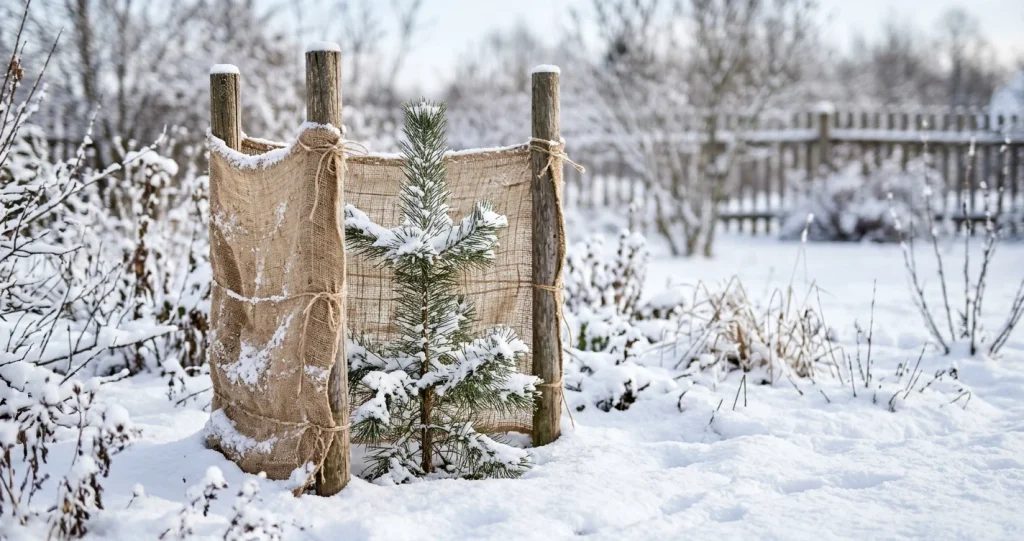
Protect Plants From Drying Winds
Temporary windbreaks can reduce exposure in particularly windy locations.
Burlap screens or other suitable barriers may help protect vulnerable evergreens.
Place barriers so they reduce wind exposure without tightly enclosing or rubbing against the foliage.
Proper installation is important.
Choose Suitable Planting Locations
Site selection can reduce winter stress.
Some evergreens perform better in locations protected from strong winter winds and intense reflected sunlight.
However, plants still need the light and air circulation appropriate for their species.
Avoid Excessive Late-Season Fertilization
Applying unnecessary fertilizer late in the growing season may encourage growth that is poorly timed for winter conditions.
Fertilization should be based on actual plant needs and soil conditions.
Avoid assuming that fertilizer will prevent winter burn.
Consider Anti-Desiccant Products Carefully
Anti-desiccant sprays are marketed to reduce moisture loss from evergreen foliage.
However, research and Extension recommendations indicate that their effectiveness can be inconsistent.
They should not replace appropriate watering, mulching, plant selection, and wind protection.
If using such products, follow label directions and species-specific guidance.
Can Brown Evergreens Recover?
Recovery depends on how much tissue was damaged.
Some plants may recover from moderate winter injury, while severely damaged branches may not regrow.
Brown Leaves May Not Turn Green Again
Once evergreen foliage is completely dead, it generally will not regain its green color.
However, the plant may produce new growth from surviving buds.
The extent of recovery depends on the species and location of the damage.
Wait Before Pruning
Early spring browning can make it difficult to determine which branches remain alive.
In many cases, it is better to wait until new growth begins before making major pruning decisions.
This allows gardeners to see which portions of the plant are recovering.
Check for Living Tissue
A small scratch test on a twig may reveal green, moist tissue beneath the bark.
However, this method has limitations and should be used carefully.
The presence of living tissue does not guarantee that the entire branch will recover.
Remove Dead Branches Appropriately
Once the extent of damage becomes clear, dead branches can be pruned using clean, appropriate tools.
Avoid cutting into old wood on species that do not readily produce new growth from bare branches.
For large trees or extensive damage, consult a qualified arborist.
In Your Own Yard: A Practical Winter Evergreen Checklist
Protecting evergreens doesn’t require complicated equipment.
A few well-timed actions can reduce winter stress and help plants remain healthy.
Early Fall: Inspect Your Plants
Walk around your garden and examine evergreen trees and shrubs.
Look for signs of drought stress, insect damage, disease, or poor drainage.
Address problems before winter when possible.
Pay particular attention to newly planted specimens.
Mid-Fall: Check Soil Moisture
If rainfall has been limited, inspect the soil near the root zone.
Water when conditions indicate a need.
Avoid watering simply because the calendar says to do so.
The goal is adequate moisture, not saturated soil.
Late Fall: Prepare for Freezing Weather
Apply suitable mulch around vulnerable plants.
Install temporary wind protection where exposure is severe.
Check that irrigation systems are properly winterized while still allowing necessary watering before the soil freezes.
During Winter: Observe Without Disturbing
Watch for snow accumulation, ice loading, and wind exposure.
Avoid shaking or striking frozen branches, which may be brittle.
Do not use deicing salts near sensitive plants when safer alternatives are available.
Late Winter: Watch for Browning
Inspect exposed foliage for changes in color.
Remember that some winter bronzing is normal.
Record which areas are affected and whether the pattern matches wind or sun exposure.
Spring: Assess Recovery
Wait for signs of new growth before deciding how much pruning is needed.
Remove clearly dead material using appropriate pruning methods.
If damage is widespread or continues progressing, seek professional diagnosis.
Three Common Mistakes That Make Winter Burn Worse
1. Assuming Snow Provides Enough Water
Snow cover does not guarantee that roots can absorb water.
If the soil is frozen, moisture may remain unavailable.
Adequate soil moisture before freezing is especially important.
2. Wrapping Evergreens Too Tightly
Tightly wrapped materials can rub against foliage, trap moisture, or interfere with normal air circulation.
A properly positioned windbreak is often preferable to direct wrapping.
Protection methods should match the plant and local climate.
3. Pruning Too Early
Removing brown branches before spring growth begins can eliminate tissue that might still be alive.
Unless branches are clearly dead or hazardous, waiting for new growth can help guide pruning decisions.
Frequently Asked Questions
1. Why do evergreen trees turn brown in winter even when there is snow?
Evergreens can continue losing water through their foliage during winter.
If the soil is frozen, their roots may be unable to replace that moisture.
Sunlight, wind, and dry air can increase the imbalance.
Snow may insulate the ground or protect lower branches, but it does not always prevent winter desiccation.
2. Will an evergreen turn green again after winter burn?
Completely dead needles or leaves generally will not become green again.
However, surviving buds may produce new foliage.
Recovery depends on the species, severity of damage, and health of the remaining plant.
Wait until spring growth begins before making major pruning decisions.
3. Should I spray my evergreens with an anti-desiccant before winter?
Anti-desiccant sprays may offer limited benefits in certain situations, but their effectiveness is inconsistent.
They are not a substitute for adequate watering, mulch, appropriate plant placement, and wind protection.
Follow local Extension guidance and product labels if considering their use.
Conclusion
An evergreen surrounded by snow can still suffer from dehydration.
That surprising contradiction is the key to understanding winter desiccation evergreens experience.
When frozen soil limits water uptake, exposed needles and leaves may lose more moisture than the roots can replace.
Sunlight, dry winds, and low humidity can intensify the problem, leaving foliage brown or scorched by late winter.
Fortunately, gardeners can reduce the risk by maintaining adequate soil moisture before freezing, applying suitable mulch, protecting vulnerable plants from wind, and choosing species adapted to local conditions.
The next time an evergreen turns brown after a snowy winter, remember that cold weather may not be the only explanation.
Sometimes, the hidden problem is a lack of accessible water.
External Sources
1. Protecting Trees and Shrubs in Winter: Explain how frozen soil, winter sunlight, cold winds, and limited water uptake cause evergreen foliage to turn brown. University of Minnesota Extension.
2. Getting Trees and Shrubs Ready for Winter: Explain why adequate fall watering and soil moisture are important, and why anti-desiccant sprays should not replace basic winter protection. University of Illinois Extension.