
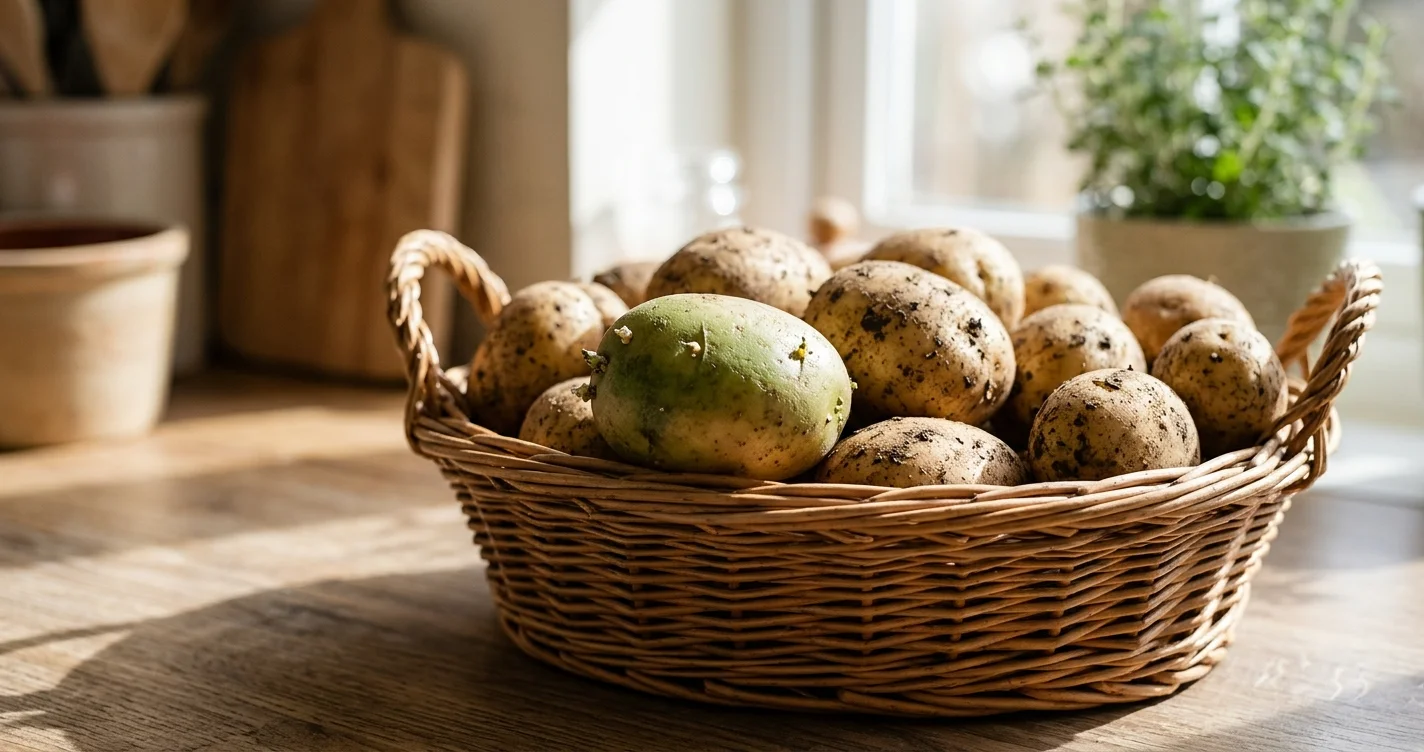
A potato can look perfectly normal when you bring it home from the grocery store. But a few days later, you notice something unexpected: a pale green patch spreading across its skin.
It might seem like the potato is simply changing color as it ages. In reality, that green tint can reveal something important about how the potato has been stored.
Green potatoes are usually the result of exposure to light. The color comes from chlorophyll, a natural green pigment. However, light exposure can also encourage the accumulation of naturally occurring toxic compounds called glycoalkaloids.
That raises an important food safety concern. The green pigment itself is not poisonous, but it can be a warning that the potato contains elevated levels of potentially harmful substances.
Understanding why potatoes turn green, when they should be discarded, and how to store them properly can help you reduce food waste without taking unnecessary risks.
Table of Contents
- What Are Green Potatoes?
- Why Do Potatoes Turn Green?
- Are Green Potatoes Safe to Eat?
- Green Potatoes and Glycoalkaloids: The Science Explained
- Can You Remove the Green Parts?
- Does Cooking Make Green Potatoes Safe?
- How to Store Potatoes Safely
- Why Homegrown Potatoes Turn Green
- Common Potato Storage Mistakes
- In Your Own Yard: Preventing Green Potatoes
- Frequently Asked Questions
What Are Green Potatoes?
Green potatoes are ordinary potatoes that have developed green pigmentation, usually after exposure to light.
Potatoes are underground storage organs called tubers. Unlike roots, tubers are modified stems that store nutrients and contain buds capable of producing new shoots.
When a potato remains underground, it is normally protected from sunlight.
However, once exposed to light, the tuber’s tissues can begin producing chlorophyll.
This is the same green pigment found in the leaves of many plants.
Why a Potato Changes Color
Chlorophyll allows plants to absorb light for photosynthesis.
Although potato tubers usually grow in darkness, their tissues retain the ability to produce chlorophyll when exposed to sufficient light.
As chlorophyll accumulates, the skin may develop green patches.
The color can range from faint yellow-green to a much darker shade.
Some potatoes develop green coloration over a broad area, while others show only small patches.
Does Green Color Mean a Potato Is Poisonous?
Not necessarily.
Chlorophyll itself is not considered toxic in the amounts normally found in foods.
The concern is that conditions promoting greening can also encourage the production of glycoalkaloids.
These compounds are part of the potato plant’s natural chemical defenses.
Because the amount of glycoalkaloids cannot be determined reliably by looking at the color alone, visible greening is an important warning sign.
Why Do Potatoes Turn Green?
Light exposure is the main reason potatoes develop green pigmentation.
This can happen in grocery stores, kitchens, storage rooms, or even gardens.
Exposure to Sunlight
Potatoes left in direct sunlight may begin producing chlorophyll.
This can happen when harvested potatoes are left outdoors or when developing tubers become exposed at the soil surface.
Sunlight can also warm the potatoes, creating additional storage problems.
Artificial Lighting
Potatoes do not need direct sunlight to turn green.
Prolonged exposure to artificial lighting can also stimulate chlorophyll production.
This explains why potatoes displayed under grocery store lights may develop green patches.
The rate of greening depends on factors such as light intensity, exposure time, and potato variety.
Improper Storage at Home
A transparent bag placed on a bright kitchen counter may allow enough light to reach the potatoes.
Over time, the exposed surfaces can turn green.
Storing potatoes in a dark location reduces this risk.
However, darkness alone does not prevent every storage problem. Temperature, humidity, ventilation, and physical damage also matter.
Are Green Potatoes Safe to Eat?
The safest approach is to avoid eating potatoes with extensive greening, significant sprouting, or signs of deterioration.
The main concern is exposure to naturally occurring potato glycoalkaloids, especially alpha-solanine and alpha-chaconine.
These substances can cause illness when consumed in sufficiently large amounts.
What Happens if You Eat Too Many Glycoalkaloids?
Excessive glycoalkaloid exposure can cause gastrointestinal symptoms, including nausea, vomiting, abdominal pain, and diarrhea.
More serious effects are possible with substantial exposure.
The severity depends on the amount consumed, the concentration of glycoalkaloids, and individual factors.
Symptoms may not appear immediately.
If you suspect potato-related poisoning, contact a poison control service or healthcare professional promptly.
In the United States, Poison Control can be reached at 1-800-222-1222.
Is a Small Green Patch Dangerous?
A small green patch does not automatically mean the entire potato contains dangerous concentrations of glycoalkaloids.
However, appearance alone cannot establish safety.
Removing a small affected area may reduce exposure, but it does not guarantee that all elevated glycoalkaloids have been eliminated.
For a conservative household approach, discard visibly green potatoes rather than relying on trimming to make them safe.
What About Bitter-Tasting Potatoes?
An unusually bitter or burning taste can be associated with elevated glycoalkaloid levels.
Do not continue eating a potato that tastes distinctly bitter or causes an unusual burning sensation.
However, the absence of bitterness does not prove that a potato is safe.
Taste should never be used as a testing method.
Green Potatoes and Glycoalkaloids: The Science Explained
The relationship between greening and potato toxicity is more complicated than it first appears.
The green pigment and the toxic compounds are different substances, even though some of the same environmental conditions can stimulate their production.
Chlorophyll and Glycoalkaloids Are Not the Same Thing
Chlorophyll is a pigment involved in photosynthesis.
Glycoalkaloids are naturally occurring defensive compounds produced by plants in the nightshade family, including potatoes.
The two substances have different chemical structures and biological functions.
A potato may produce chlorophyll after exposure to light, creating visible green coloration.
Under certain conditions, it may also accumulate additional glycoalkaloids.
However, the degree of greening does not provide a precise measurement of glycoalkaloid concentration.
This is why a potato’s color cannot be used as a reliable chemical safety test.
Why Potato Plants Produce Glycoalkaloids
Potato plants produce glycoalkaloids as part of their natural defenses against some pests and other biological threats.
These compounds occur in different parts of the plant.
Leaves, stems, and sprouts can contain relatively high concentrations.
Potato tubers normally contain lower levels, although concentrations vary by cultivar, growing conditions, storage history, and tissue location.
The skin and tissues immediately beneath it often contain more glycoalkaloids than the inner flesh.
How Light Changes a Potato
When potato tubers receive light, several physiological processes can occur.
Chlorophyll production may increase, resulting in greening.
Light exposure may also stimulate glycoalkaloid accumulation.
These responses are influenced by the intensity and duration of exposure, the wavelength of light, and the potato’s genetic characteristics.
Different potato varieties may respond differently under similar conditions.
Why Damage and Sprouting Matter
Light is not the only factor associated with glycoalkaloid accumulation.
Physical injury and other stresses may also influence concentrations.
Sprouts and the tissues around the eyes can contain elevated levels.
A potato that is heavily sprouted, damaged, or deteriorating deserves particular caution.
Although removing sprouts eliminates some potentially high-concentration tissue, it does not guarantee the remaining tuber is safe.
Why Green Color Is an Imperfect Warning
One of the most important distinctions is that glycoalkaloids can be present without obvious greening.
Likewise, a green appearance does not reveal the exact concentration of those compounds.
Some varieties have darker skins that can make greening difficult to recognize.
For this reason, safe storage and careful inspection are more reliable household practices than trying to judge toxicity from color intensity.
Can You Remove the Green Parts?
Peeling and trimming can reduce glycoalkaloid exposure because concentrations are often higher near the skin.
However, these methods have limitations.
What Peeling Can Remove
Removing the skin and some underlying tissue may eliminate a portion of the glycoalkaloids.
The reduction varies depending on how deeply the compounds are distributed.
A potato with widespread greening may contain elevated concentrations beyond the visibly affected areas.
Consequently, peeling should not be considered a guaranteed solution.
When Discarding Is the Better Choice
Discard potatoes with extensive green coloration, strong bitterness, significant sprouting, or obvious deterioration.
If you are uncertain about a potato’s condition, choosing another potato is the safer option.
Avoid using green or damaged potatoes in meals intended for children or other vulnerable individuals.
Why Appearance Is Not Enough
A potato can look mostly normal while still containing glycoalkaloids.
Likewise, a faint green patch does not reveal exactly how much is present.
Without laboratory testing, consumers cannot determine the concentration precisely.
The practical goal is to minimize avoidable exposure rather than attempt to estimate toxicity visually.
Does Cooking Make Green Potatoes Safe?
Cooking does not reliably eliminate potato glycoalkaloids.
This is an important difference from some food safety hazards that can be reduced through ordinary cooking.
Boiling
Boiling may reduce certain compounds under some conditions, but it is not a dependable method for making heavily green potatoes safe.
Glycoalkaloids are relatively stable during common cooking processes.
Baking and Roasting
Baking and roasting do not guarantee substantial glycoalkaloid removal.
A potato that was unsuitable before cooking should not be considered safe simply because it has been heated.
Frying
Some research has found reductions in glycoalkaloid concentrations under particular frying conditions.
However, results depend on temperature, processing methods, and the potato itself.
Home frying should not be treated as a reliable detoxification method.
The Safest Cooking Decision
Start with sound, properly stored potatoes.
Cooking should be used to prepare food, not to compensate for questionable raw ingredients.
If a potato has extensive greening or other warning signs, discard it before cooking.
How to Store Potatoes Safely
Proper storage helps prevent greening, slows unwanted sprouting, and preserves quality.
The ideal conditions depend partly on whether the potatoes are intended for immediate cooking, longer storage, or planting.
Keep Potatoes in the Dark
Store potatoes away from sunlight and prolonged artificial light.
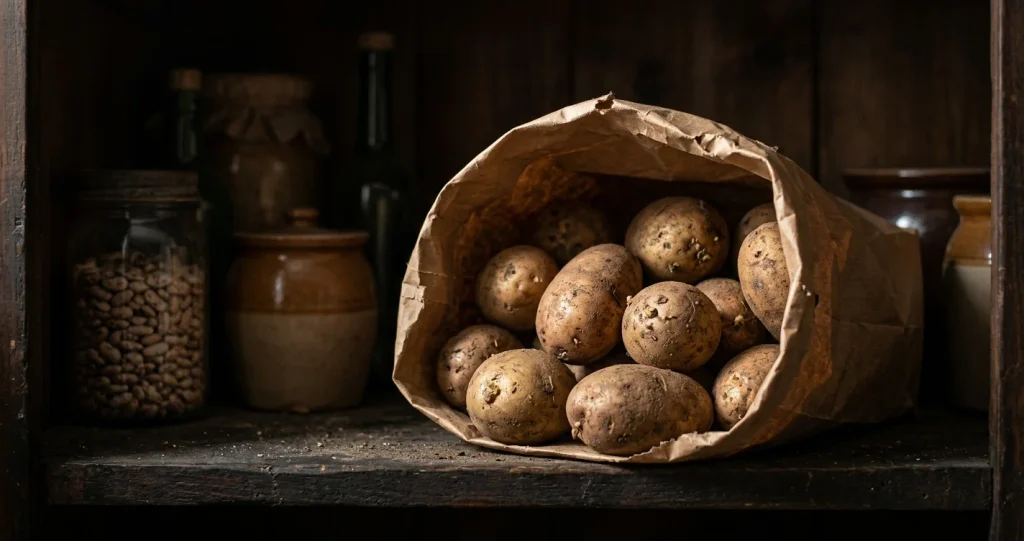
An opaque, ventilated container can help.
A cardboard box, paper bag, or suitable storage bin may work well.
Avoid leaving potatoes in clear plastic bags on a bright countertop.
Choose a Cool, Stable Location
For longer-term storage, potatoes generally keep best in a cool environment, often around 45–50°F (7–10°C), with suitable humidity and ventilation.
Many homes do not have a space that consistently maintains these conditions.
A cool pantry, basement, or dedicated storage area may be suitable if it remains dark and does not freeze.
At ordinary room temperatures, potatoes may sprout and lose quality more quickly.
Avoid Excessive Moisture
Stored potatoes need adequate ventilation.
Condensation and standing moisture can encourage decay.
Do not wash potatoes before long-term storage.
Instead, gently remove loose soil and wash them shortly before cooking.
Handle Potatoes Carefully
Bruises and cuts can create opportunities for deterioration.
Avoid dropping or crushing potatoes during harvesting and storage.
Inspect stored potatoes periodically.
Remove any that become soft, moldy, extensively green, or otherwise spoiled.
Should Potatoes Be Refrigerated?
Refrigeration guidance depends on the intended use and storage conditions.
Very cold storage can increase the conversion of starch into sugars, which may change flavor and cooking behavior.
For potatoes intended for frying or high-temperature roasting, increased reducing sugars can contribute to greater acrylamide formation during cooking.
A cool, dark, ventilated pantry or cellar is generally preferable when suitable conditions are available.
If refrigeration is the only practical option, follow current food safety guidance and consider how the potatoes will be cooked.
Why Homegrown Potatoes Turn Green
Garden-grown potatoes can develop green patches before harvest if sunlight reaches their tubers.
This often happens when soil shifts, erodes, or becomes too shallow around the developing potatoes.
Potatoes Need Soil Coverage
Potato tubers develop underground along specialized stems.
As they enlarge, some may approach the soil surface.
If exposed to light, they can begin producing chlorophyll.
Maintaining adequate soil coverage helps prevent this problem.
Why Hilling Matters
Hilling involves drawing soil around the base of growing potato plants.
This creates additional coverage over developing tubers.
The practice helps reduce light exposure and can support suitable growing conditions.
Hilling should be done carefully to avoid damaging roots and underground stems.
Mulch Can Help, but Coverage Matters
Organic mulch may help conserve soil moisture and moderate soil temperature.
However, thin or displaced mulch may allow light to reach developing tubers.
Where potatoes are grown under mulch, maintain enough coverage to prevent exposure.
Check regularly as plants grow and tubers enlarge.
Common Potato Storage Mistakes
Several everyday habits can increase the risk of greening or spoilage.
Leaving Potatoes on a Sunny Counter
A bright countertop may seem convenient, but repeated light exposure can encourage greening.
Move potatoes to a dark storage area.
Using Airtight Plastic Containers
Sealed containers may trap moisture and reduce ventilation.
Choose breathable or ventilated storage materials instead.
Storing Damaged Potatoes With Healthy Ones
Damaged or rotting potatoes can create unfavorable storage conditions.
Inspect the harvest and separate questionable tubers.
Use sound potatoes first when they are not suited to long storage.
Ignoring Sprouting
Sprouting indicates that a potato is beginning to resume growth.
Small sprouts do not automatically mean a potato is unsafe, but extensive sprouting and deterioration are warning signs.
Discard potatoes that are heavily sprouted, green, soft, or shriveled.
Forgetting to Check Stored Potatoes
Even properly stored potatoes change over time.
Inspect them regularly for greening, moisture, sprouting, and decay.
Removing deteriorating potatoes promptly can help protect the remaining batch.
In Your Own Yard: Preventing Green Potatoes
Preventing greening begins while potatoes are still growing.
A few simple gardening practices can reduce the chance of sunlight reaching developing tubers.
Plant at an Appropriate Depth
Follow regional planting recommendations for your potato variety and soil conditions.
Tubers should have sufficient soil coverage as plants develop.
Hill Soil Around Growing Plants
As potato stems grow taller, carefully draw loose soil around their bases.
Repeat as needed to maintain coverage over developing tubers.
Avoid burying excessive foliage or damaging the plants.
Watch for Soil Erosion
Heavy rain and irrigation can move soil away from potato plants.
Inspect the rows after storms.
If developing tubers become exposed, restore appropriate soil coverage promptly.
Harvest Carefully
Choose suitable harvest conditions and avoid unnecessary bruising.
Use a garden fork or shovel carefully, keeping the tool away from the tubers when possible.
After harvesting, move potatoes out of direct sunlight.
Cure Potatoes for Storage
Potatoes intended for longer storage may benefit from a curing period under suitable conditions.
Curing allows minor surface injuries to heal and can improve storage performance.
Conditions vary by variety and harvest situation, but curing is generally performed in darkness with controlled temperature, relatively high humidity, and adequate ventilation.
Avoid exposing harvested potatoes to sunlight during this process.
Store the Harvest Properly
After curing, keep sound potatoes in a dark, cool, ventilated location.
Check them periodically.
Use damaged or short-storage potatoes promptly if they remain suitable for consumption, and discard potatoes showing unsafe or significant deterioration.
Good storage begins with healthy tubers and continues with careful monitoring.
Frequently Asked Questions
1. Are green potatoes poisonous?
Green coloration itself comes from chlorophyll, which is not the main toxic concern.
However, conditions that cause greening can also increase glycoalkaloids, including alpha-solanine and alpha-chaconine.
These compounds can cause illness at sufficiently high levels.
Because color does not reliably indicate concentration, potatoes with extensive greening should be discarded.
2. Can you eat a potato after cutting off the green part?
Removing green skin and surrounding tissue may reduce glycoalkaloid exposure, but it does not guarantee safety.
The compounds may extend beyond the visible green area.
For a conservative approach, discard visibly green potatoes rather than relying on trimming, particularly when greening is widespread.
3. What is the best way to stop potatoes from turning green?
Keep potatoes in a dark, cool, ventilated location away from sunlight and prolonged artificial lighting.
Avoid excessive moisture, physical damage, and freezing.
For homegrown potatoes, maintain adequate soil coverage while the tubers develop.
Conclusion
A green patch on a potato may seem like a small cosmetic change, but it can signal a more important chemical response.
Light exposure stimulates chlorophyll production, creating the familiar green color. Under certain conditions, it can also contribute to increased glycoalkaloid concentrations.
Although chlorophyll itself is not the problem, green potatoes deserve caution because their appearance cannot reliably reveal how much of these potentially harmful compounds they contain.
The safest strategy is prevention: keep potatoes covered while growing, harvest them carefully, and store them in a cool, dark, well-ventilated place.
Discard extensively green, heavily sprouted, bitter, or deteriorating potatoes rather than attempting to make them safe through cooking.
The next time you discover a green patch on a potato, you’ll understand what caused it and why proper storage matters.
A little darkness can go a long way toward keeping your harvest in good condition.
External Sources
1. Glycoalkaloids in Potato Tubers
Explain how light exposure, physical damage, and sprouting affect glycoalkaloid levels, and why proper storage matters. Oregon State University Extension Service.
Support food safety guidance about green or sprouted potatoes, peeling, storage conditions, and why ordinary cooking does not reliably remove glycoalkaloids. Health Canada — Government of Canada.
3. Green Potatoes: Causes and Concerns
Explain how sunlight and artificial lighting cause potato greening, and how proper soil coverage, hilling, and dark storage help prevent it. University of Alaska Fairbanks — Cooperative Extension Service.