
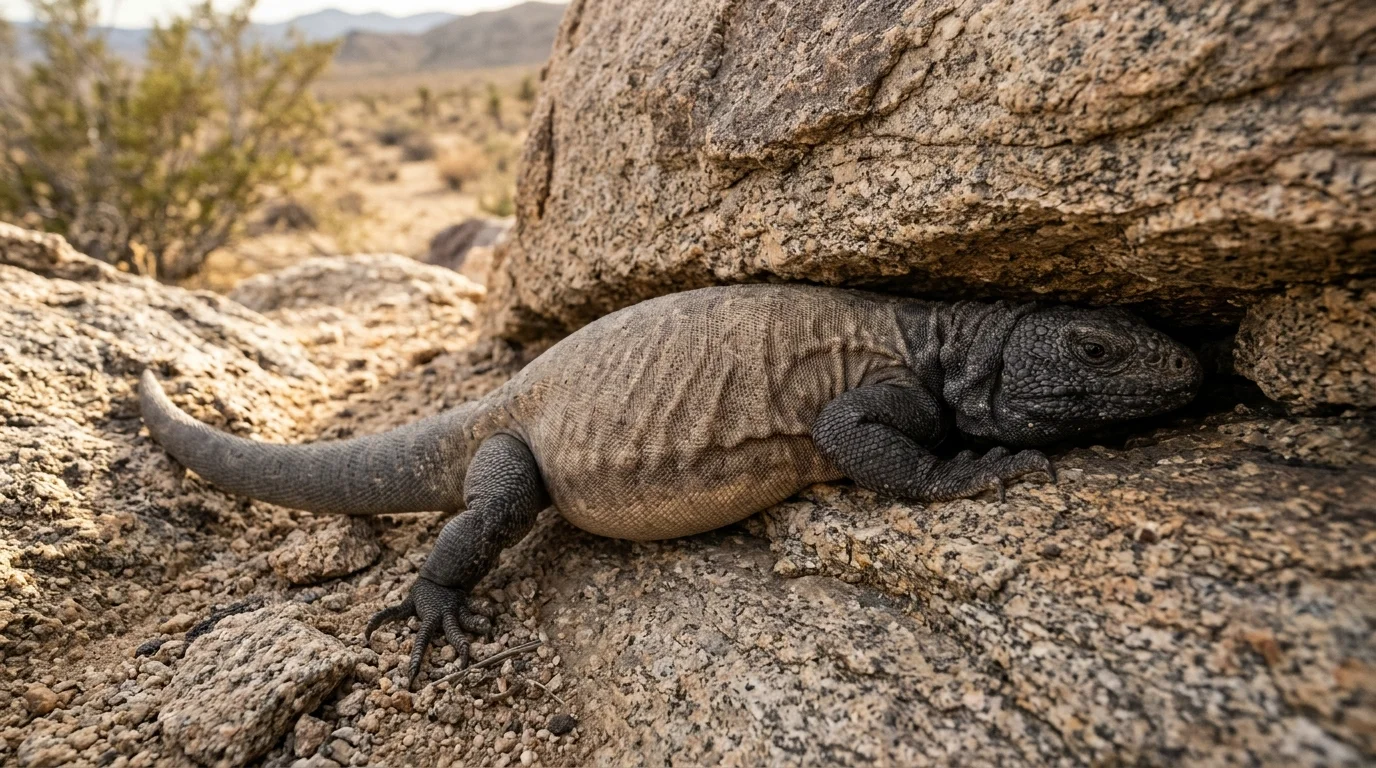
Imagine a desert lizard disappearing into a narrow crack between two rocks. A predator reaches the opening, but the lizard refuses to move. Instead, its body expands, pressing tightly against the stone until pulling it free becomes remarkably difficult.
This is one of the most unusual defensive behaviors in the American Southwest.
The chuckwalla is a large, mostly plant-eating desert lizard with a survival strategy that turns rocky terrain into a natural fortress. Rather than relying on venom, sharp teeth, or extraordinary speed, it uses its powerful body and loose skin to secure itself inside rock crevices.
These fascinating reptiles are native to some of North America’s hottest landscapes, including the Mojave and Sonoran deserts.
Their ability to survive intense heat, find food in dry environments, and escape predators through body inflation makes them an extraordinary example of desert adaptation.
But how does a chuckwalla wedge itself into a rock, and why is this behavior so effective?
Table of Contents
- What Is a Chuckwalla?
- How the Chuckwalla Wedges Itself Into Rock Crevices
- Why Rocky Habitats Are Essential for Chuckwallas
- How Chuckwallas Survive Extreme Desert Heat
- What Do Chuckwallas Eat?
- What Animals Hunt Chuckwallas?
- Chuckwalla Behavior and Daily Life
- Chuckwallas vs. Other Desert Lizards
- Are Chuckwallas Dangerous to Humans?
- Conservation and Threats to Chuckwallas
- In Your Own Yard: Supporting Desert Lizards
- Frequently Asked Questions
What Is a Chuckwalla?
Chuckwallas are large-bodied lizards belonging to the genus Sauromalus, part of the iguana family, Iguanidae.
The most familiar species in the continental United States is the common chuckwalla, Sauromalus ater.
These reptiles have broad bodies, thick tails, relatively short legs, and loose folds of skin around their necks and sides.
Their appearance may seem awkward compared with the slender bodies of many other desert lizards, but their anatomy is well suited to life among rocks.
Where Chuckwallas Live
Common chuckwallas inhabit arid regions of the southwestern United States and northwestern Mexico.
In the United States, they occur in parts of California, Nevada, Arizona, and Utah.
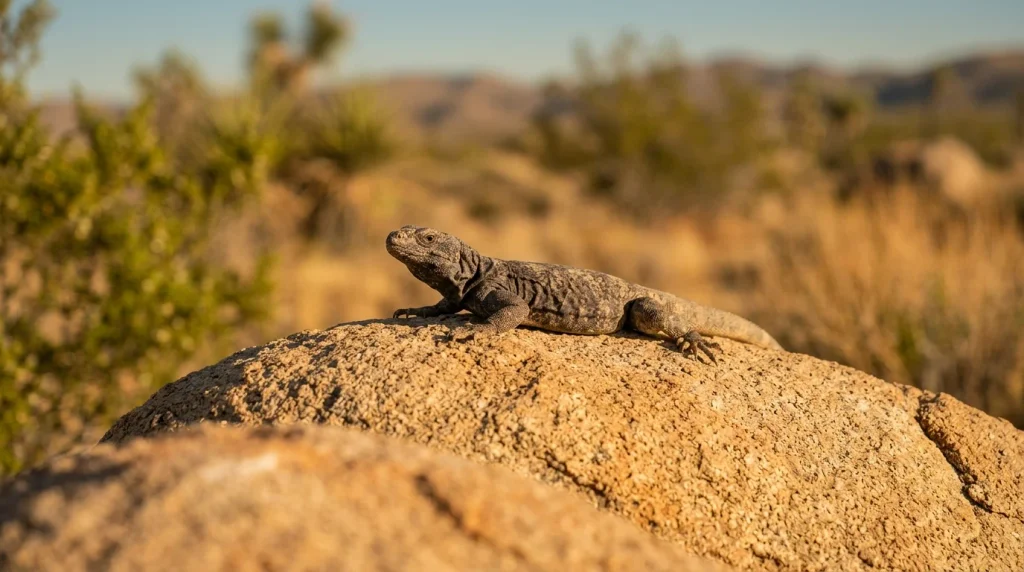
They are particularly associated with rocky hillsides, desert mountains, boulder fields, and areas containing numerous crevices.
These habitats provide places to hide from predators and shelter from extreme temperatures.
Unlike some desert animals that spend much of their time underground, chuckwallas often depend on natural openings between rocks.
What Does a Chuckwalla Look Like?
Adult chuckwallas have sturdy bodies, rounded bellies, and thick tails.
Their coloration varies according to species, age, sex, and geographic population.
Common chuckwallas may display combinations of dark gray, black, brown, tan, and reddish tones.
Adult males in some populations develop particularly dark heads and shoulders.
Females and younger individuals often show different patterns.
Their coloration can help them blend into rocky surroundings, although camouflage is only one of their defensive advantages.
How the Chuckwalla Wedges Itself Into Rock Crevices
The chuckwalla’s most remarkable defense begins when it detects danger.
A predator approaching across exposed desert terrain may trigger a rapid retreat toward nearby rocks.
Instead of attempting a long-distance escape, the lizard often seeks a narrow crevice.
Once inside, it uses a surprisingly effective physical strategy.
Step 1: The Chuckwalla Detects Danger
Chuckwallas are generally alert animals.
They use vision and other sensory information to monitor their surroundings.
When disturbed, they often move toward familiar shelter.
Their preference for rocky habitats means a suitable hiding place may be only a short distance away.
This reduces the need to outrun a predator across open ground.
Step 2: It Enters a Narrow Opening
The lizard slips into a crack between rocks.
Its relatively low body position and flexible skin help it maneuver through irregular spaces.
The opening may appear too narrow for such a bulky animal.
However, chuckwallas can flatten and position their bodies to fit into suitable crevices.
The surrounding rock provides physical protection.
A predator cannot easily attack the lizard from every direction.
Step 3: The Body Expands
Once inside, the chuckwalla can inflate its body by taking in air.
This expansion increases pressure against the surrounding rock surfaces.
Its loose skin accommodates the change in body volume.
The result is a much tighter fit.
The lizard effectively wedges itself into the opening.
Step 4: The Rocks Become a Defensive Barrier
As the chuckwalla presses against the rock, removing it becomes difficult.
A predator attempting to pull the lizard backward must overcome both its grip and the friction created by the expanded body.
The crevice also restricts access to much of the animal.
This defensive strategy is particularly useful against predators that cannot easily break apart or enter the rocky shelter.
However, it is not a guarantee of survival.
Its effectiveness depends on the crevice, predator, and circumstances.
Why Body Inflation Works
The strategy combines three important elements: a confined space, an expandable body, and contact with rough rock surfaces.
Inflation increases the chuckwalla’s contact with the surrounding stone.
That contact can increase friction and resistance to being pulled out.
Its claws and body position may provide additional stability.
The lizard is not becoming physically attached to the rock.
Instead, it is using mechanical resistance to make extraction difficult.
This is an elegant example of how animal anatomy and habitat can work together.
Why Rocky Habitats Are Essential for Chuckwallas
Rocky terrain is more than a convenient hiding place.
It influences nearly every aspect of chuckwalla life.
Rocks Provide Protection
Crevices offer shelter from predators, direct sunlight, and changing weather conditions.
The temperature inside a shaded crack may differ substantially from that of an exposed rock surface.
This allows the lizard to move between warmer and cooler microhabitats.
Rocks Help Regulate Body Temperature
Chuckwallas are ectothermic reptiles.
They depend heavily on environmental heat to regulate body temperature.
During cooler morning hours, they may bask on sunlit rocks.
As temperatures rise, they can retreat into shade or sheltered crevices.
This movement between different temperatures is called behavioral thermoregulation.
It allows the lizard to remain active without producing large amounts of internal heat like mammals and birds.
Familiar Shelter Can Be Valuable
Chuckwallas often occupy areas containing suitable basking sites and nearby hiding places.
Knowing where shelter is located can be important when danger appears.
Although individual movement patterns vary, their strong association with rocky habitats reflects the value of reliable refuges.
Removing or disturbing these rock formations can reduce habitat quality.
How Chuckwallas Survive Extreme Desert Heat
The American Southwest presents serious challenges for reptiles.
Summer temperatures can become extremely high, rainfall is often limited, and exposed surfaces can heat rapidly under direct sunlight.
Chuckwallas survive by carefully managing their activity.
Morning Basking
A chuckwalla may emerge from shelter and bask in the morning sun.
Sunlight warms its body, supporting movement, digestion, and other physiological functions.
Darker body coloration can influence heat absorption, although the relationship depends on several environmental factors.
Retreating During Extreme Heat
When exposed surfaces become too hot, chuckwallas often seek cooler locations.
Rock crevices provide shade and can reduce exposure to direct solar radiation.
During especially hot conditions, activity may become limited to favorable parts of the day.
Seasonal Activity
In cooler months, chuckwallas may become less active and spend extended periods in protected shelters.
The timing varies with local climate, elevation, and weather.
In many desert reptiles, seasonal inactivity helps reduce energy expenditure when temperatures are unsuitable for normal activity.
Chuckwallas do not simply tolerate every extreme condition.
They survive partly by avoiding exposure when conditions become dangerous.
What Do Chuckwallas Eat?
Despite their intimidating size and sturdy appearance, chuckwallas are primarily herbivorous.
Their diet consists largely of desert vegetation.
Leaves, Flowers, and Fruits
Chuckwallas feed on available leaves, flowers, buds, and fruits.
The exact plants consumed depend on the local habitat and season.
In the Mojave and Sonoran deserts, vegetation changes considerably following rainfall.
Spring growth can provide valuable feeding opportunities.
Chuckwallas may take advantage of these periods when fresh plant material is available.
How They Obtain Water
Desert animals must manage limited water supplies.
Chuckwallas obtain moisture from the vegetation they consume.
Their behavior and physiology also help them conserve water.
However, the amount of moisture available in food varies by plant and season.
Eating water-rich vegetation can reduce dependence on frequently finding standing water.
Their Role in Desert Ecosystems
By feeding on vegetation, chuckwallas participate in desert food webs.
Their feeding activity can influence individual plants and local ecological relationships.
They also provide prey for certain predators.
This makes them part of the broader balance between plants, herbivores, and carnivores.
What Animals Hunt Chuckwallas?
Chuckwallas face threats from several predators in their native habitats.
Depending on the region, potential predators include birds of prey, snakes, and carnivorous mammals.
Young chuckwallas may be especially vulnerable because of their smaller size.
Why Hiding Is Often Better Than Fighting
Chuckwallas are not specialized for pursuing prey or fighting large predators.
Their main defense is avoiding capture.
A narrow rock crevice can provide a level of protection that open ground cannot.
The ability to inflate their bodies makes this shelter even more effective.
Camouflage Provides Additional Protection
Chuckwallas often have muted colors that resemble desert rock.
This can make them less conspicuous when resting or basking.
However, a moving lizard may still be detected.
Camouflage and crevice hiding work as complementary defenses rather than interchangeable strategies.
Chuckwalla Behavior and Daily Life
Chuckwallas are often seen basking quietly on rocks, but their behavior is more complex than it first appears.
Territorial Behavior
Adult males may defend areas containing valuable resources, including basking sites and shelter.
They can display body postures and movements during interactions with other chuckwallas.
Head bobbing is one behavior observed in iguanid lizards and can play a role in communication.
The frequency and meaning of displays vary by species and context.
Breeding and Reproduction
Chuckwallas reproduce by laying eggs.
Females typically select suitable nesting locations where developing eggs can remain protected.
Reproductive timing varies with climate and environmental conditions.
Food availability and seasonal rainfall may influence breeding success.
Young chuckwallas must quickly begin navigating the same rocky environments used by adults.
How Long Do Chuckwallas Live?
Chuckwallas can be relatively long-lived reptiles.
Their lifespan depends on species, habitat conditions, predation, and whether they live in the wild or captivity.
Captive individuals may survive longer because they experience fewer predators and receive regular food and veterinary care.
However, captive longevity should not be treated as a reliable estimate of average survival in natural desert populations.
Chuckwallas vs. Other Desert Lizards
The American Southwest supports many lizard species with different survival strategies.
Some escape by sprinting across open ground.
Others rely on camouflage, burrowing, or defensive displays.
Chuckwallas stand out because their body inflation works particularly well in narrow rocky shelters.
Chuckwallas and Desert Iguanas
Desert iguanas are generally more slender and often associated with sandy desert habitats.
Chuckwallas are heavier-bodied and strongly associated with rocky terrain.
Both are adapted to hot environments, but they use different combinations of behavior and habitat.
Chuckwallas and Horned Lizards
Horned lizards have flattened bodies and defensive adaptations that differ considerably from those of chuckwallas.
Some horned lizard species can squirt blood from around their eyes when threatened by certain predators.
Chuckwallas instead depend heavily on retreating into crevices and expanding their bodies.
These contrasting strategies demonstrate the diversity of reptile defenses.
Are Chuckwallas Dangerous to Humans?
Chuckwallas are generally not aggressive toward people.
They are not venomous and usually attempt to escape when approached.
However, like other wild reptiles, they may bite or struggle if captured or handled.
Their powerful jaws and claws can cause injury.
Why You Should Never Pull One From a Crevice
A chuckwalla wedged inside a rock crack is using a natural defense.
Attempting to pull it out can injure the animal.
It may also damage its skin, limbs, or internal tissues.
The safest approach is to leave it undisturbed.
Watching from a distance allows the lizard to continue its normal behavior without unnecessary stress.
Conservation and Threats to Chuckwallas
Chuckwallas are adapted to harsh natural environments, but human activity can create additional pressures.
Habitat Disturbance
Development, recreational activity, and landscape modification can alter rocky desert habitats.
Removing rocks or disturbing crevices may eliminate important shelters.
Off-road vehicle use can also damage vegetation and fragile desert soils in some locations.
Illegal Collection
Some reptiles are collected for the pet trade.
Collection pressure can affect local populations, particularly where species have restricted distributions.
Wildlife laws vary by state and species.
Observing chuckwallas in their natural habitat is preferable to removing them.
Climate and Environmental Change
Changing temperatures and rainfall patterns may influence desert vegetation and reptile activity.
Potential effects vary across species and geographic regions.
Because chuckwallas depend on both suitable temperatures and rocky shelters, changes to their habitats deserve continued scientific attention.
In Your Own Yard: Supporting Desert Lizards
If you live in the southwestern United States, your yard may be part of a landscape used by native reptiles.
Even if chuckwallas are not present, thoughtful gardening practices can support other local lizard species.
Preserve Natural Rock Features
Where safe and appropriate, retain existing rock formations.
Stable rocks and crevices can provide shelter for reptiles and other small wildlife.
Avoid dismantling natural rock piles simply to create a tidier appearance.
Never build unstable rock structures that could collapse or create hazards.
Grow Native Desert Plants
Native vegetation can provide food, shade, and habitat for wildlife.
In suitable chuckwalla habitat, locally native plants may contribute to the resources available to these herbivorous lizards.
Choose plants appropriate for your region, soil, and water availability.
Local native plant societies and cooperative extension offices can help identify suitable species.
Reduce Pesticide Use
Many desert lizards depend on insects, even though chuckwallas are primarily plant-eating.
Reducing unnecessary broad-spectrum pesticide applications helps protect local food webs.
Integrated pest management emphasizes prevention, monitoring, and targeted control when needed.
Keep Pets Away From Wildlife
Free-roaming cats and unsupervised dogs can injure reptiles.
Pets may also disturb basking or sheltering animals.
Supervision helps protect both domestic animals and wildlife.
Observe Without Disturbing
If you encounter a chuckwalla, remain at a respectful distance.
Avoid blocking access to nearby shelter.
Never attempt to make the animal inflate its body for a photograph.
Natural behavior is best observed when wildlife is allowed to remain undisturbed.
Frequently Asked Questions
1. Why do chuckwallas inflate their bodies inside rocks?
Chuckwallas can inflate their bodies after entering narrow rock crevices. The expansion increases pressure and friction against the surrounding surfaces, making them difficult for predators to pull out. This defensive behavior is especially useful in rocky desert habitats.
2. Where can you find chuckwallas in the United States?
Common chuckwallas occur in parts of the southwestern United States, particularly California, Nevada, Arizona, and Utah. They favor rocky desert slopes, boulder fields, and habitats with suitable crevices for shelter.
3. Do chuckwallas eat insects or plants?
Chuckwallas are primarily herbivorous. They feed mainly on leaves, flowers, buds, and other plant material. Occasional animal matter may be consumed under some circumstances, but vegetation forms the main part of their natural diet.
Conclusion
A predator chasing a lizard into a narrow crack might expect an easy capture.
But the chuckwalla has a remarkable way of turning that hiding place into a defensive stronghold.
By inflating its body inside a rock crevice, it makes itself far more difficult to remove.
Its thick body, powerful limbs, desert diet, and ability to regulate temperature through behavior all contribute to its survival.
The chuckwalla reminds us that extraordinary animal defenses do not always involve speed, venom, or sharp weapons.
Sometimes, the smartest escape is simply finding the right place to hide—and making sure nothing can pull you out.
External Sources
1. Common Chuckwalla
Support the article’s central explanation of how chuckwallas inflate their lungs to wedge themselves tightly inside rock crevices, making it difficult for predators to remove them.
Also supports: Physical characteristics, rocky desert habitats, feeding behavior, and reproduction. National Park Service — Common Chuckwalla
2. Common Chuckwalla (Sauromalus ater)
Explain how chuckwallas survive in the Sonoran Desert through basking, seasonal activity, herbivorous feeding, and retreating into rock crevices.
Also supports: Predator avoidance, territorial behavior, and the relationship between food availability and reproduction. desertmuseum.org, Arizona-Sonora Desert Museum — Common Chuckwalla