
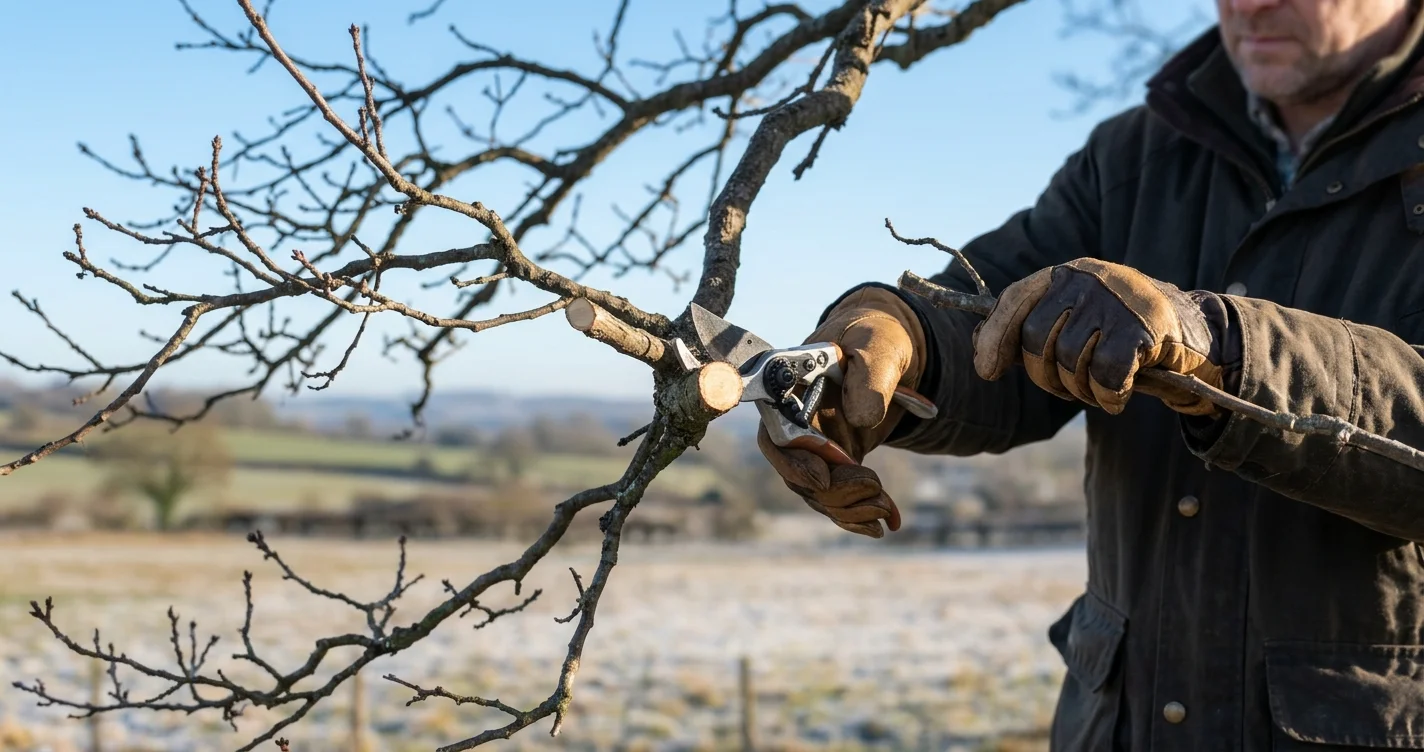
A simple pruning cut can sometimes put an otherwise healthy oak tree at risk. The problem is not necessarily the cut itself, but when it happens.
Fresh pruning wounds can attract insects capable of carrying the fungus responsible for oak wilt, a serious disease affecting oak trees across parts of the United States. During certain times of year, even routine maintenance can create an opportunity for infection.
That is why knowing when to prune oak trees matters just as much as knowing how to prune them.
For many homeowners, winter is the safest season for planned oak pruning. But the exact timing depends on local climate, regional oak wilt activity, and the type of work being performed.
Understanding these differences can help protect valuable trees while avoiding unnecessary pruning mistakes.
Table of Contents
- Why Pruning Timing Matters for Oak Trees
- When to Prune Oak Trees to Reduce Oak Wilt Risk
- What Is Oak Wilt?
- How Oak Wilt Spreads Through Trees
- How to Prune Oak Trees Safely
- Oak Wilt Symptoms Every Homeowner Should Recognize
- Common Oak Pruning Mistakes
- In Your Own Yard: A Seasonal Oak Care Plan
- Frequently Asked Questions
Why Pruning Timing Matters for Oak Trees
Oak trees are among the most valuable trees in many American landscapes.
Their broad canopies provide shade, their roots help stabilize soil, and their branches support birds, insects, and other wildlife.
Some oaks can live for centuries when growing conditions remain favorable.
However, oak trees are also vulnerable to diseases that can spread through damaged tissue.
One of the most concerning is oak wilt.
Fresh Wounds Can Create Entry Points
When a branch is removed, the exposed wood forms a fresh wound.
Under normal conditions, trees respond by compartmentalizing damaged tissue and gradually growing new tissue around the wound.
They do not heal in exactly the same way humans do.
Instead, they limit the spread of damage and decay through specialized biological processes.
Oak wilt introduces an additional complication.
In areas where the disease occurs, fresh wounds can attract certain sap-feeding beetles that may carry infectious fungal spores.
If contaminated insects visit a susceptible wound, infection can occur.
Why the Season Changes the Risk
The activity of insects involved in oak wilt transmission changes throughout the year.
In many regions, these beetles become more active during warmer weather.
Oak wilt infections may also be more likely during particular seasonal conditions.
As a result, pruning during high-risk periods can increase the opportunity for disease transmission.
Pruning during colder months generally reduces this exposure.
However, the safest dates vary by state and sometimes by county.
A pruning schedule appropriate for Minnesota may not be identical to one recommended in Texas.
When to Prune Oak Trees to Reduce Oak Wilt Risk
For routine maintenance, the safest general recommendation is to prune oak trees during their dormant season, when disease-spreading insects are less active.
In many parts of the United States, this means late fall through winter.
However, local oak wilt recommendations should always take priority over a general calendar.
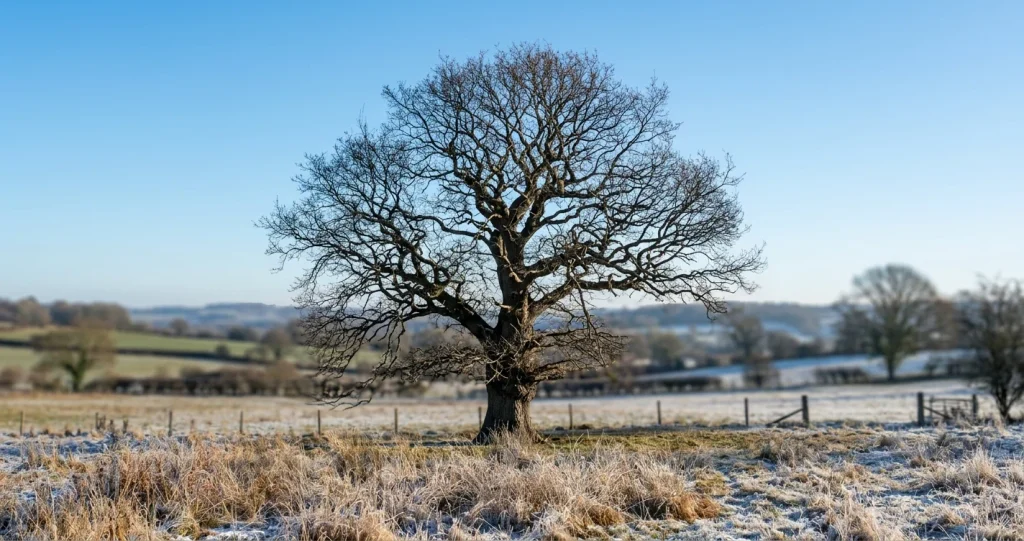
Winter Is Often the Best Time
Winter pruning offers several advantages.
During colder weather, the insects associated with aboveground oak wilt transmission are generally less active.
Many deciduous oaks have also dropped their leaves, making branch structure easier to inspect.
This allows an arborist to identify crossing branches, damaged limbs, and structural problems more clearly.
In oak wilt-affected regions, winter is often the preferred season for nonurgent pruning.
A Regional Pruning Calendar
The following table provides broad guidance, not a substitute for local extension recommendations.
| Region | General guidance |
|---|---|
| Upper Midwest | Winter pruning is often preferred. Many authorities advise avoiding spring and early-summer pruning. |
| Great Lakes region | Avoid locally designated oak wilt risk periods, which often extend from spring into summer. |
| Texas | Follow Texas A&M Forest Service guidance, including seasonal restrictions and immediate wound treatment recommendations. |
| Other regions | Check whether oak wilt occurs locally and follow state forestry or university extension advice. |
A commonly recommended winter window in many northern areas is approximately November through February, but this is not a universal safe period.
Unusually warm weather can affect insect activity, and some states recommend more conservative restrictions.
Why Spring Is Often Risky
Spring is a particularly important season for oak wilt prevention.
As temperatures rise, sap-feeding beetles become more active.
Fresh wounds may release odors that attract these insects.
In areas where oak wilt is established, this combination can increase infection risk.
For this reason, many forestry agencies recommend avoiding routine oak pruning during spring and parts of summer.
Is Fall Pruning Safe?
Fall may be safer than spring in some locations, especially after temperatures have dropped and insect activity has declined.
However, early fall can still be warm enough for insects to remain active.
The presence of falling leaves does not automatically mean the oak wilt transmission season has ended.
Homeowners should check local recommendations before scheduling fall pruning.
What About Emergency Pruning?
Sometimes a damaged branch presents an immediate safety hazard.
A large hanging limb over a sidewalk, driveway, or building should not be ignored simply because it is spring.
Emergency pruning may be necessary at any time of year.
In oak wilt areas, professional arborists can assess the hazard and follow appropriate disease-prevention procedures.
Some state agencies recommend immediately covering unavoidable fresh oak wounds with a suitable wound dressing during high-risk periods.
These recommendations are exceptions to the usual advice against routine wound paints and should be followed according to local guidance.
What Is Oak Wilt?
Oak wilt is a serious vascular disease caused by the fungus Bretziella fagacearum, formerly known as Ceratocystis fagacearum.
The disease interferes with the tree’s ability to transport water through its vascular system.
As the infection progresses, affected branches may wilt, discolor, and die.
In susceptible oak species, the disease can develop rapidly.
Why Some Oaks Are More Vulnerable
Oak species differ in their response to oak wilt.
Members of the red oak group are generally more susceptible to rapid decline.
These include northern red oak, pin oak, and several other species.
Infected red oaks may die within weeks or months after symptoms become apparent.
White oaks often show greater resistance and may decline more slowly.
However, resistance varies among species and individual trees.
No oak should be considered completely immune simply because it belongs to the white oak group.
Where Oak Wilt Occurs
Oak wilt has been documented in numerous states, particularly in parts of the eastern and central United States.
Its distribution is not uniform.
Some areas experience significant disease pressure, while others have few or no confirmed cases.
The disease can also appear in new locations through movement of infected material.
For homeowners, local disease status is important because it determines how strictly pruning restrictions and sanitation measures should be applied.
How Oak Wilt Spreads Through Trees
Understanding how oak wilt spreads explains why pruning timing is so important.
The disease can move through two major pathways: insect transmission and underground root connections.
These pathways require different prevention strategies.
Insect Transmission Through Fresh Wounds
Certain sap-feeding beetles, including nitidulid beetles, can carry oak wilt fungal spores.
Infected red oaks may develop fungal mats beneath their bark.
These mats can attract beetles, which may then transport spores to fresh wounds on healthy trees.
If the spores enter a suitable wound, infection may begin.
This process is especially concerning during periods when beetles are active and fresh wounds are exposed.
Avoiding unnecessary pruning during high-risk seasons reduces opportunities for transmission.
It does not eliminate every possible source of infection, because storm damage and other injuries can also create wounds.
Underground Spread Through Root Connections
Oak wilt can also spread between neighboring trees through connected roots.
Closely growing oaks, especially trees of the same species, may develop natural root grafts.
These connections allow water and other materials to move between root systems.
Unfortunately, they can also provide a pathway for the oak wilt fungus.
This is one reason oak wilt can sometimes affect groups of trees rather than isolated individuals.
Why Pruning Alone Cannot Stop an Established Infection
Changing pruning practices can help prevent new infections through wounds.
However, pruning does not reliably cure a tree already infected with oak wilt.
Removing visibly affected branches may leave the fungus elsewhere in the vascular system.
Where root transmission is occurring, specialized root-disruption methods may be needed to limit further spread.
In some situations, preventive fungicide treatments can help protect high-value trees.
These measures require professional diagnosis and planning.
How to Prune Oak Trees Safely
Good pruning begins with a clear reason for removing a branch.
A healthy oak does not need aggressive annual pruning simply to maintain its appearance.
Unnecessary cutting creates wounds and can reduce the tree’s ability to produce energy.
Start With a Structural Inspection
Look for dead, broken, crossing, or poorly attached branches.
Young trees may benefit from selective structural pruning that encourages strong branch spacing.
Mature trees often require less intervention.
Large branches should be evaluated carefully because their removal can create substantial wounds and affect tree stability.
For mature oaks, consulting an ISA Certified Arborist is often the safest approach.
Make Proper Pruning Cuts
When removing a branch, preserve the branch collar, the slightly swollen area where the branch meets the trunk or a larger limb.
Avoid cutting flush against the trunk.
Also avoid leaving unnecessarily long stubs.
For larger branches, arborists commonly use a three-cut method to prevent bark tearing as the branch is removed.
Proper cuts support the tree’s natural ability to compartmentalize the wound.
Avoid Removing Too Much Canopy
Excessive pruning can stress an oak.
Leaves produce the carbohydrates needed for growth, maintenance, and defense.
Removing large portions of the canopy can reduce these resources.
The amount of live foliage that can safely be removed depends on tree age, condition, species, and the purpose of pruning.
Avoid treating a fixed percentage as universally safe.
Understand Wound Dressing Recommendations
Routine pruning paint is generally not recommended for most tree species because it does not reliably improve wound closure.
Oak wilt prevention is an important regional exception.
In some oak wilt-affected areas, forestry authorities recommend immediately painting fresh oak wounds, particularly when pruning cannot be avoided during transmission season.
Texas guidance is especially specific about promptly treating fresh oak wounds.
Always follow the recommendations issued for your location rather than applying a universal rule.
Oak Wilt Symptoms Every Homeowner Should Recognize
Early recognition can help protect neighboring trees.
However, oak wilt symptoms can resemble those caused by drought, root injury, and other diseases.
Visual symptoms alone are not always enough for a reliable diagnosis.
Sudden Leaf Wilting
One possible sign is rapid wilting or browning of leaves.
In some red oaks, leaves may discolor from the edges inward.
Affected leaves may fall prematurely, sometimes while still partly green.
Branch Dieback
As the disease progresses, branches may lose foliage and die.
The pattern of decline can vary among oak species.
Some trees deteriorate rapidly, while others develop symptoms over a longer period.
Changes Beneath the Bark
Certain infected oaks may show vascular discoloration.
Fungal mats can develop beneath the bark of some infected red oaks under suitable conditions.
These mats are not present in every infected tree.
Homeowners should not remove bark or cut into a potentially infected tree simply to look for them.
Confirm the Diagnosis
If oak wilt is suspected, contact a local cooperative extension office, state forestry agency, or qualified tree-care professional.
Laboratory testing may be needed to distinguish oak wilt from other problems.
Avoid moving potentially infected firewood or tree debris until appropriate handling guidance is available.
Common Oak Pruning Mistakes
Several common mistakes can increase disease risk or damage tree structure.
Pruning During a High-Risk Season
The most preventable error is scheduling unnecessary pruning when local oak wilt transmission risk is high.
Plan nonurgent work for the recommended dormant-season window.
Topping the Tree
Topping removes large portions of the canopy and often encourages weakly attached regrowth.
It can create extensive wounds and compromise long-term structure.
Selective pruning is generally a better approach.
Making Flush Cuts
Removing the branch collar can interfere with the tree’s natural protective response.
Use appropriate pruning cuts rather than cutting directly against the trunk.
Ignoring Nearby Infected Trees
An oak may be at risk even if it has never been pruned.
Where oak wilt is established, connected roots can transmit the disease between neighboring trees.
Nearby suspected infections deserve professional attention.
Assuming Every Brown Leaf Means Oak Wilt
Drought stress, insect injury, root problems, and other diseases can cause similar symptoms.
Accurate diagnosis matters before making costly management decisions.
In Your Own Yard: A Seasonal Oak Care Plan
Protecting an oak tree begins long before the first pruning cut.
A simple seasonal routine can reduce avoidable damage while supporting healthy growth.
Winter: Inspect and Plan
During the dormant season, examine the tree’s branch structure.
Look for deadwood, broken limbs, and potential hazards.
Schedule necessary pruning within the locally recommended low-risk window.
For large trees, hire a qualified arborist rather than attempting dangerous cuts.
Spring: Avoid Unnecessary Wounds
In oak wilt-affected regions, spring is often a season to avoid routine pruning.
Be careful when mowing, trimming vegetation, or operating equipment near the trunk.
Mechanical injuries can create openings for infection.
Protect the root zone from unnecessary soil compaction and construction damage.
Summer: Monitor Tree Health
Observe foliage color, branch condition, and unusual leaf loss.
Provide appropriate watering during prolonged drought, especially for recently planted trees.
Avoid excessive fertilization unless a soil test or professional assessment indicates a need.
If symptoms suggest oak wilt, seek advice promptly.
Fall: Prepare for the Next Pruning Window
Review any structural problems noticed during the growing season.
Arrange professional work for the safest upcoming pruning period.
Maintain a suitable layer of organic mulch over the root zone, keeping it away from direct contact with the trunk.
Avoid burying the root flare.
Healthy roots, appropriate soil moisture, and minimal physical damage all support long-term oak health.
Frequently Asked Questions
1. What is the safest month to prune oak trees?
There is no single safest month for every location.
In many northern oak wilt-affected regions, midwinter is preferred because insect activity is generally low.
However, state-specific restrictions vary. Check your local extension or forestry guidance before scheduling pruning.
2. Can pruning an oak tree cause oak wilt?
Pruning does not create the oak wilt fungus.
However, fresh pruning wounds can provide an entry point when contaminated insects are active.
The risk is greatest where the disease occurs and environmental conditions favor transmission.
Proper timing helps reduce this risk.
3. Should I paint oak tree pruning wounds?
For most routine tree pruning, wound paint is not recommended.
However, in oak wilt-affected regions, some forestry agencies advise immediately painting fresh oak wounds, especially during high-risk periods.
Follow local recommendations because wound-treatment guidance differs by region.
Conclusion
A single pruning cut may seem insignificant on a large, established tree.
Yet in areas affected by oak wilt, that fresh wound can become an important entry point for disease.
Understanding when to prune oak trees helps homeowners avoid unnecessary risks while maintaining strong, healthy branches.
For many regions, winter is the preferred season, but local forestry recommendations should guide the final decision.
The best oak care is not about cutting more. It is about making the right cuts, for the right reasons, at the right time.
External Sources
1. Oak Wilt in Minnesota
Support the article’s explanation of oak wilt, its symptoms, transmission through beetles and connected roots, and the importance of winter pruning. University of Minnesota Extension — Oak Wilt in Minnesota
2. Pruning Guidelines for Prevention of Oak Wilt
Support the sections about proper pruning techniques, avoiding fresh wounds, emergency pruning, and regional wound-painting recommendations. Texas Oak Wilt — Pruning Guidelines for Prevention
3. Oak Wilt
Explain why pruning timing matters, how insects transmit oak wilt, and why preventing infection is easier than controlling an established outbreak. Wisconsin Department of Natural Resources, Wisconsin DNR — Oak Wilt.