
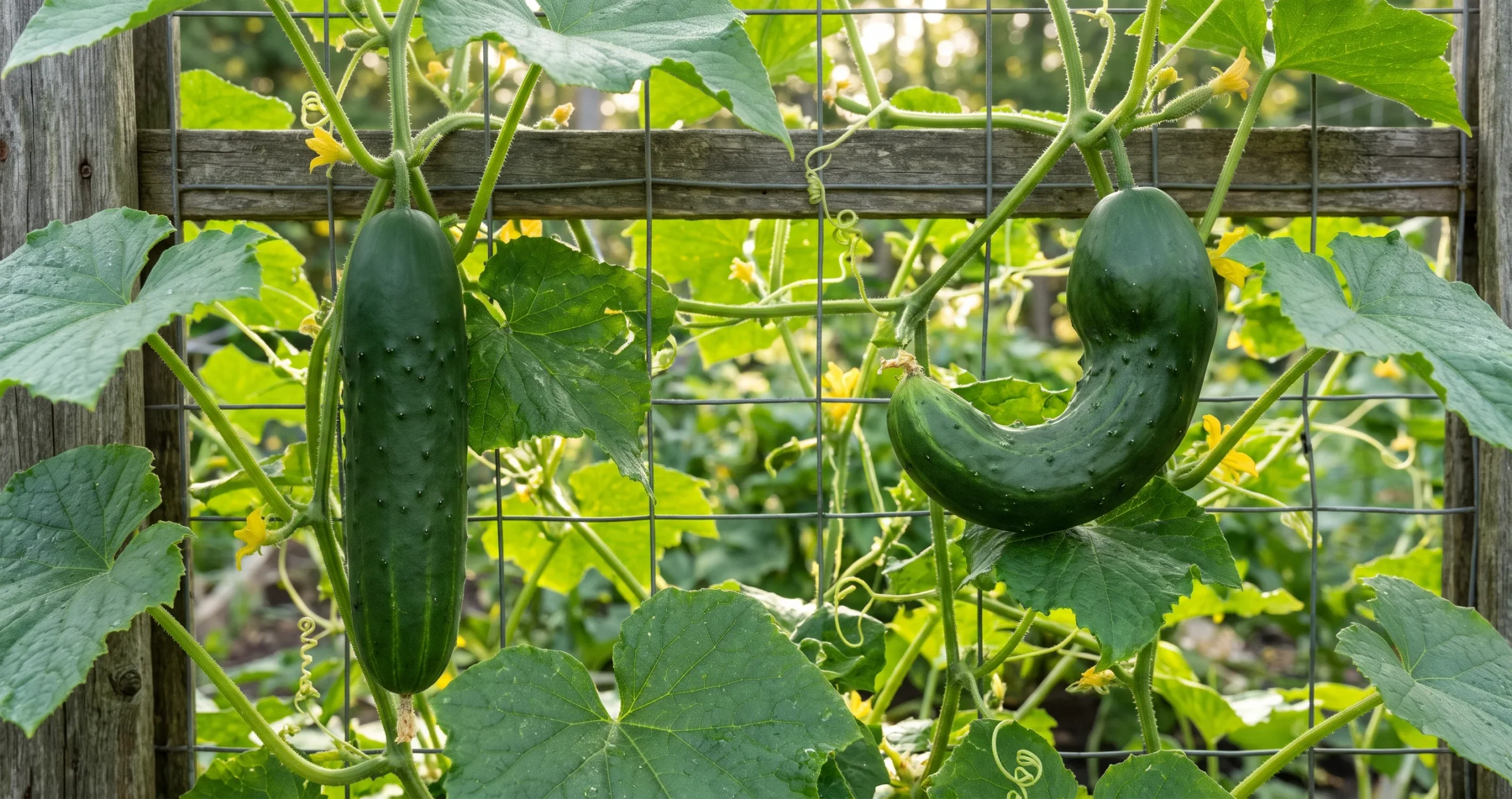
Understanding why cucumbers turn bitter or develop unusual shapes can help home gardeners improve the quality of their harvest. Cucumbers are popular warm-season vegetables across the United States, but even healthy-looking plants sometimes produce fruits with unpleasant flavors, curved ends, or irregular growth.
Bitterness and crooked growth are two different problems. Bitter cucumbers contain naturally occurring compounds called cucurbitacins, while misshapen cucumbers may result from incomplete pollination, environmental stress, or physical restrictions during fruit development.
Hot weather, inconsistent moisture, cultivar characteristics, and growing conditions can influence cucumber quality. However, these factors do not affect every cucumber variety in the same way.
A cucumber can grow perfectly straight and still taste bitter. Another may develop a curved shape while remaining crisp and flavorful.
This practical guide explains the science behind cucumber bitterness and irregular fruit development, along with useful gardening techniques for watering, mulching, pollination, variety selection, and harvesting.
Table of Contents
- Why Cucumbers Sometimes Develop an Unpleasant Bitter Taste
- What Causes Bitterness in Cucumbers?
- Cucurbitacins and Natural Plant Chemistry
- Variety and Genetics
- Heat and Water Stress
- Why Cucumbers Grow Crooked or Misshapen
- Incomplete Pollination
- Uneven Growing Conditions
- Physical Obstructions
- How Pollination Affects Cucumber Development
- How to Water Cucumbers for Consistent Growth
- Mulching and Temperature Management
- Choosing Cucumber Varieties
- When to Harvest Cucumbers
- Common Cucumber Growing Mistakes
- Frequently Asked Questions
- Conclusion
Why Cucumbers Sometimes Develop an Unpleasant Bitter Taste
Fresh cucumbers are generally valued for their mild flavor, crisp texture, and refreshing quality.
Occasionally, however, a cucumber develops a noticeably bitter taste.
This bitterness is associated with cucurbitacins, a group of naturally occurring compounds found in plants belonging to the gourd family, Cucurbitaceae.
Modern cultivated cucumber varieties have generally been selected for low bitterness, particularly in the edible fruit.
Nevertheless, bitterness can still occur in susceptible varieties under certain conditions.
Some gardeners notice that one cucumber tastes bitter while another fruit from the same plant tastes normal.
This variation can reflect differences in genetics, fruit development, and environmental conditions.
Importantly, bitterness and irregular fruit shape are separate characteristics.
A curved cucumber is not automatically bitter, and a bitter cucumber does not necessarily show visible deformities.
Recognizing this distinction helps gardeners investigate the correct causes rather than assuming that every cucumber problem has the same solution.
What Causes Bitterness in Cucumbers?
Several factors can contribute to bitter-tasting cucumbers.
The most important involve natural plant chemistry, genetic differences, and environmental conditions.
Cucurbitacins and Natural Plant Chemistry
Cucurbitacins are intensely bitter compounds produced by certain plants in the cucumber and squash family.
They serve ecological functions, including discouraging some herbivores from feeding on plant tissues.
In cultivated cucumbers, breeding has reduced the likelihood of substantial bitterness in the fruit.
However, genetic differences mean some varieties remain more susceptible than others.
The distribution of bitter compounds can vary between plant tissues and individual fruits.
Although bitterness is sometimes associated with the stem end or skin, it should not be assumed that removing one section will make an unusually bitter cucumber safe to eat.
Food safety note: Cucumbers or other cucurbits with an unusually strong or intense bitter taste should be discarded. High concentrations of cucurbitacin’s can cause gastrointestinal illness, including nausea, vomiting, and diarrhea. Cooking does not reliably eliminate these compounds.
Variety and Genetics
Cucumber varieties differ in flavor, growth habits, fruit shape, and sensitivity to environmental stress.
Some modern cultivars are specifically marketed as bitter-free or low-bitter.
These varieties have been selected to reduce the likelihood of cucurbitacin accumulation in edible fruits.
However, the term “bitter-free” should not be interpreted as an absolute guarantee under every growing condition.
Seed descriptions from reputable suppliers can help gardeners identify cultivars suited to their climate.
Selecting varieties with low bitterness potential is often more reliable than attempting to correct bitterness through watering alone.
Heat and Water Stress
Environmental stress can contribute to bitterness in susceptible cucumber varieties.
Extended periods of high temperatures, dry soil, and inconsistent moisture may influence plant metabolism and fruit quality.
Cucumbers have relatively shallow root systems and benefit from a steady supply of moisture during active growth.
When soil repeatedly becomes very dry and is then heavily watered, plants may experience fluctuating water availability.
Heat stress can also affect flowering, fruit development, and overall plant performance.
However, stress does not cause every cucumber to become bitter.
Genetics plays an important role, and some varieties remain mild even during challenging growing conditions.
Consistent care reduces avoidable stress but cannot guarantee bitterness-free fruit.
Why Cucumbers Grow Crooked or Misshapen
Crooked cucumbers often develop when fruit growth becomes uneven.
The causes are not necessarily related to the chemical processes responsible for bitterness.
Several factors may influence fruit shape.
Incomplete Pollination
Traditional seeded cucumber varieties generally require pollen transfer from male flowers to female flowers.
Bees and other pollinating insects help accomplish this process.
When pollination is incomplete, developing fruits may receive uneven hormonal signals associated with seed development.
This can contribute to curved, narrow-ended, or otherwise irregular cucumbers.
However, incomplete pollination is only one possible explanation.
Some cucumber varieties develop fruit without pollination, and their growth follows different biological patterns.
Uneven Growing Conditions
Cucumbers grow rapidly when temperatures, moisture, and nutrients are favorable.
Periods of restricted water availability, excessive heat, or other environmental stress can interfere with normal development.
Uneven growth may contribute to irregular fruit shapes.
Nutrient imbalances and plant health problems can also affect fruit quality.
However, identifying the precise cause requires considering the entire plant and growing environment.
Physical Obstructions
A developing cucumber may become curved when it grows against a trellis, stem, container edge, or another fruit.
As the cucumber expands, contact with nearby objects can restrict growth on one side.
This is particularly common in crowded planting areas.
Training cucumber vines vertically can improve visibility and reduce some physical obstructions.
For additional growing techniques, see How to Grow Cucumbers Vertically on a Trellis.
Vertical growing does not eliminate every cause of misshapen fruit, but it can improve access for harvesting and garden maintenance.
How Pollination Affects Cucumber Development
Pollination plays an important role in the development of many cucumber varieties.
Most traditional garden cucumbers produce separate male and female flowers on the same plant.
Male flowers supply pollen, while female flowers contain the small developing ovary that can become a cucumber.
Bees transfer pollen between flowers as they collect nectar and pollen.
Successful pollination supports seed development and normal fruit growth in seeded varieties.
When pollinator activity is limited, gardeners may notice poorly developed or irregular fruits.
Several conditions can reduce pollination success, including prolonged rainy weather, unsuitable temperatures, and limited pollinator activity.
Gardeners can support pollinating insects by growing flowering plants near vegetable beds.
Native flowering species are particularly valuable when selected for local growing conditions.
Providing flowers throughout the growing season helps maintain nectar and pollen resources.
Avoiding unnecessary insecticide applications during flowering also protects beneficial insects.
For additional habitat ideas, explore How to Attract Pollinators to Your Vegetable Garden.
Parthenocarpic Cucumbers
Not all cucumber varieties require pollination to produce fruit.
Parthenocarpic cultivars can develop cucumbers without fertilization.
These varieties are especially useful in greenhouses, high tunnels, and other environments where insect activity may be limited.
Some produce seedless fruits when grown without pollination.
For gardeners experiencing persistent pollination difficulties, choosing an appropriate parthenocarpic variety may improve fruit production.
How to Water Cucumbers for Consistent Growth
Consistent watering supports healthy cucumber plants and normal fruit development.
Cucumbers contain a high percentage of water and require adequate soil moisture during flowering and fruit enlargement.
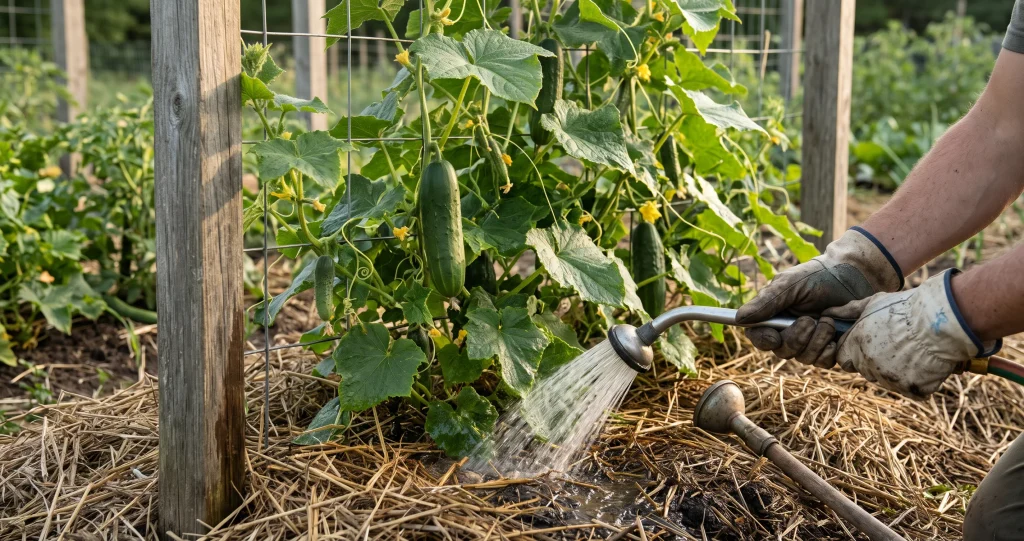
A practical starting point is approximately 1–2 inches of total water per week, including rainfall.
Actual requirements depend on soil type, temperature, wind, plant size, and local weather conditions.
Sandy soils may require more frequent watering than soils with greater water-holding capacity.
Practical Cucumber Watering Tips
Check soil moisture regularly. Examine the soil several inches below the surface rather than judging moisture only by appearance.
Water deeply. Apply enough water to moisten the active root zone.
Maintain consistency. Avoid repeated cycles of severe drying followed by excessive watering.
Water near the soil surface. Drip irrigation or soaker hoses can deliver moisture directly to the root zone.
Adjust during hot weather. High temperatures and strong winds may increase water demand.
Watering early in the day is often convenient and allows gardeners to monitor soil conditions before afternoon heat.
For more detailed guidance, see How to Water Vegetable Gardens During Hot Weather.
Consistent watering supports plant health, but it cannot eliminate bitterness caused by genetic characteristics.
Mulching and Temperature Management
Mulching can help stabilize soil moisture and moderate temperature fluctuations around cucumber roots.
Organic materials such as clean straw, shredded leaves, or untreated grass clippings can reduce evaporation from the soil surface.
A layer approximately 2–3 inches thick is commonly useful in vegetable gardens, depending on the material.
Keep mulch slightly away from plant stems to maintain airflow and reduce excessive moisture around the crown.
Managing Summer Heat
Cucumbers prefer warm growing conditions, but prolonged extreme heat can reduce plant performance.
High temperatures may interfere with flowering, pollination, and fruit development.
In particularly hot climates, temporary afternoon shade can reduce heat exposure.
Lightweight shade cloth may be useful during severe heat, provided plants continue receiving adequate sunlight.
Mulch and consistent irrigation can help reduce sudden changes in root-zone conditions.
However, these practices support general plant health rather than guaranteeing straight or mild-tasting cucumbers.
Choosing Cucumber Varieties
Variety selection is one of the most useful long-term strategies for improving cucumber quality.
Gardeners should consider local climate, available growing space, intended use, and pollination requirements.
Low-Bitterness Varieties
Some cucumber cultivars have been bred for reduced bitterness.
Seed catalogs may describe these as bitter-free or low-bitter varieties.
Selecting cultivars with a strong record of producing mild fruit can reduce the likelihood of unpleasant flavors.
Slicing Cucumbers
Slicing varieties are commonly grown for fresh salads and sandwiches.
They differ in fruit length, skin texture, disease resistance, and growth habit.
Pickling Cucumbers
Pickling varieties typically produce shorter fruits suited to preservation.
Frequent harvesting is especially important because oversized fruits may become less desirable for pickling.
Parthenocarpic Varieties
Parthenocarpic cucumbers produce fruit without requiring pollination.
They can be useful in protected growing environments or gardens with limited pollinator access.
When purchasing seeds, choose varieties recommended for your USDA growing region and local disease conditions.
University extension cultivar recommendations can provide useful regional guidance.
When to Harvest Cucumbers
Harvest timing affects cucumber texture, seed development, and overall eating quality.
Cucumbers generally taste best when harvested at the size recommended for their particular variety.
Allowing fruits to become excessively mature can result in tougher skins, larger seeds, and declining texture.
Some cucumbers also develop yellowish coloration as they become overripe.
Harvesting Recommendations
Inspect plants frequently during periods of rapid fruit growth.
Many cucumber varieties benefit from harvesting every one or two days during peak production.
Use clean garden shears or a sharp knife to cut the stem.
Avoid pulling or twisting the fruit aggressively because this can damage vines.
Harvesting regularly also encourages continued fruit production in many varieties.
For mild flavor and crisp texture, prioritize healthy fruits at the appropriate maturity stage.
If a cucumber has an unusually intense bitter taste, discard it rather than attempting to remove the bitterness through peeling or cooking.
Common Cucumber Growing Mistakes
Several common gardening practices can contribute to poor cucumber development.
Allowing Soil to Dry Repeatedly
Severe moisture fluctuations can stress plants and interfere with normal growth.
Maintain reasonably consistent soil moisture.
Ignoring Pollinator Activity
Seeded cucumber varieties often depend on insect pollination.
Provide suitable flowering habitat and protect beneficial insects.
Growing Vines in Crowded Spaces
Dense vegetation can restrict airflow and increase contact between developing fruits and surrounding structures.
Follow recommended spacing and train vines when appropriate.
Choosing Unsuitable Varieties
Cultivars differ in their tolerance of local growing conditions.
Select varieties appropriate for your climate and gardening method.
Harvesting Too Late
Oversized cucumbers often develop tougher skins and larger seeds.
Harvest at the recommended size.
Assuming Every Crooked Cucumber Is Poorly Pollinated
Irregular growth can result from several factors, including physical obstructions and environmental conditions.
Evaluate the growing environment before identifying a single cause.
Frequently Asked Questions
1. Why cucumbers turn bitter even when watered regularly?
Cucumber bitterness is influenced by genetics and natural cucurbitacin production. Consistent watering can reduce environmental stress, but some varieties remain susceptible to bitterness even under favorable growing conditions.
2. Are crooked cucumbers safe to eat?
Crooked cucumbers are generally safe to eat when they are healthy, fresh, and free from spoilage. Irregular shape alone does not indicate toxicity. However, unusually or intensely bitter cucumbers should be discarded.
3. Can poor pollination cause misshapen cucumbers?
Yes. In traditional seeded varieties, incomplete pollination can contribute to uneven fruit development. However, environmental stress and physical obstructions can also produce irregular shapes.
4. Does peeling a cucumber remove bitterness?
Peeling may reduce mild bitterness in some cucumbers, depending on where bitter compounds are concentrated. However, unusually or intensely bitter cucumbers should be discarded rather than peeled or cooked.
5. How can gardeners prevent bitter cucumbers?
Choose cultivars with low bitterness potential, maintain consistent soil moisture, reduce severe environmental stress, and harvest fruits at the recommended maturity. These practices reduce risk but cannot guarantee that every cucumber will remain mild.
Conclusion
Understanding why cucumbers turn bitter helps gardeners distinguish flavor problems from irregular fruit development.
Bitterness is primarily associated with cucurbitacin’s, cultivar genetics, and environmental influences.
Crooked or misshapen cucumbers may result from incomplete pollination, uneven growing conditions, or physical restrictions during growth.
These problems can occur independently and require different management approaches.
Selecting suitable varieties, maintaining consistent soil moisture, supporting pollinators, applying mulch, and harvesting regularly can improve cucumber quality.
With careful observation and practical growing techniques, home gardeners can encourage healthier plants and more consistent cucumber harvests throughout the growing season.
Internal Sources
1. How to Grow Cucumbers Vertically on a Trellis: Growing cucumbers vertically improves airflow, saves garden space, and helps prevent developing fruits from becoming trapped against the soil or nearby objects, https://secretsofthegreengarden.com/how-to-grow-cucumbers-in-containers-a-practical-guide-for-healthy-harvests/
External Sources
1. University of Minnesota Extension — Growing Cucumbers: Explains cucumber bitterness, cucurbitacin differences between varieties, pollination requirements, trellising, and harvesting. It also notes that bitterness is often stronger near the skin and blossom end, although distribution varies, University of Minnesota Extension
2. University of Minnesota Extension — Fruits and Vegetables That Require Pollination: Explains how inadequate pollination can produce misshapen cucumbers and why certain parthenocarpic varieties develop fruit without pollination.
3. University of Minnesota Extension — How Excessive Heat Affects the Vegetable Garden: Describes how high temperatures influence flowering, bee activity, and cucumber fruit development.
4. Oregon State University Extension — Grow Your Own Cucumbers: Provides practical guidance on cultivar selection, pollination, temperature stress, bitterness, and harvesting.
5. Oregon State University Extension — Are Volunteer Squash Toxic?: Explains the potential health risks associated with extremely bitter cucurbits and why unusually bitter fruits should be discarded.