
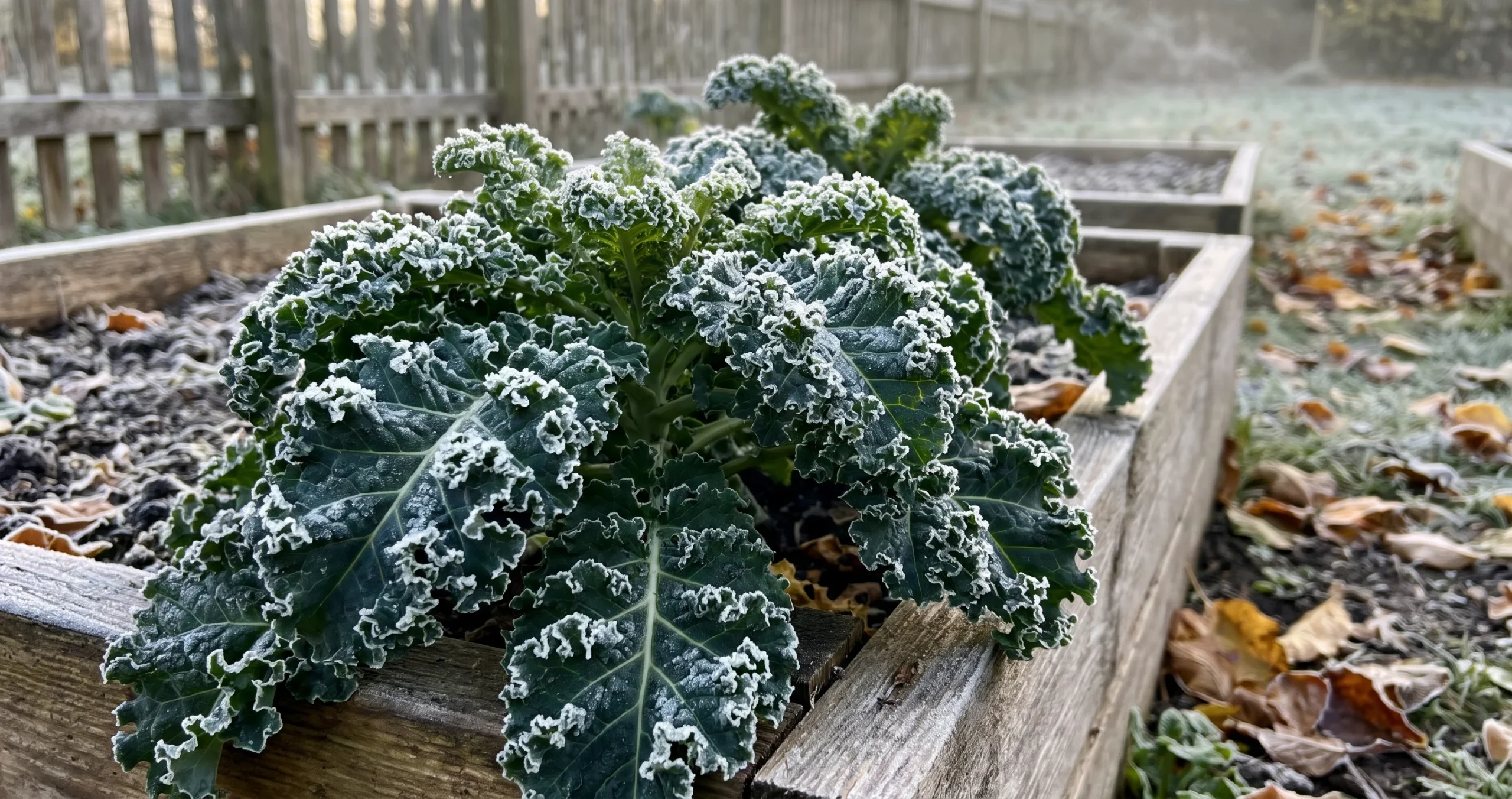
Kale is one of the most dependable vegetables for gardeners who want to extend their harvest beyond summer. While tomatoes, peppers, and other warm-season crops struggle as temperatures drop, kale often continues producing nutritious, flavorful leaves well into autumn.
One of the most interesting characteristics of this leafy green is its response to cold weather. Gardeners frequently notice that kale harvested after chilly nights tastes milder or slightly sweeter than leaves collected during warmer conditions.
This change is connected to the plant’s natural response to low temperatures. However, frost does not guarantee sweeter kale, and the results depend on the variety, growing conditions, and severity of the cold.
Growing kale in cold weather requires relatively little specialized equipment. With appropriate planting dates, healthy soil, and occasional frost protection, gardeners across much of the United States can enjoy fresh kale during the cooler months.
Table of Contents
- Why Kale Tolerates Cold Weather
- Why Kale Can Taste Sweeter After Frost
- How Much Frost Can Kale Survive?
- How to Grow Kale for an Autumn Harvest
- Protecting Kale During Colder Weather
- How to Harvest Kale Without Damaging the Plant
- Common Problems With Autumn Kale
- Growing Kale in Containers
- Frequently Asked Questions
- Conclusion
Why Kale Tolerates Cold Weather
Kale (Brassica oleracea var. acephala) belongs to the cabbage family, which includes broccoli, Brussels sprouts, cauliflower, and collard greens.
Unlike warm-season vegetables, kale grows particularly well in cool conditions. Established plants can tolerate temperatures that would damage more sensitive crops.
Its cold tolerance comes partly from physiological changes that occur as temperatures gradually decline.
During cold acclimation, kale can accumulate soluble sugars and other compounds that help protect plant cells from freezing-related stress. These substances influence how water behaves inside plant tissues and can help stabilize cellular structures.
The plant also adjusts aspects of its metabolism as daylight decreases and temperatures fall.
Cold tolerance is not unlimited, however. A healthy, established plant that has experienced gradually cooling temperatures is generally better prepared for freezing weather than a tender seedling suddenly exposed to severe cold.
Plant health, soil moisture, wind exposure, and the duration of freezing conditions also influence survival.
For fall vegetable gardening, this means that timing matters. Kale planted early enough to establish a strong root system before persistent freezing weather has a better chance of producing a useful late-season harvest.
Why Kale Can Taste Sweeter After Frost
One reason gardeners appreciate frost-kissed kale is the possibility of improved flavor.
Kale contains naturally occurring sugars, bitter-tasting compounds, and other substances that contribute to its distinctive taste.
As temperatures decline, changes in carbohydrate metabolism can alter the balance of sugars within the leaves.
Under some conditions, cold acclimation increases concentrations of soluble sugars. These changes may make kale taste sweeter or reduce the perception of bitterness.
However, the relationship between frost and flavor is more complicated than a simple temperature change.
Variety Makes a Difference
Different kale varieties have different flavor profiles.
Curly kale often has a stronger texture and more pronounced flavor, while some gardeners find lacinato kale relatively mild.
Red Russian kale is frequently valued for its tender leaves, particularly when harvested young.
Individual varieties may also respond differently to cold temperatures.
Growing Conditions Influence Flavor
Sunlight, plant maturity, water availability, and nutrient levels can all affect leaf composition.
A plant experiencing drought or nutrient stress may develop a different flavor from one growing under favorable conditions.
The age of the harvested leaves matters as well. Young leaves are often more tender than older foliage.
Frost Does Not Always Improve Taste
A light frost may coincide with favorable flavor changes, but severe freezing can damage leaf tissues.
Repeated freeze-thaw cycles may also reduce quality, especially when leaves become water-soaked or begin deteriorating.
For the best results, harvest healthy leaves after they have thawed naturally rather than handling frozen, brittle foliage.
How Much Frost Can Kale Survive?
Kale is considered a cold-hardy vegetable, but its survival depends on more than the lowest temperature recorded.
Light Frost
A light frost generally occurs when exposed plant surfaces fall to freezing temperatures, sometimes while the measured air temperature remains slightly above freezing.
Established kale plants usually tolerate these conditions well.
Leaves may appear frosted early in the morning and return to their normal appearance after temperatures rise.
Harder Freezes
More severe freezing temperatures can damage leaves, particularly on young or poorly established plants.
Some mature kale varieties survive temperatures well below freezing when properly acclimated, but there is no single temperature that guarantees survival.
Wind, soil conditions, cultivar, and the duration of exposure all matter.
Regional Differences Across the United States
In the northern United States, kale may continue producing through autumn before persistent winter conditions slow or stop growth.
Gardeners in the Upper Midwest and Northeast often benefit from row covers or other season-extension methods.
In the Pacific Northwest, relatively mild winters can allow kale to remain productive for extended periods, although saturated soil and prolonged freezing remain concerns.
Across parts of the South, kale can be an excellent fall and winter crop because temperatures often remain suitable for growth.
In warmer regions, winter may provide better kale-growing conditions than summer.
Local frost dates and climate patterns should guide planting and protection decisions.
How to Grow Kale for an Autumn Harvest
Successful fall kale begins with proper timing and healthy growing conditions.
1. Choose the Right Planting Window
Kale can be started from seed or transplants.
For an autumn harvest, many gardeners sow seeds approximately 8–12 weeks before their area’s average first fall frost, adjusting for variety, local weather, and whether they plan to harvest baby or mature leaves.
In colder regions, starting plants earlier may be necessary because growth slows significantly as daylight decreases.
Gardeners in mild-winter climates may be able to plant later.
For additional seasonal crop choices, see [vegetables suitable for fall planting — internal link placeholder].
2. Select a Sunny Location
Kale generally performs best with at least six hours of direct sunlight daily.
It can tolerate partial shade, particularly in warmer climates, but reduced sunlight may slow growth.
Choose a location with good air circulation and protection from persistent strong winds.
3. Prepare the Soil
Kale grows best in fertile, well-drained soil containing adequate organic matter.
Before planting, incorporate finished compost where needed to improve soil structure.
A soil test can help determine whether fertilizer or pH adjustments are necessary.
Avoid applying excessive nitrogen, which can encourage lush growth without necessarily improving overall plant health.
4. Provide Adequate Spacing
For full-sized plants, spacing kale approximately 12–18 inches apart is a useful starting point.
Smaller spacing may work for baby-leaf production, while large mature varieties may need additional room.
Follow the seed packet or transplant label for cultivar-specific recommendations.
5. Water Consistently
Kale needs adequate moisture to establish roots and maintain healthy leaf growth.
Aim for approximately one inch of water per week from rainfall and irrigation combined during active growth, adjusting for soil type and weather.
Water the soil near the base of the plants rather than repeatedly wetting the foliage.
As temperatures fall, reduce irrigation when evaporation and plant water use decline.
Avoid allowing the soil to remain waterlogged.
Protecting Kale During Colder Weather
Although kale tolerates frost, a few protective measures can extend the harvest and improve leaf quality.
Use Floating Row Covers
Lightweight agricultural fabric can help moderate temperatures around plants and reduce exposure to wind.
Install the material over hoops or directly over suitable crops, securing the edges to prevent it from blowing away.
Heavier frost-protection fabrics generally provide more insulation than lightweight insect barriers.
Remove or ventilate covers when necessary to prevent overheating during unexpectedly warm weather.
Apply Organic Mulch
A layer of clean straw, shredded leaves, or other suitable organic mulch helps moderate soil temperature and reduce moisture fluctuations.
Keep mulch slightly away from plant stems to discourage excessive moisture accumulation around the crown.
Mulch protects the root zone but cannot guarantee that exposed leaves will survive severe freezing.
Reduce Wind Exposure
Cold, drying winds can increase stress on kale leaves.
A sheltered garden location, temporary windbreak, or low tunnel may reduce exposure.
Avoid structures that collapse under snow or prevent adequate ventilation.
Use Low Tunnels Carefully
Low tunnels covered with horticultural fabric or suitable plastic can help extend the growing season.
Plastic covers require particular attention to ventilation because temperatures may rise rapidly on sunny days.
Gardeners should also monitor soil moisture beneath covered beds.
For additional protection methods, see [protecting raised garden beds from frost — internal link placeholder].
How to Harvest Kale Without Damaging the Plant
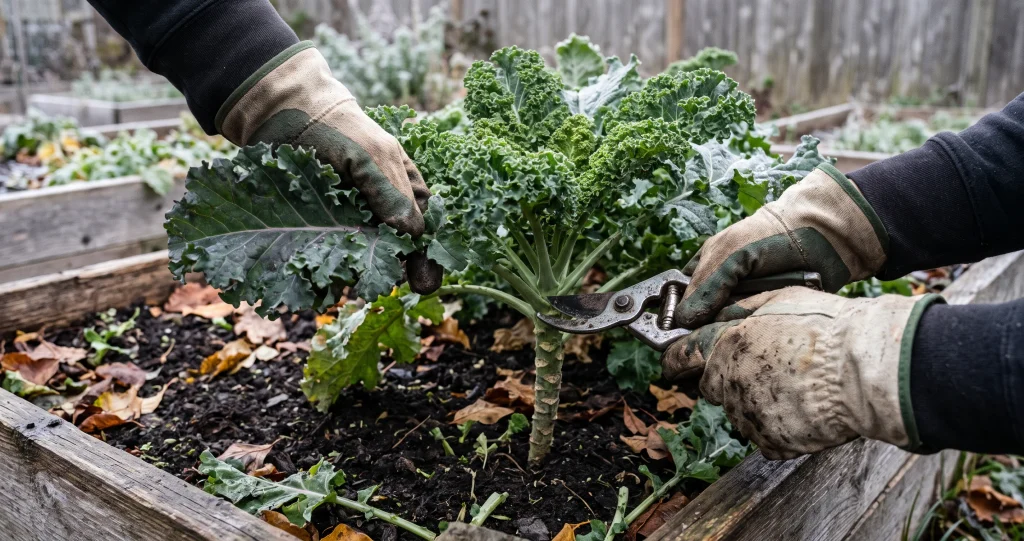
Harvesting kale after frost is straightforward when the plant’s central growing point remains intact.
Kale produces new leaves from the growing region near the center of the plant.
Removing this growing point can stop or severely limit further leaf production.
Step 1: Choose Healthy Outer Leaves
Select mature leaves from the lower or outer portion of the plant.
Avoid leaves showing extensive decay, disease, or severe freeze damage.
Younger central leaves should remain in place.
Step 2: Cut or Snap the Leaves Carefully
Use clean garden scissors or pruning shears to remove leaves near their attachment point.
Alternatively, mature leaves may be removed carefully by hand without damaging the main stem.
Avoid pulling forcefully.
Step 3: Leave Enough Foliage for Continued Growth
Do not strip the plant completely.
Leave several healthy leaves, especially those near the growing center, so the plant can continue photosynthesis.
Step 4: Harvest During Suitable Conditions
When kale leaves are frozen solid, wait until they thaw before harvesting.
Frozen tissues can be brittle and more vulnerable to mechanical damage.
Step 5: Store the Harvest Properly
Remove damaged leaves and refrigerate harvested kale promptly.
Store it in a clean container or produce bag that helps limit moisture loss without trapping excessive condensation.
Wash leaves thoroughly before eating.
Continued harvesting is possible while the plant remains healthy and growing conditions allow new leaves to develop.
Common Problems With Autumn Kale
Cooler temperatures reduce some gardening challenges, but kale can still experience pests and environmental stress.
Aphids
Aphids sometimes gather on leaf undersides and tender growing tips.
Inspect plants regularly and remove small infestations with a gentle stream of water.
Encouraging beneficial insects can also support natural pest management.
Caterpillars
Cabbageworms and cabbage loopers may continue feeding during mild autumn weather.
Look for holes in leaves, caterpillars, and small droppings.
Hand removal and properly installed insect netting can help protect plants.
Excess Moisture
Poor drainage increases the risk of root problems and plant decline.
Improve drainage, avoid unnecessary irrigation, and prevent containers from standing in water.
Cold Damage
Severely damaged kale leaves may become limp, translucent, or water-soaked after thawing.
Remove deteriorating foliage when conditions permit, but avoid cutting away healthy growth unnecessarily.
Growing Kale in Containers
Kale is also suitable for patios, balconies, and small-space gardens.
For a single full-sized plant, choose a container approximately 12–16 inches wide and at least 12 inches deep, with adequate drainage holes.
Larger containers provide more room for roots and generally experience less rapid moisture and temperature fluctuations.
Fill the container with a quality potting mix rather than compacted garden soil.
Place it in a sunny location and water when the upper portion of the mix begins to dry.
During freezing weather, container-grown kale may need additional protection because its roots are more exposed than those of plants growing in the ground.
Move containers to a sheltered outdoor location or insulate them with suitable materials when severe cold is expected.
Avoid placing plants in consistently warm indoor conditions unless sufficient growing light is available.
For more container gardening guidance, see [growing vegetables in containers — internal link placeholder].
Frequently Asked Questions
1. Does kale actually become sweeter after frost?
Sometimes. Cold acclimation can change the concentration of soluble sugars in kale leaves, potentially producing a sweeter flavor. The effect varies with the variety, plant maturity, and growing conditions.
2. Can kale survive snow?
Established kale can sometimes survive snowfall, especially when the plants are acclimated and temperatures are not excessively severe. Snow may provide some insulation, but prolonged freezing and heavy snow can still damage plants.
3. Should kale be harvested before or after frost?
Both are possible. Healthy kale can be harvested before frost or after the leaves have thawed. Waiting for cool weather may improve flavor in some varieties, but there is no need to risk severe crop damage.
4. Will kale continue growing throughout winter?
Growth depends on temperature, daylight, and regional climate. In mild areas, kale may continue growing slowly. In colder regions, growth can nearly stop until conditions improve.
5. Can kale grow back after leaves are harvested?
Yes. Kale can produce additional leaves when its central growing point remains intact and growing conditions are favorable. Repeated harvesting is possible, although production slows during cold weather.
Conclusion
Growing kale in cold weather is a practical way to extend the vegetable gardening season and enjoy fresh greens beyond summer.
Its natural cold tolerance makes it particularly suitable for autumn planting, while changes in leaf metabolism may improve flavor during cooler conditions.
Successful winter kale gardening depends on choosing appropriate planting dates, maintaining healthy soil, providing adequate moisture, and protecting plants when temperatures become severe.
Harvesting mature outer leaves while preserving the central growing point allows kale to continue producing whenever conditions support growth.
Although frost tolerance varies by cultivar and climate, kale remains one of the most useful vegetables for gardeners interested in productive cool-season growing.
External Sources
- University of Minnesota Extension — Planting Vegetables in Midsummer for Fall Harvest: Covers fall planting dates, kale’s cold tolerance, and the importance of local frost dates. It identifies approximately 20°F as a general cold-hardiness guideline, not a guaranteed survival limit.
- Utah State University Extension — How to Grow Kale in Your Garden: Provides recommendations for soil, spacing, watering, fall planting, pest management, and harvesting. It also discusses improved flavor after autumn frosts.
- Oregon State University Extension — Kale: Provides regional planting windows, recommended varieties, and instructions for harvesting outer leaves to extend production.
- Utah State University Extension — Harvest and Storage of Vegetables and Fruits: Supports harvesting mature outer leaves first and using protective materials to extend the autumn harvest.