
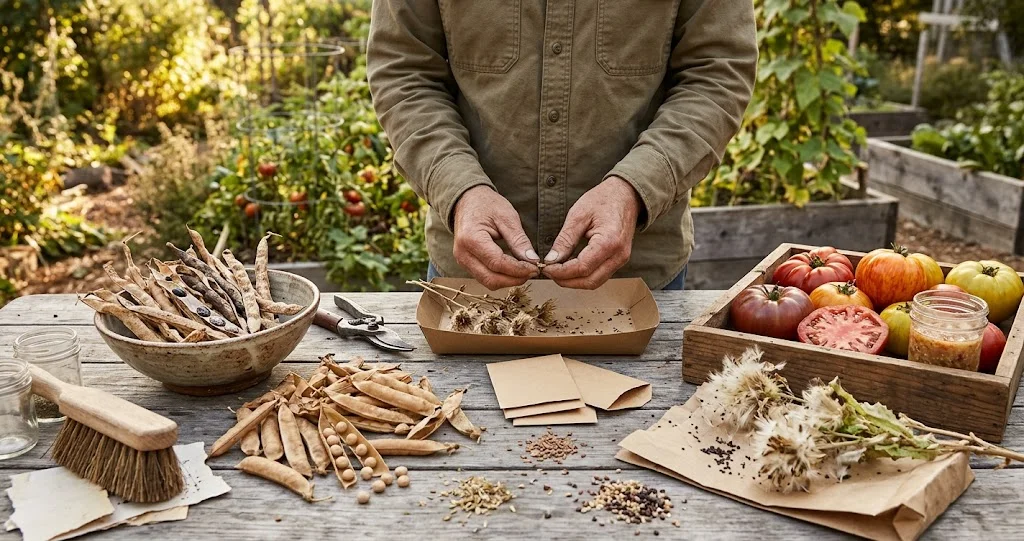
Saving seeds is one of the simplest ways to become a more self-reliant gardener. A handful of dried bean seeds, a ripe tomato, or a few lettuce plants left to flower can provide the starting point for another growing season.
But successful seed saving involves more than collecting seeds and putting them in an envelope. The variety you grow, the way its flowers are pollinated, and the maturity of the seeds all influence what happens when you plant them next year.
The good news is that seed saving for beginners does not require expensive equipment or advanced botanical knowledge. Starting with reliable crops such as beans, peas, lettuce, and tomatoes makes the process manageable.
This guide explains how to choose suitable varieties, harvest mature seeds, prevent common storage problems, and build a collection of seeds suited to your garden.
Table of Contents
- Why Saving Seeds Is Worth Learning
- Open-Pollinated, Heirloom, and F1 Hybrid Varieties Explained
- Why Beans and Peas Are Beginner-Friendly
- How to Save Lettuce Seeds
- How to Save Tomato Seeds
- Why Squash, Cucumbers, and Corn Require More Planning
- Understanding Cross-Pollination and Isolation Distances
- Harvesting Seeds at the Right Maturity
- Drying and Storing Seeds Safely
- Labeling Seed Envelopes
- Common Seed-Saving Mistakes
- Frequently Asked Questions
- Conclusion
Why Saving Seeds Is Worth Learning
Seed saving connects one growing season to the next.
Instead of purchasing every variety again, gardeners can preserve seeds from plants they particularly enjoyed growing.
Saving Money and Preserving Varieties
Collecting seeds from suitable open-pollinated crops can reduce annual seed expenses.
It also helps maintain access to varieties that may be difficult to find commercially.
Heirloom vegetables are especially valued for their histories, distinctive flavors, colors, and growth characteristics.
Learning About Plant Reproduction
Seed saving encourages gardeners to observe flowers, pollination, fruit development, and seed maturity.
These observations improve understanding of how garden plants reproduce.
Over time, gardeners may also learn which varieties perform consistently under their local growing conditions.
However, preserving a variety reliably requires attention to pollination and maintaining enough healthy parent plants.
Open-Pollinated, Heirloom, and F1 Hybrid Varieties Explained
Choosing the right seeds is the foundation of successful seed saving.
Three common terms appear on seed packets: open-pollinated, heirloom, and F1 hybrid.
Open-Pollinated Vegetables
Open-pollinated varieties reproduce through normal pollination and can produce offspring resembling the parent variety when unwanted cross-pollination is prevented.
These varieties are generally suitable for seed saving.
However, maintaining their characteristics may require isolation from other compatible varieties.
Heirloom Seeds
Heirlooms are open-pollinated varieties preserved across generations.
The term often refers to varieties with historical or cultural significance, although definitions vary.
Heirloom seeds are not automatically guaranteed to grow true to type.
Cross-pollination, accidental mixing, and poor selection can change a variety over time.
F1 Hybrid Seeds
An F1 hybrid is produced by crossing two selected parent lines.
The first-generation plants often display predictable characteristics.
However, seeds collected from F1 plants produce a genetically variable next generation, commonly called F2.
Those offspring may differ in fruit size, flavor, color, disease resistance, and growth habit.
F1 seeds are not necessarily sterile; they simply may not reproduce the original variety consistently.
| Seed type | Suitable for saving? | Important consideration |
|---|---|---|
| Open-pollinated | Usually yes | Prevent unwanted crosses |
| Heirloom | Usually yes | Maintain variety purity |
| F1 hybrid | Possible, but unpredictable | Offspring may differ from parent |
Why Beans and Peas Are Beginner-Friendly
Beans and peas are excellent starting crops because they predominantly self-pollinate.
Their flowers often fertilize themselves before opening fully, reducing the likelihood of unwanted crossing.
Nevertheless, occasional cross-pollination can occur.
How to Save Bean Seeds
- Select healthy plants of a known open-pollinated variety.
- Allow several pods to mature fully on the plant.
- Wait until the pods become dry and papery.
- Harvest before prolonged rain or pod shattering causes losses.
- Remove the seeds and allow them to finish drying indoors.
- Store only clean, thoroughly dried seeds.
For bush and pole beans, choose plants that show the characteristics you want to preserve.
How to Save Pea Seeds
Peas follow a similar process.
Leave selected pods on the vines until they dry and turn brown.
Remove the seeds, inspect them for damage, and finish drying before storage.
If wet weather threatens, mature pods may be brought indoors to complete drying, provided the seeds have developed sufficiently.
Why These Crops Are Easier
Bean and pea seeds are relatively large, making them simple to collect and inspect.
They also require no fermentation or specialized extraction method.
For beginners, saving one clearly labeled variety of each crop is an excellent first project.
How to Save Lettuce Seeds
Lettuce is another useful crop for learning how to save seeds.
Unlike beans and peas, lettuce is normally harvested before it flowers.
Seed saving requires allowing selected plants to complete their reproductive cycle.
Let Lettuce Bolt
As temperatures rise or day length increases, lettuce plants may produce tall flowering stalks.
This process is called bolting.
The small flowers eventually develop seeds attached to fluffy structures that aid wind dispersal.
Collect Mature Seeds
Wait until the seed heads become dry and fluffy.
Collect mature seeds by gently shaking the flower heads into a clean container or paper bag.
Because seed heads mature gradually, several collections may be necessary.
Protect Variety Purity
Lettuce is predominantly self-pollinating, but occasional crosses are possible.
Growing only one variety for seed production simplifies the process.
Select healthy plants that represent the variety’s typical characteristics rather than automatically saving seeds from the first plant to bolt.
How to Save Tomato Seeds
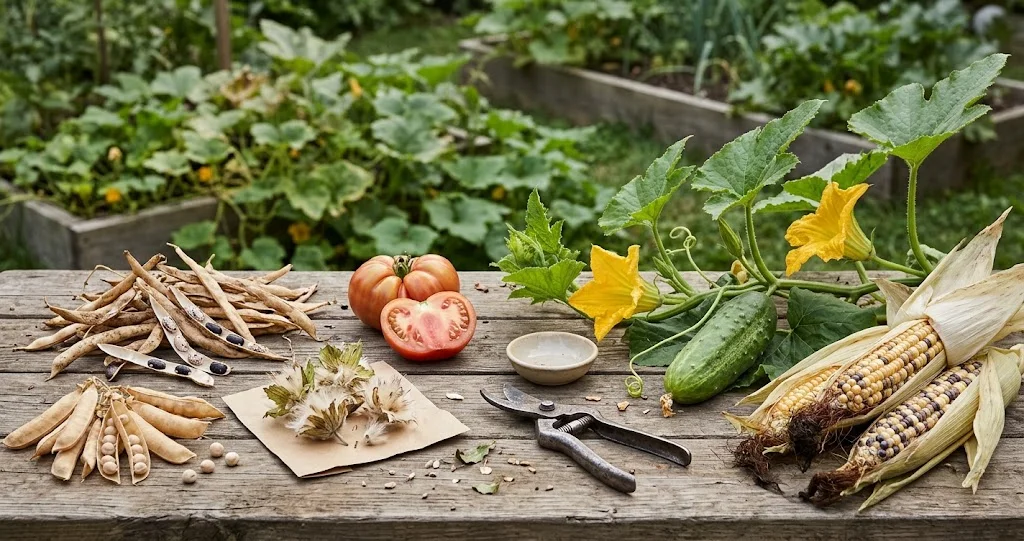
Tomatoes are popular seed-saving crops because most cultivated varieties predominantly self-pollinate.
However, cross-pollination can occur, particularly in varieties with more exposed floral structures.
Choose Fully Ripe Tomatoes
Select healthy, fully ripe fruits from vigorous open-pollinated plants.
Avoid collecting seeds from diseased or unusually poor-performing plants.
Cut the tomato and squeeze the seeds and surrounding gel into a clean container.
Ferment the Seeds
Tomato seeds are surrounded by a gelatinous coating.
A short fermentation process helps separate the seeds from this coating.
- Place the seeds and gel in a clean jar.
- Add a small amount of water if necessary.
- Leave the container at room temperature for approximately one to three days.
- Stir occasionally and check for breakdown of the gel.
- Rinse the seeds thoroughly using a fine strainer.
- Spread them on a nonstick surface to dry completely.
Fermentation duration varies with temperature. Avoid leaving seeds fermenting unnecessarily long, as prolonged exposure may reduce viability.
Dry Before Storage
Spread cleaned seeds in a thin layer.
Keep them in a ventilated location away from excessive heat and direct sunlight.
Once fully dry, transfer them into labeled storage containers.
Fermentation is a common method, but it is not the only way to clean tomato seeds.
Why Squash, Cucumbers, and Corn Require More Planning
These crops can produce excellent seeds, but keeping a variety genetically consistent requires additional care.
Squash and Cucumbers
Squash and cucumbers rely heavily on insect pollination.
Bees can carry pollen between compatible varieties, producing crossed seeds.
Importantly, not all squash cross with one another. Cross-compatibility depends on botanical species, not simply whether plants are called summer squash, winter squash, or pumpkins.
For example, zucchini and many pumpkins belong to Cucurbita pepo and can cross.
Hand-pollination and protecting flowers from unwanted pollen are useful techniques for gardeners with limited space.
Corn
Corn is wind-pollinated.
Pollen can travel from nearby plantings, making variety isolation challenging.
Maintaining a corn variety also requires a sufficiently large breeding population to reduce inbreeding and genetic drift.
These requirements make corn a more advanced seed-saving project.
Understanding Cross-Pollination and Isolation Distances
Cross-pollination occurs when pollen from one plant fertilizes a flower on another genetically different, compatible plant.
This can introduce new genetic combinations into saved seeds.
Self-Pollination Is Not a Perfect Guarantee
Beans, peas, lettuce, and most tomatoes predominantly self-pollinate.
Nevertheless, insects and flower structure can occasionally allow crossing.
The risk varies among varieties and environments.
Isolation Depends on the Crop
There is no universal safe distance for seed saving.
Isolation requirements depend on plant species, pollinator activity, local geography, nearby varieties, and how strictly seed purity must be maintained.
Gardeners preserving a rare heirloom for distribution may need stricter precautions than someone conducting a personal experiment.
Different plants · same species
Pollen on anther
Anthers make pollen; stigmas receive it.
SelfCross
Give feedback
Alternatives to Distance
Physical barriers, flower bagging, controlled hand-pollination, and staggered flowering periods can reduce unwanted crosses.
For detailed guidance, consult crop-specific seed-saving references rather than relying on one isolation distance for every vegetable.
Harvesting Seeds at the Right Maturity
Seeds intended for planting often need to remain on the plant longer than vegetables harvested for eating.
Dry-Seeded Crops
Beans, peas, and lettuce generally produce seeds that mature as pods or seed heads dry.
Harvest when seeds are fully developed and before prolonged wet weather causes deterioration.
Wet-Seeded Crops
Tomatoes and other fleshy fruits contain seeds surrounded by moist pulp.
Allow fruits to reach appropriate physiological maturity before extracting seeds.
For cucumbers, seed maturity usually occurs after the fruit has passed its normal eating stage.
Choose Healthy Parent Plants
Select vigorous, representative plants with desirable characteristics.
Avoid saving seeds from plants showing suspicious disease symptoms, because some pathogens can be seedborne.
The University of Minnesota Extension’s vegetable seed-saving guide provides practical crop-specific harvesting and disease-prevention advice.
Drying and Storing Seeds Safely
Poor storage can ruin otherwise excellent seeds.
Dry Seeds Thoroughly
Spread cleaned seeds in a thin layer on a screen, plate, or other suitable surface.
Choose a shaded, well-ventilated location.
Avoid high heat, which can damage living seed tissues.
Large seeds such as beans should feel hard and dry before packaging.
Keep Seeds Cool and Dry
Once fully dried, place seeds in labeled paper envelopes.
Store the envelopes inside an airtight jar or other moisture-resistant container.
A small silica-gel packet can help control moisture.
For many common vegetable seeds, a refrigerator offers favorable storage conditions if the container is sealed against condensation.
Check Germination Before Planting
Seed viability declines over time, although the rate varies by species and storage conditions.
A simple germination test involves placing a counted sample of seeds between moist paper towels and observing how many sprout under suitable temperatures.
This provides a useful estimate of whether stored seeds remain suitable for planting.
Oregon State University Extension provides additional advice on collecting, storing, and testing garden seeds.
Labeling Seed Envelopes
A reliable labeling system prevents confusion when planting season arrives.
Every envelope should include:
- Crop and variety: for example, ‘Brandywine’ tomato.
- Harvest year: the year the seeds were collected.
- Source: the garden bed or original seed supplier.
- Notes: plant performance, unusual weather, or possible cross-pollination.
An example label might read:
Tomato — ‘Brandywine’ — 2026 — Bed 3 — Open-pollinated; selected from healthy plants.
Keep records in a garden notebook or spreadsheet if saving several varieties.
Common Seed-Saving Mistakes
Saving Seeds From F1 Hybrids Expecting Identical Plants
F1 hybrids can produce viable seeds, but their offspring may display different characteristics.
Choose open-pollinated varieties when consistency matters.
Harvesting Too Early
Immature seeds may have poor germination or reduced storage life.
Allow seeds to develop fully before collecting them.
Storing Seeds While Damp
Excess moisture encourages mold and deterioration.
Always dry seeds thoroughly before sealing them in containers.
Ignoring Cross-Pollination
Compatible varieties growing nearby may exchange pollen.
Understand the crop’s pollination biology before attempting to maintain a pure variety.
Saving Seeds From Too Few Plants
Repeatedly saving from very small populations can reduce genetic diversity in cross-pollinated crops.
Use crop-specific recommendations for population size when maintaining a variety over many generations.
Forgetting Labels
Unlabeled seeds quickly become difficult to identify.
Record variety names and harvest years immediately rather than relying on memory.
Frequently Asked Questions
1. Which vegetables are easiest for beginners to save seeds from?
Beans, peas, lettuce, and tomatoes are excellent starting choices because they predominantly self-pollinate. Their seeds are relatively easy to harvest, although tomatoes benefit from cleaning or fermentation.
2. Can I save seeds from grocery-store vegetables?
Yes, some seeds may germinate. However, grocery-store produce may come from F1 hybrids, and fruits may have been harvested before their seeds matured. The resulting plants may not resemble the original vegetables.
3. Will heirloom seeds always grow true to type?
Not necessarily. Heirloom varieties can remain consistent when properly maintained, but unwanted cross-pollination, seed mixing, and selection can alter their characteristics.
4. How long do saved vegetable seeds last?
Longevity depends on species, initial seed quality, moisture, and temperature. Some vegetable seeds remain viable for several years under favorable conditions, while others lose viability more quickly. Germination testing helps assess older seeds.
5. Do I need to ferment tomato seeds?
Fermentation is a widely used method for removing the gelatinous coating surrounding tomato seeds. Other cleaning methods exist, but fermentation is convenient for home gardeners.
6. Can different squash varieties cross-pollinate?
Yes, if they are compatible. Many squash varieties within the same botanical species can cross, even when their fruits look very different. Squash belonging to different species generally do not cross readily.
7. Can I store seeds in the refrigerator?
Yes. Fully dried seeds can be stored in airtight containers in a refrigerator. Keep moisture out, and allow sealed containers to reach room temperature before opening to minimize condensation.
Conclusion
Seed saving for beginners is easiest when you start with a few dependable crops and learn their reproductive habits.
Beans and peas provide a straightforward introduction because their seeds mature inside drying pods. Lettuce teaches gardeners how to collect seeds from flowering plants, while tomatoes introduce wet-seed processing and fermentation.
As your experience grows, squash, cucumbers, and corn offer opportunities to learn about cross-pollination, isolation, and maintaining genetic diversity.
The most important habits are simple: choose suitable open-pollinated varieties, collect mature seeds from healthy plants, dry them thoroughly, and label every batch.
With consistent records and proper storage, a small collection of saved seeds can become a valuable part of your gardening routine.
Internal Sources
How a Seed Germinates: A Step-by-Step Look Inside a Bean
A related guide explaining seed anatomy, germination requirements, and the early growth stages of bean seedlings.
External Sources
1. University of Minnesota Extension — Saving Vegetable Seeds Read the extension guide
Research-based guidance on open-pollinated varieties, hybrids, tomato seed processing, beans, peas, and storage.
2. Oregon State University Extension — Save Seeds Now for Next Year’s Garden Read the seed-saving recommendations
Explains cross-pollination challenges, seed harvesting, and storage methods.
3. Oregon State University Extension — A Step-by-Step Guide to Saving Seeds Read the practical seed-saving guide