
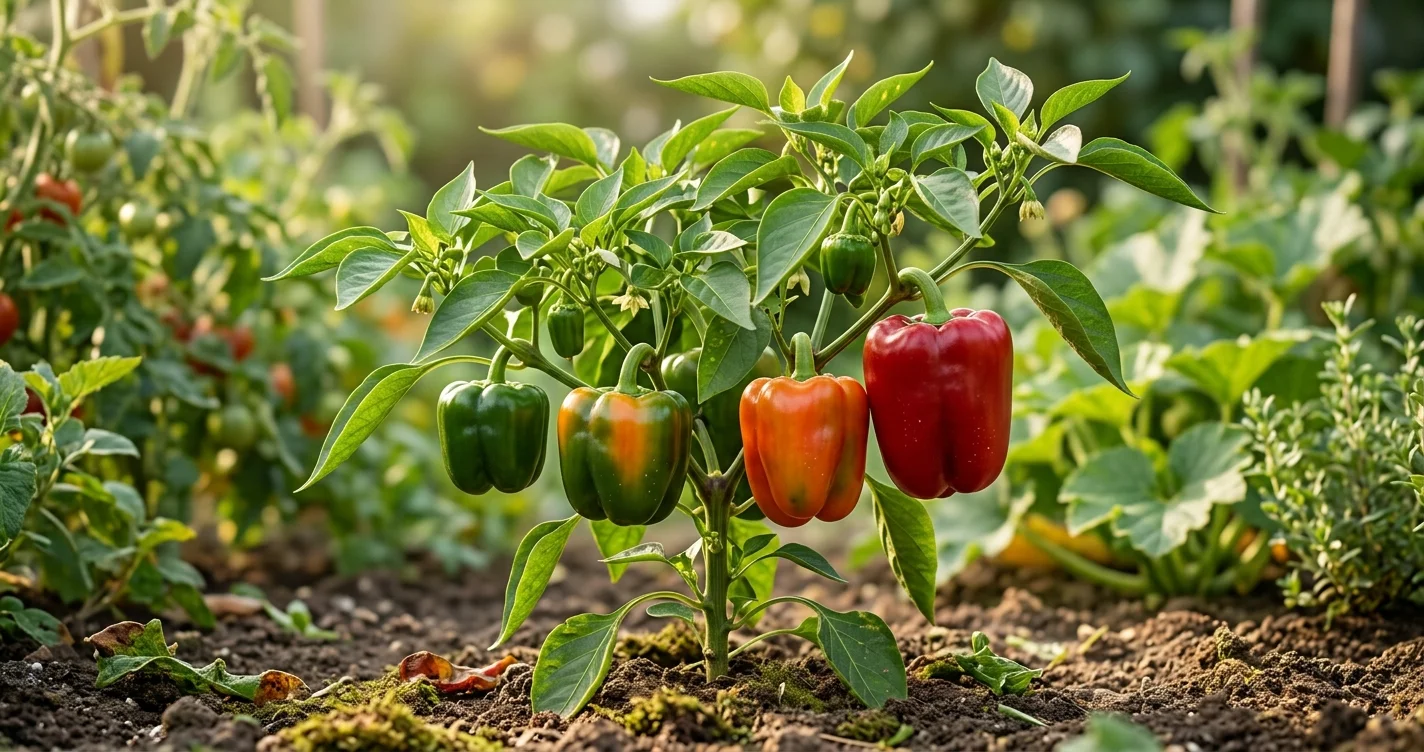
A green bell pepper hanging on the plant may look unfinished, but it could already be perfectly ready to harvest. As the fruit matures, its color, flavor, texture, and nutritional composition gradually change.
Understanding the bell pepper ripening stages helps gardeners decide when to harvest, why some peppers stay green, and what happens as green fruit develops its final color. A red bell pepper, for example, often begins as a green fruit before gradually turning red.
However, not every pepper follows the same color sequence. Some varieties mature yellow, orange, purple, or chocolate brown. The six stages below describe a practical visual progression for a red-ripening bell pepper variety, rather than a universal biological classification.
Table of Contents
- Why Bell Peppers Change Color
- The 6 Bell Pepper Ripening Stages
- Green Bell Pepper vs Red Bell Pepper
- How Long Bell Peppers Take to Ripen
- When to Harvest Bell Peppers
- Can Bell Peppers Ripen After Picking?
- Why Bell Peppers Sometimes Stay Green
- Common Bell Pepper Ripening Mistakes
- Common Myths About Bell Pepper Colors
- Frequently Asked Questions
- Conclusion
Why Bell Peppers Change Color
Bell peppers belong to the species Capsicum annuum, which includes numerous sweet and hot pepper varieties.
During early fruit development, most bell peppers contain substantial amounts of chlorophyll, the green pigment involved in photosynthesis.
As certain varieties ripen, chlorophyll breaks down while other pigments become more prominent.
Chlorophyll and the Green Stage
Chlorophyll gives immature and mature-green peppers their familiar green appearance.
A pepper can reach its full usable size while still containing abundant chlorophyll. At this point, it may be considered mature-green and suitable for harvesting.
This is why green bell peppers are not necessarily underdeveloped or unsuitable for eating.
Carotenoids and Color Development
In many red-ripening varieties, carotenoid pigments accumulate as the fruit matures.
Compounds such as capsanthin and capsorubin contribute to the characteristic red coloration of ripe peppers.
Other carotenoids help create yellow and orange shades in different cultivars.
Purple or nearly black-looking peppers may owe much of their appearance to anthocyanins, another group of plant pigments.
The combination of pigments and the plant’s genetics determines the fruit’s appearance.
Variety Determines Final Color
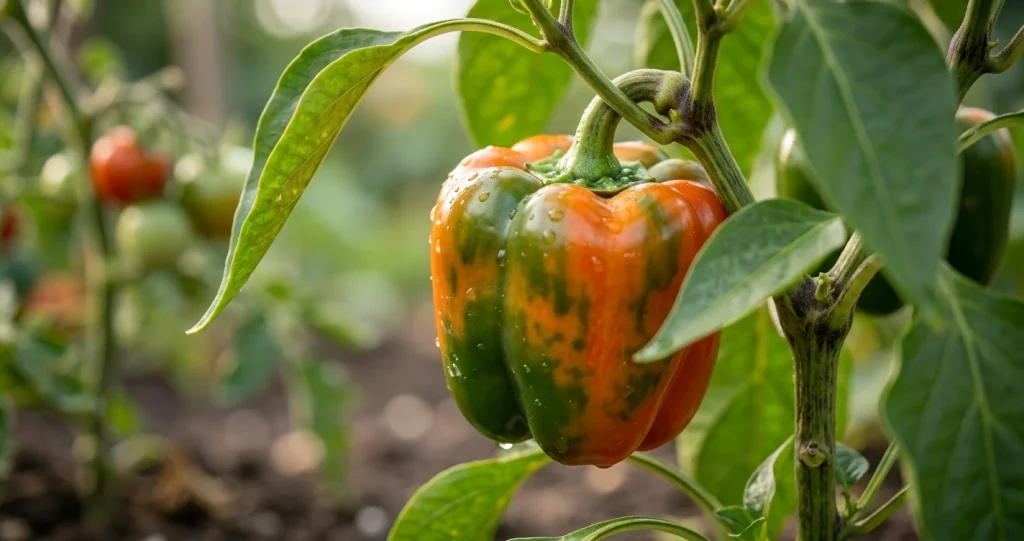
A red-ripening pepper may progress from green through mixed orange and red patches before becoming fully red.
A yellow-ripening cultivar may instead change from green to yellow, while certain purple varieties can display dark pigmentation before reaching their final mature color.
Therefore, the best way to predict a pepper’s final appearance is to know the cultivar you planted.
The 6 Bell Pepper Ripening Stages
These six stages provide a convenient way to observe how a typical red-ripening bell pepper changes.
They are not six officially standardized botanical stages, and the transitions may overlap.
Stage 1: Mature Green
The pepper has reached its expected harvestable size and has firm, glossy skin.
Its flesh is generally crisp, with a fresh, grassy flavor and varying degrees of bitterness.
At this stage, the fruit can be harvested for cooking or eaten raw.
If left attached to a healthy plant, a red-ripening variety may continue developing color.
Stage 2: Color Break
The first visible patches of new color appear.
Small yellowish, orange, or reddish areas may develop as chlorophyll declines and other pigments become visible.
The transition is often irregular rather than perfectly uniform.
A pepper at color break is still edible, although its flavor may differ from both fully green and fully red fruit.
Stage 3: Partial Color
A substantial portion of the pepper begins changing color.
Green areas remain visible alongside orange or red sections.
As ripening progresses, sugars and other flavor-related compounds change, often making the pepper taste less grassy and somewhat sweeter.
The exact flavor depends on variety and growing conditions.
Stage 4: Mostly Colored
Most of the pepper has developed its expected mature coloration.
Only smaller green patches remain.
The fruit is approaching full color maturity, and its flavor may be noticeably sweeter than at the mature-green stage.
Gardeners who prefer nearly ripe peppers can harvest at this point, although leaving the fruit attached longer may allow more complete coloration.
Stage 5: Fully Colored
The pepper has reached the typical mature red color of its cultivar.
At this stage, red-ripening bell peppers commonly have a sweeter, more developed flavor than their green counterparts.
Their carotenoid content is generally higher, and vitamin C levels can also differ with maturity.
A healthy, fully colored pepper with firm skin is an excellent choice for fresh eating, roasting, or cooking.
Stage 6: Overripe
If a pepper remains on the plant beyond its ideal eating stage, its texture may gradually decline.
The skin can soften or wrinkle, and the fruit may eventually become less appealing.
Overripeness is not a required stage for harvesting seeds.
For seed saving, select healthy, fully mature fruit from suitable varieties rather than relying on wrinkled or deteriorating peppers.
Green Bell Pepper vs Red Bell Pepper
Green and red bell peppers can come from the same red-ripening cultivar, harvested at different maturity levels.
Their differences extend beyond appearance.
| Characteristic | Mature-green pepper | Fully red pepper |
|---|---|---|
| Flavor | Grassy, fresh, sometimes slightly bitter | Generally sweeter and more developed |
| Texture | Typically firm and crisp | Often still crisp, sometimes slightly softer |
| Sugars | Generally lower | Often higher |
| Carotenoids | Different profile, often lower in red carotenoids | Richer in red carotenoids |
| Vitamin C | Good source | Often higher, depending on cultivar |
| Common uses | Stir-fries, salads, stuffed peppers | Roasting, sauces, salads, grilling |
Why Red Peppers Often Taste Sweeter
During ripening, changes in carbohydrate metabolism affect the balance of sugars and other flavor compounds.
Green flavors may become less pronounced while sweetness increases.
However, sweetness is not determined by color alone. Genetics, temperature, water availability, and overall growing conditions also influence taste.
Nutritional Differences
Both green and red bell peppers provide valuable nutrients, including vitamin C and dietary fiber.
Fully red peppers often contain higher concentrations of certain carotenoids, including pigments with antioxidant activity.
Vitamin C concentrations may also increase during ripening, although exact differences vary.
Neither color is universally better for every meal or nutritional goal.
How Long Bell Peppers Take to Ripen
There is no single ripening schedule that applies to every bell pepper variety.
Seed catalogs commonly provide estimated days to maturity, but these numbers must be interpreted carefully.
Mature-Green Versus Full-Color Harvest
Some varieties are listed according to when their fruits can be harvested green.
Others include separate estimates for green and fully colored maturity.
Developing full color often requires additional time after the fruit reaches its mature-green stage.
The difference can amount to several weeks under favorable conditions, but weather and cultivar characteristics make exact predictions unreliable.
Temperature and Sunlight
Bell peppers are warm-season crops.
Moderately warm conditions support healthy growth and fruit development, while prolonged cool weather can slow ripening.
Extreme heat may also interfere with fruit set and plant performance.
Adequate sunlight supports photosynthesis and the plant’s overall energy supply, but exposing fruit to excessive direct sunlight can increase the risk of sunscald.
Plant Health and Growing Conditions
Consistent watering, suitable nutrition, and healthy foliage help plants support developing fruit.
Severe drought stress, root problems, or significant leaf loss may slow development.
Gardeners should avoid excessive nitrogen fertilization, which can encourage leafy growth without necessarily improving fruit production.
When to Harvest Bell Peppers
The ideal harvest time depends on how you plan to use the fruit.
Harvest Green for Crisp Texture
Mature-green bell peppers are excellent for stuffed peppers, stir-fries, and recipes where a slightly grassy flavor is desirable.
Harvest when the fruit has reached its expected size and feels firm.
Removing mature-green peppers may also encourage the plant to continue directing resources toward other developing fruit.
Wait for Full Color for Sweeter Flavor
If your goal is a sweeter pepper, allow a red-ripening variety to develop its characteristic mature color.
The fruit should remain firm and free from serious damage.
Check plants regularly because fully colored peppers can deteriorate if left too long.
Use Pruners Instead of Pulling
Bell pepper stems can be relatively tough.
Pulling fruit directly from the plant may break branches or damage developing shoots.
Use clean pruning shears or scissors to cut the stem, leaving a short section attached to the pepper.
For general vegetable-growing guidance, see the University of Minnesota Extension guide to growing peppers.
Can Bell Peppers Ripen After Picking?
Bell peppers can undergo some additional color development after harvest, particularly when they are already close to ripening.
However, they are generally considered non-climacteric fruits, meaning they do not undergo the same strong ethylene-driven ripening process as bananas or tomatoes.
Color Change Does Not Guarantee Better Flavor
A partially colored pepper may become redder after picking.
That does not mean it will develop the same sweetness or overall quality as fruit allowed to mature on a healthy plant.
Once detached, the pepper no longer receives sugars and other resources from the plant.
Best Postharvest Practices
Harvest peppers at the color and maturity stage appropriate for their intended use.
Handle them gently to avoid bruising.
Refrigerate harvested peppers for storage rather than leaving them in hot conditions in an attempt to force ripening.
If full color is your priority, allowing healthy fruit to ripen on the plant is usually the better approach.
Why Bell Peppers Sometimes Stay Green
A pepper that remains green is not necessarily experiencing a problem.
The Variety May Mature Green or Another Color
Some peppers are intended to be harvested green, while others have mature colors that differ from red.
Check the seed packet or cultivar description before assuming something is wrong.
Cool Weather Slows Development
Autumn temperatures can slow color changes, especially when nighttime conditions become consistently cool.
Plants approaching the end of the growing season may not have enough warmth or time to finish ripening all their fruit.
The Fruit May Need More Time
A mature-green pepper can remain green for a period before visible color changes begin.
Patience is often the simplest solution when the plant is healthy and growing conditions are suitable.
Plant Stress Can Interfere
Poor drainage, irregular watering, root damage, and severe pest pressure can reduce plant vigor.
Maintaining healthy foliage and balanced growing conditions supports normal fruit development.
Common Bell Pepper Ripening Mistakes
Harvesting Too Early for Full Color
Picking a pepper at the mature-green stage is perfectly acceptable.
However, harvesting it early while expecting the same sweetness as a fully colored pepper can lead to disappointment.
Confusing Sunscald With Ripening
Sunscald may produce pale, bleached, or damaged areas on fruit exposed to intense sunlight.
These patches are not normal ripening colors.
Damaged tissue may later become sunken or vulnerable to decay.
Leaving Damaged Fruit on the Plant
Peppers with significant rot or serious damage should be removed appropriately.
Leaving deteriorating fruit attached does not improve its eating quality.
Expecting Every Picked Pepper to Turn Red
A green pepper harvested well before color break may remain green after picking.
Even when color changes occur, they do not guarantee improved sweetness.
Common Myths About Bell Pepper Colors
Myth 1: Every Green Bell Pepper Eventually Turns Red
False. Mature color depends on genetics, and some varieties finish yellow, orange, brown, or other colors.
Myth 2: Red, Yellow, and Orange Peppers Are Always the Same Variety at Different Stages
False. Many differently colored peppers are separate cultivars bred for particular mature colors.
Myth 3: Green Bell Peppers Are Not Ready to Eat
False. Mature-green peppers are commonly harvested, sold, and eaten.
Myth 4: A Red Pepper Is Automatically Better for Seed Saving
Not necessarily. Seed quality depends on fruit maturity, plant health, seed development, and genetics.
Hybrid varieties may not produce offspring identical to the parent plant.
Myth 5: Wrinkled Peppers Are Always Better for Seeds
False. A fully mature, healthy pepper is preferable to one that is deteriorating.
Frequently Asked Questions
Do green bell peppers turn red?
Many red-ripening bell pepper varieties begin green and eventually turn red. Other cultivars mature to different colors.
Are green peppers unripe?
They may be mature-green, meaning they are fully developed and ready to harvest even though they have not reached their final color.
How long does a green bell pepper take to turn red?
The timing varies by cultivar, temperature, and growing conditions. Full color may develop weeks after the mature-green harvest stage.
Are red bell peppers sweeter than green ones?
Generally, fully red peppers from red-ripening cultivars taste sweeter because their sugar and flavor profiles change during maturation.
Can a green pepper turn red after being picked?
Some peppers can develop additional color after harvest, especially if color change has already begun. However, quality and sweetness may not develop as fully as on the plant.
Why is my pepper half green and half red?
It is likely in a transitional ripening stage. Uneven patches of color are normal in many red-ripening cultivars.
Can I save seeds from a fully red bell pepper?
Yes, if the fruit is healthy and fully mature. For predictable offspring, use seeds from an appropriate open-pollinated variety and prevent unwanted cross-pollination.
Should I pick peppers before frost?
Yes. Bell peppers are sensitive to freezing temperatures, so harvest usable fruit before a damaging frost.
Conclusion
The six bell pepper ripening stages provide a practical way to understand the transformation of a red-ripening pepper from mature green to fully colored fruit and, eventually, declining quality.
Green peppers are already useful and edible, while fully colored peppers often offer sweeter flavor and a different nutritional profile.
The most important consideration is the cultivar. Not all bell peppers turn red, and not every variety follows the same sequence of colors.
By understanding ripening physiology, maintaining healthy plants, and harvesting at the right time for your intended use, you can enjoy better-quality peppers throughout the growing season.
External Sources
1. University of Maryland Extension — Growing Peppers in a Home Garden, Covers mature-green harvesting, full-color ripening, growing conditions, and harvesting methods.
2. UC Davis — Bell Pepper Postharvest Information, Explains maturity indicators, storage, ethylene response, and why bell peppers are classified as non-climacteric.
3. Iowa State University Extension — Growing Peppers in the Home Garden, Provides practical information about bell pepper varieties, color changes, harvesting, and fruit quality.