
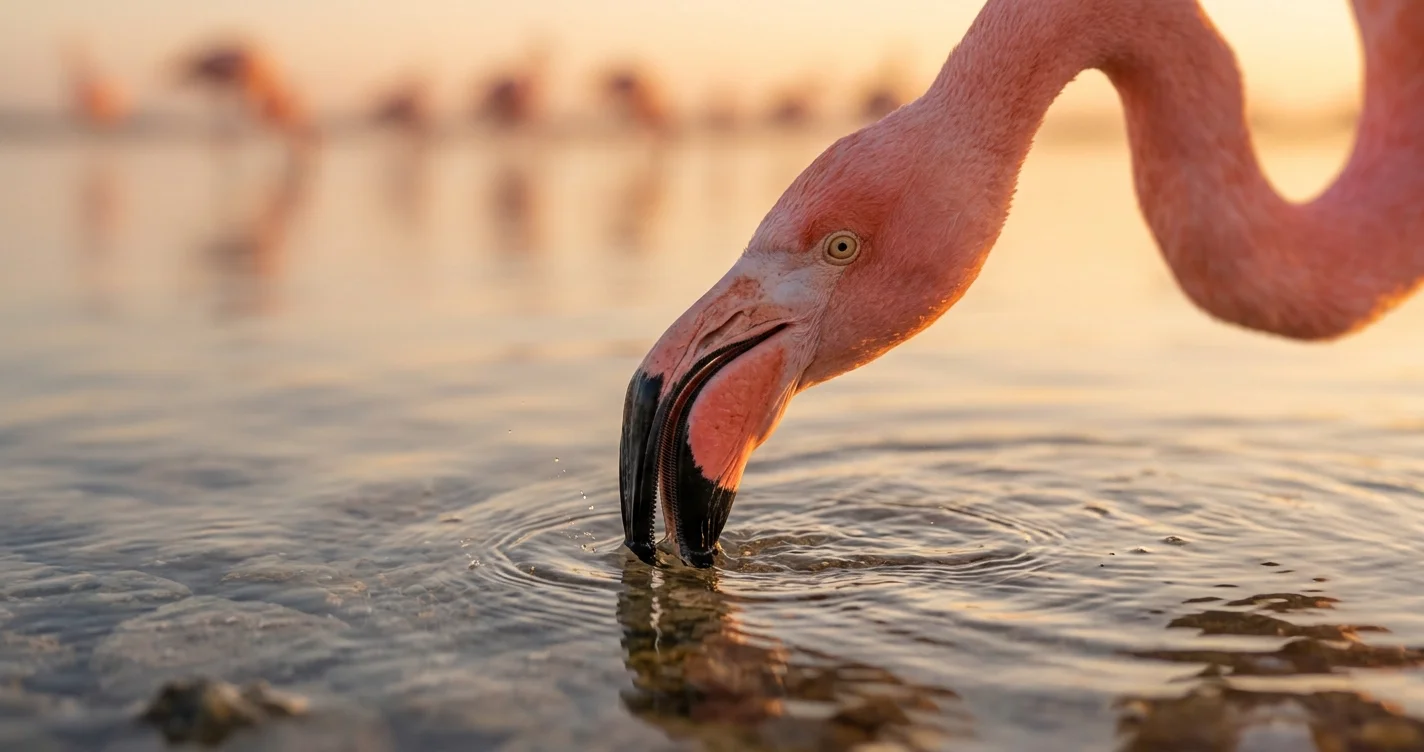
Flamingos are famous for their brilliant pink feathers, extraordinarily long legs, and graceful appearance in shallow water. Yet their unusual coloring is not something they are simply born with. It develops through a fascinating relationship between food, pigments, and feather growth.
Understanding why flamingos are pink reveals much more than a colorful dietary trick. These birds have specialized bills that filter tiny organisms from water, flexible necks that allow them to feed upside down, and leg anatomy that often surprises people.
From gray newborn chicks to bright pink adults standing on one leg, flamingos demonstrate how evolution can shape nearly every part of an animal’s body to suit its environment.
Table of Contents
- Why Flamingos Are Pink: The Science of Their Color
- Why Baby Flamingos Are Gray
- How Flamingos Feed With Their Heads Upside Down
- The Strange Anatomy of Flamingo Legs
- Why Flamingos Stand on One Leg
- Where Flamingos Live and What They Eat
- Flamingo Breeding Colonies and Parental Care
- Common Myths About Flamingos
- Frequently Asked Questions
- Conclusion
Why Flamingos Are Pink: The Science of Their Color
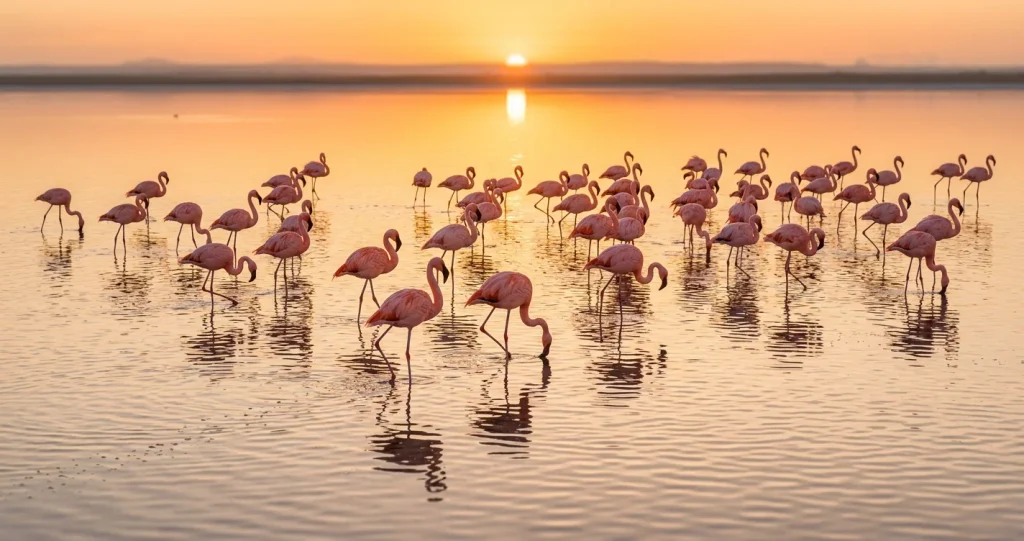
The distinctive pink coloring of flamingos comes primarily from carotenoids, a group of naturally occurring pigments found in various plants, algae, and other organisms.
Carotenoids are responsible for many yellow, orange, and red colors in nature. They also contribute to the coloration of carrots, tomatoes, and numerous bird species.
Flamingos obtain these pigments through their diets rather than producing them entirely from scratch.
How Algae and Small Crustaceans Provide Pigments
Different flamingo species consume varying combinations of algae, cyanobacteria, small crustaceans, insect larvae, and other aquatic organisms.
Some of these foods contain carotenoid pigments, while others acquire the pigments by feeding on algae or microorganisms.
Brine shrimp, for example, can accumulate carotenoids from their food.
When flamingos consume these organisms, their digestive systems absorb the pigments.
The birds then metabolize and distribute carotenoid compounds, allowing them to become incorporated into growing feathers and other tissues.
Why Some Flamingos Are Brighter Than Others
Not every flamingo has the same shade of pink.
Depending on species, diet, age, and individual condition, plumage can range from pale pink to vivid coral or reddish tones.
The American flamingo (Phoenicopterus ruber) is often particularly colorful, while greater flamingos (Phoenicopterus roseus) typically have paler bodies with stronger pink coloration on certain feathers.
Color intensity can also change over time as feathers are replaced and dietary pigment availability varies.
Can Flamingos Lose Their Pink Color?
Yes. If a flamingo receives insufficient dietary carotenoids over time, newly grown feathers may become noticeably paler.
This is one reason properly managed flamingo diets in zoos and conservation facilities include appropriate carotenoid sources.
However, a pale flamingo is not automatically unhealthy. Species differences, age, feather condition, and other factors must also be considered.
Why Baby Flamingos Are Gray
Flamingo chicks do not hatch with the bright pink feathers associated with adults.
Instead, newly hatched chicks usually have pale grayish or whitish down, which is gradually replaced as they grow.
Their Color Develops Gradually
Young flamingos develop their adult coloration over an extended period.
As they begin consuming food containing carotenoids and replace their juvenile plumage, pink pigments gradually become more visible.
The process can take several years, depending on the species and individual bird.
This explains why a flamingo colony may contain birds with dramatically different colors.
How Flamingo Parents Feed Their Chicks
Flamingo parents produce a specialized nutritious secretion commonly called crop milk.
Both males and females can produce this substance in their upper digestive tract.
The secretion contains proteins, fats, and pigments that help nourish developing chicks.
Unlike mammalian milk, it is not produced by mammary glands.
Parents regurgitate the secretion to feed their offspring until the young become capable of feeding independently.
How Flamingos Feed With Their Heads Upside Down
One of the most extraordinary flamingo adaptations is its specialized feeding system.
The bird’s large, sharply curved bill may look awkward when viewed from the side, but its shape is highly effective for filtering food from water.
A Bill Designed for Filtering
Inside the flamingo’s bill are specialized comb-like structures called lamellae.
These structures help separate edible particles from water and sediment.
Flamingos also possess a muscular tongue that moves food and water through the filtering apparatus.
The system works somewhat like a biological sieve, although its mechanics are more complex than those of a simple strainer.
Why the Head Turns Upside Down
When feeding, flamingos bend their long necks downward and position their heads upside down in shallow water.
In this position, the bill is oriented to scoop or filter water and sediment efficiently.
The bird uses coordinated movements of its tongue and bill to retain food while expelling excess water.
Different species have different bill structures suited to particular food sizes.
Some specialize in filtering very small organisms, while others consume a broader range of aquatic prey.
Two Feeding Styles
Flamingos can use different feeding movements depending on water depth and food availability.
Some sweep their bills from side to side through shallow water or soft sediment.
Others feed with their heads submerged while moving slowly through suitable areas.
Their long necks and legs allow them to reach feeding zones that shorter-legged birds may find difficult to access.
For additional information about flamingo biology, the University of Michigan’s Animal Diversity Web profile of the greater flamingo provides scientific background on flamingo feeding, behavior, and reproduction.
The Strange Anatomy of Flamingo Legs
Flamingo legs appear unusually long and flexible, but one of their most recognizable joints is frequently misunderstood.
The joint that looks like a backward-bending knee is actually the ankle.
Where the Real Knee Is Located
A flamingo’s true knee is positioned higher on the leg, close to the body, and is largely hidden beneath feathers.
The visible joint halfway down the exposed leg is part of the ankle region.
This arrangement is common among birds, although the extraordinary length of flamingo legs makes it especially noticeable.
Why the Ankle Appears to Bend Backward
The apparent backward bend occurs because the bird’s lower limb anatomy differs from the simplified human leg shape people often imagine.
The long section below the visible ankle consists largely of elongated foot bones.
This structure allows flamingos to wade through shallow water while keeping most of their bodies above the surface.
Specialized Feet for Wetlands
Flamingos have webbed feet that help support movement across soft mud and shallow water.
Their feet can also disturb sediment while feeding, making small organisms more accessible.
Together, long legs and webbed feet allow them to exploit specialized wetland habitats.
Why Flamingos Stand on One Leg
Few flamingo behaviors are more recognizable than standing on one leg.
The posture may appear uncomfortable to humans, but flamingos can maintain it for extended periods.
Conserving Body Heat
One explanation is that standing on one leg helps reduce heat loss.
Legs exposed to water and air can transfer body heat to the surrounding environment.
By lifting one leg and tucking it closer to the body, a flamingo reduces the surface area available for heat exchange.
Research suggests that thermal conditions can influence this behavior.
A Surprisingly Stable Posture
Studies of flamingo anatomy and balance indicate that standing on one leg may require relatively little muscular effort.
The bird’s body mechanics can help stabilize the position.
This makes one-legged standing an efficient resting posture rather than a constant balancing challenge.
Not Just a Cold-Weather Behavior
Flamingos may stand on one leg in a range of environmental conditions.
Heat conservation is therefore not necessarily the only influence.
Resting behavior, posture, and mechanical efficiency may also contribute.
Scientists continue investigating how these factors interact.
Where Flamingos Live and What They Eat
Flamingos occur in several regions of the world, including Africa, southern Europe, parts of Asia, the Caribbean, and South America.
Different species inhabit different geographic ranges, but they share a strong association with shallow aquatic environments.
Salt Lakes and Coastal Lagoons
Many flamingos live in saline or alkaline lakes, coastal lagoons, estuaries, and other wetlands.
Some habitats have chemical conditions that would be challenging for many other birds.
Flamingos are able to exploit food resources in these environments because of their specialized feeding systems.
Their Diet Depends on the Habitat
The composition of a flamingo’s diet varies with species and location.
Greater flamingos may consume small crustaceans, mollusks, insect larvae, and other aquatic organisms.
Lesser flamingos (Phoeniconaias minor) rely heavily on microscopic organisms, including cyanobacteria, in suitable alkaline lakes.
This dietary specialization helps explain why different flamingo species can coexist in some wetlands.
Wetlands Support More Than Flamingos
Healthy wetlands provide food, nesting areas, and shelter for numerous bird species and other wildlife.
They also contribute to water regulation, nutrient cycling, and broader ecological processes.
Readers interested in wetland wildlife can explore additional nature articles at Secrets of the Green Garden.
Flamingo Breeding Colonies and Parental Care
Flamingos are highly social birds that often gather in large groups.
During breeding, some colonies contain thousands of individuals, although colony size varies considerably.
Mud-Mound Nests
Many flamingos build raised nests from mud and sediment.
These nests often resemble small cones with a shallow depression at the top.
The elevated structure helps keep the egg above shallow water and surrounding wet ground.
Usually One Egg at a Time
Flamingos typically lay a single egg per breeding attempt.
Both parents may participate in incubation and chick care.
After hatching, the chick remains dependent on parental feeding while it develops.
Large Groups of Young Flamingos
As chicks grow, they may gather in large groups commonly called crèches.
These groups can provide social and protective advantages.
Despite the large number of young birds, parents can recognize their own offspring using vocal signals.
Conservation Challenges
Flamingo populations depend on suitable wetland habitats and reliable food supplies.
Water diversion, pollution, habitat development, and climate-related changes can threaten important breeding and feeding areas.
Disturbance near nesting colonies can also reduce reproductive success.
Protecting wetlands and maintaining suitable water conditions are important components of flamingo conservation.
Common Myths About Flamingos
Flamingos have inspired many popular claims, but not all are scientifically accurate.
Myth 1: Flamingos Are Born Pink
Flamingo chicks generally hatch with pale or grayish down.
Their pink coloration develops gradually as they obtain and metabolize dietary carotenoids.
Myth 2: Flamingos Turn Pink Only Because They Eat Shrimp
Shrimp and other crustaceans can provide carotenoids, but algae and additional dietary sources also contribute.
Different flamingo species have different diets.
Myth 3: Flamingos Have Backward-Bending Knees
The visible backward-bending joint is the ankle.
The true knee is located higher on the leg and is usually hidden by feathers.
Myth 4: Flamingos Stand on One Leg Because the Other Is Injured
One-legged standing is a normal resting behavior.
Healthy flamingos regularly alternate between one-legged and two-legged postures.
Myth 5: All Flamingos Are Bright Pink
Flamingo coloration varies considerably.
Species, age, diet, and individual condition can influence the shade and intensity of their feathers.
Frequently Asked Questions
Why are flamingos pink instead of white?
Flamingos obtain carotenoid pigments from their food. These pigments are processed by the body and incorporated into feathers, creating pink, orange, or reddish coloration.
Are baby flamingos pink?
No. Young flamingos typically have pale gray or whitish down and gradually develop pink coloration as they mature.
Do flamingos really eat shrimp?
Some flamingo species eat small shrimp-like crustaceans, including brine shrimp. Others rely more heavily on algae, cyanobacteria, or other aquatic organisms.
Why do flamingos feed upside down?
Their curved bills and specialized filtering structures work effectively when the head is inverted, allowing them to separate food from water and sediment.
Can flamingos stand on both legs?
Yes. Flamingos regularly stand and walk on both legs, but often rest on one leg for extended periods.
Do flamingos have knees?
Yes. Their true knees are positioned close to the body and are usually concealed beneath feathers.
How long does it take for flamingos to turn pink?
The development of adult coloration is gradual and can take several years, depending on the species, diet, and individual bird.
Are flamingos endangered?
Conservation status varies by species. Some flamingos have relatively stable populations, while others face significant threats from wetland degradation, disturbance, and changing environmental conditions.
Conclusion
Flamingos are far more than beautiful pink birds.
Their coloration comes from dietary carotenoids, their specialized bills allow them to filter tiny organisms from water, and their unusual leg anatomy supports life in shallow wetlands.
Even familiar behaviors, such as standing on one leg, involve fascinating interactions between anatomy, energy conservation, and balance.
Understanding these adaptations reveals how flamingos are closely connected to the wetlands that support them.
Protecting these habitats helps preserve not only flamingos but also the complex aquatic ecosystems on which countless other species depend.
External Sources
1. Smithsonian’s National Zoo — American Flamingo: Covers flamingo coloration, carotenoid-rich diets, feeding adaptations, breeding behavior, and habitat. Smithsonian National Zoo: American Flamingo
2. University of Michigan — Animal Diversity Web: Greater Flamingo: Scientific information about flamingo anatomy, diet, habitat, reproduction, and behavior.Animal Diversity Web: Greater Flamingo
3. San Diego Zoo Wildlife Alliance — Flamingo: Educational information about flamingo anatomy, filter feeding, diet, chick development, and breeding colonies. San Diego Zoo: Flamingo