
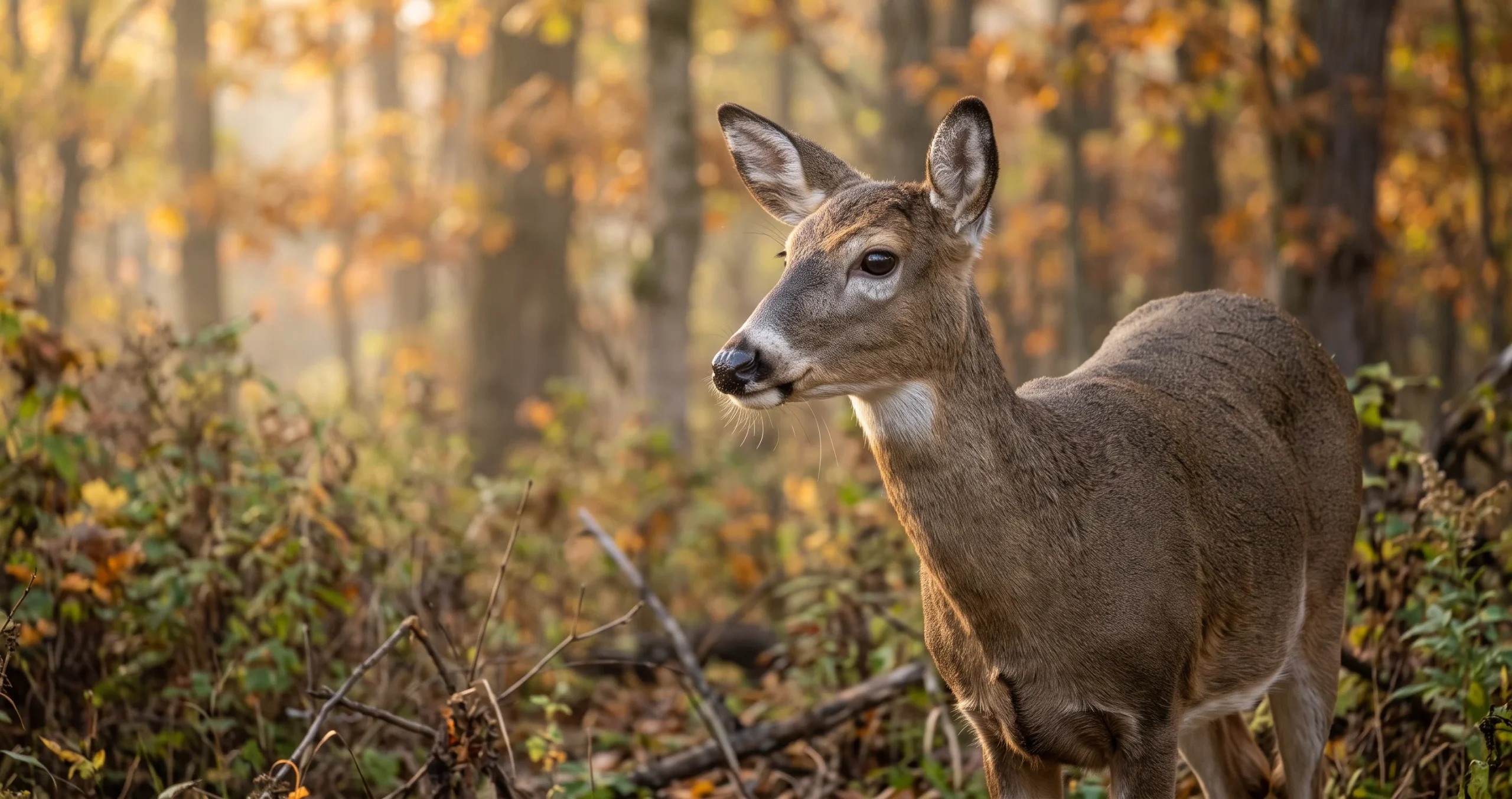
White-tailed deer are among North America’s most recognizable woodland mammals, yet their familiar appearance conceals a remarkable collection of biological adaptations. From the sudden flash of a white tail to the annual regeneration of antlers, deer anatomy adaptations help these animals detect danger, communicate, move efficiently, and compete for mates.
The white-tailed deer (Odocoileus virginianus) is more than a graceful forest herbivore. Its sensory systems, specialized glands, flexible hooves, and rapidly growing antlers reveal a complex relationship between anatomy, behavior, and survival.
Understanding these features provides a fascinating look at how evolution has shaped one of North America’s most widespread large mammals.
Table of Contents
- The White Tail: A Visible Warning Signal
- The Nose: A Powerful Chemical Detection System
- The Hooves: Movement and Scent Communication
- Antlers: Living Bone That Regrows Every Year
- How Deer Anatomy Adaptations Work Together
- Seasonal Changes in Deer Biology
- White-Tailed Deer Compared With Other Deer Species
- Common Myths About Deer Anatomy
- Frequently Asked Questions
- Conclusion
The White Tail: A Visible Warning Signal
The Biological Purpose of the White Tail
The white-tailed deer gets its common name from the striking white underside of its tail. When the animal is relaxed, the tail usually hangs downward, leaving much of the white surface concealed.
When alarmed, a deer may lift its tail, exposing a bright white patch that contrasts sharply with its brown coat. This behavior, known as tail-flagging, is particularly noticeable when deer run through woodland openings.
The white coloration makes the raised tail visually conspicuous. Its exact evolutionary functions are still discussed, but communication during potential danger is an important explanation.
Tail-Flagging and Predator Awareness
When a deer detects a possible threat, it may freeze, raise its head, stamp a foot, snort, or flee. Tail-flagging sometimes accompanies these responses.
Other deer can observe the conspicuous tail and may become alert or follow a fleeing animal. The signal can be especially noticeable in woodland habitats where vegetation partially obscures the body.
Researchers have also considered whether flagging communicates awareness to predators. However, no single explanation accounts for every instance of this behavior.
Deer Do Not Always Raise Their Tails
A common misconception is that white-tailed deer automatically raise their tails whenever danger approaches.
In reality, their responses vary with the situation. A deer attempting to remain unnoticed may keep its tail lowered, while another fleeing across open ground may display it prominently.
Tail posture is therefore one component of a broader behavioral response, rather than a perfectly reliable indication of danger.
The Nose: A Powerful Chemical Detection System
How Deer Detect Odors in Their Environment
Among the most important deer anatomy adaptations is a highly developed sense of smell.
White-tailed deer use their olfactory system to gather information about nearby animals, food sources, and potential threats. Airborne odor molecules interact with sensory receptors inside the nasal cavity, allowing the nervous system to process chemical information.
This ability is particularly useful in forests, where vegetation can block direct lines of sight.
A deer may detect the scent of a predator before seeing or hearing it, although detection depends on wind, distance, terrain, and environmental conditions.
Wind Direction and Predator Detection
Wind plays a major role in how odors travel through a deer’s habitat.
When air moves from a predator toward a deer, scent molecules may reach the animal before the predator comes into view. Conversely, a predator approaching from downwind may be harder to detect by smell alone.
Changing air currents, humidity, and vegetation can influence how scent spreads.
Deer frequently combine smell with attentive listening and visual scanning to assess their surroundings.
Scent Communication Between Deer
Smell is also essential for communication within the species.
White-tailed deer possess several specialized scent glands, including the tarsal, metatarsal, preorbital, and interdigital glands. Their secretions contribute to chemical information associated with individual animals and their activities.
During the breeding season, males often rub trees and create scrapes, leaving scent associated with glandular secretions and urine.
These behaviors are part of a complex communication system involving reproductive condition, social interactions, and local deer activity.
More Than a Sensitive Nose
Deer do not depend entirely on smell.
Their large ears can rotate to help detect sounds from different directions, while their eyes provide a broad field of view useful for identifying movement.
Together, these senses support rapid decisions about feeding, vigilance, and escape.
The Hooves: Movement and Scent Communication
The Structure of Cloven Hooves
White-tailed deer walk on two principal weight-bearing toes on each foot, creating the familiar split or cloven hoof.
The outer hoof covering is made primarily of keratin, a durable structural protein also found in mammalian hair and nails.
The hoof’s shape supports efficient movement across a variety of surfaces, including forest soil, grassland, and uneven woodland terrain.
Deer also possess smaller dewclaws positioned above the main hooves. These may contact the ground in soft substrates or during certain movements.
Adaptations for Running and Uneven Ground
The two main hoof digits can move slightly relative to each other, helping accommodate irregular surfaces.
Strong limb muscles, flexible joints, and elongated lower legs contribute to the deer’s ability to run and leap.
White-tailed deer can move rapidly through dense vegetation, using powerful hindlimb movements to clear obstacles.
Their locomotion reflects the coordination of the entire musculoskeletal system rather than the hooves alone.
Interdigital Glands and Chemical Signals
One of the lesser-known deer anatomy adaptations is the presence of interdigital scent glands between the main toes.
These glands produce secretions that can contact the ground as deer walk. Their location makes it possible for chemical material to be deposited along travel routes.
Scientists have investigated the potential role of these secretions in communication and scent recognition.
However, the precise information conveyed by interdigital gland odors is not completely understood. Claims that deer leave detailed, universally interpretable messages with every step go beyond established evidence.
Hooves as Part of a Larger Communication System
White-tailed deer use several glandular structures in different behavioral contexts.
For example, tarsal glands on the hind legs are associated with scent communication, particularly during the breeding season. Bucks may urinate over their tarsal glands in a behavior known as rub-urination.
Interdigital glands represent another possible source of chemical information.
Together, these structures demonstrate how deer anatomy supports communication beyond visible movements and vocal sounds.
Antlers: Living Bone That Regrows Every Year
The Remarkable Annual Antler Cycle
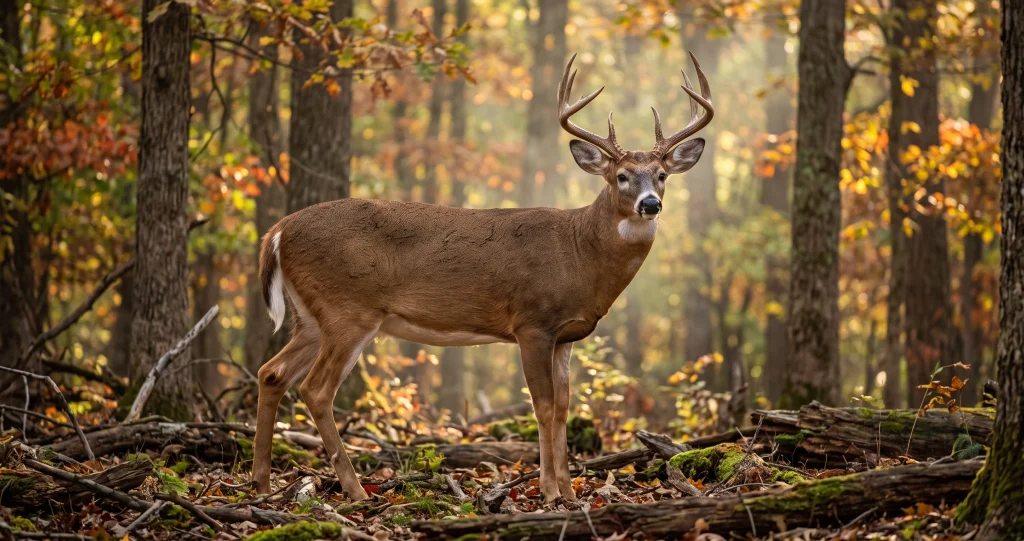
Perhaps the most visually impressive deer anatomy adaptations involve antlers.
Male white-tailed deer, commonly called bucks, typically grow a new pair of antlers every year. These structures develop from permanent bony bases called pedicles on the skull.
After the previous antlers are shed, new growth begins as seasonal hormonal conditions change.
Unlike most mammalian skeletal structures, antlers undergo a repeated cycle of rapid growth, mineralization, use, and shedding.
Velvet and Rapid Bone Development
During early development, growing antlers are covered with a soft, living tissue called velvet.
Velvet contains blood vessels and nerves that support the developing antlers. Beneath this covering, specialized tissues produce cartilage and bone as the antlers lengthen.
This growth requires substantial energy and nutrients, including minerals involved in bone formation.
Antlers are among the fastest-growing bone structures in mammals, although growth rates vary considerably with species, age, nutrition, and individual condition.
Hormones Control Antler Growth and Shedding
The antler cycle is closely connected to seasonal changes in reproductive hormones.
In white-tailed bucks, changing daylight influences physiological processes associated with testosterone production.
As antlers mature and testosterone levels rise, the velvet dries and is shed, revealing hardened bone.
After the breeding season, declining testosterone contributes to the development of specialized cells that weaken the connection between the antler and its pedicle.
Eventually, the antler separates and falls away, allowing the cycle to begin again.
Antlers During Competition
Mature antlers play an important role in competition among male deer during the breeding season.
Bucks may use antler displays, body posture, and physical contests when competing for access to receptive females.
Antlers can also communicate aspects of an individual’s physical development and condition, although size alone does not determine dominance or reproductive success.
Not every encounter results in direct fighting. Behavioral assessment can allow animals to avoid unnecessary physical conflict.
Why Antler Size Varies
Antler development is influenced by several interacting factors.
Age is important because young bucks generally produce smaller antlers than physically mature individuals. Nutrition also affects the resources available for skeletal growth.
Genetics, health, environmental conditions, and previous injuries can influence antler shape and development.
Large antlers should not automatically be interpreted as proof that a deer is exceptionally old or genetically superior.
Antlers Are Different From Horns
Antlers and horns are often confused, but they are biologically distinct structures.
Deer antlers are primarily bone and are usually shed and regrown annually. True horns, such as those found in cattle and goats, generally consist of a permanent bony core covered by a keratin sheath.
In most deer species, antlers are primarily associated with males.
Reindeer are a notable exception because females commonly grow antlers too. Female white-tailed deer can occasionally develop antlers, often in association with unusual hormonal or developmental conditions.
How Deer Anatomy Adaptations Work Together
The survival value of these features becomes clearer when they are considered together.
A deer feeding in a woodland clearing may detect an unfamiliar odor, turn its ears toward a sound, and scan nearby vegetation for movement.
If it decides to flee, its limbs and cloven hooves support rapid movement across uneven ground. Its raised white tail may also provide a conspicuous visual cue to nearby deer.
Meanwhile, chemical signals deposited through glandular secretions contribute to social communication over longer periods.
These adaptations are not independent tricks. They form an integrated system shaped by the challenges of finding food, avoiding predators, reproducing, and navigating changing habitats.
Seasonal Changes in Deer Biology
Spring and Summer
During spring, deer increasingly exploit newly available vegetation. Bucks begin developing antlers, while pregnant females approach the period when fawns are born.
In summer, growing antlers remain covered in velvet, and deer adjust their activity according to temperature, food availability, and disturbance.
Autumn and Winter
Autumn brings major behavioral changes associated with the breeding season, commonly called the rut.
Bucks increase scent-marking activity and may travel more widely while searching for receptive females.
As winter approaches, deer also respond to changes in forage quality, weather, and energy requirements.
The timing and intensity of these seasonal patterns vary across North America’s different climates.
White-Tailed Deer Compared With Other Deer Species
White-tailed deer share many biological characteristics with other members of the deer family, Cervidae, but important differences exist.
Mule deer (Odocoileus hemionus) typically have larger ears and often display a distinctive bounding gait called stotting. Their antlers commonly branch differently from those of white-tailed deer.
Elk possess much larger bodies and antlers, while moose have long legs and broad muzzles adapted to different ecological conditions.
Reindeer are especially distinctive because females commonly develop antlers.
These comparisons show that deer anatomy reflects both shared evolutionary ancestry and adaptation to particular habitats.
Common Myths About Deer Anatomy
Myth: Deer always raise their tails when frightened.
Tail-flagging is common but not universal. Responses depend on the animal and the situation.
Myth: Deer antlers are permanent horns.
Antlers are bone structures that typically grow and shed annually, unlike most true horns.
Myth: Every scent gland has one clearly understood function.
Researchers have documented several deer scent glands, but the precise meaning of all their chemical signals remains incompletely understood.
Myth: Bigger antlers always indicate an older deer.
Antler size is influenced by age, nutrition, genetics, and health. It cannot provide an exact age by itself.
Frequently Asked Questions
What makes white-tailed deer different from other deer?
Their characteristic white tail underside, body proportions, behavior, and antler structure help distinguish them from related species. Tail-flagging is particularly recognizable in white-tailed deer.
Do deer use their tails to communicate?
A raised white tail can function as a visible signal during alarm or flight. However, its interpretation depends on context, and scientists continue to investigate the full range of possible functions.
Can deer smell predators from far away?
Deer have a highly developed sense of smell, but detection distance varies with wind direction, terrain, odor concentration, and atmospheric conditions. No single distance applies to every situation.
Do deer leave scent trails with their hooves?
Interdigital glands can deposit secretions as deer move. Their possible communication role is supported by anatomical and behavioral observations, although the exact information transmitted remains uncertain.
Does growing antlers hurt deer?
Growing antlers are living, innervated structures covered in sensitive velvet. Mature hardened antlers are different because the velvet is shed and the exposed antler bone no longer contains living nerves.
Why do deer lose their antlers every year?
Seasonal hormonal changes regulate the antler cycle. After the breeding season, declining testosterone contributes to antler shedding, followed by renewed growth during the next cycle.
Can female deer grow antlers?
Most female white-tailed deer do not grow antlers, but exceptional cases occur. In reindeer, antler growth among females is a normal characteristic of the species.
Conclusion
White-tailed deer are far more biologically sophisticated than their familiar woodland appearance might suggest.
Their conspicuous tails, sensitive noses, specialized hooves, chemical communication systems, and annually regenerating antlers illustrate the remarkable diversity of mammalian adaptations.
Some of these functions are well established, while others, particularly the precise meanings of chemical signals, remain active subjects of scientific investigation.
By understanding deer anatomy adaptations, we gain a deeper appreciation of how ordinary-looking wildlife has evolved to meet the challenges of survival in changing natural environments.