
Imagine a tiny mammal escaping a predator by leaving part of its skin behind. For most mammals, such an injury would be devastating, potentially causing extensive scarring and permanent damage. But the African spiny mouse possesses an extraordinary biological ability: it can repair substantial skin injuries and regenerate structures that most adult mammals struggle to replace.
African spiny mouse skin regeneration has become an important subject in regenerative biology. Researchers have discovered that these small rodents can regenerate hair follicles and other skin structures while limiting the dense scar formation commonly associated with mammalian wound healing.
The discovery challenges a long-standing assumption that adult mammals have only limited regenerative abilities. It also offers scientists a valuable natural model for investigating how injured tissues might recover their original structure instead of simply forming a scar.
The African spiny mouse is not a medical miracle, and its regenerative abilities have important limitations. Nevertheless, its biology provides a fascinating window into the hidden potential of mammalian tissue repair.
Table of Contents
- The African Spiny Mouse
- A Mouse That Can Lose Its Skin to Escape
- How African Spiny Mice Regenerate Their Skin
- The Science Behind Their Remarkable Regeneration
- What This Discovery Could Mean for Regenerative Medicine
- Five Fascinating Facts About African Spiny Mice
- Frequently Asked Questions
- Conclusion
The African Spiny Mouse
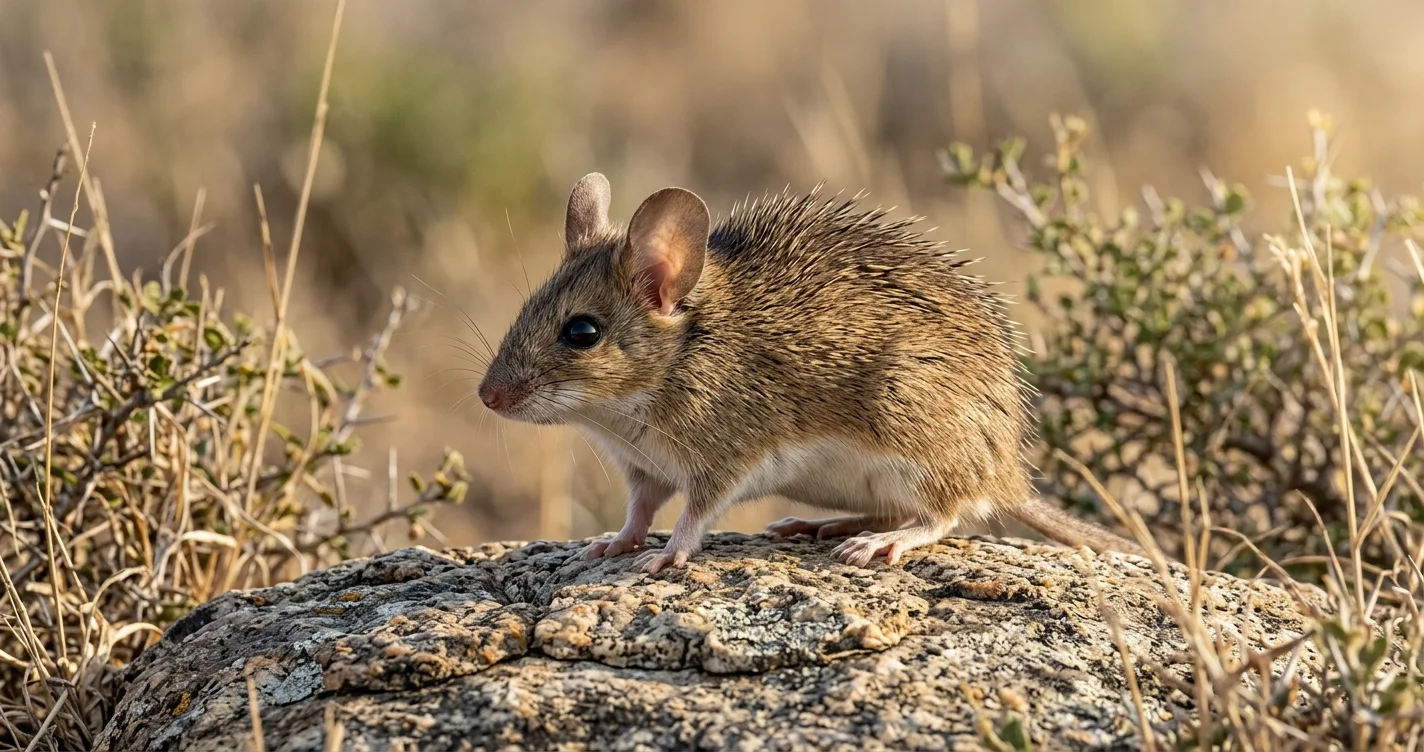
African spiny mice belong to the genus Acomys, a group of small rodents found in parts of Africa and neighboring regions of the Middle East. Despite their familiar mouse-like appearance, they are biologically distinct from the common house mouse, Mus musculus.
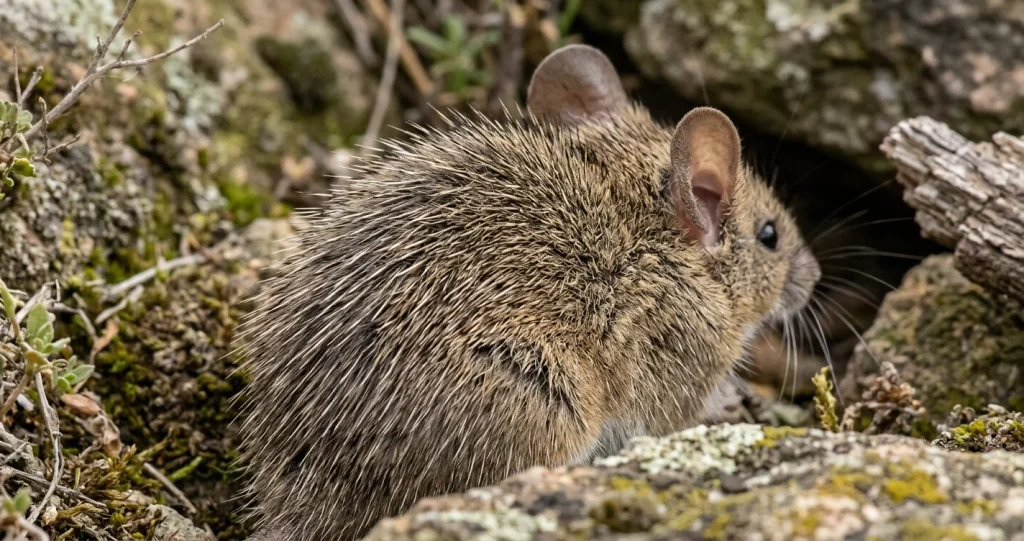
Their most recognizable feature is the coat of stiff, spine-like hairs covering much of their backs. These modified hairs give the animals their common name and create a rougher texture than the soft fur associated with ordinary mice.
Spiny mice typically have prominent rounded ears, large eyes, pointed snouts, long tails, and relatively pale undersides. Their coloration varies among species, often incorporating shades of brown, sandy beige, gray, or reddish brown.
Many species occupy rocky landscapes, dry grasslands, savannas, and arid environments. Some are particularly well adapted to sheltering among rocks and crevices, where they can avoid predators and extreme environmental conditions.
Their diets can include seeds, vegetation, and invertebrates, although feeding behavior differs among species and habitats.
What makes these rodents especially remarkable, however, is not their appearance or diet. It is the unusual structure of their skin and the way their bodies respond to injury.
A Mouse That Can Lose Its Skin to Escape
For most mammals, the skin forms a relatively tough protective covering. Its layers help resist mechanical damage while protecting underlying tissues from dehydration, infection, and environmental hazards.
African spiny mice possess unusually fragile skin that can tear under relatively modest mechanical stress.
In a landmark study published in Nature in 2012, researchers examined this unusual property and found that the skin of African spiny mice was substantially easier to tear than the skin of laboratory house mice.
The researchers also documented extensive skin loss in these animals, revealing a remarkable combination of skin fragility and regenerative repair.
This phenomenon is commonly described as skin autotomy, referring to the loss or shedding of tissue as a defensive adaptation.
Autotomy is familiar in certain reptiles, particularly lizards that can release their tails during predator attacks. In African spiny mice, the detachable structure is skin rather than a tail.
When a predator grabs the animal, the fragile skin may tear, potentially allowing the mouse to escape its grip.
Importantly, this does not mean that the mouse consciously chooses to shed its skin or that the process is painless.
Skin loss is a genuine injury. It exposes vulnerable tissue and creates risks associated with damage to the body’s protective barrier.
The evolutionary advantage is thought to lie in the possibility of escaping immediate capture, while the animal’s unusual healing abilities may help it recover afterward.
The 2012 findings provided compelling evidence that African spiny mice combine an unusual defensive skin property with a regenerative response rarely observed in adult mammals.
How African Spiny Mice Regenerate Their Skin
The most scientifically significant feature of these rodents is not simply their ability to lose skin. It is their capacity to rebuild damaged tissue in ways that differ from ordinary mammalian wound healing.
Wound Closure and Tissue Repair
After a skin injury, mammals normally initiate a coordinated repair process involving inflammation, tissue formation, and remodeling.
Blood clotting and inflammatory responses help protect the wound. Cells then migrate into the injured area, and new tissue develops to restore the protective barrier.
In ordinary adult mammals, this process often produces scar tissue rich in collagen.
African spiny mice also undergo wound closure, but experimental studies show that their repair process can proceed toward a more regenerative outcome.
Rather than replacing all damaged structures with dense scar tissue, they can restore important components of the original skin.
Researchers have observed substantial wound contraction and subsequent regeneration of skin structures.
This distinction matters because closing a wound and regenerating its original architecture are not the same biological achievement.
A closed wound may protect the body successfully while still lacking the hair follicles, glands, and organized tissue structure that existed before the injury.
Regrowing Hair Follicles and Skin Structures
One of the most striking discoveries involves the regeneration of hair follicles.
Hair follicles are complex miniature organs embedded in the skin. They contain specialized cells and interact with surrounding tissues to produce hair.
In many adult mammals, deeply damaged skin heals without restoring all the follicles that were lost.
African spiny mice can form new hair follicles within previously injured skin.
Researchers have also documented regeneration of associated skin structures, including glands, in experimental wound models.
This process demonstrates that the animals are doing more than covering an injury with replacement tissue.
They can reconstruct components of functional skin architecture.
However, the extent of regeneration depends on the tissue, injury model, and experimental conditions. The findings should not be interpreted as evidence that every wound is restored perfectly.
Reduced Scarring Compared With Typical Mammalian Healing
Scar formation is a normal protective response in mammals.
When tissue is severely damaged, cells called fibroblasts help produce extracellular matrix materials, particularly collagen, that stabilize the injured region.
This process can restore strength and prevent further damage, but excessive collagen deposition may produce stiff, fibrotic tissue.
African spiny mice show a different pattern of tissue remodeling in studied injuries.
Their wounds can regenerate important structures while displaying substantially reduced fibrotic scarring compared with typical laboratory mouse responses.
The difference is not simply faster healing. It concerns the quality and organization of the repaired tissue.
Scientists therefore distinguish regenerative healing, which restores lost structures, from fibrotic healing, which relies more heavily on scar formation.
African spiny mice provide a rare opportunity to study this distinction within mammals.
The Science Behind Their Remarkable Regeneration
Scientists are investigating the cellular and molecular mechanisms that allow African spiny mice to rebuild damaged tissues.
Several important processes appear to contribute to their regenerative abilities.
Extracellular Matrix Remodeling
The extracellular matrix is a network of proteins and other materials surrounding cells. It provides structural support and influences how cells move, communicate, and respond to injury.
During ordinary wound healing, collagen-rich matrix can accumulate and become organized into a dense scar.
In African spiny mice, researchers have observed a different extracellular matrix response, including a relatively porous matrix during regeneration.
The original 2012 study identified distinctive collagen organization in healing wounds, suggesting that the physical environment surrounding cells may help support tissue reconstruction.
This does not mean collagen is absent. Instead, the amount, arrangement, and remodeling of matrix materials differ from typical scar-forming repair.
Inflammation and Immune Responses
Inflammation is essential for normal wound healing. Immune cells remove damaged material, respond to potential infections, and release signals that influence tissue repair.
However, prolonged or poorly regulated inflammation can contribute to fibrosis.
Scientists are examining how inflammatory responses differ between regenerative spiny mice and conventional laboratory mice.
An important research question is whether particular immune-cell behaviors help create conditions favorable to regeneration.
The evidence does not support the simplistic idea that regeneration occurs because inflammation is completely switched off. Instead, the timing, composition, and resolution of inflammatory responses may influence the eventual outcome.
Cellular Signaling and Scar Formation
More recent experiments have identified specific molecular pathways associated with regeneration.
A 2021 study published in Developmental Cell investigated myofibroblasts, cells involved in wound contraction and scar formation.
The researchers found that injury-associated myofibroblasts behaved differently in spiny mice and conventional laboratory mice. They also identified a role for Hippo-YAP signaling in determining whether ear injuries followed a regenerative or fibrotic pathway.
Disrupting particular YAP-related signaling interactions in spiny mice inhibited regeneration and promoted fibrosis.
Another important study, published in Science Advances in 2023, examined extracellular signal-regulated kinase, commonly called ERK.
The researchers found that sustained ERK signaling was associated with successful regeneration. Inhibiting ERK shifted healing toward fibrosis in experimental spiny mouse ear injuries.
These findings indicate that regeneration depends partly on how cells interpret and respond to injury signals.
Regenerating Ear Tissue
African spiny mice are also capable of regenerating complex structures following certain ear injuries.
In experimental ear-punch studies, researchers observed restoration of tissues including cartilage, dermis, hair follicles, and sebaceous glands.
Cartilage is especially interesting because it provides structural support and is generally difficult to regenerate in adult mammals.
Scientists have compared aspects of this response with regeneration in salamanders, which can rebuild complex body structures.
In particular, spiny mouse ear regeneration involves the formation of tissue with characteristics resembling a regenerative blastema, a population of cells associated with rebuilding missing structures.
It is important to distinguish these findings from skin regeneration. The restoration of an experimental ear hole involves several tissue types, whereas skin-wound experiments examine the repair and regeneration of the skin itself.
Neither result establishes that African spiny mice can regenerate entire limbs or every damaged organ.
What This Discovery Could Mean for Regenerative Medicine
Regenerative medicine aims to restore damaged tissues and improve biological function rather than simply replacing injured areas with scar tissue.
African spiny mice are valuable to this field because they demonstrate that substantial tissue regeneration is possible in an adult mammal.
Researchers can compare their cells, immune responses, extracellular matrix, and molecular signaling pathways with those of mammals that heal primarily through fibrosis.
Such comparisons may reveal mechanisms that encourage regenerative repair.
One particularly important area is fibrosis.
Fibrosis occurs when excessive connective tissue accumulates after injury or during chronic disease. It can interfere with normal tissue function and contribute to serious health problems.
Understanding how spiny mice regulate scar-forming cells could help scientists identify new research targets for controlling fibrosis.
Another area of interest is hair follicle regeneration. Discovering how adult skin creates new follicles may improve scientific understanding of skin development and repair.
Research into ERK and Hippo-YAP signaling has already provided experimental evidence that specific molecular pathways can influence whether injured tissue regenerates or scars.
However, manipulating these pathways safely in humans is a separate challenge.
Cellular signaling networks perform many functions throughout the body. A pathway that supports regeneration in one experimental setting may have undesirable effects if altered in another.
Furthermore, mouse skin and human skin differ in important structural and physiological ways.
No established human treatment currently reproduces the full skin-regenerative ability of African spiny mice.
The most realistic scientific value of these animals lies in helping researchers understand the fundamental biology of tissue repair.
Five Fascinating Facts About African Spiny Mice
1. Their skin is unusually easy to tear. Mechanical testing has demonstrated exceptionally low resistance to tearing in studied African spiny mouse species. This property may help an animal escape when a predator grips its skin.
2. They can regenerate new hair follicles. Rather than merely covering a wound, spiny mice can form new hair-producing structures within repaired skin.
3. Some can regenerate ear cartilage. Experimental ear-punch injuries have demonstrated the restoration of several tissue types, including cartilage, making these rodents unusual among adult mammals.
4. Their regeneration involves specialized molecular signaling. Studies have identified important roles for pathways involving ERK and Hippo-YAP, providing insight into the cellular decisions that influence regeneration and fibrosis.
5. They are helping scientists reconsider mammalian healing. Their abilities demonstrate that adult mammals are not uniformly restricted to scar-based tissue repair.
Frequently Asked Questions
Can African spiny mice regrow their skin?
Yes. Researchers have documented substantial skin regeneration in African spiny mice, including the restoration of hair follicles and other skin structures. The extent of regeneration varies with the injury and experimental conditions.
Does losing skin hurt the mouse?
Skin tearing is a physical injury that damages living tissue. There is no reliable scientific basis for claiming that the process is painless. Although skin fragility may help the animal escape predators, it does not eliminate the biological consequences of injury.
Can African spiny mice regenerate hair follicles?
Yes. Experimental studies have demonstrated the formation of new hair follicles in previously injured skin. This ability is particularly important because adult mammalian skin frequently heals without fully replacing lost follicles.
Do African spiny mice heal without scars?
They can regenerate certain injuries with remarkably little fibrotic scarring. However, describing all their healing as completely scar-free would be an overgeneralization. Outcomes depend on the tissue, injury severity, and conditions studied.
Can this discovery help humans regenerate skin?
Potentially, but indirectly. Studying African spiny mice may reveal biological pathways relevant to wound healing and fibrosis. Translating those findings into safe, effective human therapies requires substantial additional research.
Conclusion
The African spiny mouse demonstrates that the regenerative abilities of mammals are more diverse than scientists once believed.
Its unusually fragile skin may provide an escape advantage during predator encounters, while its remarkable healing response allows it to reconstruct structures that many other adult mammals replace with scar tissue.
Research has revealed regeneration of skin, hair follicles, and complex ear tissues, alongside distinctive patterns of extracellular matrix remodeling and molecular signaling.
These discoveries do not mean that the African spiny mouse possesses unlimited regenerative powers or that human regenerative medicine has already solved the problem of scarring.
Instead, this small rodent offers something scientifically valuable: a natural example of how mammalian tissues can sometimes rebuild themselves.
By understanding the mechanisms behind African spiny mouse skin regeneration, scientists may uncover new principles that eventually contribute to better approaches to tissue repair and the study of fibrosis.