
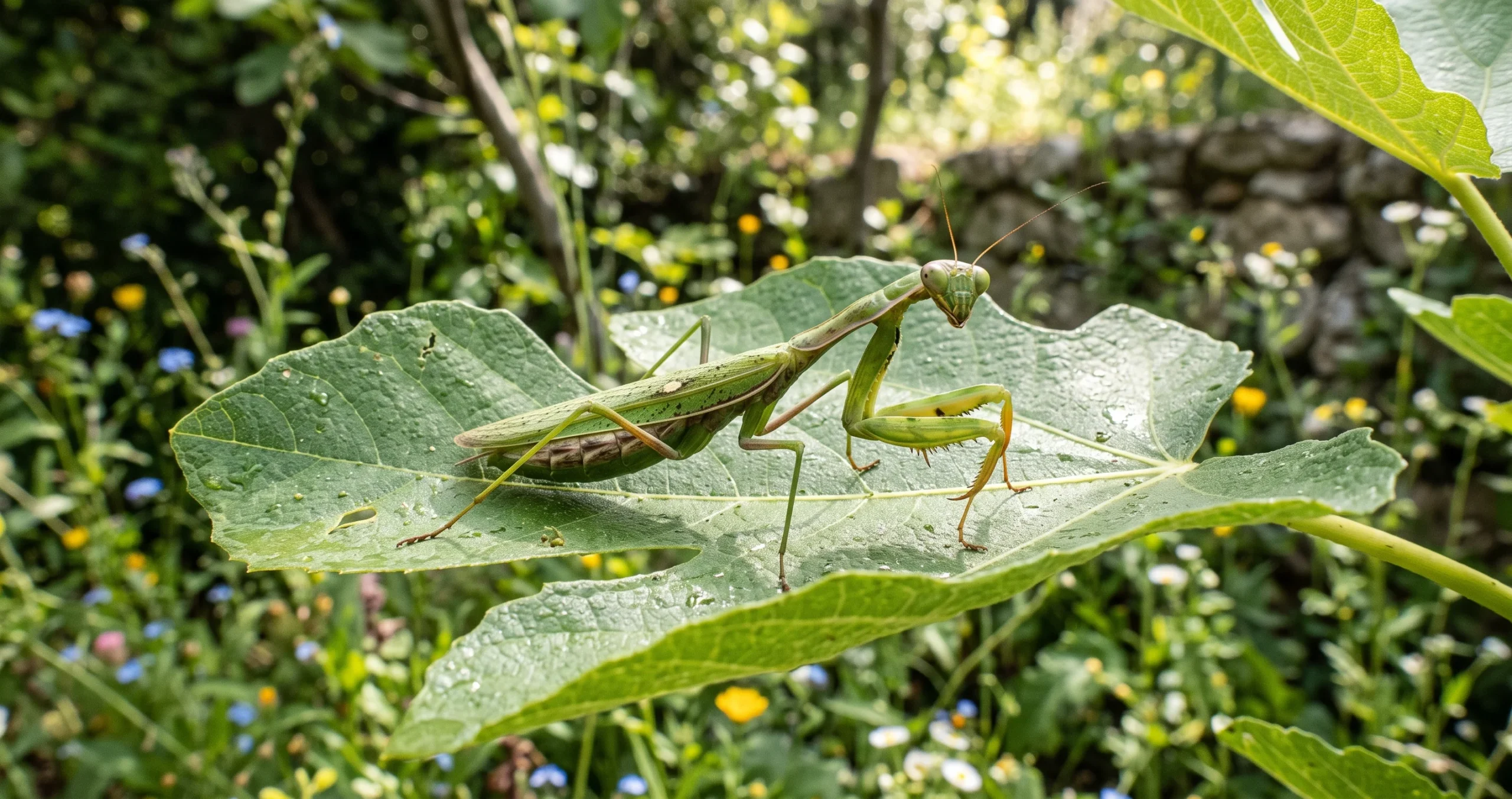
The strange world of praying mantis cannibalistic mating has produced one of the most persistent myths in nature: that a female praying mantis always kills and eats the male after mating. Sexual cannibalism is real, but scientific research shows that it is far from inevitable.
Wild observations and laboratory experiments reveal a much more complicated story. Female hunger, nutritional condition, male behavior, mating opportunities, and experimental conditions can all influence whether cannibalism occurs. In one classic field study of Mantis religiosa, researchers observed sexual cannibalism in 31% of matings—not every mating.
This makes praying mantis cannibalistic mating especially interesting to biologists because it combines predation, reproduction, nutrition, and evolutionary conflict in a single encounter.
Table of Contents
- What Is Praying Mantis Cannibalistic Mating?
- Do Female Praying Mantises Always Eat Their Mates?
- Wild vs. Laboratory Cannibalism
- Why Laboratory Results Can Be Different
- Why Female Mantises Eat Males
- Hunger, Nutrition, and Egg Production
- Does Being Eaten Benefit the Male?
- How Male Mantises Avoid Cannibalism
- How Males Detect Dangerous Females
- General Praying Mantis Biology
- What Praying Mantises Eat
- Praying Mantis Life Cycle
- Frequently Asked Questions
- Conclusion
What Is Praying Mantis Cannibalistic Mating?
Praying mantis cannibalistic mating refers to sexual cannibalism in which a female mantis attacks and consumes a male associated with a mating encounter.
Cannibalism can occur before copulation, during mating, or afterward. That timing matters.
A male killed before mating may lose his immediate opportunity to reproduce. A male attacked after mating has begun may already have transferred sperm. A male that escapes completely may potentially mate again.
This is one reason researchers do not treat every case of mantis cannibalism as biologically identical.
Do Female Praying Mantises Always Eat Their Mates?
No. The famous image of a female inevitably killing her partner greatly exaggerates real mantis behavior.
A field study of the European mantis, Mantis religiosa, recorded sexual cannibalism in approximately 31% of observed matings. That is frequent enough to be biologically important, but it also means that most observed matings in that study did not end in cannibalism.
Rates should not be generalized across all mantis species. There are thousands of mantis species worldwide, living under different ecological conditions and displaying different behaviors.
The more accurate description is that praying mantis cannibalistic mating occurs under some circumstances, not as a mandatory final stage of mating.
Praying Mantis Cannibalistic Mating in the Wild vs. Laboratory
One of the most important distinctions involves where scientists observe the insects.
Some of the dramatic reputation surrounding mantis sexual cannibalism developed from captive observations.
Laboratory experiments are extremely useful because researchers can control female hunger, male access, enclosure size, feeding history, and other variables. However, an enclosure is not identical to a natural plant or meadow.
A male placed near a hungry female inside a small container may have fewer escape options.
Wild males can potentially approach from different directions, retreat, wait, or abandon an encounter.
Field research nevertheless confirms that sexual cannibalism genuinely occurs in nature. The important correction is that laboratory observations should not automatically be interpreted as the exact frequency expected in wild populations.
Why Does a Female Praying Mantis Eat the Male?
The simplest answer begins with basic mantis biology.
A praying mantis is a predator.
A male approaching a female is therefore entering the strike range of an animal equipped with powerful raptorial forelegs designed to capture other animals.
The female also needs substantial resources for reproduction.
Producing eggs and egg cases requires energy and nutrients. A male mantis represents a relatively large package of animal tissue.
Research has consequently investigated whether sexual cannibalism can provide females with reproductive nutritional benefits.
The evidence indicates that it can.
Experiments have found relationships between female nutritional intake and reproductive output, while other research has demonstrated that nutrients obtained from cannibalized males can eventually contribute to female reproductive tissues and eggs.
Hunger Can Change the Risk
Female nutritional condition is one of the most important variables in praying mantis cannibalistic mating.
A hungry female may represent a greater predation risk than a well-fed female.
Experiments with Chinese mantises have shown that males can alter their behavior around females presenting different levels of danger.
This produces an intriguing interaction.
The female may gain valuable nutrition by consuming the male, while the male may gain more reproductive opportunities by surviving.
Their evolutionary interests are therefore not necessarily identical.
Does Being Eaten Benefit the Male?
It can be tempting to describe the male as deliberately sacrificing himself to feed the female.
That interpretation is too simple.
If a male survives mating, he may have opportunities to reproduce with additional females. Survival can therefore have considerable reproductive value.
Behavioral studies provide another clue.
Male mantises often behave as though they are trying not to be eaten.
They can slow their approach, modify courtship, approach from safer positions, and respond differently to females that appear especially dangerous.
Those behaviors make sense if cannibalism represents a real cost to the male.
How Male Mantises Avoid Being Eaten
Avoiding the female’s strike is one of the strangest aspects of mantis courtship.
1. Slow Approaches
Males can approach females very cautiously.
Fast or poorly positioned movement may expose a male to the same predatory response a female uses against ordinary prey.
A slow approach may reduce that risk.
2. Safer Positioning
Orientation matters.
Experimental work has shown that males can modify their behavior when approaching a female from a more dangerous direction.
A male facing the female’s predatory forelegs is in a very different position from one approaching more discreetly.
3. Assessing Female Danger
Research suggests that males in some species respond to differences in female aggression or hunger.
In Parastagmatoptera tessellata, for example, males have shown preferences for less aggressive females.
That makes mantis courtship much more sophisticated than the popular image of a helpless male simply walking toward his death.
The Nutritional Value of Cannibalism
Sexual cannibalism provides something very concrete: calories and nutrients.
Researchers studying the Chinese mantis Tenodera sinensis used labeled nutrients to investigate what happened after females consumed males.
Material originating in males was subsequently detected within female tissues and eggs.
In other words, part of a cannibalized male can eventually contribute materially to reproduction.
This provides a plausible evolutionary advantage for the female.
It does not mean that every female needs to eat her mate or that cannibalism is always advantageous under every condition.
Behavior evolves within trade-offs.
Why Laboratory Cannibalism Can Look More Dramatic
Captive environments introduce conditions that may not perfectly resemble nature.
Potential influences include:
- Restricted escape space
- Female hunger
- Disturbance
- Artificial proximity
- Limited vegetation
- Differences in encounter timing
This is why researchers compare controlled experiments with natural observations.
Laboratory studies help reveal mechanisms.
Field studies help determine how those mechanisms operate under natural ecological conditions.
Using both approaches gives a much more reliable understanding of praying mantis cannibalistic mating than relying on dramatic captive observations alone.
General Praying Mantis Biology
Praying mantises belong to the insect order Mantodea.
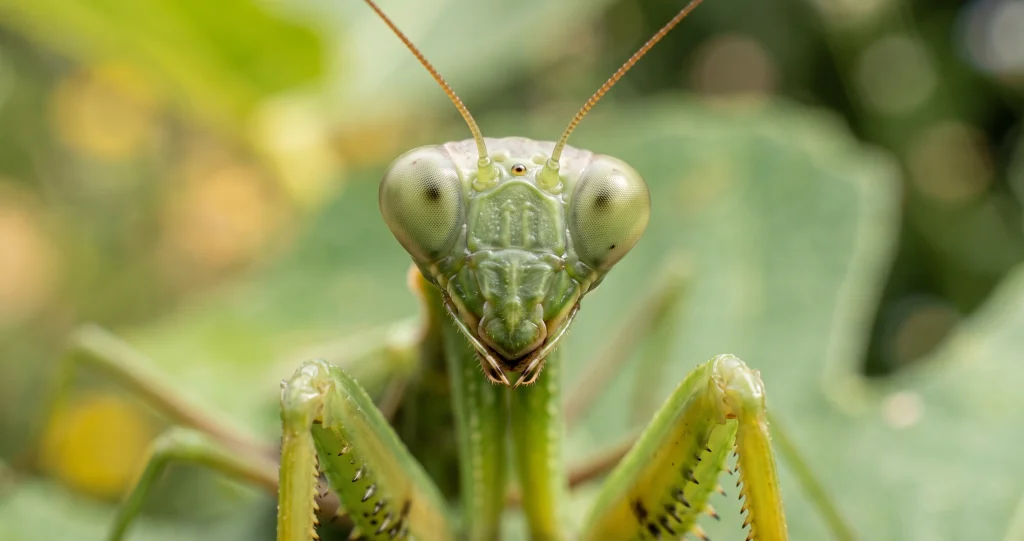
Their most recognizable feature is a pair of enlarged raptorial forelegs.
These legs fold beneath the body when waiting and then extend rapidly when prey comes within reach.
Mantises are primarily visual hunters.
Many species rely on camouflage and remain almost motionless while waiting for prey.
Their triangular heads are highly mobile, giving them an unusually expressive appearance for an insect.
But those famous “praying” arms are not designed for prayer.
They are weapons.
What Do Praying Mantises Eat?
Mantises are generalist predators.
Depending on species and body size, prey may include:
- Flies
- Moths
- Grasshoppers
- Crickets
- Beetles
- Bees
- Butterflies
- Other mantises
Large species can occasionally capture surprisingly substantial prey.
This broad diet also explains why mantises should not simply be described as garden pest-control machines.
They may eat insects gardeners consider pests, but they can also capture pollinators and other beneficial species.
Cannibalism fits naturally within this predatory lifestyle.
Mantises can consume members of their own species outside mating encounters as well.
From Egg Case to Adult
Praying mantises undergo incomplete metamorphosis.
Their life cycle consists of:
Egg → Nymph → Adult
Females place eggs inside a protective structure known as an ootheca.
A foamy secretion surrounds the eggs and hardens, creating a protective case.
In many temperate species, the eggs remain inside this structure through winter.
Young mantises emerge as nymphs.
They resemble miniature adults but lack fully developed wings and reproductive structures.
As they grow, they repeatedly shed their exoskeletons.
Eventually they become sexually mature adults, beginning the reproductive cycle in which the famous cannibalism behavior may—or may not—occur.
Why the Head-Biting Story Became So Famous
The image of a female mantis biting off her partner’s head is unforgettable.
That memorability probably helps explain why the behavior became exaggerated in popular culture.
An ordinary mating in which both animals survive is not nearly as dramatic.
The unusual cases become photographs, documentary sequences, headlines, and stories.
Eventually, “sometimes happens” becomes “always happens.”
Scientific observations tell a different story.
Sexual cannibalism is genuine and evolutionarily fascinating precisely because its occurrence depends on circumstances.
What Praying Mantis Cannibalistic Mating Reveals About Evolution
The behavior illustrates an important evolutionary principle: males and females of the same species do not necessarily benefit from exactly the same outcome.
A female may gain nutrition from consuming a male.
A male may benefit from surviving and mating again.
The female’s predatory behavior and the male’s avoidance behavior can therefore exert evolutionary pressures on one another.
Hunger changes the calculation.
Mate availability changes it again.
The male’s approach strategy changes the probability of attack.
The result is not a fixed ritual but a dynamic interaction involving risk and reproductive opportunity.
Frequently Asked Questions
Is praying mantis cannibalistic mating real?
Yes. Sexual cannibalism has been documented scientifically in praying mantises both in captivity and in natural populations.
The myth is not that cannibalism exists. The myth is that every female inevitably eats every male.
What percentage of female mantises eat their mates?
There is no reliable universal percentage for all mantis species.
One classic field study of Mantis religiosa observed sexual cannibalism in approximately 31% of matings. Different species, female conditions, environments, and experimental circumstances can produce different results.
Why do female praying mantises eat males?
Nutrition is one important factor.
A male provides a substantial meal, and research indicates that nutrients obtained through sexual cannibalism can contribute to female reproductive investment.
Female hunger can also influence cannibalism risk.
Can a male praying mantis survive mating?
Yes.
Many males survive mating, and surviving males may potentially reproduce again.
Do males try to avoid being eaten?
Research indicates that they can.
Depending on the species and circumstances, males may approach cautiously, adjust courtship behavior, respond to female hunger or aggression, and favor less dangerous mating opportunities.
Does every mantis species practice sexual cannibalism?
No assumption should be made that every mantis species behaves identically.
Mantises are diverse, and the prevalence and circumstances of sexual cannibalism vary.
Are female mantises always larger than males?
Sexual size differences occur in many mantis species, and females are often larger, but the degree of size difference varies considerably among species.
Conclusion
Praying mantis cannibalistic mating is one of nature’s most famous reproductive behaviors, but the popular version leaves out the most interesting part.
The female does not always eat the male.
Sexual cannibalism occurs naturally, and field research confirms that it can be common enough to exert meaningful evolutionary pressure. Yet its frequency varies with species and circumstances. A classic study of wild Mantis religiosa recorded cannibalism in roughly 31% of observed matings—not 100%.
Female hunger and nutrition help explain part of the behavior. A male represents both a reproductive partner and a potential source of nutrients, and experiments have shown that nutrients obtained from cannibalized males can contribute to female reproduction.
Males, meanwhile, are not necessarily passive participants. They can change how they approach females, respond to danger, and sometimes favor less aggressive partners.
That turns the familiar mantis story into something far more interesting than a simple tale of a female eating her mate. It is an evolutionary balancing act between hunger, reproduction, predation, risk, and survival.
For another remarkable example of complex animal behavior, read our internal article How Army Ants Build Living Bridges With Their Own Bodies on Secrets of the Green Garden.