
Table of Contents
- What Are Tomato Hornworms?
- Why They’re So Hard to Spot
- Recognizing Hornworm Damage
- H2: Tomato Hornworm Identification Removal Guide
- Understanding the Hornworm Life Cycle
- How to Remove Tomato Hornworms Safely
- Why Hornworms Covered in White Cocoons Should Be Left Alone
- Preventing Future Hornworm Problems
- Practical Tips
- Common Mistakes
- Frequently Asked Questions
- Conclusion
Tomato Hornworms: How to Spot, Remove, and Deal With Them Safely
One day your tomato plants look healthy and thriving. The next morning, entire branches seem stripped of leaves, stems are bare, and green tomatoes have fresh bite marks. The culprit is often hiding in plain sight. Learning tomato hornworm identification removal techniques is one of the most valuable skills for vegetable gardeners because these enormous caterpillars can cause significant damage in just a few days.
Despite growing up to four inches long, tomato hornworms are surprisingly difficult to find. Their bright green bodies blend almost perfectly with tomato foliage, allowing them to feed unnoticed until the damage becomes obvious. Fortunately, they are relatively easy to manage without resorting to broad-spectrum insecticides. Hand removal is highly effective, and many hornworms are naturally controlled by beneficial insects such as tiny parasitic braconid wasps.
Understanding the hornworm’s life cycle, knowing how to identify it correctly, and recognizing when nature is already solving the problem will help you protect your tomatoes while preserving beneficial insects that contribute to a healthier garden.
What Are Tomato Hornworms?
Tomato hornworms are the caterpillar stage of large sphinx moths, commonly called hawk moths.
In much of North America, gardeners most often encounter:
- Tomato hornworm (Manduca quinquemaculata)
- Tobacco hornworm (Manduca sexta)
These closely related species look similar and feed on many members of the nightshade family, including:
- Tomatoes
- Peppers
- Eggplants
- Potatoes
- Tomatillos
Although they may occasionally feed on ornamental relatives, tomatoes remain their best-known host plant.
University Cooperative Extension programs recommend regular inspection of tomato plants during summer because early detection makes management much easier.
Excellent identification resources are available through the University of Minnesota Extension:
https://extension.umn.edu/
Why They’re So Hard to Spot
Few garden pests hide as effectively as tomato hornworms.
Their bodies are almost exactly the same shade of green as tomato leaves.
Several features improve their camouflage:
- Green body color.
- White diagonal markings.
- Smooth skin.
- Motionless posture during the day.
When feeding stops, hornworms often remain perfectly still along stems or beneath leaves.
Even experienced gardeners may overlook them repeatedly.
Ironically, gardeners usually notice the missing foliage long before spotting the caterpillar itself.
Recognizing Hornworm Damage
Large caterpillars eat a tremendous amount of plant material.
Common signs include:
- Missing leaves.
- Bare stems.
- Ragged feeding damage.
- Chewed green tomatoes.
- Large dark droppings (frass) beneath plants.
Those droppings are often the easiest clue.
If you notice fresh green leaves disappearing together with large black pellets on lower foliage or the ground, a hornworm is probably nearby.
H2: Tomato Hornworm Identification Removal Guide
Proper identification prevents confusion with harmless caterpillars.
Tomato Hornworm Identification
Typical characteristics include:
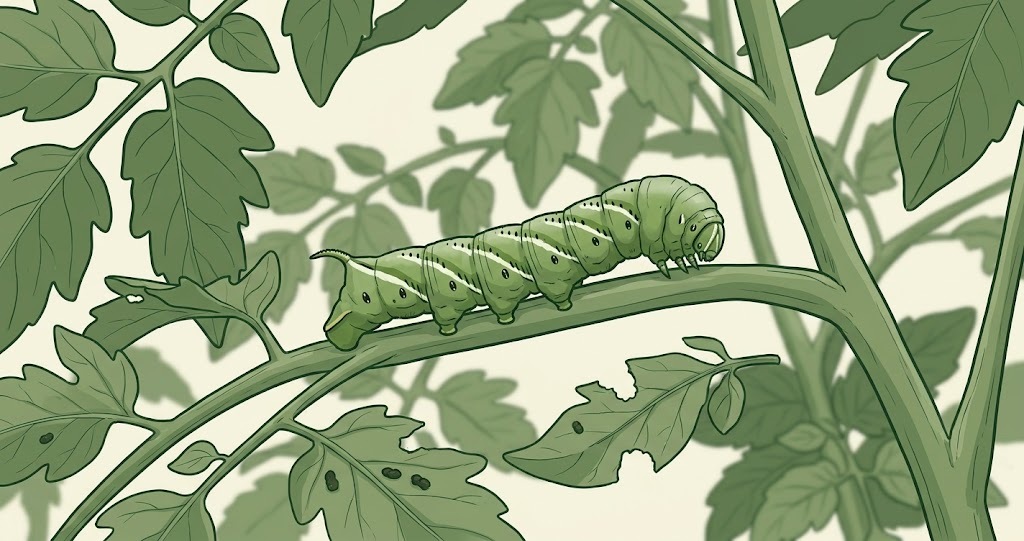
- Bright green body.
- Large size (up to about 4 inches).
- Prominent tail “horn.”
- White V-shaped markings along the sides.
- Powerful chewing mouthparts.
The horn itself looks intimidating but is harmless.
It cannot sting or inject venom.
Tomato vs. Tobacco Hornworms
The two species look similar.
Generally:
Tomato hornworms often display V-shaped white markings.
Tobacco hornworms usually have diagonal white stripes and a differently colored horn.
Because both species cause similar damage and are managed the same way, exact identification is rarely necessary for home gardeners.
Understanding the Hornworm Life Cycle
Knowing when hornworms appear helps gardeners monitor plants more effectively.
Adult Moths
Large sphinx moths emerge from pupae in the soil.
These fast-flying moths visit flowers at dusk and are sometimes mistaken for hummingbirds because of their hovering flight.
Egg Stage
Females lay small green eggs individually on host plants.
Eggs are usually deposited on leaf undersides.
Caterpillar Stage
After hatching, hornworms feed continuously while growing rapidly through several molts.
This stage causes nearly all garden damage.
Pupa Stage
Once fully grown, caterpillars burrow into the soil where they pupate.
Depending on climate, additional generations may occur before winter, while colder regions typically produce fewer generations.
How to Remove Tomato Hornworms Safely
The good news is that hand removal remains one of the most effective management methods.
Search Early or Late
Hornworms are often easier to find:
- Early morning.
- Late afternoon.
- Near sunset.
At these times they may be feeding more actively.
Follow the Droppings
Fresh frass frequently falls directly below feeding caterpillars.
Looking upward from the droppings often leads straight to the hornworm.
Hand Removal
Wear gloves if preferred.
Simply grasp the caterpillar firmly and remove it from the plant.
Gardeners commonly:
- Drop them into soapy water.
- Relocate them where appropriate.
- Dispose of them according to personal preference.
Because hornworms do not sting, handling them is generally safe.
Blacklight Trick
Some experienced gardeners use ultraviolet flashlights after dark.
Hornworms fluoresce under UV light, making nighttime searches surprisingly effective.
Why Hornworms Covered in White Cocoons Should Be Left Alone
Perhaps the most important identification skill involves recognizing beneficial parasitic wasps.
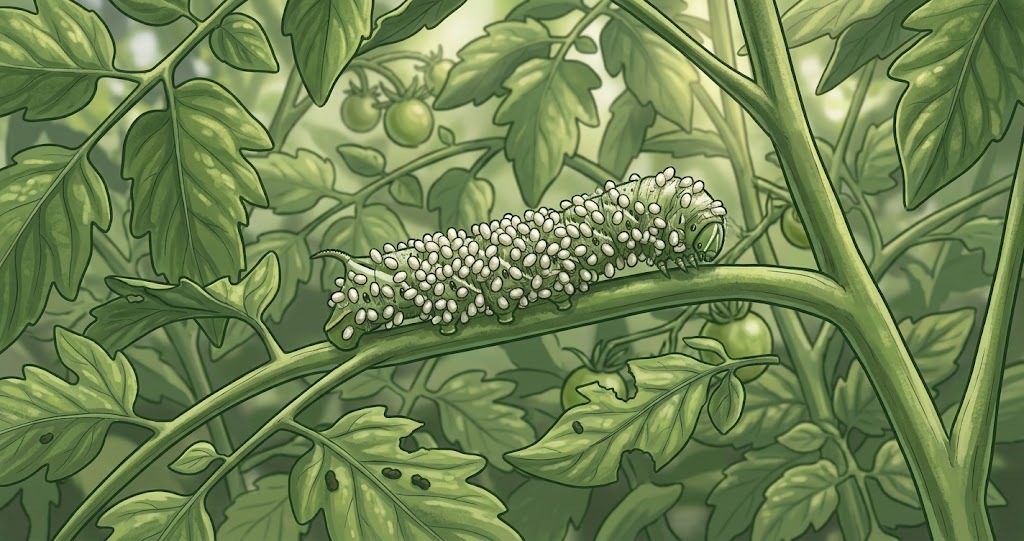
Occasionally gardeners discover hornworms covered with dozens of tiny white rice-like structures.
These are not eggs.
They are cocoons produced by tiny braconid wasps.
What Happened?
A female braconid wasp previously laid eggs inside the hornworm.
The developing larvae consumed internal tissues while keeping the caterpillar alive.
When mature, the wasp larvae emerged and spun white cocoons on the hornworm’s back.
Soon, adult wasps emerge from those cocoons and continue searching for additional hornworms.
Why You Should Leave These Hornworms Alone
Although the hornworm may still move slowly, it will no longer recover.
Leaving it on the plant provides several important benefits:
- New beneficial wasps successfully emerge.
- Future hornworms are naturally controlled.
- Chemical insecticide use becomes less necessary.
Removing parasitized hornworms also removes valuable biological control agents.
Extension entomologists consistently recommend leaving these caterpillars undisturbed.
Preventing Future Hornworm Problems
Complete prevention is difficult, but several practices help reduce infestations.
Inspect Plants Frequently
Checking tomato plants every few days allows early detection before significant feeding occurs.
Encourage Beneficial Insects
Flowering plants that support tiny parasitoid wasps help strengthen natural biological control.
Rotate Crops
Crop rotation reduces the likelihood that overwintering pupae remain directly beneath next year’s tomato plants.
Cultivate Soil Carefully
Light cultivation after harvest may expose some pupae to weather and predators.
Avoid Unnecessary Broad-Spectrum Insecticides
Many insecticides kill beneficial predators and parasitoids alongside pests.
Integrated pest management emphasizes preserving natural enemies whenever possible.
If you’re growing healthier tomatoes overall, you’ll also find our guide helpful:
https://secretsofthegreengarden.com/blossom-end-rot-tomatoes/
Practical Tips
- Inspect tomato plants every few days during summer.
- Search near fresh feeding damage.
- Look for dark droppings beneath plants.
- Remove healthy hornworms by hand.
- Leave hornworms carrying white braconid wasp cocoons.
- Encourage beneficial insects with flowering companion plants.
- Rotate tomato planting locations each year when practical.
Common Mistakes
Ignoring Early Feeding Damage
Small infestations become much easier to manage before caterpillars reach full size.
Crushing Hornworms Covered in White Cocoons
These caterpillars are already helping future pest control by supporting beneficial wasps.
Using Broad-Spectrum Insecticides Immediately
These products may also eliminate natural predators and parasitoids.
Mistaking the Tail Horn for a Stinger
The horn is harmless and cannot sting.
Frequently Asked Questions
Do tomato hornworms bite people?
They may grip with their mouthparts if handled, but they are not dangerous and cannot sting.
Are hornworms poisonous?
No. They are harmless to people and pets.
What are the white cocoons on a hornworm?
They are cocoons of beneficial braconid wasps, not hornworm eggs.
Should I remove hornworms with white cocoons?
No. Leave them on the plant so the beneficial wasps can complete their life cycle.
Can tomato plants recover?
Yes. Healthy tomato plants often recover well if hornworms are removed before severe defoliation occurs.
Conclusion
Finding a giant green caterpillar on your tomato plant can be alarming, but tomato hornworm identification removal is usually straightforward once you know what to look for. Regular inspections, early hand removal, and attention to feeding damage are often enough to keep these impressive caterpillars from causing major losses.
Just as importantly, recognizing hornworms covered with white braconid wasp cocoons helps gardeners work with nature rather than against it. Those tiny parasitoid wasps provide one of the most effective forms of natural biological control available in the vegetable garden. By preserving these beneficial insects while removing only healthy hornworms, gardeners can enjoy productive tomato harvests with fewer pesticides and a healthier garden ecosystem.
Internal Link Suggestions
Anchor text: Blossom End Rot on Tomatoes: Why It’s Not Really About Watering
Link: https://secretsofthegreengarden.com/blossom-end-rot-tomatoes/
Anchor text: Companion Planting That Actually Works (And the Pairings That Don’t)
Link: https://secretsofthegreengarden.com/companion-planting-that-works/
External Dofollow Authoritative Sources
University of Minnesota Extension – Tomato Hornworms
https://extension.umn.edu/
North Carolina State Extension – Tomato Hornworms
https://content.ces.ncsu.edu/
University of California Integrated Pest Management – Tomato Hornworms
https://ipm.ucanr.edu/