
Table of Contents
- Meet the Giant Wasp in Your Lawn
- What Is a Cicada Killer Wasp?
- How to Identify a Cicada Killer
- H2: Cicada Killer Wasp Lawn Behavior Explained
- The Fascinating Cicada Hunting Strategy
- Why Males Look Aggressive but Can’t Sting
- Why Females Rarely Sting People
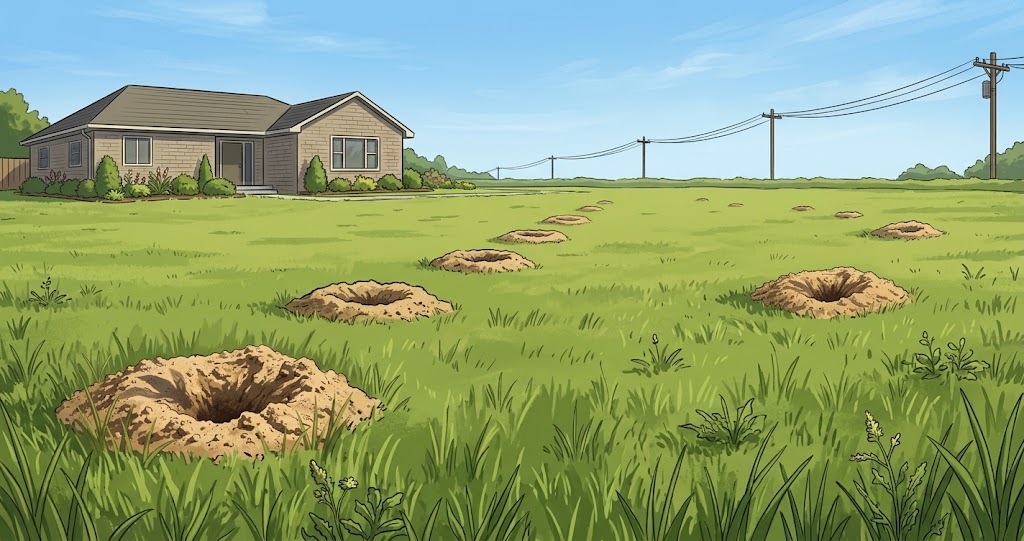
- Why They Nest in Lawns
- Are Cicada Killers Beneficial?
- When (and If) You Should Intervene
- Practical Tips
- Common Mistakes
- Frequently Asked Questions
- Conclusion
Cicada Killer Wasps: The Giant Lawn Wasp That Isn’t What It Looks Like
Every summer, homeowners across much of the United States are startled by enormous wasps flying low over their lawns, hovering near bare patches of soil, and occasionally buzzing toward anyone who walks by. It’s easy to assume these insects are highly aggressive because of their size. In reality, the cicada killer wasp lawn phenomenon is one of the most misunderstood events of late summer. Despite their intimidating appearance, cicada killer wasps are remarkably peaceful insects that spend most of their lives hunting cicadas rather than bothering people.
Growing to nearly two inches long, cicada killers are among North America’s largest solitary wasps. Their loud flight and impressive size naturally attract attention, but they are not social wasps like yellowjackets or paper wasps. Instead, each female builds and provisions her own underground nest, while males spend their time patrolling territories in hopes of finding mates.
Understanding how these remarkable insects live—and why they behave the way they do—can replace fear with appreciation for one of nature’s most specialized predators.
Meet the Giant Wasp in Your Lawn
The first encounter is often unforgettable.
A large black-and-yellow wasp suddenly appears, flying low over the grass before disappearing into a hole in the ground.
Within minutes, another one may emerge nearby.
Because several nests often occur in the same general area, homeowners sometimes believe they’ve discovered an enormous wasp colony.
In reality, these insects are solitary wasps.
Each female constructs and maintains her own nest, even though many females may choose favorable nesting sites close together.
What Is a Cicada Killer Wasp?
The Eastern Cicada Killer (Sphecius speciosus) is the species most commonly encountered across the eastern and central United States.
It belongs to a group known as digger wasps.
Unlike social wasps that cooperate to defend a colony, cicada killers work independently.
Each female:
- Digs her own burrow.
- Hunts her own prey.
- Lays her own eggs.
- Provides food for each offspring.
Adult wasps feed primarily on flower nectar and plant sap, while developing larvae feed exclusively on cicadas supplied by their mother.
The University of Kentucky Department of Entomology provides an excellent overview of cicada killer biology:
https://entomology.ca.uky.edu/
How to Identify a Cicada Killer
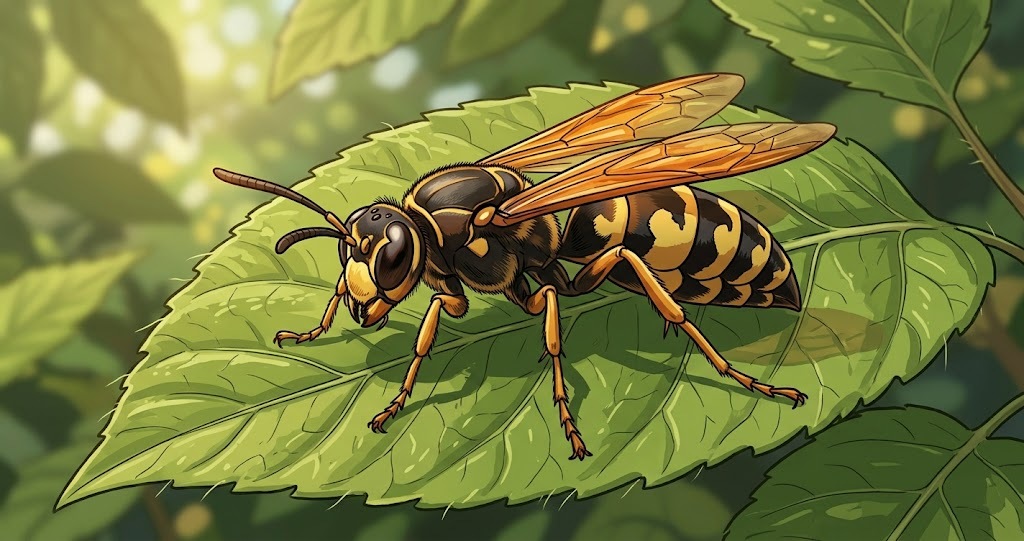
Cicada killers are frequently mistaken for hornets because of their impressive size.
However, several characteristics help distinguish them.
Look for:
- Black body with yellow markings.
- Reddish-brown wings.
- Large size (often 1½–2 inches long).
- Thick waist.
- Loud buzzing flight.
- Solitary behavior.
Unlike yellowjackets, they usually ignore picnic tables, garbage cans, and sugary drinks.
Instead, they’re almost always associated with sunny patches of loose soil.
H2: Cicada Killer Wasp Lawn Behavior Explained
One reason these wasps cause concern is their preference for nesting in residential lawns.
Fortunately, this behavior is generally temporary.
Why They Choose Lawns
Females prefer:
- Well-drained soil.
- Sandy or loose ground.
- Full sun.
- Sparse vegetation.
Bare patches along sidewalks, flower beds, playground edges, or lightly vegetated lawns often provide ideal nesting conditions.
Healthy, dense turfgrass is generally less attractive because digging becomes more difficult.
Loose Colonial Nesting
Although each female maintains an individual burrow, suitable habitat often attracts many females.
This creates what entomologists describe as loose nesting aggregations rather than true colonies.
Unlike honey bees or yellowjackets, these wasps do not cooperate or defend a communal nest.
The Fascinating Cicada Hunting Strategy
The female cicada killer’s hunting behavior is among the most remarkable in the insect world.
After locating a cicada high in the trees, she attacks with remarkable precision.
Paralyzing the Prey
Using her stinger, the female injects venom that paralyzes—but does not kill—the cicada.
Keeping the prey alive helps preserve it as fresh food for developing larvae.
Carrying an Enormous Load
A captured cicada often weighs as much as—or even more than—the wasp herself.
The female may:
- Glide from trees.
- Drag prey across the ground.
- Climb vegetation.
- Pull the cicada into her burrow.
The effort is extraordinary and can take several minutes.
Feeding the Next Generation
Inside the burrow, the female places one or more cicadas into an underground chamber.
She lays a single egg before sealing the chamber.
When the larva hatches, it consumes the stored cicadas before pupating underground.
The new adult emerges the following summer, beginning the cycle again.
Why Males Look Aggressive but Can’t Sting
This is perhaps the most surprising fact about cicada killers.
Male cicada killers do not possess stingers.
Because the stinger is a modified egg-laying structure, only females have one.
Territorial Behavior
Male wasps establish territories around nesting areas.
When people walk nearby, males often fly directly toward them.
This behavior appears intimidating but is simply an attempt to chase away potential rivals.
The male may:
- Hover close.
- Circle your head.
- Investigate briefly.
Once he realizes you’re not another male cicada killer, he usually flies away.
Despite the dramatic display, he is physically incapable of stinging.
Why Females Rarely Sting People
Female cicada killers do possess functional stingers.
However, they are generally remarkably non-aggressive.
Their energy is focused almost entirely on:
- Digging nests.
- Hunting cicadas.
- Provisioning offspring.
A female is unlikely to sting unless:
- Grabbed.
- Trapped against skin.
- Handled roughly.
Simply walking near active nests rarely results in defensive behavior.
Are Cicada Killers Beneficial?
Absolutely.
Although they temporarily create small soil mounds while digging, cicada killers perform useful ecological roles.
Benefits include:
- Naturally controlling cicada populations.
- Pollinating flowers while feeding on nectar.
- Serving as prey for birds and other wildlife.
- Contributing to healthy insect diversity.
Because adults consume nectar, they also visit many flowering plants throughout the season.
When (and If) You Should Intervene
Most cicada killer nesting sites disappear naturally once adults complete their brief summer life cycle.
In many cases, no action is necessary.
When Leaving Them Alone Makes Sense
If nests occur:
- Along rarely used lawn edges.
- In flower beds.
- Around naturalized areas.
- Away from children’s play spaces.
Observation is usually the best approach.
Adults are active for only a relatively short period each year.
When Intervention May Be Reasonable
Occasionally, management becomes appropriate if nests occur:
- In heavily used playgrounds.
- Beside frequently used walkways.
- Where someone has a medically confirmed severe allergy to wasp stings and repeated close encounters cannot reasonably be avoided.
Rather than relying immediately on insecticides, cultural management often provides long-term results.
Improving turf density, reducing bare soil, and modifying highly attractive nesting sites may discourage future nesting.
Always follow local Extension recommendations before considering chemical control.
If you’re interested in understanding another misunderstood late-summer wasp, read:
https://secretsofthegreengarden.com/yellowjackets-aggressive-late-summer/
Practical Tips
- Observe wasps from a respectful distance.
- Avoid blocking active burrows.
- Keep lawns healthy to reduce attractive nesting areas.
- Don’t panic if a male hovers nearby.
- Teach children not to handle wildlife.
- Appreciate their role as natural predators of cicadas.
Common Mistakes
Assuming They’re Hornets
Despite their appearance, cicada killers are solitary digger wasps.
Thinking Hovering Means They’re About to Sting
Hovering males are defending territory but cannot sting.
Destroying Every Nest Immediately
Most nesting activity is temporary and ends naturally by late summer.
Confusing Them With Yellowjackets
Yellowjackets are social wasps that defend colonies.
Cicada killers are solitary hunters with very different behavior.
Frequently Asked Questions
Are cicada killer wasps dangerous?
Generally no. Males cannot sting, and females rarely sting unless physically handled or trapped.
Why are they digging holes in my lawn?
Females create underground nesting burrows where they raise their offspring.
Do they kill people or pets?
No. They are not considered dangerous to healthy people or pets under normal circumstances.
How long are they active?
Adults are typically active for several weeks during mid-to-late summer, depending on regional climate.
Should I eliminate them?
In most cases, no. They are beneficial native predators, and their nesting activity is temporary.
Conclusion
Encountering a giant wasp flying low over your yard can certainly be startling, but the cicada killer wasp lawn spectacle is far less threatening than it first appears. These impressive insects spend their short adult lives hunting cicadas, raising the next generation, and largely ignoring people. The dramatic hovering behavior that frightens many homeowners usually comes from stingless males simply defending territory.
By recognizing the difference between cicada killers and more defensive social wasps, homeowners can make informed decisions about coexistence. In most situations, these beneficial predators deserve appreciation rather than fear. Their brief seasonal appearance is simply another fascinating chapter in the remarkable diversity of backyard wildlife.
Internal Link Suggestions
Anchor text: Why Yellowjackets Get More Aggressive in Late Summer
Link: https://secretsofthegreengarden.com/yellowjackets-aggressive-late-summer/
Anchor text: Why Orb-Weaver Spiders Suddenly Seem Huge in Late Summer
Link: https://secretsofthegreengarden.com/orb-weaver-spiders-late-summer/
External Dofollow Authoritative Sources
University of Kentucky Department of Entomology – Cicada Killer Wasps
https://entomology.ca.uky.edu/
Penn State Extension – Cicada Killer Wasps
https://extension.psu.edu/
North Carolina State Extension – Cicada Killer Wasps
https://gardening.ces.ncsu.edu/