
Table of Contents
- Why Woolly Bear Caterpillars Fascinate People Every Fall
- The Famous Winter Prediction Myth
- Does the Band Width Really Forecast Winter?
- The Amazing Science Behind Woolly Bear Survival
- How Woolly Bears Survive Freezing Temperatures
- From Caterpillar to Isabella Tiger Moth
- Why We See Woolly Bears in Autumn
- Appreciating the Folklore Without Mistaking It for Science
- Practical Tips for Backyard Naturalists
- Common Mistakes
- Frequently Asked Questions
- Conclusion
Woolly Bear Caterpillars: The Winter Myth vs. the Actual Survival Science
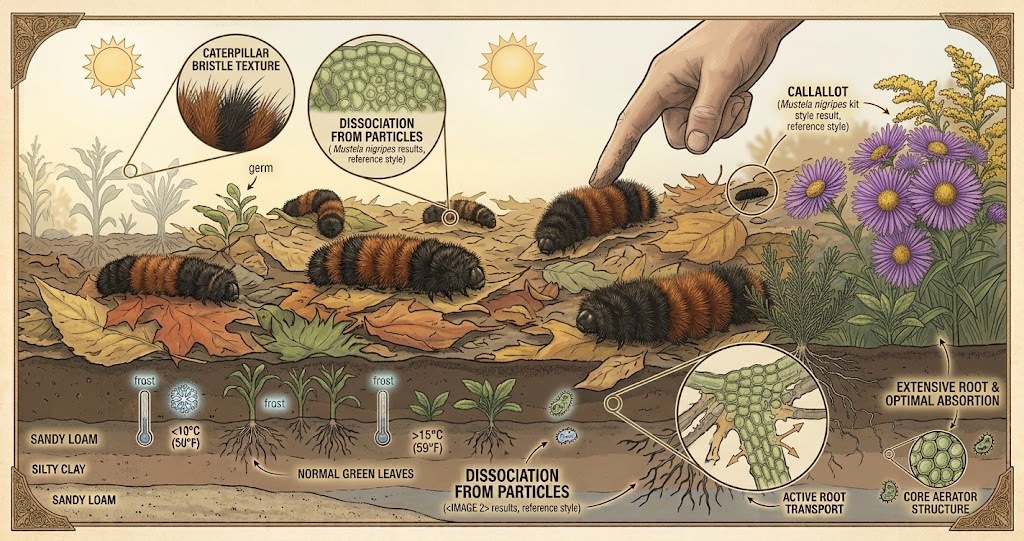
Few autumn insects are as recognizable—or as surrounded by folklore—as the woolly bear caterpillar. Every fall, countless people stop to admire its fuzzy black-and-rust bands, and many still wonder whether those markings predict the severity of the coming winter. The enduring woolly bear caterpillar winter myth claims that the width of the brown band can forecast snow, cold, or the length of the season ahead. It’s a charming tradition that has been passed down through generations.
Modern entomology, however, tells a different story. While the band pattern makes for enjoyable folklore, scientific studies have found no reliable evidence that a woolly bear’s coloration predicts future winter weather. What is truly remarkable isn’t its supposed forecasting ability—it’s the caterpillar’s extraordinary survival strategy. Woolly bears are among the insects capable of surviving freezing temperatures through specialized physiological adaptations that allow them to endure winter conditions that would kill many other species.
Understanding both the folklore and the biology gives us an even greater appreciation for these familiar autumn visitors.
Why Woolly Bear Caterpillars Fascinate People Every Fall
Woolly bear caterpillars are the larval stage of the Isabella tiger moth (Pyrrharctia isabella), a widespread species found across much of North America.
Their fuzzy appearance makes them one of the easiest caterpillars to recognize.
Unlike many insects that disappear before cold weather arrives, woolly bears remain active well into autumn, often crossing sidewalks, roads, and garden paths while searching for suitable overwintering sites.
Because people encounter them during the very season when conversations naturally turn toward winter weather, it’s easy to understand how weather folklore became attached to them.
The Famous Winter Prediction Myth
According to traditional folklore, the width of the rusty brown band predicts the coming winter.
Common versions include:
- A wide brown band means a mild winter.
- A narrow brown band means a severe winter.
- More black indicates colder weather.
- Longer black sections predict longer winters.
Different regions tell the story slightly differently, and some versions also claim the position of the brown band predicts when the harshest weather will arrive.
These traditions have become part of American autumn culture, especially during festivals celebrating woolly bear caterpillars.
The folklore itself remains an enjoyable seasonal tradition, even if the science tells another story.
H2: Woolly Bear Caterpillar Winter Myth — What Science Actually Says
Despite its popularity, scientific research has not demonstrated that woolly bear coloration can accurately predict future weather.
Weather months in advance depends on complex atmospheric and oceanic processes that caterpillars simply cannot anticipate through body coloration.
Entomologists generally explain that band width is influenced by factors such as:
- Age and developmental stage
- Genetics
- Nutrition
- Environmental conditions experienced during growth
Older caterpillars, for example, often develop broader brown bands simply because of normal maturation.
This can create the illusion that color patterns vary dramatically from year to year.
The University of Kentucky Department of Entomology notes that there is no scientific evidence supporting the caterpillar’s ability to forecast winter weather:
https://entomology.ca.uky.edu/
The Amazing Science Behind Woolly Bear Survival
Although woolly bears cannot predict winter, they are remarkably well adapted to surviving it.
Unlike insects that migrate or avoid freezing temperatures, woolly bears often remain outdoors throughout winter.
Their survival depends on a fascinating biological strategy known as freeze tolerance.
Rather than preventing ice formation completely, these caterpillars tolerate controlled freezing of certain body tissues while protecting vital cells.
This adaptation allows them to survive temperatures well below freezing.
How Woolly Bears Survive Freezing Temperatures
As autumn progresses, woolly bears prepare for winter through physiological changes.
Producing Cryoprotectants
One of the most remarkable adaptations involves producing compounds called cryoprotectants.
These naturally occurring substances—such as glycerol and related compounds—help protect cells from damage during freezing.
Cryoprotectants reduce the harmful effects that ice crystals can have on delicate tissues.
Slowing Metabolism
As temperatures fall, metabolism decreases dramatically.
Reduced activity conserves energy throughout winter.
Finding Protected Shelters
Before freezing weather arrives, woolly bears seek sheltered locations beneath:
- Fallen leaves
- Loose bark
- Logs
- Leaf litter
- Rocks
These microhabitats moderate temperature extremes while providing protection from predators and drying winds.
Freezing—Then Reviving
Perhaps the most astonishing part of the process is that woolly bears can freeze during winter and resume normal activity after thawing in spring.
Although not every individual survives every winter, this freeze-tolerance strategy has evolved over thousands of generations as an effective adaptation to northern climates.
From Caterpillar to Isabella Tiger Moth
The woolly bear spends the winter as a caterpillar.
When spring arrives and temperatures rise, it resumes feeding for a relatively short time before pupating.
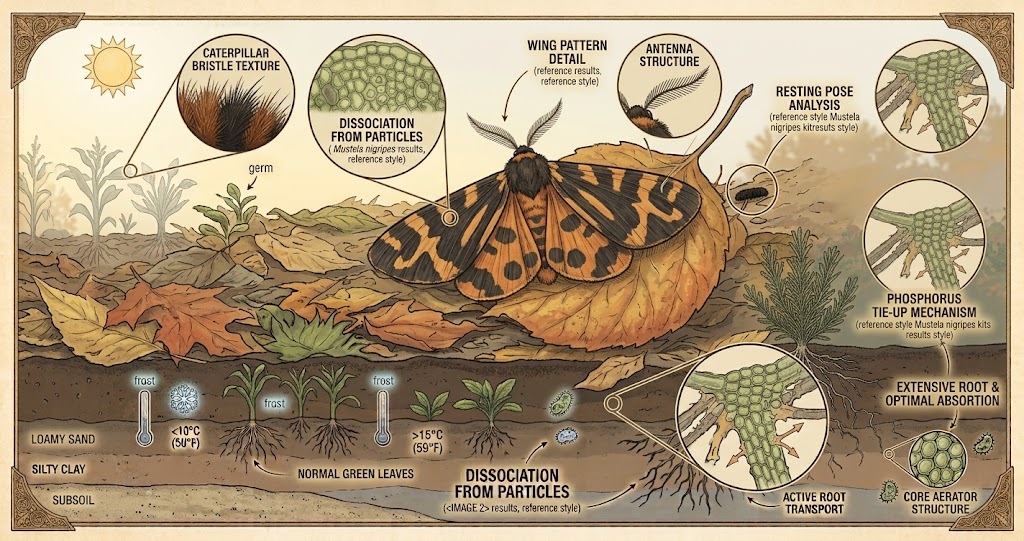
Inside the chrysalis, remarkable changes transform the caterpillar into the adult Isabella tiger moth.
Adult Isabella Tiger Moths
Adult moths look very different from their fuzzy caterpillar stage.
They are:
- Yellowish to orange
- Covered with fine scales
- Active mainly at night
Unlike the caterpillar, the adult moth’s primary role is reproduction.
After mating and laying eggs, the cycle begins again.
Why We See Woolly Bears in Autumn
Late summer and fall are when woolly bears become especially visible.
Several factors contribute to this.
Searching for Winter Shelter
Much of their autumn movement involves locating safe overwintering sites.
This often brings them across sidewalks, driveways, and garden paths.
Cooler Weather
As vegetation changes during autumn, caterpillars become easier to spot against fallen leaves.
Human Activity
People spend more time outdoors during pleasant fall weather, increasing the likelihood of noticing wildlife that might otherwise go unseen.
Appreciating the Folklore Without Mistaking It for Science
One of the best aspects of the woolly bear story is that science and folklore do not need to compete.
Folklore connects communities with seasonal traditions and encourages people—especially children—to notice wildlife.
Scientific understanding simply helps explain what the caterpillar is actually doing.
Rather than predicting the future, woolly bears demonstrate one of nature’s most impressive survival adaptations.
Both perspectives add value:
- Folklore celebrates cultural history.
- Science reveals biological reality.
Together they deepen our appreciation for this familiar autumn insect.
If you enjoy discovering the science behind seasonal wildlife, explore our guide:
https://secretsofthegreengarden.com/fall-backyard-wildlife/
Practical Tips for Backyard Naturalists
- Observe woolly bears without handling them unnecessarily.
- Leave some leaf litter in naturalized areas during fall.
- Avoid excessive pesticide use around wildlife habitat.
- Photograph color patterns for fun, but don’t rely on them as weather forecasts.
- Encourage children to compare folklore with scientific explanations.
Common Mistakes
Believing Band Width Predicts Winter
Current scientific evidence does not support this traditional belief.
Moving Caterpillars Long Distances
If one is crossing a path, gently moving it only a short distance in the direction it was already traveling is generally preferable to relocating it far from its habitat.
Removing All Leaf Litter
Many beneficial insects, including overwintering species, depend on natural ground cover.
Confusing Folklore with Biological Evidence
Traditional stories remain culturally valuable even when scientific studies reach different conclusions.
Frequently Asked Questions
Can woolly bear caterpillars really predict winter?
There is no scientific evidence that their color bands reliably forecast winter weather.
Why are they fuzzy?
The hairs help provide some protection from predators and environmental conditions, although they are not the primary reason the caterpillar survives freezing temperatures.
What does a woolly bear become?
It develops into the Isabella tiger moth after pupating in spring.
How do they survive freezing?
They produce cryoprotectants that help protect cells while tolerating freezing during winter.
Should I move one I find on a sidewalk?
If necessary for its safety, gently moving it a short distance in the direction it was already traveling is generally sufficient.
Conclusion
The woolly bear caterpillar has earned its place in North American autumn traditions, not because it predicts the weather, but because it inspires curiosity every time it appears. While the woolly bear caterpillar winter myth remains a beloved piece of seasonal folklore, modern entomology reveals an even more fascinating reality: these humble caterpillars possess extraordinary freeze-tolerance adaptations that allow them to survive winters many insects could never endure.
By appreciating both the cultural stories and the remarkable science behind their survival, we gain a deeper respect for one of fall’s most recognizable backyard creatures. Sometimes the truth turns out to be even more impressive than the legend.