
Table of Contents
- What Is the Monarch “Super Generation”?
- The Typical Monarch Life Cycle
- What Makes the Super Generation Different?
- Understanding Reproductive Diapause
- The Environmental Cues That Trigger the Super Generation
- The Two Major Monarch Migration Routes
- Eastern Monarch Population
- Western Monarch Population
- Why This Extraordinary Generation Matters
- How Home Gardeners Can Help Monarchs
- Plant Regionally Appropriate Native Milkweed
- Avoid Pesticides
- Provide Fall Nectar Sources
- The Concern About Tropical Milkweed
- Practical Tips
- Common Mistakes
- Frequently Asked Questions
- Conclusion
The Monarch “Super Generation”: Why This Butterfly Lives 8 Months, Not 2 Weeks
Most monarch butterflies live only a few weeks as adults. Yet every year, one remarkable generation breaks that rule. Known as the monarch butterfly migration generation, these butterflies can survive for up to eight months while completing one of the most extraordinary migrations in the insect world.
Instead of immediately reproducing like their summer-born relatives, these monarchs delay reproduction, conserve energy, and travel hundreds or even thousands of miles before breeding the following spring. Their longer lifespan isn’t the result of a different species or special diet. It’s a remarkable adaptation that has evolved over countless generations, allowing monarchs to survive seasonal changes and complete an annual migration unlike that of almost any other butterfly.
Understanding how this “super generation” forms—and how gardeners can support it—offers valuable insight into both monarch biology and backyard conservation.
What Is the Monarch “Super Generation”?
The term “super generation” refers to the final generation of monarch butterflies produced near the end of summer.
Unlike earlier generations, these butterflies postpone reproduction and enter a temporary physiological state known as reproductive diapause. Rather than investing energy into mating and egg production, they devote those resources to storing energy reserves for migration and winter survival.
This delayed reproductive strategy allows them to live dramatically longer than typical summer monarchs.
The Typical Monarch Life Cycle
Most monarchs follow a relatively short life cycle during spring and summer.
After emerging from their chrysalis, adult butterflies typically spend their time feeding, finding mates, and laying eggs on milkweed plants.
Their offspring continue the cycle throughout the growing season, producing several generations before autumn arrives.
Each summer generation generally lives only a few weeks as an adult because its primary role is reproduction.
The final generation, however, follows a very different path.
What Makes the Super Generation Different?
The super generation postpones reproduction entirely until after migration.
Instead of immediately producing eggs, these monarchs:
- Build larger energy reserves.
- Delay reproductive development.
- Migrate south.
- Survive through winter.
- Begin reproducing the following spring.
This remarkable life-history strategy allows one generation to bridge the gap between two breeding seasons.
Without it, the annual migration could not be completed.
Understanding Reproductive Diapause
Reproductive diapause is a naturally occurring period during which reproductive development slows or temporarily stops.
In monarch butterflies, this state is triggered by environmental conditions rather than age alone.
Scientists have studied this phenomenon for decades and understand that diapause allows monarchs to redirect energy toward survival instead of reproduction.
During diapause:
- Mating is delayed.
- Egg production pauses.
- Energy is stored as fat.
- Lifespan increases substantially.
Once favorable spring conditions return, reproductive activity resumes.
This reversible physiological state is one of the defining characteristics of the monarch butterfly migration generation.
The Environmental Cues That Trigger the Super Generation
Monarchs do not consciously decide to migrate.
Instead, environmental cues influence hormones that determine whether developing butterflies become short-lived summer adults or long-lived migrants.
Shortening Day Length
The most reliable cue is decreasing daylight after the summer solstice.
As days gradually become shorter, developing monarch caterpillars and pupae experience changing environmental conditions that influence their adult physiology.
Photoperiod has long been recognized as one of the primary triggers for reproductive diapause.
Cooler Temperatures
Gradually cooling temperatures reinforce the seasonal signal.
Although an early cold snap does not create the super generation by itself, seasonal cooling works together with shortening day length to influence development.
These predictable environmental changes help synchronize migration across large geographic areas.
The Two Major Monarch Migration Routes
Eastern Monarch Population
The eastern monarch population includes butterflies that breed across much of the eastern and central United States and southern Canada.
During autumn, these monarchs migrate south toward the mountains of central Mexico, where they spend the winter in high-elevation oyamel fir forests.
In spring, they begin moving north again, with several generations completing the return journey.
This migration is one of the most extensively studied insect migrations in the world.
Western Monarch Population
Monarchs west of the Rocky Mountains generally follow a different migration pattern.
Rather than traveling to central Mexico, many western monarchs overwinter along the California coast in sheltered groves that provide favorable winter conditions.
As spring arrives, they disperse inland and northward to reproduce.
Although eastern and western monarchs belong to the same species, their migratory routes differ because of geography and historical evolutionary patterns.
For more information about monarch migration and conservation, Monarch Watch provides science-based educational resources:
https://monarchwatch.org/
Why This Extraordinary Generation Matters
The monarch super generation is essential to the species’ annual life cycle.
Without these long-lived adults surviving winter and beginning the next breeding season, the migration would eventually collapse.
This remarkable adaptation illustrates how insects can evolve highly specialized life-history strategies that match seasonal environmental conditions.
Because migration depends on suitable breeding habitat, nectar sources, and overwintering areas across an enormous geographic range, conserving monarchs requires cooperation across many regions.
How Home Gardeners Can Help Monarchs
Even relatively small gardens can provide valuable habitat during migration.
Thoughtful planting choices and responsible gardening practices can support monarchs throughout different stages of their annual cycle.
Plant Regionally Appropriate Native Milkweed
Milkweed is the only host plant on which monarch caterpillars develop.
However, not every milkweed species is appropriate everywhere.
Whenever possible, gardeners should select native milkweed species naturally adapted to their local region.
Native species typically support local ecosystems more effectively and fit naturally within regional flowering schedules.
Many state extension services and native plant societies provide recommendations for appropriate species.
If you’re planning a pollinator-friendly landscape, our guide to creating a pollinator garden offers additional ideas:
https://secretsofthegreengarden.com/how-to-create-a-pollinator-garden/
Avoid Pesticides
Broad-spectrum insecticides can unintentionally harm monarch eggs, caterpillars, and adult butterflies.
Whenever possible:
- Avoid routine insecticide applications.
- Use integrated pest management practices.
- Encourage beneficial insects.
- Tolerate minor cosmetic plant damage when appropriate.
Reducing pesticide use benefits many pollinating insects in addition to monarchs.
Provide Fall Nectar Sources
Although milkweed supports caterpillars, adult monarchs also require abundant nectar.
Late-season native flowers help migrating butterflies replenish energy reserves before and during migration.
Excellent choices may include:
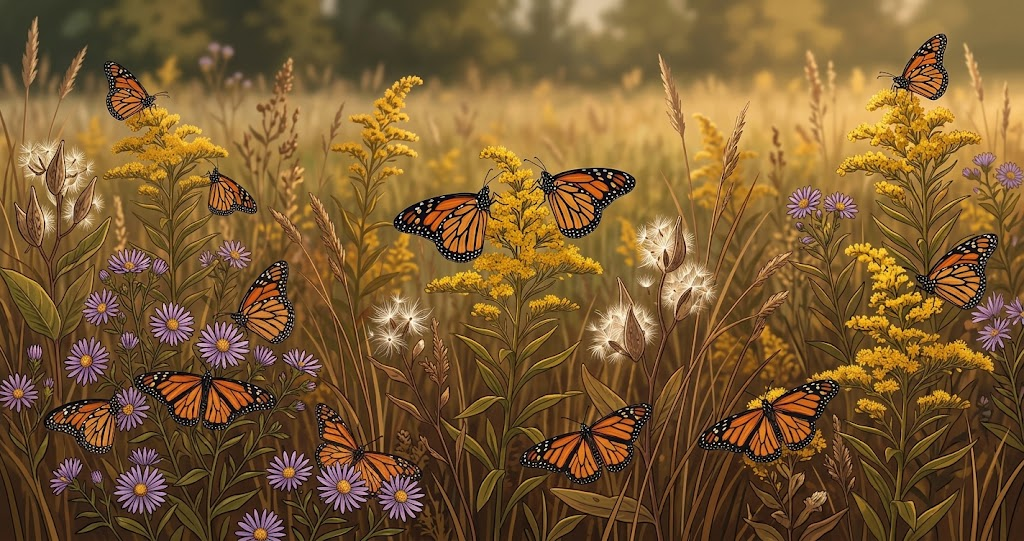
- Goldenrod (Solidago species)
- Native asters
- Joe-Pye weed (Eutrochium species)
- Blazing star (Liatris species)
- Ironweed (Vernonia species)
Selecting plants native to your region provides nectar not only for monarchs but also for bees, hummingbirds, and numerous other pollinators.
The Concern About Tropical Milkweed
One topic that often generates discussion is tropical milkweed (Asclepias curassavica).
Unlike many native milkweeds, tropical milkweed may continue growing through mild winters in some warmer climates.
Researchers have expressed concern that year-round growth could interfere with normal seasonal patterns and may contribute to disease transmission where plants remain continuously available.
For this reason, many experts recommend prioritizing regionally native milkweed species whenever practical.
Recommendations can vary depending on climate and local growing conditions, so gardeners should consult regional extension guidance when selecting milkweed species.
Image Placement Suggestion

Practical Tips
- Plant several native nectar species that bloom from late summer into fall.
- Choose native milkweed recommended for your region.
- Avoid unnecessary pesticide applications.
- Leave some garden areas natural to support pollinators.
- Include flowers with overlapping bloom periods.
- Provide shallow water sources with stones for safe landing.
- Support local native plant initiatives whenever possible.
Common Mistakes
Planting Only One Nectar Source
A diversity of flowering plants provides more reliable nectar throughout migration.
Assuming All Milkweed Species Are Equally Suitable
Native species are generally the preferred choice because they evolved alongside local ecosystems.
Removing Every Insect
Healthy gardens support complex food webs that benefit butterflies and many other wildlife species.
Using Broad-Spectrum Pesticides
These products may unintentionally harm pollinators while reducing beneficial insect populations.
Frequently Asked Questions
Why does the monarch super generation live so much longer?
Because reproductive diapause delays mating and egg production, allowing energy to be directed toward migration and overwinter survival.
Do all monarch butterflies migrate?
Not every individual migrates, but migration is a defining feature of the eastern and many western North American monarch populations.
Is milkweed only important for caterpillars?
Milkweed is the essential host plant for caterpillars, while adult butterflies also depend heavily on nectar from many flowering plants.
Should I remove tropical milkweed?
Recommendations vary by region. In many parts of North America, experts encourage planting native milkweed species whenever possible.
Can a small backyard really help monarchs?
Yes. Even modest gardens planted with native nectar flowers and appropriate milkweed can provide valuable habitat for migrating butterflies.
Conclusion
The monarch super generation represents one of nature’s most remarkable adaptations. By entering reproductive diapause, these butterflies transform from short-lived summer breeders into long-distance migrants capable of surviving for many months while completing an extraordinary annual journey.
Although monarch populations continue to face conservation challenges, home gardeners can make a meaningful contribution by planting regionally appropriate native milkweed, providing abundant fall nectar sources, reducing pesticide use, and creating diverse pollinator-friendly landscapes. Every healthy habitat—whether it’s a rural meadow or a suburban flower bed—can become an important stop along one of the world’s most iconic insect migrations.