
Table of Contents
- What Is Powdery Mildew?
- Why It Appears Every Late Summer
- The Biology Behind Powdery Mildew
- Why Squash and Cucumbers Are So Susceptible
- Recognizing the Early Symptoms
- Safe and Effective Ways to Manage Powdery Mildew
- Improve Airflow
- Water the Right Way
- Choose Resistant Varieties
- Remove Heavily Infected Leaves
- Should You Use Homemade Treatments?
- Practical Tips
- Common Mistakes
- Frequently Asked Questions
- Conclusion
Powdery Mildew on Squash and Cucumbers: Why It Shows Up Every Late Summer
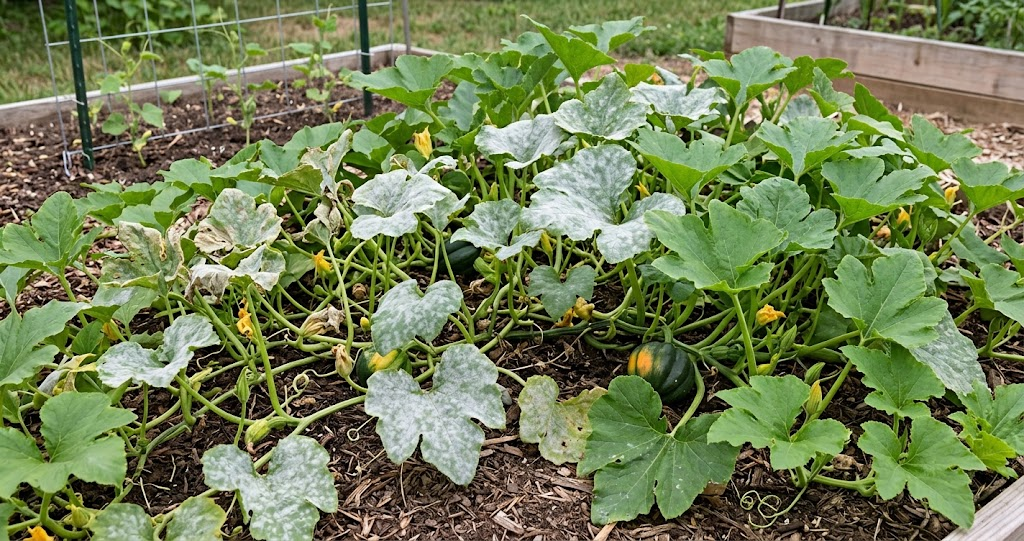
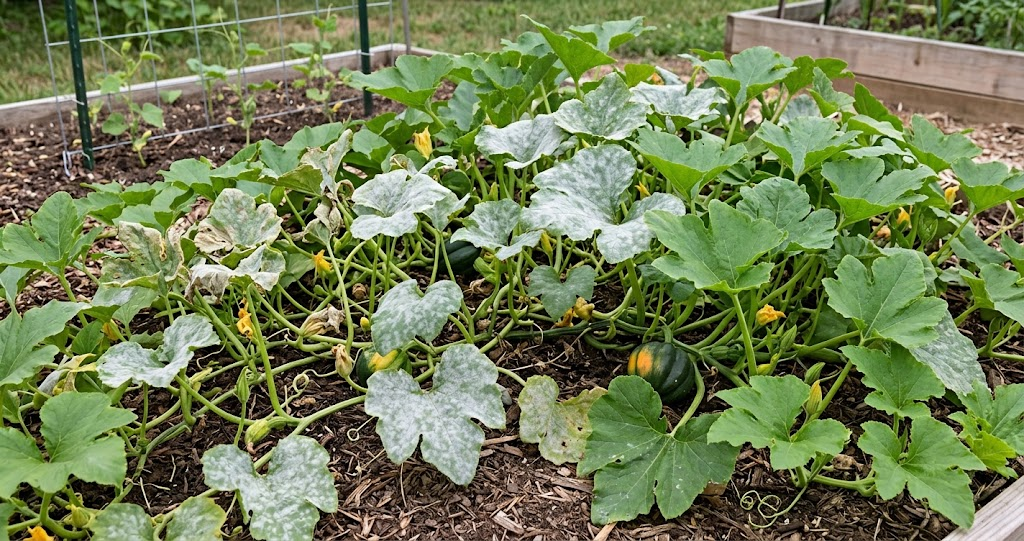
If you grow squash, pumpkins, zucchini, or cucumbers, you’ve probably seen it before: white, dusty patches slowly spreading across leaves just when the plants seem to be producing their biggest harvest. While it may feel like the disease appears overnight, powdery mildew squash cucumbers is actually the predictable result of a fungal disease taking advantage of late-summer weather conditions.
Unlike many plant diseases that require rainy weather, powdery mildew often thrives during warm days followed by cool, humid nights. By the time gardeners notice the familiar white coating, fungal spores have usually been developing for days.
The good news is that powdery mildew rarely kills healthy plants immediately, and there are several science-backed ways to slow its spread and keep squash and cucumber plants productive longer. Understanding why the disease develops—and how to manage it safely—can make a significant difference in your late-season harvest.
What Is Powdery Mildew?
Powdery mildew is a fungal disease caused by several closely related species of fungi, each adapted to particular host plants. The species that commonly infect cucurbits—such as squash, pumpkins, melons, and cucumbers—primarily belong to fungi in the genera Podosphaera and Golovinomyces.
These fungi produce masses of microscopic white spores that give infected leaves their familiar powdery appearance.
Unlike many other fungal diseases, powdery mildew does not require standing water on leaf surfaces to infect plants. Instead, it often develops when humidity is high but leaves remain relatively dry.
This unusual biology explains why powdery mildew often becomes severe during periods that don’t seem especially rainy.
Why It Appears Every Late Summer
Many gardeners notice that powdery mildew seems to arrive at almost the same time every year.
That’s not a coincidence.
Late summer provides several environmental conditions that strongly favor fungal growth while also placing cucurbit plants under increasing stress.
Warm Days Encourage Rapid Growth
Daytime temperatures during late summer are often ideal for powdery mildew development.
Warm weather allows fungal spores to germinate and produce new colonies quickly.
Meanwhile, rapidly growing vines provide plenty of fresh leaf tissue for infection.
Cool Nights Increase Humidity
As nights become cooler toward late summer and early fall, humidity near the leaf surface often increases.
Even without rain, these humid nighttime conditions help powdery mildew establish itself.
Morning dew may briefly increase local humidity around foliage, although extended leaf wetness is generally less important for powdery mildew than for many other fungal diseases.
Aging Plants Become More Vulnerable
By late summer, squash and cucumber plants have already invested enormous energy into flowering and fruit production.
Older leaves become naturally less vigorous, making them more susceptible to disease pressure.
Together, warm days, cool nights, abundant humidity, and aging foliage create ideal conditions for powdery mildew to spread.
The Biology Behind Powdery Mildew
Understanding how powdery mildew grows helps explain why some management practices work better than others.
The fungus survives between growing seasons on living host plants or, depending on the species and local climate, as specialized survival structures that persist until favorable conditions return.
When conditions become suitable, spores are released and carried by wind over surprisingly long distances.
After landing on a susceptible leaf, a spore germinates and produces specialized structures that penetrate only the outer cells of the leaf rather than invading deeply into plant tissue.
The fungus then develops a network of thread-like filaments across the leaf surface while drawing nutrients from the plant.
As colonies mature, they produce millions of additional spores that are easily carried to neighboring plants by wind.
Because spores are continuously produced throughout the growing season, infections can spread rapidly once environmental conditions become favorable.
For an excellent overview of powdery mildew biology and management, see the Cornell Integrated Pest Management Program:
https://cals.cornell.edu/integrated-pest-management
Why Squash and Cucumbers Are So Susceptible
Members of the cucurbit family are particularly prone to powdery mildew.
Several factors contribute:
- Large leaf surfaces provide ample space for infection.
- Dense vines often reduce airflow.
- Rapid late-season growth produces abundant young tissue.
- Many popular garden varieties vary in their natural resistance.
Even healthy plants growing in ideal soil can eventually develop powdery mildew if weather conditions strongly favor the fungus.
Recognizing the Early Symptoms
Early detection makes management more effective.
Initial symptoms often appear as small white spots on upper leaf surfaces.
As colonies expand, they merge into larger patches that may eventually cover much of the leaf.
Later symptoms include:
- Yellowing leaves
- Premature leaf death
- Reduced photosynthesis
- Lower fruit quality
- Decreased overall plant vigor
Although fruits themselves are rarely covered by powdery mildew, severe infections reduce the plant’s ability to support continued production.
Safe and Effective Ways to Manage Powdery Mildew
Complete elimination is rarely realistic once powdery mildew becomes established.
Instead, gardeners should focus on slowing disease development and maintaining healthy plants for as long as possible.
Improve Airflow
Crowded foliage creates humid microclimates that favor fungal growth.
Pruning selected older leaves can improve air circulation around plants.
Avoid excessive pruning, however, because leaves remain essential for photosynthesis and fruit production.
Providing adequate spacing when planting also reduces humidity within the canopy.
Water the Right Way
Although powdery mildew doesn’t require wet leaves to spread, proper watering still supports healthier plants.
Water:
- Early in the morning
- At soil level
- Deeply rather than frequently
- Consistently throughout the growing season
Soaker hoses and drip irrigation are excellent choices because they deliver water directly to the root zone while minimizing unnecessary leaf moisture.
For additional watering strategies, see our guide:
https://secretsofthegreengarden.com/how-to-water-your-garden-properly/
Choose Resistant Varieties
Many modern squash and cucumber varieties have been bred with improved resistance to powdery mildew.
Resistance doesn’t guarantee immunity, but it often delays infection and reduces disease severity.
When purchasing seeds, look for varieties described as resistant or tolerant to powdery mildew.
Remove Heavily Infected Leaves
If only a few leaves are severely affected, careful removal may slow disease spread.
Always disinfect pruning tools between plants and avoid working among wet foliage to reduce the chance of spreading other plant diseases.
Dispose of infected material according to local recommendations rather than composting it if you’re unsure whether your compost pile reaches temperatures sufficient to destroy pathogens.
Should You Use Homemade Treatments?
Home remedies for powdery mildew are widely shared online, but they deserve careful consideration.
Some university extension programs have evaluated diluted solutions containing ingredients such as baking soda or potassium bicarbonate as part of broader disease management strategies. However, effectiveness varies depending on timing, disease severity, weather, and proper preparation.
Gardeners should be cautious about using undiluted household substances—including vinegar, bleach, hydrogen peroxide, essential oils, or concentrated alcohol—directly on plants. These products can burn leaves, damage plant tissues, interfere with beneficial organisms, or worsen stress if applied incorrectly.
Whenever fungicides or homemade treatments are considered, follow guidance from university Cooperative Extension services or product labels rather than relying on unverified internet recipes.
Preventing disease through good cultural practices remains the most reliable long-term strategy.
Practical Tips
- Plant resistant squash and cucumber varieties whenever available.
- Space plants to improve airflow.
- Water at soil level during the morning.
- Mulch to reduce plant stress and conserve soil moisture.
- Inspect leaves weekly beginning in midsummer.
- Remove severely infected foliage when practical.
- Rotate cucurbit crops each year where possible.
Common Mistakes
Waiting Until Every Leaf Is Covered
Managing powdery mildew is much easier when addressed early.
Overcrowding Plants
Poor airflow encourages humid conditions inside dense foliage.
Watering Late in the Evening
Morning watering allows plants to begin the day well hydrated while avoiding prolonged overnight moisture around the root zone.
Trusting Every Homemade Recipe Online
Not every internet remedy is safe or effective. Undiluted household chemicals can injure plants more than the disease itself.
Frequently Asked Questions
Does powdery mildew kill squash plants?
Usually not immediately. However, severe infections reduce photosynthesis, weaken plants, and shorten the harvest season.
Can I eat squash or cucumbers from infected plants?
Yes. Powdery mildew primarily affects leaves rather than the fruit itself. Harvest healthy fruits and wash them before eating.
Why does powdery mildew appear even when it hasn’t rained?
Unlike many fungal diseases, powdery mildew thrives in humid conditions without requiring free water on leaf surfaces.
Should I remove every infected leaf?
Not necessarily. Removing too many leaves can reduce photosynthesis. Focus on heavily infected leaves while maintaining enough healthy foliage to support fruit production.
Will powdery mildew return next year?
It may. Windborne spores are widespread, and favorable weather conditions often allow new infections to develop each growing season.
Conclusion
Powdery mildew has become almost synonymous with late-summer squash and cucumber gardening because seasonal weather creates nearly ideal conditions for the fungus. Warm days, cool nights, aging foliage, and increased humidity combine to give this common disease an annual opportunity to spread.
Fortunately, gardeners aren’t powerless. Choosing resistant varieties, improving airflow, watering consistently at the soil level, monitoring plants early, and relying on proven horticultural practices can greatly reduce disease pressure. While homemade remedies may occasionally have a place when supported by extension guidance, prevention through good cultural care remains the safest and most effective approach.
By understanding the biology behind powdery mildew rather than reacting after symptoms become severe, you’ll be better prepared to keep your cucurbits productive well into the growing season.
SEO & Metadata
SEO Title: Powdery Mildew Squash Cucumbers: 7 Powerful Ways to Stop This Frustrating Late-Summer Disease
Meta Description: Learn why powdery mildew squash cucumbers appears every late summer and discover science-backed ways to prevent and manage it safely.
Focus Keyword: powdery mildew squash cucumbers
Related Keywords:
- powdery mildew on squash
- cucumber powdery mildew
- squash leaf fungus
- powdery mildew treatment
- cucurbit diseases
URL Slug:powdery-mildew-squash-cucumbers
Suggested Category:
Remedies
Tags:
Organic Gardening, Vegetable Garden, Soil Health, Container Gardening, compost
Internal Link Suggestions
Anchor text: how to water your garden properly
Link: https://secretsofthegreengarden.com/how-to-water-your-garden-properly/
Anchor text: common vegetable garden diseases and how to prevent them
Link: https://secretsofthegreengarden.com/common-vegetable-garden-diseases/
External Dofollow Authoritative Sources
Cornell Integrated Pest Management – Powdery Mildew
https://cals.cornell.edu/integrated-pest-management
University of California Integrated Pest Management – Powdery Mildew on Cucurbits
https://ipm.ucanr.edu/
University of Minnesota Extension – Powdery Mildew on Cucurbits
https://extension.umn.edu/