
Table of Contents
- Why Hummingbird Migration Timing Matters
- What Triggers Hummingbirds to Migrate?
- The Changes You’ll Notice Before Migration
- Fat Accumulation
- Increased Territorial Behavior
- Hummingbird Migration Timing Across the United States
- Northern States
- Mid-Atlantic Region
- Gulf Coast
- Do Feeders Delay Migration? The Truth Behind the Myth
- How to Support Migrating Hummingbirds
- Feeder Placement
- Nectar Recipe
- Cleaning Schedule
- Native Late-Season Flowers
- Practical Backyard Tips
- Common Mistakes to Avoid
- Frequently Asked Questions
- Conclusion
When Do Hummingbirds Migrate South? A Backyard Timing Guide
If you’ve noticed your hummingbird visitors becoming more active at the feeder or chasing each other more often, you’re probably witnessing one of nature’s most fascinating seasonal events. Understanding hummingbird migration timing helps explain these sudden behavioral changes and allows you to provide the best possible habitat as these tiny birds prepare for an extraordinary journey.
Unlike many songbirds that migrate in flocks, hummingbirds usually travel alone. Before leaving, they undergo remarkable physical and behavioral changes that have evolved over thousands of years. Knowing what to expect—and what not to worry about—can help backyard bird enthusiasts support migrating hummingbirds throughout late summer and fall.
Why Hummingbird Migration Timing Matters
Migration isn’t determined by a calendar date. Instead, hummingbirds respond primarily to changing day length (photoperiod), along with seasonal weather patterns and food availability.
As daylight gradually shortens after the summer solstice, hormonal changes signal that it’s time to prepare for migration. Even if flowers are still blooming or feeders remain full, these internal biological cues continue to guide the birds’ schedule.
Because migration is largely controlled by natural rhythms, hummingbirds generally begin their journeys at similar times each year, although local weather may influence exactly when individual birds depart.
For gardeners and bird lovers, recognizing these patterns helps ensure that nectar sources remain available during this critical period.
What Triggers Hummingbirds to Migrate?
The strongest trigger is decreasing daylight.
Scientists have long understood that many migratory birds use changes in day length to regulate seasonal behaviors. As the days become shorter, hummingbirds begin preparing their bodies for one of the most demanding journeys in the bird world.
Other factors may influence exactly when a particular bird leaves, including:
- Nighttime temperatures
- Weather systems
- Availability of flowering plants
- Nectar resources
- Individual age and health
These influences fine-tune migration, but they do not replace the internal biological clock that initiates it.
The Changes You’ll Notice Before Migration
Fat Accumulation
One of the most noticeable signs of approaching migration is increased feeding.
A hummingbird that seemed to visit occasionally during midsummer may suddenly appear at your feeder every few minutes. This isn’t because it’s becoming dependent on your feeder—it’s storing energy.
Before migration, hummingbirds enter a period known as hyperphagia, meaning they dramatically increase food intake. Much of this energy is converted into fat, which serves as the primary fuel for migration.
Although hummingbirds are famous for burning energy rapidly during flight, stored body fat provides the reserves needed for long-distance travel.
Seeing frequent feeder visits in late summer is therefore completely normal and usually indicates that migration preparations are underway.
Increased Territorial Behavior
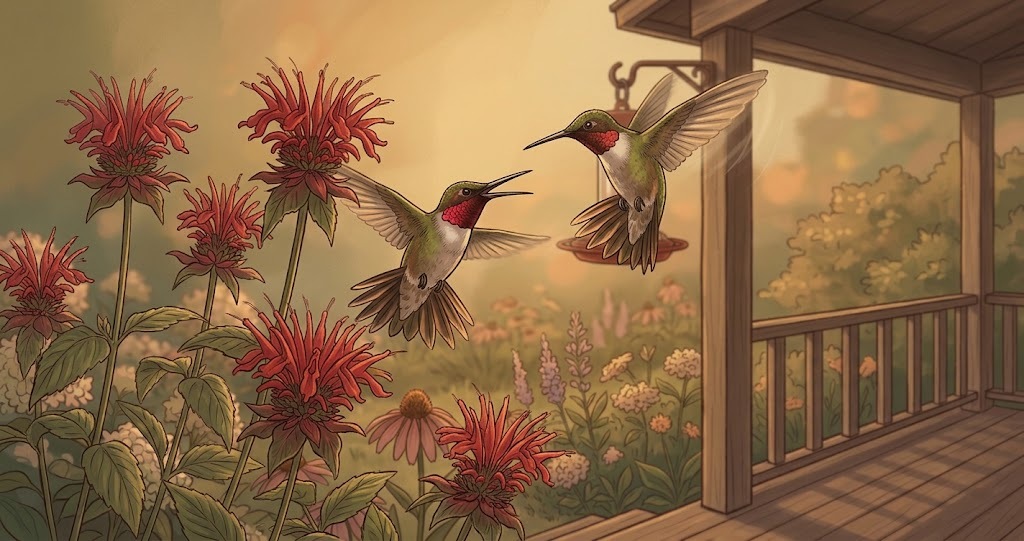
Many homeowners also notice more aggressive behavior around feeders.
Late in the season, hummingbirds often become noticeably more territorial. Birds that previously tolerated one another may begin chasing rivals away from flowers and feeders.
This behavior helps individuals protect valuable nectar resources while building the fat reserves needed for migration.
You may observe:
- High-speed aerial chases
- Loud chipping calls
- Perching near feeders to guard them
- Repeated dive displays toward competitors
Although these interactions can appear dramatic, they’re a natural part of pre-migration behavior.
H2: Hummingbird Migration Timing by Region
Northern States
In northern parts of the United States and southern Canada, migration generally begins earlier because cooler temperatures and shorter days arrive sooner.
Ruby-throated hummingbirds breeding across much of the eastern and central northern United States often begin moving south during late summer, with many individuals leaving before autumn fully arrives.
By early fall, sightings become increasingly uncommon in the far north.
Mid-Atlantic Region
States in the Mid-Atlantic typically experience migration somewhat later than northern areas.
Many hummingbirds continue visiting feeders well into early fall as birds from farther north pass through on their way south. This means homeowners may actually see more hummingbirds during migration than they did during the nesting season.
Migration often occurs in waves, with local birds departing while travelers from northern regions briefly stop to refuel.
Gulf Coast
The Gulf Coast serves as an important migration corridor.
Some ruby-throated hummingbirds continue south through coastal states before crossing the Gulf of Mexico, while others follow routes around the coastline.
Because birds from across eastern North America funnel through this region, feeders may remain busy long after northern gardens have become quiet.
Do Feeders Delay Migration? The Truth Behind the Myth
One of the most persistent myths is that leaving hummingbird feeders up prevents birds from migrating.
Fortunately, this simply isn’t supported by ornithological research.
Migration is controlled primarily by changing daylight and internal biological rhythms—not by whether a feeder contains nectar.
Leaving feeders available during migration actually benefits hummingbirds by providing a dependable energy source before departure and for birds traveling through your area.
Many bird organizations, including the Cornell Lab of Ornithology, recommend keeping feeders available during migration because they support both local birds and migrants passing through. Learn more at https://www.allaboutbirds.org/.
Once you have gone about two weeks without seeing a hummingbird, it’s generally reasonable to remove and clean your feeders for the season.
How to Support Migrating Hummingbirds
If you’d like to help migrating hummingbirds, providing clean nectar and native flowering plants is one of the simplest and most effective ways.
You can also learn more about creating bird-friendly landscapes by reading our guide on attracting pollinators and wildlife at https://secretsofthegreengarden.com/.
Feeder Placement
Choose locations that are:
- Easy for birds to see
- Near flowering plants
- Away from heavy pedestrian traffic
- Protected from strong afternoon sun when possible
- Safe from window collisions
Providing more than one feeder can reduce competition between territorial birds.
Nectar Ratio
Experts consistently recommend a simple nectar recipe:
- 1 part plain white granulated sugar
- 4 parts water
Boil the water, dissolve the sugar, allow the mixture to cool, and never add food coloring, honey, brown sugar, or artificial sweeteners.
Cleaning Frequency
Clean feeders regularly to prevent harmful mold and fermentation.
General guidance is:
- Every two to three days during hot weather
- Every four to five days during cooler conditions
- Immediately if nectar appears cloudy
Use hot water and a bottle brush. Mild unscented soap may be used if thoroughly rinsed away before refilling.
Native Late-Season Flowers
Late-blooming native plants provide important natural nectar sources during migration.
Depending on your region, excellent choices may include:
- Cardinal flower (Lobelia cardinalis)
- Jewelweed (Impatiens capensis)
- Bee balm (Monarda species)
- Great blue lobelia (Lobelia siphilitica)
- Scarlet sage (Salvia coccinea, where native)
- Native asters
- Native salvias appropriate to your area
Selecting plants native to your region supports not only hummingbirds but also native bees, butterflies, and other pollinators.
Image Placement Suggestion
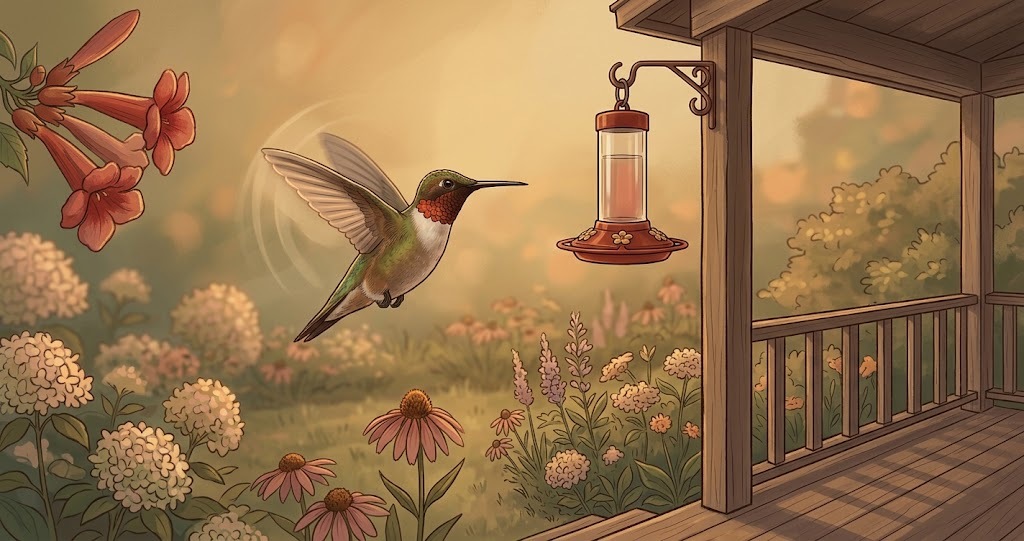
Image: Ruby-throated hummingbird feeding before autumn migration.
Alt text: “hummingbird migration timing feeder chart showing seasonal backyard activity”
Practical Backyard Tips
- Keep feeders available through migration season.
- Replace nectar before it becomes cloudy.
- Plant a diversity of native flowering species with overlapping bloom periods.
- Offer multiple feeders if territorial behavior becomes intense.
- Watch for increased feeding rather than relying on calendar dates.
- Continue observing your garden after local birds leave because migrating visitors may still arrive.
Common Mistakes to Avoid
Removing Feeders Too Early
Many migrating hummingbirds depend on late-season nectar sources while traveling.
Using the Wrong Nectar Recipe
Stick to the standard 1:4 sugar-to-water ratio. Richer mixtures provide no proven benefit and may create problems.
Neglecting Feeder Cleaning
Dirty feeders can harbor mold and bacteria that may harm birds.
Assuming Aggression Means Something Is Wrong
Increased territorial behavior is a normal part of migration preparation.
Frequently Asked Questions
When do hummingbirds usually start migrating south?
The exact timing depends on latitude. Northern populations generally begin earlier than birds farther south, while Gulf Coast regions continue receiving migrants well into fall.
Should I stop feeding hummingbirds in autumn?
No. Keeping feeders available does not prevent migration and can provide valuable fuel for both resident and migrating birds.
Why are hummingbirds suddenly fighting at my feeder?
As migration approaches, hummingbirds often defend nectar sources more aggressively while building fat reserves.
Can hummingbirds survive only on feeder nectar?
No. Feeders provide energy-rich nectar, but hummingbirds also rely on small insects and spiders for protein and other nutrients.
What flowers help migrating hummingbirds?
Native late-season bloomers such as cardinal flower, bee balm, jewelweed, and regional native salvias provide excellent nectar during migration.
Conclusion
Watching hummingbirds prepare for migration offers a remarkable glimpse into one of nature’s most impressive seasonal events. Increased feeding, territorial displays, and frequent feeder visits are all signs that these tiny birds are following ancient biological rhythms rather than responding to the presence of backyard feeders.
By understanding hummingbird migration timing, gardeners can better support these incredible travelers with clean feeders, properly mixed nectar, and a landscape rich in native late-season flowers. Even small backyard habitats become important refueling stations as hummingbirds make their long journey south, proving that thoughtful gardening can play a meaningful role in wildlife conservation.