
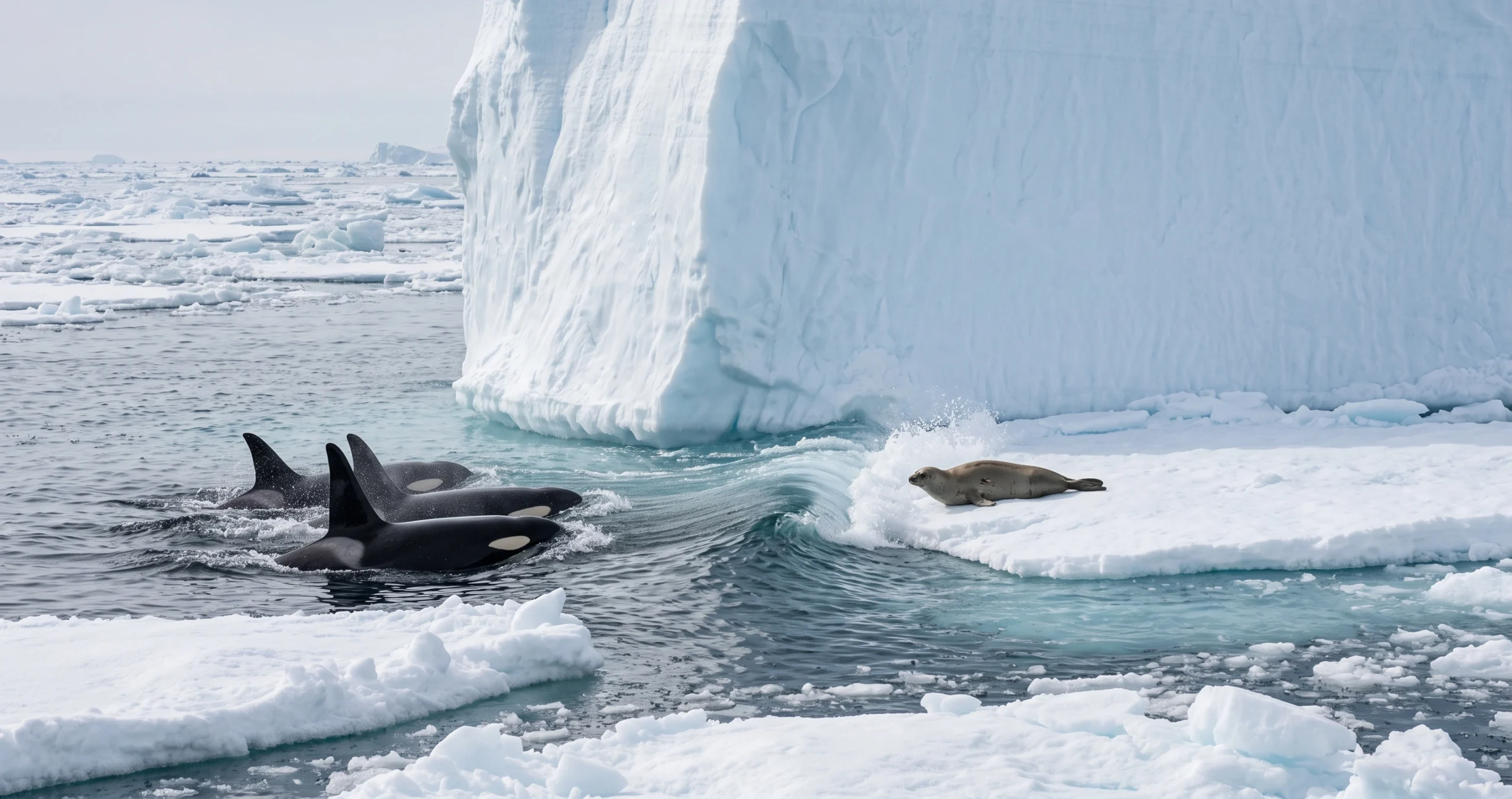
The first time scientists documented orca wave washing, it became clear that killer whales are capable of one of the most sophisticated hunting techniques in the animal kingdom. Instead of relying on speed or brute force alone, these highly intelligent marine predators work together to create powerful waves that can sweep seals from floating ice into the water.
This behavior is a remarkable example of teamwork, communication, and learned hunting skills. Not every population of orcas uses this technique, and it appears to be passed from one generation to the next through observation and practice. The result is a hunting strategy that combines precision, cooperation, and a deep understanding of the surrounding environment.
In this article, we’ll explore exactly how orcas create these waves, why seals are vulnerable despite their icy refuge, and what this extraordinary behavior reveals about one of the ocean’s smartest predators.
Table of Contents
- What Is Orca Wave Washing?
- Meet the Orca
- Where Wave Washing Happens
- Why Seals Rest on Ice
- How Orcas Create Hunting Waves
- Teamwork Makes the Strategy Possible
- Why This Hunting Method Works
- Learning and Cultural Transmission
- Anatomy That Supports Cooperative Hunting
- Ecological Importance
- Conservation Challenges
- What People Often Get Wrong
- Practical Wildlife Observation Tips
- Frequently Asked Questions
- Conclusion
What Is Orca Wave Washing?
Orca wave washing is a specialized hunting behavior in which multiple killer whales generate waves that wash seals from floating sea ice into the water.
Rather than attacking the ice directly, the whales coordinate their movements with remarkable precision. Swimming side by side at speed, they dive beneath the surface and surge upward together, producing a wave large enough to flood the ice floe.
Once the seal loses its footing and falls into the water, the orcas have a much greater chance of capturing it.
Researchers have primarily observed this behavior among certain Antarctic populations of killer whales, particularly those known for hunting seals around pack ice.
Meet the Orca
Orcas (Orcinus orca), also known as killer whales, are actually the world’s largest members of the dolphin family.
Adult males can exceed 30 feet (9 meters) in length and weigh more than 10,000 pounds (4,500 kilograms), while females are generally smaller.
Their striking black-and-white coloration makes them instantly recognizable, but their intelligence is even more impressive.
Orcas possess:
- Large brains relative to body size
- Exceptional hearing underwater
- Sophisticated echolocation
- Complex vocal communication
- Strong social bonds within family groups
Unlike many marine predators, orcas live in stable family units called pods. These close relationships allow individuals to coordinate hunting techniques that would be impossible for a solitary predator.
Where Wave Washing Happens
Wave washing is most closely associated with Antarctic waters.
Here, expansive fields of seasonal sea ice create ideal resting platforms for several seal species, including:
- Weddell seals
- Crabeater seals
- Leopard seals
Floating ice offers temporary protection from underwater predators. However, experienced orcas have evolved a strategy that turns this refuge into a trap.
Researchers have observed wave washing in regions of the Southern Ocean where pack ice breaks into smaller floes. These floating platforms are large enough for seals to rest on but small enough to be affected by carefully generated waves.
Importantly, not all orca populations hunt this way. Different populations specialize in different prey, including fish, sharks, rays, squid, and marine mammals.
Why Seals Rest on Ice
From a seal’s perspective, floating sea ice provides several advantages.
It allows individuals to:
- Rest between foraging trips
- Escape predators approaching underwater
- Conserve energy
- Nurse young safely
- Molt in relative security
Remaining out of the water reduces the immediate threat from predators below.
Ironically, this very strategy creates the opportunity for wave washing.
The seal may be safe from a direct underwater attack, but it becomes vulnerable if the entire ice platform begins moving beneath it.
How Orcas Create Hunting Waves
Step 1: Locating the Target
The pod first identifies a seal resting on a suitable ice floe.
The whales often approach quietly and position themselves carefully before beginning the attack.
Step 2: Coordinating Positions
Several orcas line up shoulder to shoulder.
This formation allows each whale’s movement to contribute to a single, larger wave instead of several smaller ones.
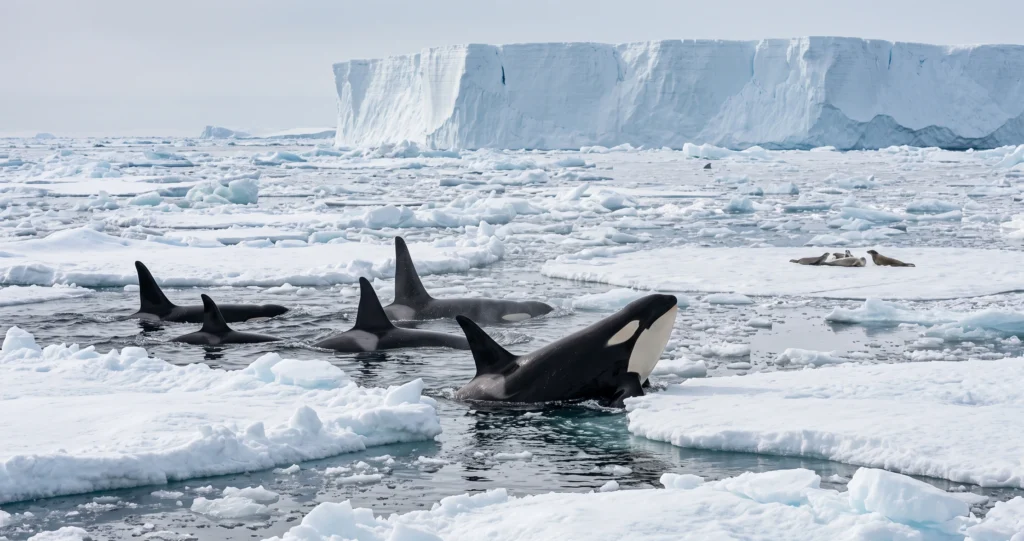
Step 3: Swimming Together
The whales accelerate in unison beneath the surface.
Timing is essential.
If one individual swims too early or too late, the wave loses much of its force.
Step 4: Generating the Wave
As the whales surge upward, their combined movement pushes a large volume of water toward the ice.
The wave rushes over the floe, reducing the seal’s grip and stability.
Step 5: Repeating if Necessary
One wave is not always enough.
Researchers have documented pods making multiple attempts before successfully dislodging a seal.
In some cases, the orcas even create waves from different directions to tilt or rotate the ice floe.
This persistence demonstrates remarkable planning and flexibility.
Teamwork Makes the Strategy Possible
Wave washing is one of the clearest examples of cooperative hunting in marine mammals.
Each whale plays an important role.
Instead of competing with one another, pod members synchronize their actions to improve the group’s overall success.
Scientists have observed behaviors including:
- Precise swimming formations
- Coordinated acceleration
- Shared prey
- Communication before and during hunts
- Adults guiding younger individuals
This cooperation reduces wasted energy while increasing the likelihood of catching prey that would otherwise remain inaccessible.
Why This Hunting Method Works
Water is extremely effective at transferring force.
Even a relatively small wave can destabilize a seal standing on smooth ice.
The seal faces several challenges:
- Limited traction
- Slippery surface
- Unexpected movement
- Little time to react
Unlike rocky shorelines, floating ice moves with the incoming wave.
This combination of flooding and shifting ice often leaves the seal unable to remain on the floe.
Once back in the water, the seal loses its temporary advantage.
Orcas are powerful swimmers capable of rapid acceleration and coordinated pursuit.
Learning and Cultural Transmission
One of the most fascinating aspects of wave washing is that it appears to be culturally learned rather than instinctive.
Young orcas spend years with their mothers and pod members.
During this extended childhood, they observe:
- Hunting strategies
- Communication calls
- Travel routes
- Social interactions
- Specialized feeding behaviors
Researchers believe many hunting techniques spread through social learning within populations rather than through genetics alone.
This helps explain why some groups perform wave washing while others never do, despite belonging to the same species.
In many ways, different orca populations possess distinct hunting traditions.
Anatomy That Supports Cooperative Hunting
Several physical adaptations make wave washing possible.
Powerful Tail Flukes
The muscular tail generates tremendous propulsion.
This force allows multiple whales to displace enough water to create large coordinated waves.
Streamlined Body
An efficient body shape minimizes drag, helping whales accelerate rapidly during synchronized attacks.
Large Pectoral Fins
These fins assist with steering and maintaining precise formation alongside other pod members.
Thick Blubber
Blubber insulates orcas in frigid Antarctic waters while providing energy reserves for extended hunting.
Advanced Hearing
Orcas rely heavily on sound to maintain communication and coordination, particularly when visibility is limited beneath the ice.
Ecological Importance
As apex predators, orcas help regulate marine ecosystems.
Their influence extends beyond individual prey species.
Predation can affect:
- Seal population dynamics
- Prey behavior
- Competition among marine mammals
- Nutrient cycling
- Food web stability
Specialized hunting behaviors like wave washing demonstrate how predators adapt to changing environments rather than relying on a single feeding strategy.
These adaptations contribute to healthy, functioning ecosystems.
Conservation Challenges
Although wave washing remains an extraordinary natural behavior, the habitats supporting it face increasing pressure.
Climate Change
Sea ice patterns are changing across parts of Antarctica.
Changes in ice coverage may influence:
- Seal haul-out locations
- Hunting opportunities
- Predator-prey interactions
The long-term ecological effects remain an active area of scientific research.
Pollution
Persistent pollutants can accumulate in marine food webs, eventually reaching apex predators such as orcas.
These contaminants may affect health and reproduction.
Noise
Growing levels of underwater noise from ships can interfere with communication that cooperative hunting depends upon.
Responsible Research
Long-term scientific monitoring helps researchers understand how environmental changes influence specialized hunting behaviors over time.
What People Often Get Wrong
Orcas Do Not Hunt Randomly
Different populations specialize in different prey.
Some primarily eat fish, while others regularly hunt marine mammals.
All Orcas Do Not Wave Wash
This behavior has only been documented in certain populations, particularly Antarctic mammal-eating ecotypes.
It Is Not Cruelty
From a human perspective, the hunt can appear dramatic.
In reality, wave washing is a natural survival strategy shaped through evolution.
Intelligence Does Not Mean Human-Like Thinking
Orcas display remarkable problem-solving abilities, but scientists avoid interpreting every behavior through human emotions or intentions.
Evidence-based observation remains essential.
Practical Wildlife Observation Tips
If you’re fortunate enough to observe wild orcas:
- Maintain a respectful distance.
- Never attempt to approach hunting whales.
- Follow local wildlife viewing regulations.
- Choose responsible tour operators that prioritize animal welfare.
- Bring binoculars or a telephoto lens rather than trying to get closer.
Responsible viewing helps reduce stress on marine wildlife while supporting conservation-focused tourism.
Frequently Asked Questions
Do all killer whales use wave washing?
No. Only certain populations have been observed using this specialized hunting technique.
Which seals are most often targeted?
Researchers have documented attacks on Weddell, crabeater, and leopard seals, depending on location and hunting opportunity.
Is wave washing instinctive?
Current evidence suggests it is largely learned through social learning within family groups.
How many orcas participate?
The number varies, but several whales usually cooperate to generate waves powerful enough to affect the ice.
Can seals escape?
Yes. Some seals successfully avoid capture by moving to thicker ice, reacting quickly, or surviving repeated wave attempts.
Conclusion
Orca wave washing stands among the most extraordinary examples of cooperative hunting ever documented in the wild. Rather than relying solely on strength, killer whales combine intelligence, communication, and precise teamwork to create waves capable of sweeping seals from floating sea ice.
This remarkable strategy highlights how adaptable orcas can be and illustrates the importance of cultural learning within their family groups. It also reminds us that even seemingly safe refuges in nature are part of an ever-changing ecological balance between predator and prey.
As scientists continue studying these incredible marine mammals, wave washing remains one of the clearest demonstrations that intelligence, cooperation, and environmental awareness can shape some of the ocean’s most effective hunting behaviors.
Suggested Internal Link Opportunities
Without inventing specific URLs, consider linking naturally to existing or future articles on:
- How Orcas Communicate Within Their Pods
- How Leopard Seals Hunt in Antarctic Waters
- Why Sea Ice Is Essential for Antarctic Wildlife
- How Apex Predators Shape Marine Ecosystems
Recommended Authoritative Sources
- NOAA Fisheries – Killer Whale species information
- Smithsonian Ocean – Orca biology and behavior
- IUCN Red List – Orcinus orca assessment
- National Science Foundation research on Antarctic killer whale behavior
- Peer-reviewed studies published in journals such as Marine Mammal Science and Behavioral Ecology and Sociobiology