
Introduction
Leeks are among the oldest cultivated vegetables in the world, valued for their sweet, delicate flavor and remarkable versatility in the kitchen. Unlike onions, which are grown primarily for their bulbs, the leek’s greatest culinary value lies in its long, white stem—often called the shank—that develops beneath the green leaves.
This pale section is prized because it remains tender, mild, and less fibrous than the green upper leaves. It forms the foundation of countless soups, stews, quiches, gratins, and roasted vegetable dishes.
For centuries, gardeners have used one simple principle to increase the length of this prized white stem: keeping it away from sunlight. This process, known as blanching, encourages the stem to remain pale by preventing chlorophyll from developing. Traditional leek-growing methods—from planting seedlings in deep holes to gradually drawing soil around the stems—are all designed to maximize this tender white portion.
Understanding why blanching works and how to apply it properly can significantly improve both the quality and appearance of your harvest.
What Makes Leeks Different from Onions?
Although leeks belong to the same Allium family as onions, garlic, shallots, and chives, they grow quite differently.
Instead of forming a large bulb, a leek develops a cylindrical stem made from tightly overlapping leaf bases.
The plant consists of:
- A small root plate.
- A white blanched stem.
- Pale green upper stem.
- Dark green leaves.
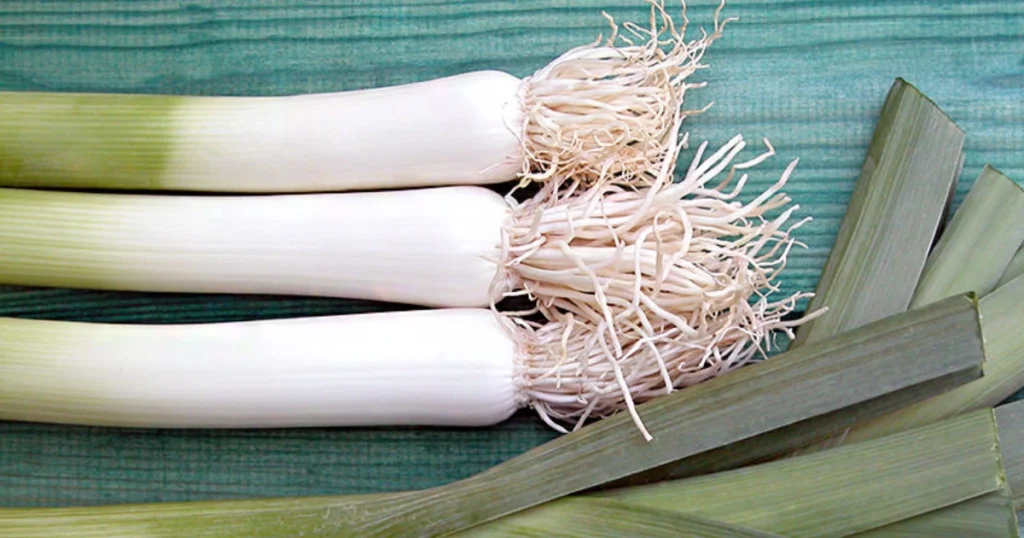
The white portion is not a true stem in the botanical sense but a bundle of tightly wrapped leaf sheaths that remain compact as the plant grows.
Why the White Shank Is So Valuable
The white section contains less chlorophyll than the exposed green leaves.
Without sunlight, this tissue remains:
- Tender.
- Mild in flavor.
- Less fibrous.
- Sweeter.
- More succulent.
The green leaves remain perfectly edible, but they contain more fiber and are generally stronger in flavor.
Many recipes focus on the white and pale green portions because of their delicate texture.
However, the darker leaves should not be wasted—they make excellent additions to homemade vegetable stock and soups.
What Is Blanching?
Blanching in gardening refers to excluding light from part of a plant while it grows.
Without exposure to sunlight, chlorophyll production is greatly reduced.
As a result, the covered tissue remains:
- Pale.
- Softer.
- More tender.
- Less bitter in some crops.
Blanching is also used with vegetables such as celery, chicory, asparagus, and cardoons.
With leeks, blanching happens naturally through careful cultivation rather than artificial coverings.
Why Light Changes the Stem
When exposed to sunlight, plants produce chlorophyll, the green pigment responsible for photosynthesis.
Photosynthesis allows plants to manufacture sugars from sunlight.
While chlorophyll is essential for healthy leaves, gardeners deliberately limit light around the lower part of the leek.
The covered section remains functional but develops:
- Less chlorophyll.
- Fewer tough fibers.
- A milder taste.
- A cleaner appearance.
This is why commercially grown exhibition-quality leeks often display impressively long white stems.
Traditional Leek Cultivation
For generations, gardeners have followed a remarkably effective growing technique.
Rather than planting seedlings at ground level, they begin by creating deep planting holes.
This simple method naturally encourages blanching as the plants develop.
Step 1: Prepare Fertile Soil
Leeks perform best in:
- Deep soil.
- Good drainage.
- High organic matter.
- Consistent moisture.
Adding compost before planting improves both fertility and soil structure.
Leeks are relatively heavy feeders and benefit from nutrient-rich soil throughout the growing season.
Step 2: Plant in Deep Holes
Instead of digging a shallow planting hole, gardeners traditionally make holes approximately 15–20 cm (6–8 inches) deep using a dibber or planting stick.
The young leek is lowered into the hole.
Importantly:
- Do not backfill with soil.
- Simply water the plant.
The water gradually washes enough soil around the roots while leaving the seedling standing naturally.
As the leek grows, the surrounding soil slowly fills the hole.
Step 3: Earth Up the Stems
As the season progresses, soil is gradually drawn around the lower stem.
This process is called earthing up or hilling.
Additional soil continues excluding sunlight from the developing stem.
The result is:
- Longer white shanks.
- Better blanching.
- Improved appearance.
- Tender texture.
Care should be taken not to allow soil to enter between the leaves, as this makes cleaning harvested leeks much more difficult.
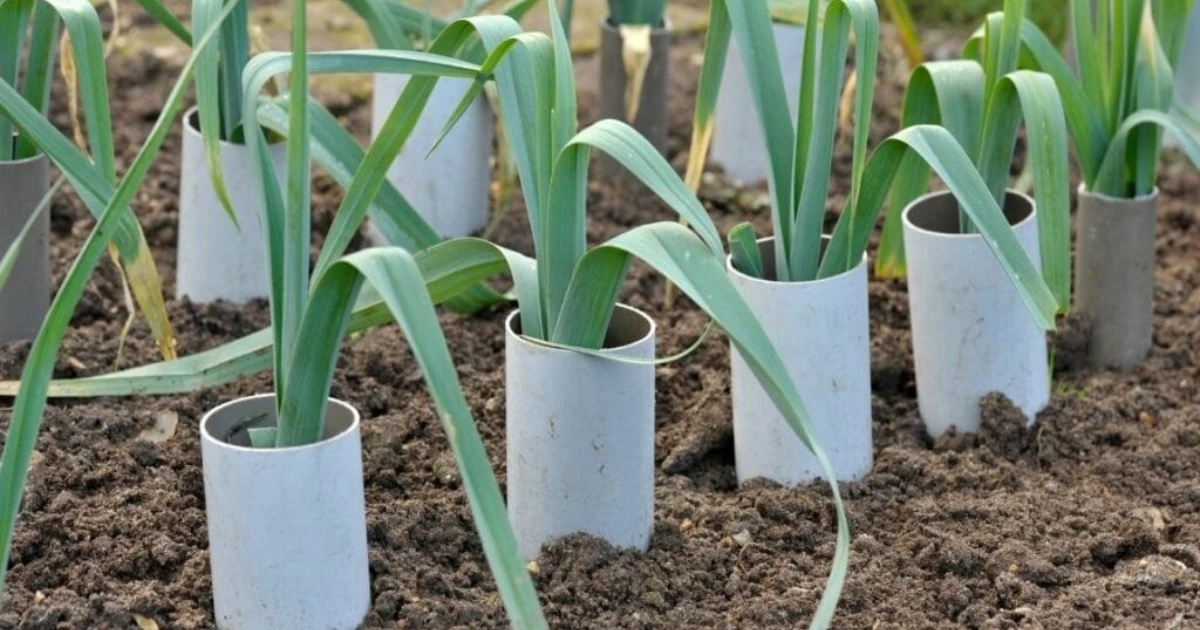
Alternative Blanching Methods
Some gardeners prefer alternatives to repeated earthing up.
These include:
- Cardboard collars.
- Plastic blanching tubes.
- Paper sleeves.
- Light-excluding wraps.
These methods reduce soil contamination while still preventing light from reaching the stem.
Whichever method is used, the principle remains identical: exclude light without damaging the plant.
Choosing the Right Variety
Different leek varieties produce different stem lengths and harvest seasons.
Generally available types include:
Summer Leeks
These mature quickly.
They are:
- Tender.
- Mild.
- Less winter hardy.
Autumn Leeks
These offer larger stems and longer harvest periods.
Winter Leeks
These tolerate frost well and may remain in the garden throughout winter in many climates.
They often develop stronger flavors after exposure to cold weather.
Choosing several varieties allows harvests over many months.
Soil Requirements
Leeks thrive in:
- Rich loamy soil.
- Good drainage.
- Moderate fertility.
- Consistent moisture.
The ideal soil pH generally falls between about 6.0 and 7.0.
Avoid compacted or waterlogged ground.
Watering
Because the edible stem consists largely of water-rich tissue, consistent moisture is essential.
Uneven watering may reduce growth and produce tougher stems.
Aim for:
- Deep watering.
- Even soil moisture.
- Organic mulch to reduce evaporation.
Avoid allowing the soil to dry completely during active growth.
Feeding Leeks
Leeks benefit from steady nutrition throughout the growing season.
Nitrogen supports healthy leaf growth, which ultimately contributes to thicker stems.
Balanced fertilization combined with compost generally produces excellent results.
Excessive feeding late in the season, however, rarely improves mature plants significantly.
Common Pests and Diseases
Although relatively reliable crops, leeks can experience several problems.
Potential pests include:
- Onion thrips.
- Allium leaf miner (where present).
- Onion maggot.
Diseases may include:
- Rust.
- White rot.
- Downy mildew.
Good crop rotation, proper spacing, and removing infected plants help reduce disease pressure.
Harvesting
Most leeks are harvested once the stems reach the desired thickness.
Unlike onions, they do not require complete maturity before harvesting.
To lift them safely:
- Loosen the soil with a fork.
- Lift gently beneath the root plate.
- Avoid pulling directly on the leaves.
Fresh leeks store well in cool conditions and may remain in the garden for extended periods, particularly winter-hardy varieties.
Cleaning Leeks Properly
Because soil often becomes trapped between the tightly wrapped leaves, thorough cleaning is important.
A common method is:
- Trim roots.
- Slice lengthwise.
- Fan open the leaves.
- Rinse under running water.
This removes hidden grit before cooking.
Culinary Uses
Leeks are exceptionally versatile.
Popular preparations include:
- Potato and leek soup.
- Quiches.
- Risottos.
- Stir-fries.
- Roasted vegetables.
- Braised leeks.
- Gratin dishes.
The green leaves also make flavorful additions to vegetable stock.
Practical Tips
- Plant seedlings deeply rather than burying stems immediately.
- Earth up gradually throughout the season.
- Keep soil consistently moist.
- Add compost before planting.
- Harvest according to stem size rather than waiting for complete maturity.
- Save dark green leaves for homemade stock.
Common Mistakes
Planting Too Shallow
Shallow planting limits the length of the white stem.
Filling the Hole Immediately
Traditional planting allows the hole to fill naturally over time.
Letting Soil Enter the Leaves
This creates unnecessary cleaning work after harvest.
Inconsistent Watering
Dry periods may slow growth and produce tougher stems.
Harvesting by Pulling
Using a garden fork reduces stem damage.
Frequently Asked Questions
Why are leeks white at the bottom?
The lower stem remains white because it is protected from sunlight, preventing chlorophyll from developing.
What is earthing up?
Earthing up involves gradually pulling soil around the lower stems to increase the length of the blanched white section.
Can you eat the green part of a leek?
Yes. Although tougher than the white stem, the green leaves are excellent for soups, broths, and stocks.
How long do leeks take to grow?
Depending on the variety, leeks typically require approximately 120 to 180 days from sowing to harvest.
Can leeks stay in the ground during winter?
Many winter varieties tolerate freezing temperatures and can remain in the garden until needed, provided the soil does not become permanently frozen.
Conclusion
The traditional method of growing leeks has remained largely unchanged for centuries because it works remarkably well. By understanding that the prized white shank develops only where light is excluded, gardeners can use simple techniques such as deep planting and gradual earthing up to produce longer, more tender stems.
The process requires patience rather than complexity. Rich soil, consistent moisture, careful blanching, and proper harvesting are usually all that is needed to produce excellent leeks with outstanding flavor and texture. Once mastered, these simple techniques reward gardeners with one of the most versatile vegetables in the kitchen—proof that sometimes the oldest gardening methods remain the most effective.
Internal Linking
Learn when garlic is truly ready for harvest:
https://secretsofthegreengarden.com/when-to-harvest-garlic/
Improve your soil before planting heavy-feeding vegetables:
https://secretsofthegreengarden.com/why-not-leave-bare-soil-winter/
Build a dedicated workspace for sowing and transplanting seedlings:
https://secretsofthegreengarden.com/potting-bench-guide/
Discover the ancient watering method that keeps vegetables evenly hydrated:
https://secretsofthegreengarden.com/olla-irrigation-clay-pot-watering/
Recommended External Sources
- Royal Horticultural Society (RHS): https://www.rhs.org.uk
- Oregon State University Extension Service: https://extension.oregonstate.edu
- University of Minnesota Extension: https://extension.umn.edu